Jun 5, 2018

Bugs in Greenland Mud Yield Clues to Future Warming

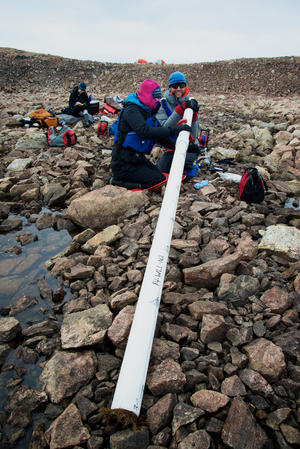
The Northwestern team hikes in northwest Greenland near the country's vast ice sheet.
Flying bugs trapped deep in the frozen mud covering Greenland have pointed researchers to new clues about the country’s climate, suggesting the now-icebound island was once warmer than previously believed. 

In the centuries that followed the last ice age and in the millenia between the last two, Greenland could have seen summer highs between 10 and 15 degrees warmer than today, according to a new study led by researchers at Northwestern University in Illinois.

Core samples taken from the mud of a lake bed in northwestern Greenland, just beyond the edge of the ice sheet and largely undisturbed by its historical ebb and flow, revealed large numbers of preserved insects known as phantom midges and a fly species known as chironomids. Those species today usually live well south of Greenland, but the numbers found in the sediment cores taken by the Northwestern team were comparable to populations seen in the Canadian Atlantic provinces.

As far as the team could tell, the phantom midge hasn’t been seen in Greenland before now.

“We think this is the first time anyone has reported it in ancient sediments or modern lakes there," Yarrow Axford, the study's senior author, said in a statement accompanying the findings. "We were really surprised to see how far north it migrated."

The findings suggest temperatures in Greenland’s summer might have ranged into the 50s Fahrenheit, or in the low teens Celsius — well above today’s averages of around 40°F.

The Northwestern team pulls a core of sediment from the bed of Wax Lips Lake.
With the Arctic warming today at twice the rate of the rest of the globe, Greenland is under intense scientific scrutiny. About four-fifths of the island is covered by a sheet of ice more than a mile thick. That’s enough frozen water to raise global sea levels by about six meters (20 feet) if it melted — which it is, at a slow but accelerating rate.

Figuring out what Greenland’s climate was like in the past can help scientists figure out what may happen to it in the future as planet-warming carbon dioxide and other gases build up in Earth’s atmosphere. That data collected by studies like the Northwestern study can be fed into computer models to help fine-tune those estimates.

“These findings may portend large future warming in this high-latitude region,” the authors conclude.

Read more at Seeker

Jun 4, 2018

Atomic clock comparison confirms key assumptions of 'Einstein's elevator'

Einstein's elevator: As the Earth falls like an elevator in the sun's gravity, atomic clocks based on hydrogen and cesium maintain the same synchronicity in their ticking properties. NIST physicists just measured this phenomenon better than ever before.
By comparing different types of remote atomic clocks, physicists at the National Institute of Standards and Technology (NIST) have performed the most accurate test ever of a key principle underlying Albert Einstein's famous theory of general relativity, which describes how gravity relates to space and time.

The NIST result, made possible by continual improvements in the world's most accurate atomic clocks, yields a record-low, exceedingly small value for a quantity that Einstein predicted to be zero.

As described in a Nature Physics paper posted online June 4, NIST researchers used the solar system as a laboratory for testing Einstein's thought experiment involving Earth as a freefalling elevator. Einstein theorized that all objects located in such an elevator would accelerate at the same rate, as if they were in a uniform gravitational field -- or no gravity at all. Moreover, he predicted, these objects' properties relative to each other would remain constant during the elevator's free-fall.

In their experiment, the NIST team regarded Earth as an elevator falling through the Sun's gravitational field. They compared recorded data on the "ticks" of two types of atomic clocks located around the world to show they remained in sync over 14 years, even as the gravitational pull on the elevator varied during the Earth's slightly off-kilter orbit around the sun. Researchers compared data from 1999 to 2014 for a total of 12 clocks -- four hydrogen masers (microwave lasers) in the NIST time scale with eight of the most accurate cesium fountain atomic clocks operated by metrology laboratories in the United States, the United Kingdom, France, Germany and Italy.

The experiment was designed to test a prediction of general relativity, the principle of local position invariance (LPI), which holds that in a falling elevator, measures of nongravitational effects are independent of time and place. One such measurement compares the frequencies of electromagnetic radiation from atomic clocks at different locations. The researchers constrained the violation of LPI to a value of 0.00000022 plus or minus 0.00000025 -- the most miniscule number yet, consistent with general relativity's predicted result of zero, and corresponding to no violation. This means the ratio of hydrogen to cesium frequencies remained the same as the clocks moved together in the falling elevator.

This result has five times less uncertainty than NIST's best previous measurement of the LPI violation, translating to five times greater sensitivity. That earlier 2007 result, from a 7-year comparison of cesium and hydrogen atomic clocks, was 20 times more sensitive than the previous tests.

The latest measurement advance is due to improvements in several areas, namely more accurate cesium fountain atomic clocks, better time transfer processes (which enable devices at different locations to compare their time signals), and the latest data for computing the position and velocity of Earth in space, NIST's Bijunath Patla said.

"But the main reason we did this work was to highlight how atomic clocks are used to test fundamental physics; in particular, the foundations of general relativity," Patla said. "This is the claim made most often when clockmakers strive for better stability and accuracy. We tie together tests of general relativity with atomic clocks, note the limitations of the current generation of clocks, and present a future outlook for how next-generation clocks will become very relevant."

Further limits on LPI are unlikely to be obtained using hydrogen and cesium clocks, the researchers say, but experimental next-generation clocks based on optical frequencies, which are much higher than the frequencies of hydrogen and cesium clocks, could offer much more sensitive results. NIST already operates a variety of these clocks based on atoms such as ytterbium and strontium.

Because so many scientific theories and calculations are intertwined, NIST researchers used their new value for the LPI violation to calculate variations in several fundamental "constants" of nature, physical quantities thought to be universal and widely used in physics. Their results for the light quark mass were the best ever, while results for the fine structure constant agreed with previously reported values for any pair of atoms.

Read more at Science Daily

Globular clusters 4 billion years younger than previously thought

This is a binary star evolution within a globular cluster.
Globular clusters could be up to 4 billion years younger than previously thought, new research led by the University of Warwick has found.

Comprised of hundreds of thousands of stars densely packed into a tight ball, globular clusters had been thought to be almost as old as the Universe itself -- but thanks to newly developed research models it has been shown that they could be as young as 9 billion years old rather than 13 billion.

The discovery brings into question current theories on how galaxies, including the Milky Way, were formed -- with between 150-180 clusters thought to exist in the Milky Way alone -- as globular clusters had previously been thought to be almost as old as the Universe itself.

Designed to reconsider the evolution of stars, the new Binary Population and Spectral Synthesis (BPASS) models take the details of binary star evolution within the globular cluster into account and are used to explore the colours of light from old binary star populations -- as well as the traces of chemical elements seen in their spectra.

The evolutionary process sees two stars interacting in a binary system, where one star expands into a giant whilst the gravitational force of the smaller star strips away the atmosphere, comprising hydrogen and helium amongst other elements, of the giant. These stars are thought to be formed as the same time as the globular cluster itself.

Through using the BPASS models and calculating the age of the binary star systems the researchers were able to demonstrate that the globular cluster of which they are part was not as ancient as other models had suggested.

The BPASS models, developed in collaboration with Dr JJ Eldridge of the University of Auckland, had previously proven effective in exploring the properties of young stellar populations in environments ranging from our Milky Way all the way out to the edge of the Universe.

Discussing the BPASS models and their findings Dr Elizabeth Stanway, of the University of Warwick's Astronomy and Astrophysics Group and the new finding's lead researcher, said:

"Determining ages for stars has always depended on comparing observations to the models which encapsulate our understanding of how stars form and evolve. That understanding has changed over time, and we have been increasingly aware of the effects of stellar multiplicity -- the interactions between stars and their binary and tertiary companions.

Dr Stanway suggests that the research's findings point to new avenues of enquiry into how massive galaxies, and the stars contained within, are formed:

"It's important to note that there is still a lot of work to do -- in particular looking at those very nearby systems where we can resolve individual stars rather than just considering the integrated light of a cluster -- but this is an interesting and intriguing result.

Read more at Science Daily

On the origins of agriculture, researchers uncover new clues

This is an old stone axe used in agriculture.
The invention of agriculture changed humans and the environment forever, and over several thousand years, the practice originated independently in a least a dozen different places. But why did agriculture begin in those places, at those particular times in human history?

Using a new methodological approach, researchers at Colorado State University and Washington University in St. Louis have uncovered evidence that underscores one long-debated theory: that agriculture arose out of moments of surplus, when environmental conditions were improving, and populations lived in greater densities.

The first-of-its-kind study, "Hindcasting global population densities reveals forces enabling the origin of agriculture," published in Nature Human Behaviour, lends support to existing ideas about the origins of human agriculture. In contrast, they found little support for two other, longstanding theories: One, that during desperate times, when environmental conditions worsened and populations lived at lower densities, agriculture was born out of necessity, as people needed a new way of getting food. And two, that no general pattern exists, but instead the story of agriculture's origins is tied to unique social and environmental conditions in each place.

Senior author Michael Gavin, an associate professor in CSU's Department of Human Dimensions of Natural Resources, said the findings and the general methodological approach may help explain other watershed events in human history.

"There have been several key threshold events in our history that changed the entire course of our species," Gavin said. "Agriculture is a link to so many other components for what the world is like today for billions of people. This begins to help us explain a key moment in human history."

Predicting into the past

Studying the depths of human history is challenging, as little data are available when looking back tens of thousands of years. Scientists typically rely on archeological evidence, but getting a broad picture is difficult, since archeological digs cover relatively small areas.

To overcome these limitations, the researchers modeled correlations between the environment, cultural traits and population densities of relatively recent foraging societies, which used hunting, fishing and gathering to obtain food.

Among the factors they considered as possible predictors of population density: environmental productivity; environmental stability; the average distance travelled when people in a community moved to a new location; whether people owned land or other resources; and distance to the nearest coast.

This model, the team found, did a remarkably good job at predicting recent population densities, which led the researchers to pair the model with data on past climate. In doing so, they could hindcast, or predict into the past, the potential population density of the entire globe dating back thousands of years.

Population maps

This study was the first to produce maps of potential population densities dating back as far as 21,000 years. The researchers used these maps to examine conditions that existed in each of the 12 centers of origin, at the point in time agricultural practices began.

Patrick Kavanagh, a CSU postdoctoral scientist and one of the study's lead authors, said the different centers of origin for agriculture all showed improving environmental conditions and increasing population densities.

"All regions that developed agriculture showed the same pattern," he said.

Researchers believe that improving environmental conditions may have allowed people the luxury of tinkering with new ideas, and that having more people living in one place would allow ideas to be shared and honed, with sparks of innovation following.

While the researchers found commonalities in the surplus aspect of what was occurring in different locations, that doesn't mean the exact same conditions existed in each center of origin. Socially, the places and people studied were probably very different. In addition, the timing of when agriculture began in these major centers varied over thousands of years, and the species of plants they were working with was different.

But, amazingly, although the centers of origin varied in time by thousands of years and ranged from the New Guinea Highlands to Central America and the Middle East, they all had one thing in common: improving environmental conditions, and the potential for higher population densities.

"In all of these major origin centers of agriculture, there were some critical environmental changes that needed to occur," Kavanagh added. "Environmental conditions needed to improve -- which we saw in all 12 centers of origin -- despite variation in the timing and the diverse geographic locations in which they occurred."

Read more at Science Daily
ALMA and VLT find too many massive stars in starburst galaxies, near and far

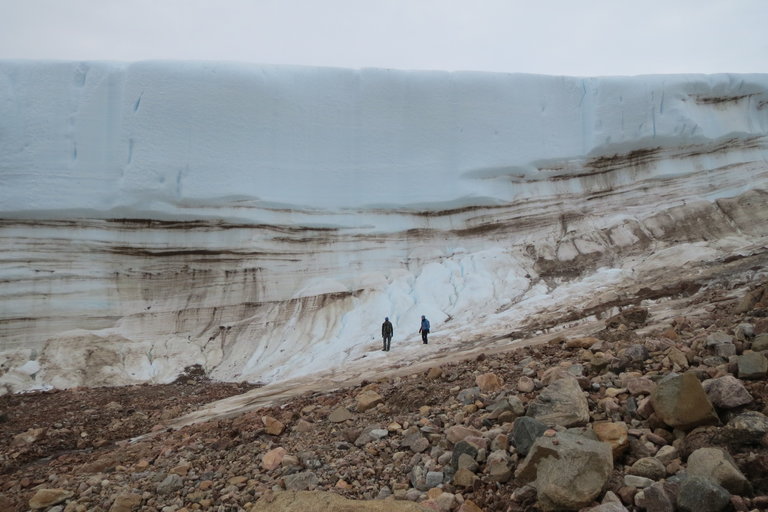
This artist's impression shows a dusty galaxy in the distant Universe that is forming stars at a rate much higher than in our Milky Way. New ALMA observations have allowed scientists to lift the veil of dust and see what was previously inaccessible -- that such starburst galaxies have an excess of massive stars as compared to more peaceful galaxies.
Probing the distant Universe a team of scientists, led by University of Edinburgh astronomer Zhi-Yu Zhang, used the Atacama Large Millimeter/submillimeter Array (ALMA) to investigate the proportion of massive stars in four distant gas-rich starburst galaxies. These galaxies are seen when the Universe was much younger than it is now so the infant galaxies are unlikely to have undergone many previous episodes of star formation, which might otherwise have confused the results.

Zhang and his team developed a new technique -- analogous to radiocarbon dating (also known as carbon-14 dating) -- to measure the abundances of different types of carbon monoxide in four very distant, dust-shrouded starburst galaxies. They observed the ratio of two types of carbon monoxide containing different isotopes.

"Carbon and oxygen isotopes have different origins," explains Zhang. "18O is produced more in massive stars, and 13C is produced more in low- to intermediate-mass stars." Thanks to the new technique the team was able to peer through the dust in these galaxies and assess for the first time the masses of their stars.

The mass of a star is the most important factor determining how it will evolve. Massive stars shine brilliantly and have short lives and less massive ones, such as the Sun, shine more modestly for billions of years. Knowing the proportions of stars of different masses that are formed in galaxies therefore underpins astronomers' understanding of the formation and evolution of galaxies throughout the history of the Universe. Consequently, it gives us crucial insights about the chemical elements available to form new stars and planets and, ultimately, the number of seed black holes that may coalesce to form the supermassive black holes that we see in the centres of many galaxies.

Co-author Donatella Romano from the INAF-Astrophysics and Space Science Observatory in Bologna explains what the team found: "The ratio of 18O to 13C was about 10 times higher in these starburst galaxies in the early Universe than it is in galaxies such as the Milky Way, meaning that there is a much higher proportion of massive stars within these starburst galaxies."

The ALMA finding is corroborated by another discovery in the local Universe. A team led by Fabian Schneider of the University of Oxford, UK, made spectroscopic measurements with ESO's Very Large Telescope of 800 stars in the gigantic star-forming region 30 Doradus in the Large Magellanic Cloud in order to investigate the overall distribution of stellar ages and initial masses.

Schneider explained, "We found around 30% more stars with masses more than 30 times that of the Sun than expected, and about 70% more than expected above 60 solar masses. Our results challenge the previously predicted 150 solar mass limit for the maximum birth mass of stars and even suggest that stars could have birth masses up to 300 solar masses!"

Read more at Science Daily

Jun 3, 2018

How Earth slows the solar wind to a gentle breeze

A giant magnetic field (swirling blue lines) surrounds Earth. As Earth travels through solar wind (orange area), its magnetic field creates a bow shock in front of itself (pale blue area).
As Earth orbits the sun at supersonic speed, it cuts a path through the solar wind. This fast stream of charged particles, or plasma, launched from the sun's outer layers would bombard Earth's atmosphere if not for the protection of Earth's magnetic field.

Just as a motorboat creates a bow-shaped wave ahead of itself as the hull pushes through the water, Earth creates a similar effect -- called a bow shock -- as it pushes through the solar wind. Scientists have sought to explain how Earth's magnetic field can shove aside the powerful solar wind without unleashing calamity. They have known part of the answer for a long time: the bow shock converts energy from the solar wind to heat stored in electrons and ions. But now, researchers have important new clues about how this process occurs.

A University of Maryland-led study describes the first observations of the process of electron heating in Earth's bow shock. The researchers found that when the electrons in the solar wind encounter the bow shock, they momentarily accelerate to such a high speed that the electron stream becomes unstable and breaks down. This breakdown process robs the electrons of their high speed and converts the energy to heat.

The results add an important new dimension to scientists' understanding of Earth's magnetic field and its ability to protect the planet from harmful particles and radiation. The research paper was published in the journal Physical Review Letters on May 31, 2018.

"If you were to stand on a mountaintop, you might get knocked over by a fast wind," explained Li-Jen Chen, lead author of the study and an associate research scientist in the UMD Department of Astronomy. "Fortunately, as the solar wind crashes into Earth's magnetic field, the bow shock protects us by slowing down this wind and changing it to a nice, warm breeze. We now have a better idea how this happens."

The scientists obtained their data from NASA's Magnetospheric Multiscale (MMS) mission. The MMS mission consists of four identical satellites that carry instruments to study the physics of Earth's magnetic field as it interacts with the solar wind. The satellites obtained three-dimensional measurements every 30 milliseconds, resulting in hundreds of measurements within the bow shock layer. These high-frequency, precise measurements from the MMS mission were critical to the study.

"The extremely fast measurements from MMS allowed us finally to see the electron heating process in the thin shock layer," said Thomas Moore, a senior project scientist at NASA's Goddard Space Flight Center and a co-author of the study. "This is groundbreaking because now we have the ability to identify the mechanism at work, instead of just observing its consequences."

Scientists have known for some time that the bow shock is somehow able to convert the energy in electrons to heat without any direct collisions between the electrons. This means that friction -- a common way to generate heat here on Earth -- is not responsible for electron heating in the bow shock.

"The new observations of electron acceleration at the bow shock rewrite the current understanding of electron heating," said Chen, who is also a research scientist at NASA's Goddard Space Flight Center. "For example, researchers didn't expect that the bow shock could accelerate the solar wind electron stream to the speeds that we observed."

In an earlier phase of the MMS mission, the satellites typically orbited much closer to Earth, so they usually missed the bow shock. However, an unexpected outburst of solar wind pushed the bow shock closer to Earth, allowing the satellites to capture rare and informative data.

Seizing on this advantage, the researchers observed the solar wind's electron stream before, during and after meeting with the bow shock. The electron stream accelerated by the shock only took 90 milliseconds to destabilize and fully break down.

"The study of electron heating is important not just for understanding how the bow shock protects Earth, but potentially for satellites, space travel and maybe exploring other planets in the future," Chen said.

By giving the first clear picture of what electrons at the bow shock are doing, Chen and her collaborators hope to encourage other scientists to perform computer simulations, further space observations and laboratory experiments on electron heating. Chen also looks forward to delving further into the mechanisms by which the bow shock accelerates the electron stream.

Read more at Science Daily

Earliest European evidence of lead pollution uncovered in the Balkans

Blacksmith fire with resilient carbons, grill.
New research from Northumbria University has revealed that metal-related pollution began in the Balkans more than 500 years before it appeared in western Europe, and persisted throughout the Dark Ages and Medieval Period, meaning the region played a far bigger role in mineral exploitation than previously believed.

The study provides a new perspective on both the timing and extent of metallurgy -- the technique of extracting metal from ores prior to heating or working with metals to give them a desired shape -- in the Balkans, and the associated economic change this brought to the region, such as the inception of the Metal Ages.

The findings are published in the journal Proceedings of the National Academy of Sciences (PNAS) today (Monday 28 May 2018).

The exploitation of mineral resources has a broad range of environmental impacts, including metal-contaminated wastewater and the release of microscopic chemical particles into the atmosphere from mining and smelting. As these particles settle on to the surface of a peat bog, an environment in which the sediment develops year on year, a clear history of the bog's development may be established.

Samples recovered from the Crveni Potok peat bog, located on the Serbia/Montenegro border, were geochemically examined by researchers from Northumbria's Department of Geography and Environmental Sciences alongside colleagues from the University of Montpellier and the Romanian Academy. They found the first clear evidence of metal pollution originating from lead in the region dating back to approximately 3600 BC.

The evidence is supported by a concurrent rise in charcoal concentration, which suggests an increase in biomass burning which is potentially related to a broad range of economic activities, including fuel production for metal smelting.

Previously, the oldest European environmental pollution dating to circa 3000 BC had been found in southern Spain, but the new data from Crveni Potok show that metal pollution was evident in this region of eastern Europe more than 500 years earlier. This evidence is the earliest documented in European environmental records and indicates environmental pollution from metallurgy at a time when Britons were still in the Stone Age. This confirms that the Balkans were not only the birthplace of metallurgy in Europe, but also of metallic pollution.

Furthermore, levels of lead pollution decreased dramatically in western Europe after the collapse of the Roman Empire, a feature not observed in this Balkan record. This suggests that the region -- which is metal rich -- should be considered more of a major player in environmental metal pollution through Dark and Middle Ages than previously thought.

This contrast between eastern and western Europe indicates that while western Europe was in the 'Dark Ages' there was significant economic development in the Balkan area with high levels of metal environmental pollution throughout the Medieval period. This confirms the large extent and size of the metalworking industry in the Balkans during this era.

As part of his PhD research Jack Longman uncovered these findings supervised by Dr Vasile Ersek, Senior Lecturer in Physical Geography in the University's Department of Geography and Environmental Sciences.

Dr Ersek explained: "Much of the focus in determining sources of ancient pollution has been on established sources such as the Romans or ancient Greeks, but these findings highlight the crucial role that the Balkan metallurgy has played in the economic development of the area.

"Metallurgy and mining is intimately linked to socioeconomic development, therefore improving our knowledge of how these resources were exploited in the past can help us understand better how societies developed over time. In this respect, the peat bog record from Crveni Potok provides a fascinating history of pollution from the early Bronze Age through to the Industrial Revolution."

Read more at Science Daily

Jun 2, 2018

Weight changes associated with reduced bone strength

Researchers from Hebrew SeniorLife's Institute for Aging Research, Boston University, Beth Israel Deaconess Medical Center, and University of Calgary have found evidence that weight loss can result in worsening bone density, bone architecture and bone strength. The results were published in the Journal of Bone and Mineral Research.

Douglas P. Kiel, MD, MPH, principal investigator for the study said, "The study is significant because it used data on weight changes over 40 years in participants in the Framingham Study. We showed that men and women with both shorter term weight loss over 4-6 years and longer term weight loss over 40 years had more micro-architectural deterioration of their bones than persons who did not lose weight."

The magnitude of changes to the skeleton were clinically significant and translated into an almost three-fold increase in the risk of fracture for those who lost 5% or more weight over 40 years.

Elizabeth (Lisa) Samelson, PhD, senior author of the paper cautioned that "Older adults who are losing weight should be aware of the potential negative effects on the skeleton and may want to consider counteracting these effects through interventions such as weight-bearing exercise and eating a balanced diet. Given that weight loss is highly common in older adults, further work is needed to evaluate if these bone deficits can be prevented through interventions or therapy."

From Science Daily

Synthetic 'tissues' build themselves

Researchers programmed cells to self-assemble into complex structures such as this one with three differently colored layers.
How do complex biological structures -- an eye, a hand, a brain -- emerge from a single fertilized egg? This is the fundamental question of developmental biology, and a mystery still being grappled with by scientists who hope to one day apply the same principles to heal damaged tissues or regrow ailing organs.

Now, in a study published May 31, 2018 in Science, researchers have demonstrated the ability to program groups of individual cells to self-organize into multi-layered structures reminiscent of simple organisms or the first stages of embryonic development.

"What is amazing about biology is that DNA allows all the instructions required to build an elephant to be packed within a tiny embryo," said study senior author Wendell Lim, PhD, chair and Byers Distinguished Professor in the Department of Cellular and Molecular Pharmacology at UCSF, director of the NIH-funded Center for Systems and Synthetic Biology, and co-director of the National Science Foundation-funded Center for Cellular Construction. "DNA encodes an algorithm for growing the organism -- a series of instructions that unfolds in time in a way we still don't really understand. It's easy to get overwhelmed by the complexity of natural systems, so here we set out to understand the minimal set of rules for programming cells to self-assemble into multicellular structures."

A critical part of development is that, as biological structures form, cells communicate with one another and make coordinated, collective decisions about how to structurally organize themselves. To mimic this process, the new research -- led by UCSF postdoctoral researcher Satoshi Toda, PhD, in Lim's lab -- relied on a powerfully customizable synthetic signaling molecule called synNotch (for "synthetic Notch receptor") recently developed in Lim's lab, which allowed the researchers to program cells to respond to specific cell-cell communication signals with bespoke genetic programs.

For example, using synNotch, the researchers engineered cells to respond to specific signals from neighboring cells by producing Velcro-like adhesion molecules called cadherins as well as fluorescent marker proteins. Remarkably, just a few simple forms of collective cell communication were sufficient to cause ensembles of cells to change color and self-organize into multi-layered structures akin to simple organisms or developing tissues.

In their simplest experiment of this sort, the researchers programmed two groups of cells to self-organize into a two-layered sphere. They started with one group of blue cells expressing a signaling protein on their surfaces, and a second group of colorless cells sporting a custom synNotch receptor programmed to detect this signal protein. When isolated from one another, these cell populations did nothing, but when the two groups were mixed, the blue cells activated the synNotch receptors on the clear cells and triggered them to produce sticky cadherins and a green marker protein called GFP. As a result, the colorless cells quickly began to turn green and cluster together, forming a central core surrounded by an outer layer of their partner blue cells.

The researchers went on to program groups of cells to self-assemble in increasingly complex ways, such as building three-layered spheres or starting with a single group of cells that sorted themselves into two distinct groups before forming a layered sphere. They even engineered cells that formed the beginnings of "polarity" -- the distinct front-back, left-right, head-toe axes that define the "body plans" of many multicellular organisms -- by expressing different types of cadherin adhesion molecules that instructed the cellular assemblages to divide into "head" and "tail" sections or to produce four distinct radial "arms."

These more complex cellular programming feats demonstrated that simple starter cells could be programmed to develop over time to form more complex structures, much like a single fertilized egg divides and differentiates to form different parts of the body and distinct tissues like skin, muscle, nerve, and bone. Lim's team showed that these complex spheroids were also self-repairing: when the researchers cut the multi-layered spheroids in half with a micro-guillotine developed by co-authors Lucas R. Blauch and Sindy Tang, PhD, of Stanford University, the remaining cells quickly re-formed and reorganized themselves according to their intrinsic program.

SynNotch was originally developed in the Lim lab by co-author Kole Roybal, PhD, now an assistant professor of microbiology and immunology at UCSF, and Leonardo Morsut, PhD, now an assistant professor of stem cell biology and regenerative medicine at the University of Southern California and co-corresponding author on the new paper.

In the future, Lim imagines programming ever more complex tissue-like cellular structures through multiple layers of synNotch signaling. For example, activation of one synNotch receptor by cell-cell contact or chemical signaling could trigger cells to produce additional distinct synNotch receptors, leading to a cascade of engineered signaling steps. In this way, Lim envisions programming the self-organization of the elaborate structures that would eventually be needed for growing tissues for wound repair or transplant.

"People talk about 3D-printing organs, but that is really quite different from how biology builds tissues. Imagine if you had to build a human by meticulously placing every cell just where it needs to be and gluing it in place," said Lim, who is a Howard Hughes Medical Institute investigator and member of the UCSF Helen Diller Family Comprehensive Cancer Center. "It's equally hard to imagine how you would print a complete organ, then make sure it was hooked up properly to the bloodstream and the rest of the body. The beauty of self-organizing systems is that they are autonomous and compactly encoded. You put in one or a few cells, and they grow and organize, taking care of the microscopic details themselves."

Read more at Science Daily

Where the brain processes spiritual experiences

Stained glass brain
Yale scientists have identified a possible neurobiological home for the spiritual experience -- the sense of connection to something greater than oneself.

Activity in the parietal cortex, an area of the brain involved in awareness of self and others as well as attention processing, seems to be a common element among individuals who have experienced a variety of spiritual experiences, according to a study published online May 29 in the journal Cerebral Cortex.

"Spiritual experiences are robust states that may have profound impacts on people's lives," said Marc Potenza, professor of psychiatry, of the Yale Child Study Center, and of neuroscience. "Understanding the neural bases of spiritual experiences may help us better understand their roles in resilience and recovery from mental health and addictive disorders."

Spiritual experiences can be religious in nature or not, such as feeling of oneness in nature or the absence of self during sporting events. Researchers at Yale and the Spirituality Mind Body Institute at Columbia University interviewed 27 young adults to gather information about past stressful and relaxing experiences as well as their spiritual experiences. The subjects then underwent fMRI scans while listening for the first time to recordings based on their personalized experiences. While individual spiritual experiences differed, researchers noted similar patterns of activity in the parietal cortex as the subjects imagined experiencing the events in the recordings.

Potenza stressed other brain areas are probably also involved in formation of spiritual experiences. The method can help future researchers study spiritual experience and its impact on mental health, he said.

Lisa Miller of Columbia is first author of the study.

From Science Daily