Showing posts with label Nobel Prize. Show all posts

Oct 7, 2020

Nobel Prize in Chemistry 2020: CRISPR/Cas9 method for genome editing

CRISPR/Cas9 gene editing, concept illustration

The Royal Swedish Academy of Sciences has decided to award the Nobel Prize in Chemistry 2020 to Emmanuelle Charpentier, Max Planck Unit for the Science of Pathogens, Berlin, Germany, and Jennifer A. Doudna, University of California, Berkeley, USA "for the development of a method for genome editing."

Genetic scissors: a tool for rewriting the code of life

Emmanuelle Charpentier and Jennifer A. Doudna have discovered one of gene technology's sharpest tools: the CRISPR/Cas9 genetic scissors. Using these, researchers can change the DNA of animals, plants and microorganisms with extremely high precision. This technology has had a revolutionary impact on the life sciences, is contributing to new cancer therapies and may make the dream of curing inherited diseases come true.

Researchers need to modify genes in cells if they are to find out about life's inner workings. This used to be time-consuming, difficult and sometimes impossible work. Using the CRISPR/Cas9 genetic scissors, it is now possible to change the code of life over the course of a few weeks.

"There is enormous power in this genetic tool, which affects us all. It has not only revolutionised basic science, but also resulted in innovative crops and will lead to ground-breaking new medical treatments," says Claes Gustafsson, chair of the Nobel Committee for Chemistry.

As so often in science, the discovery of these genetic scissors was unexpected. During Emmanuelle Charpentier's studies of Streptococcus pyogenes, one of the bacteria that cause the most harm to humanity, she discovered a previously unknown molecule, tracrRNA. Her work showed that tracrRNA is part of bacteria's ancient immune system, CRISPR/Cas, that disarms viruses by cleaving their DNA.

Charpentier published her discovery in 2011. The same year, she initiated a collaboration with Jennifer Doudna, an experienced biochemist with vast knowledge of RNA. Together, they succeeded in recreating the bacteria's genetic scissors in a test tube and simplifying the scissors' molecular components so they were easier to use.

In an epoch-making experiment, they then reprogrammed the genetic scissors. In their natural form, the scissors recognise DNA from viruses, but Charpentier and Doudna proved that they could be controlled so that they can cut any DNA molecule at a predetermined site. Where the DNA is cut it is then easy to rewrite the code of life.

Since Charpentier and Doudna discovered the CRISPR/Cas9 genetic scissors in 2012 their use has exploded. This tool has contributed to many important discoveries in basic research, and plant researchers have been able to develop crops that withstand mould, pests and drought. In medicine, clinical trials of new cancer therapies are underway, and the dream of being able to cure inherited diseases is about to come true. These genetic scissors have taken the life sciences into a new epoch and, in many ways, are bringing the greatest benefit to humankind.

Read more at Science Daily

Oct 6, 2020

Nobel Prize in Physics 2020: Discoveries about black holes


Abstract illustration of black hole.
The Royal Swedish Academy of Sciences has decided to award the Nobel Prize in Physics 2020 with one half to Roger Penrose, University of Oxford, UK, "for the discovery that black hole formation is a robust prediction of the general theory of relativity" and the other half jointly to Reinhard Genzel, Max Planck Institute for Extraterrestrial Physics, Garching, Germany and University of California, Berkeley, USA and Andrea Ghez, University of California, Los Angeles, USA "for the discovery of a supermassive compact object at the centre of our galaxy."

Black holes and the Milky Way's darkest secret

Three Laureates share this year's Nobel Prize in Physics for their discoveries about one of the most exotic phenomena in the universe, the black hole. Roger Penrose showed that the general theory of relativity leads to the formation of black holes. Reinhard Genzel and Andrea Ghez discovered that an invisible and extremely heavy object governs the orbits of stars at the centre of our galaxy. A supermassive black hole is the only currently known explanation.

Roger Penrose used ingenious mathematical methods in his proof that black holes are a direct consequence of Albert Einstein's general theory of relativity. Einstein did not himself believe that black holes really exist, these super-heavyweight monsters that capture everything that enters them. Nothing can escape, not even light.

In January 1965, ten years after Einstein's death, Roger Penrose proved that black holes really can form and described them in detail; at their heart, black holes hide a singularity in which all the known laws of nature cease. His groundbreaking article is still regarded as the most important contribution to the general theory of relativity since Einstein.

Reinhard Genzel and Andrea Ghez each lead a group of astronomers that, since the early 1990s, has focused on a region called Sagittarius A* at the centre of our galaxy. The orbits of the brightest stars closest to the middle of the Milky Way have been mapped with increasing precision. The measurements of these two groups agree, with both finding an extremely heavy, invisible object that pulls on the jumble of stars, causing them to rush around at dizzying speeds. Around four million solar masses are packed together in a region no larger than our solar system.

Using the world's largest telescopes, Genzel and Ghez developed methods to see through the huge clouds of interstellar gas and dust to the centre of the Milky Way. Stretching the limits of technology, they refined new techniques to compensate for distortions caused by the Earth's atmosphere, building unique instruments and committing themselves to long-term research. Their pioneering work has given us the most convincing evidence yet of a supermassive black hole at the centre of the Milky Way.

Read more at Science Daily

Oct 5, 2020

Nobel Prize in Physiology or Medicine 2020: Discovery of Hepatitis C virus


Hepatitis C virus infection medical concept, 3D illustration.
The Nobel Assembly at Karolinska Institutet has today decided to award the 2020 Nobel Prize in Physiology or Medicine jointly to Harvey J. Alter, Michael Houghton and Charles M. Rice for the discovery of Hepatitis C virus.

This year's Nobel Prize is awarded to three scientists who have made a decisive contribution to the fight against blood-borne hepatitis, a major global health problem that causes cirrhosis and liver cancer in people around the world.

Harvey J. Alter, Michael Houghton and Charles M. Rice made seminal discoveries that led to the identification of a novel virus, Hepatitis C virus. Prior to their work, the discovery of the Hepatitis A and B viruses had been critical steps forward, but the majority of blood-borne hepatitis cases remained unexplained. The discovery of Hepatitis C virus revealed the cause of the remaining cases of chronic hepatitis and made possible blood tests and new medicines that have saved millions of lives.

Hepatitis -- a global threat to human health

Liver inflammation, or hepatitis, a combination of the Greek words for liver and inflammation, is mainly caused by viral infections, although alcohol abuse, environmental toxins and autoimmune disease are also important causes. In the 1940's, it became clear that there are two main types of infectious hepatitis. The first, named hepatitis A, is transmitted by polluted water or food and generally has little long-term impact on the patient. The second type is transmitted through blood and bodily fluids and represents a much more serious threat since it can lead to a chronic condition, with the development of cirrhosis and liver cancer. This form of hepatitis is insidious, as otherwise healthy individuals can be silently infected for many years before serious complications arise. Blood-borne hepatitis is associated with significant morbidity and mortality, and causes more than a million deaths per year world-wide, thus making it a global health concern on a scale comparable to HIV-infection and tuberculosis.

An unknown infectious agent

The key to successful intervention against infectious diseases is to identify the causative agent. In the 1960's, Baruch Blumberg determined that one form of blood-borne hepatitis was caused by a virus that became known as Hepatitis B virus, and the discovery led to the development of diagnostic tests and an effective vaccine. Blumberg was awarded the Nobel Prize in Physiology or Medicine in 1976 for this discovery.

At that time, Harvey J. Alter at the US National Institutes of Health was studying the occurrence of hepatitis in patients who had received blood transfusions. Although blood tests for the newly-discovered Hepatitis B virus reduced the number of cases of transfusion-related hepatitis, Alter and colleagues worryingly demonstrated that a large number of cases remained. Tests for Hepatitis A virus infection were also developed around this time, and it became clear that Hepatitis A was not the cause of these unexplained cases.

It was a great source of concern that a significant number of those receiving blood transfusions developed chronic hepatitis due to an unknown infectious agent. Alter and his colleagues showed that blood from these hepatitis patients could transmit the disease to chimpanzees, the only susceptible host besides humans. Subsequent studies also demonstrated that the unknown infectious agent had the characteristics of a virus. Alter's methodical investigations had in this way defined a new, distinct form of chronic viral hepatitis. The mysterious illness became known as "non-A, non-B" hepatitis.

Identification of Hepatitis C virus

Identification of the novel virus was now a high priority. All the traditional techniques for virus hunting were put to use but, in spite of this, the virus eluded isolation for over a decade. Michael Houghton, working for the pharmaceutical firm Chiron, undertook the arduous work needed to isolate the genetic sequence of the virus. Houghton and his co-workers created a collection of DNA fragments from nucleic acids found in the blood of an infected chimpanzee. The majority of these fragments came from the genome of the chimpanzee itself, but the researchers predicted that some would be derived from the unknown virus. On the assumption that antibodies against the virus would be present in blood taken from hepatitis patients, the investigators used patient sera to identify cloned viral DNA fragments encoding viral proteins. Following a comprehensive search, one positive clone was found. Further work showed that this clone was derived from a novel RNA virus belonging to the Flavivirus family and it was named Hepatitis C virus. The presence of antibodies in chronic hepatitis patients strongly implicated this virus as the missing agent.

The discovery of Hepatitis C virus was decisive; but one essential piece of the puzzle was missing: could the virus alone cause hepatitis? To answer this question the scientists had to investigate if the cloned virus was able to replicate and cause disease. Charles M. Rice, a researcher at Washington University in St. Louis, along with other groups working with RNA viruses, noted a previously uncharacterized region in the end of the Hepatitis C virus genome that they suspected could be important for virus replication. Rice also observed genetic variations in isolated virus samples and hypothesized that some of them might hinder virus replication. Through genetic engineering, Rice generated an RNA variant of Hepatitis C virus that included the newly defined region of the viral genome and was devoid of the inactivating genetic variations. When this RNA was injected into the liver of chimpanzees, virus was detected in the blood and pathological changes resembling those seen in humans with the chronic disease were observed. This was the final proof that Hepatitis C virus alone could cause the unexplained cases of transfusion-mediated hepatitis.

Read more at Science Daily

Oct 9, 2019

Nobel Prize in Chemistry 2019: Lithium-ion batteries

Lithium-ion batteries concept
The Royal Swedish Academy of Sciences has decided to award the Nobel Prize in Chemistry 2019 to John B. Goodenough, of The University of Texas at Austin, USA, M. Stanley Whittingham, of Binghamton University, State University of New York, USA, and Akira Yoshino of Asahi Kasei Corporation, Tokyo, Japan, and Meijo University, Nagoya, Japan "for the development of lithium-ion batteries."

They created a rechargeable world

The Nobel Prize in Chemistry 2019 rewards the development of the lithium-ion battery. This lightweight, rechargeable and powerful battery is now used in everything from mobile phones to laptops and electric vehicles. It can also store significant amounts of energy from solar and wind power, making possible a fossil fuel-free society.

Lithium-ion batteries are used globally to power the portable electronics that we use to communicate, work, study, listen to music and search for knowledge. Lithiumion batteries have also enabled the development of long-range electric cars and the storage of energy from renewable sources, such as solar and wind power.

The foundation of the lithium-ion battery was laid during the oil crisis in the 1970s. Stanley Whittingham worked on developing methods that could lead to fossil fuel-free energy technologies. He started to research superconductors and discovered an extremely energy-rich material, which he used to create an innovative cathode in a lithium battery. This was made from titanium disulphide which, at a molecular level, has spaces that can house -- intercalate -- lithium ions.

The battery's anode was partially made from metallic lithium, which has a strong drive to release electrons. This resulted in a battery that literally had great potential, just over two volts. However, metallic lithium is reactive and the battery was too explosive to be viable.

John Goodenough predicted that the cathode would have even greater potential if it was made using a metal oxide instead of a metal sulphide. After a systematic search, in 1980 he demonstrated that cobalt oxide with intercalated lithium ions can produce as much as four volts. This was an important breakthrough and would lead to much more powerful batteries.

With Goodenough's cathode as a basis, Akira Yoshino created the first commercially viable lithium-ion battery in 1985. Rather than using reactive lithium in the anode, he used petroleum coke, a carbon material that, like the cathode's cobalt oxide, can intercalate lithium ions.

The result was a lightweight, hardwearing battery that could be charged hundreds of times before its performance deteriorated. The advantage of lithium-ion batteries is that they are not based upon chemical reactions that break down the electrodes, but upon lithium ions flowing back and forth between the anode and cathode.

Read more at Science Daily

Oct 8, 2019

2019 Nobel Prize in Physics: Evolution of the universe and discovery of exoplanet orbiting solar-type star

Illustration of exoplanet orbiting star.
The Royal Swedish Academy of Sciences has decided to award the Nobel Prize in Physics 2019 "for contributions to our understanding of the evolution of the universe and Earth's place in the cosmos" with one half to James Peebles of Princeton University, USA, "for theoretical discoveries in physical cosmology" and the other half jointly to Michel Mayor of the University of Geneva, Switzerland, and Didier Queloz of the University of Geneva, Switzerland, and the University of Cambridge, UK, "for the discovery of an exoplanet orbiting a solar-type star."

New perspectives on our place in the universe

This year's Nobel Prize in Physics rewards new understanding of the universe's structure and history, and the first discovery of a planet orbiting a solar-type star outside our solar system.

James Peebles' insights into physical cosmology have enriched the entire field of research and laid a foundation for the transformation of cosmology over the last fifty years, from speculation to science. His theoretical framework, developed since the mid-1960s, is the basis of our contemporary ideas about the universe.

The Big Bang model describes the universe from its very first moments, almost 14 billion years ago, when it was extremely hot and dense. Since then, the universe has been expanding, becoming larger and colder. Barely 400,000 years after the Big Bang, the universe became transparent and light rays were able to travel through space. Even today, this ancient radiation is all around us and, coded into it, many of the universe's secrets are hiding. Using his theoretical tools and calculations, James Peebles was able to interpret these traces from the infancy of the universe and discover new physical processes.

The results showed us a universe in which just five per cent of its content is known, the matter which constitutes stars, planets, trees -- and us. The rest, 95 per cent, is unknown dark matter and dark energy. This is a mystery and a challenge to modern physics.

In October 1995, Michel Mayor and Didier Queloz announced the first discovery of a planet outside our solar system, an exoplanet, orbiting a solar-type star in our home galaxy, the Milky Way. At the Haute-Provence Observatory in southern France, using custom-made instruments, they were able to see planet 51 Pegasi b, a gaseous ball comparable with the solar system's biggest gas giant, Jupiter.

This discovery started a revolution in astronomy and over 4,000 exoplanets have since been found in the Milky Way. Strange new worlds are still being discovered, with an incredible wealth of sizes, forms and orbits. They challenge our preconceived ideas about planetary systems and are forcing scientists to revise their theories of the physical processes behind the origins of planets. With numerous projects planned to start searching for exoplanets, we may eventually find an answer to the eternal question of whether other life is out there.

Read more at Science Daily

Oct 7, 2019

Nobel Prize in Physiology or Medicine 2019: How cells sense and adapt to oxygen availability

Marathon runners
The Nobel Assembly at Karolinska Institutet has today decided to award the 2019 Nobel Prize in Physiology or Medicine jointly to William G. Kaelin Jr., Sir Peter J. Ratcliffe and Gregg L. Semenza for their discoveries of how cells sense and adapt to oxygen availability.

Animals need oxygen for the conversion of food into useful energy. The fundamental importance of oxygen has been understood for centuries, but how cells adapt to changes in levels of oxygen has long been unknown.

William G. Kaelin Jr., Sir Peter J. Ratcliffe and Gregg L. Semenza discovered how cells can sense and adapt to changing oxygen availability. They identified molecular machinery that regulates the activity of genes in response to varying levels of oxygen.

The seminal discoveries by this year's Nobel Laureates revealed the mechanism for one of life's most essential adaptive processes. They established the basis for our understanding of how oxygen levels affect cellular metabolism and physiological function. Their discoveries have also paved the way for promising new strategies to fight anemia, cancer and many other diseases.

Oxygen at center stage

Oxygen, with the formula O2, makes up about one fifth of Earth's atmosphere. Oxygen is essential for animal life: it is used by the mitochondria present in virtually all animal cells in order to convert food into useful energy. Otto Warburg, the recipient of the 1931 Nobel Prize in Physiology or Medicine, revealed that this conversion is an enzymatic process.

During evolution, mechanisms developed to ensure a sufficient supply of oxygen to tissues and cells. The carotid body, adjacent to large blood vessels on both sides of the neck, contains specialized cells that sense the blood's oxygen levels. The 1938 Nobel Prize in Physiology or Medicine to Corneille Heymans awarded discoveries showing how blood oxygen sensing via the carotid body controls our respiratory rate by communicating directly with the brain.

HIF enters the scene

In addition to the carotid body-controlled rapid adaptation to low oxygen levels (hypoxia), there are other fundamental physiological adaptations. A key physiological response to hypoxia is the rise in levels of the hormone erythropoietin (EPO), which leads to increased production of red blood cells (erythropoiesis). The importance of hormonal control of erythropoiesis was already known at the beginning of the 20th century, but how this process was itself controlled by O2 remained a mystery.

Gregg Semenza studied the EPO gene and how it is regulated by varying oxygen levels. By using gene-modified mice, specific DNA segments located next to the EPO gene were shown to mediate the response to hypoxia. Sir Peter Ratcliffe also studied O2-dependent regulation of the EPO gene, and both research groups found that the oxygen sensing mechanism was present in virtually all tissues, not only in the kidney cells where EPO is normally produced. These were important findings showing that the mechanism was general and functional in many different cell types.

Semenza wished to identify the cellular components mediating this response. In cultured liver cells he discovered a protein complex that binds to the identified DNA segment in an oxygen-dependent manner. He called this complex the hypoxia-inducible factor (HIF) . Extensive efforts to purify the HIF complex began, and in 1995, Semenza was able to publish some of his key findings, including identification of the genes encoding HIF. HIF was found to consist of two different DNA-binding proteins, so called transcription factors, now named HIF-1α and ARNT. Now the researchers could begin solving the puzzle, allowing them to understand which additional components were involved and how the machinery works.

VHL: an unexpected partner

When oxygen levels are high, cells contain very little HIF-1α. However, when oxygen levels are low, the amount of HIF-1α increases so that it can bind to and thus regulate the EPO gene as well as other genes with HIF-binding DNA segments. Several research groups showed that HIF-1α, which is normally rapidly degraded, is protected from degradation in hypoxia. At normal oxygen levels, a cellular machine called the proteasome, recognized by the 2004 Nobel Prize in Chemistry to Aaron Ciechanover, Avram Hershko and Irwin Rose, degrades HIF-1α. Under such conditions a small peptide, ubiquitin, is added to the HIF-1α protein. Ubiquitin functions as a tag for proteins destined for degradation in the proteasome. How ubiquitin binds to HIF-1α in an oxygen-dependent manner remained a central question.

The answer came from an unexpected direction. At about the same time as Semenza and Ratcliffe were exploring the regulation of the EPO gene, cancer researcher William Kaelin, Jr. was researching an inherited syndrome, von Hippel-Lindau's disease (VHL disease). This genetic disease leads to dramatically increased risk of certain cancers in families with inherited VHL mutations. Kaelin showed that the VHL gene encodes a protein that prevents the onset of cancer. Kaelin also showed that cancer cells lacking a functional VHL gene express abnormally high levels of hypoxia-regulated genes; but that when the VHL gene was reintroduced into cancer cells, normal levels were restored. This was an important clue showing that VHL was somehow involved in controlling responses to hypoxia. Additional clues came from several research groups showing that VHL is part of a complex that labels proteins with ubiquitin, marking them for degradation in the proteasome. Ratcliffe and his research group then made a key discovery: demonstrating that VHL can physically interact with HIF-1α and is required for its degradation at normal oxygen levels. This conclusively linked VHL to HIF-1α.

Oxygen sHIFts the balance

Many pieces had fallen into place, but what was still lacking was an understanding of how O2 levels regulate the interaction between VHL and HIF-1α. The search focused on a specific portion of the HIF-1α protein known to be important for VHL-dependent degradation, and both Kaelin and Ratcliffe suspected that the key to O2-sensing resided somewhere in this protein domain. In 2001, in two simultaneously published articles they showed that under normal oxygen levels, hydroxyl groups are added at two specific positions in HIF-1α. This protein modification, called prolyl hydroxylation, allows VHL to recognize and bind to HIF-1α and thus explained how normal oxygen levels control rapid HIF-1α degradation with the help of oxygen-sensitive enzymes (so-called prolyl hydroxylases). Further research by Ratcliffe and others identified the responsible prolyl hydroxylases. It was also shown that the gene activating function of HIF-1α was regulated by oxygen-dependent hydroxylation. The Nobel Laureates had now elucidated the oxygen sensing mechanism and had shown how it works.

Oxygen shapes physiology and pathology

Thanks to the groundbreaking work of these Nobel Laureates, we know much more about how different oxygen levels regulate fundamental physiological processes. Oxygen sensing allows cells to adapt their metabolism to low oxygen levels: for example, in our muscles during intense exercise. Other examples of adaptive processes controlled by oxygen sensing include the generation of new blood vessels and the production of red blood cells. Our immune system and many other physiological functions are also fine-tuned by the O2-sensing machinery. Oxygen sensing has even been shown to be essential during fetal development for controlling normal blood vessel formation and placenta development.

Read more at Science Daily

Oct 9, 2018

Nobel Prize in Economics 2018

Technological Earth concept
The Royal Swedish Academy of Sciences has decided to award the Sveriges Riksbank Prize in Economic Sciences in Memory of Alfred Nobel 2018 to William D. Nordhaus, Yale University, New Haven, USA "for integrating climate change into long-run macroeconomic analysis" and Paul M. Romer, NYU Stern School of Business, New York, USA "for integrating technological innovations into long-run macroeconomic analysis."

Integrating innovation and climate with economic growth

William D. Nordhaus and Paul M. Romer have designed methods for addressing some of our time's most basic and pressing questions about how we create long-term sustained and sustainable economic growth.

At its heart, economics deals with the management of scarce resources. Nature dictates the main constraints on economic growth and our knowledge determines how well we deal with these constraints. This year's Laureates William Nordhaus and Paul Romer have significantly broadened the scope of economic analysis by constructing models that explain how the market economy interacts with nature and knowledge.

Technological change

Romer demonstrates how knowledge can function as a driver of long-term economic growth. When annual economic growth of a few per cent accumulates over decades, it transforms people's lives. Previous macroeconomic research had emphasised technological innovation as the primary driver of economic growth, but had not modelled how economic decisions and market conditions determine the creation of new technologies. Paul Romer solved this problem by demonstrating how economic forces govern the willingness of firms to produce new ideas and innovations.

Romer's solution, which was published in 1990, laid the foundation of what is now called endogenous growth theory. The theory is both conceptual and practical, as it explains how ideas are different to other goods and require specific conditions to thrive in a market. Romer's theory has generated vast amounts of new research into the regulations and policies that encourage new ideas and long-term prosperity.

Climate change

Nordhaus' findings deal with interactions between society and nature. Nordhaus decided to work on this topic in the 1970s, as scientists had become increasingly worried about the combustion of fossil fuel resulting in a warmer climate. In the mid-1990s, he became the first person to create an integrated assessment model, i.e. a quantitative model that describes the global interplay between the economy and the climate. His model integrates theories and empirical results from physics, chemistry and economics. Nordhaus' model is now widely spread and is used to simulate how the economy and the climate co-evolve. It is used to examine the consequences of climate policy interventions, for example carbon taxes.

Read more at Science Daily

Oct 3, 2018

Nobel Prize in Chemistry 2018

Abstract molecular structure
The Royal Swedish Academy of Sciences has decided to award the Nobel Prize in Chemistry 2018 with one half to Frances H. Arnold, California Institute of Technology, Pasadena, USA "for the directed evolution of enzymes" and the other half jointly to George P. Smith, University of Missouri, Columbia, USA and Sir Gregory P. Winter, MRC Laboratory of Molecular Biology, Cambridge, UK "for the phage display of peptides and antibodies."

They harnessed the power of evolution

The power of evolution is revealed through the diversity of life. The 2018 Nobel Laureates in Chemistry have taken control of evolution and used it for purposes that bring the greatest benefit to humankind. Enzymes produced through directed evolution are used to manufacture everything from biofuels to pharmaceuticals. Antibodies evolved using a method called phage display can combat autoimmune diseases and in some cases cure metastatic cancer.

Since the first seeds of life arose around 3.7 billion years ago, almost every crevice on Earth has filled with different organisms. Life has spread to hot springs, deep oceans and dry deserts, all because evolution has solved a number of chemical problems. Life's chemical tools -- proteins -- have been optimised, changed and renewed, creating incredible diversity.

This year's Nobel Laureates in Chemistry have been inspired by the power of evolution and used the same principles -- genetic change and selection -- to develop proteins that solve humankind's chemical problems.

One half of this year's Nobel Prize in Chemistry is awarded to Frances H. Arnold. In 1993, she conducted the first directed evolution of enzymes, which are proteins that catalyse chemical reactions. Since then, she has refined the methods that are now routinely used to develop new catalysts. The uses of Frances Arnold's enzymes include more environmentally friendly manufacturing of chemical substances, such as pharmaceuticals, and the production of renewable fuels for a greener transport sector.

The other half of this year's Nobel Prize in Chemistry is shared by George P. Smith and Sir Gregory P. Winter. In 1985, George Smith developed an elegant method known as phage display, where a bacteriophage -- a virus that infects bacteria -- can be used to evolve new proteins. Gregory Winter used phage display for the directed evolution of antibodies, with the aim of producing new pharmaceuticals. The first one based on this method, adalimumab, was approved in 2002 and is used for rheumatoid arthritis, psoriasis and inflammatory bowel diseases. Since then, phage display has produced anti-bodies that can neutralise toxins, counteract autoimmune diseases and cure metastatic cancer.

Read more at Science Daily

Oct 2, 2018

Nobel Prize in Physics 2018

Laser beam light effect
The inventions being honored this year have revolutionised laser physics. Extremely small objects and incredibly rapid processes are now being seen in a new light. Advanced precision instruments are opening up unexplored areas of research and a multitude of industrial and medical applications.

The Royal Swedish Academy of Sciences has decided to award the Nobel Prize in Physics 2018 "for groundbreaking inventions in the field of laser physics" with one half to Arthur Ashkin, Bell Laboratories, Holmdel, USA "for the optical tweezers and their application to biological systems" and the other half jointly to Gérard Mourou, École Polytechnique, Palaiseau, France and University of Michigan, Ann Arbor, USA and Donna Strickland, University of Waterloo, Canada "for their method of generating high-intensity, ultra-short optical pulses."

Arthur Ashkin invented optical tweezers that grab particles, atoms, viruses and other living cells with their laser beam fingers. This new tool allowed Ashkin to realise an old dream of science fiction -- using the radiation pressure of light to move physical objects. He succeeded in getting laser light to push small particles towards the centre of the beam and to hold them there. Optical tweezers had been invented.

A major breakthrough came in 1987, when Ashkin used the tweezers to capture living bacteria without harming them. He immediately began studying biological systems and optical tweezers are now widely used to investigate the machinery of life.

Gérard Mourou and Donna Strickland paved the way towards the shortest and most intense laser pulses ever created by humankind. Their revolutionary article was published in 1985 and was the foundation of Strickland's doctoral thesis.

Using an ingenious approach, they succeeded in creating ultrashort high-intensity laser pulses without destroying the amplifying material. First they stretched the laser pulses in time to reduce their peak power, then amplified them, and finally compressed them. If a pulse is compressed in time and becomes shorter, then more light is packed together in the same tiny space -- the intensity of the pulse increases dramatically.

Strickland and Mourou's newly invented technique, called chirped pulse amplification, CPA, soon became standard for subsequent high-intensity lasers. Its uses include the millions of corrective eye surgeries that are conducted every year using the sharpest of laser beams.

Read more at Science Daily

Oct 1, 2018

2018 Nobel Prize in Physiology or Medicine

Upper left: Activation of T cells requires that the T-cell receptor binds to structures on other immune cells recognized as 'non-self'. A protein functioning as a T-cell accelerator is also required for T cell activation. CTLA- 4 functions as a brake on T cells that inhibits the function of the accelerator. Lower left: Antibodies (green) against CTLA-4 block the function of the brake leading to activation of T cells and attack on cancer cells. Upper right: PD-1 is another T-cell brake that inhibits T-cell activation. Lower right: Antibodies against PD-1 inhibit the function of the brake leading to activation of T cells and highly efficient attack on cancer cells.
The Nobel Assembly at Karolinska Institutet has today decided to award the 2018 Nobel Prize in Physiology or Medicine jointly to James P. Allison and Tasuku Honjo for their discovery of cancer therapy by inhibition of negative immune regulation.

Cancer kills millions of people every year and is one of humanity's greatest health challenges. By stimulating the inherent ability of our immune system to attack tumor cells this year's Nobel Laureates have established an entirely new principle for cancer therapy.

James P. Allison studied a known protein that functions as a brake on the immune system. He realized the potential of releasing the brake and thereby unleashing our immune cells to attack tumors. He then developed this concept into a brand new approach for treating patients.

In parallel, Tasuku Honjo discovered a protein on immune cells and, after careful exploration of its function, eventually revealed that it also operates as a brake, but with a different mechanism of action. Therapies based on his discovery proved to be strikingly effective in the fight against cancer.

Allison and Honjo showed how different strategies for inhibiting the brakes on the immune system can be used in the treatment of cancer. The seminal discoveries by the two Laureates constitute a landmark in our fight against cancer.

Can our immune defense be engaged for cancer treatment?

Cancer comprises many different diseases, all characterized by uncontrolled proliferation of abnormal cells with capacity for spread to healthy organs and tissues. A number of therapeutic approaches are available for cancer treatment, including surgery, radiation, and other strategies, some of which have been awarded previous Nobel Prizes. These include methods for hormone treatment for prostate cancer (Huggins, 1966), chemotherapy (Elion and Hitchins, 1988), and bone marrow transplantation for leukemia (Thomas 1990). However, advanced cancer remains immensely difficult to treat, and novel therapeutic strategies are desperately needed.

In the late 19th century and beginning of the 20th century the concept emerged that activation of the immune system might be a strategy for attacking tumor cells. Attempts were made to infect patients with bacteria to activate the defense. These efforts only had modest effects, but a variant of this strategy is used today in the treatment of bladder cancer. It was realized that more knowledge was needed. Many scientists engaged in intense basic research and uncovered fundamental mechanisms regulating immunity and also showed how the immune system can recognize cancer cells. Despite remarkable scientific progress, attempts to develop generalizable new strategies against cancer proved difficult.

Accelerators and brakes in our immune system

The fundamental property of our immune system is the ability to discriminate "self" from "non-self" so that invading bacteria, viruses and other dangers can be attacked and eliminated. T cells, a type of white blood cell, are key players in this defense. T cells were shown to have receptors that bind to structures recognized as non-self and such interactions trigger the immune system to engage in defense. But additional proteins acting as T-cell accelerators are also required to trigger a full-blown immune response (see Figure). Many scientists contributed to this important basic research and identified other proteins that function as brakes on the T cells, inhibiting immune activation. This intricate balance between accelerators and brakes is essential for tight control. It ensures that the immune system is sufficiently engaged in attack against foreign microorganisms while avoiding the excessive activation that can lead to autoimmune destruction of healthy cells and tissues.

A new principle for immune therapy

During the 1990s, in his laboratory at the University of California, Berkeley, James P. Allison studied the T-cell protein CTLA-4. He was one of several scientists who had made the observation that CTLA-4 functions as a brake on T cells. Other research teams exploited the mechanism as a target in the treatment of autoimmune disease. Allison, however, had an entirely different idea. He had already developed an antibody that could bind to CTLA-4 and block its function (see Figure). He now set out to investigate if CTLA-4 blockade could disengage the T-cell brake and unleash the immune system to attack cancer cells. Allison and co-workers performed a first experiment at the end of 1994, and in their excitement it was immediately repeated over the Christmas break. The results were spectacular. Mice with cancer had been cured by treatment with the antibodies that inhibit the brake and unlock antitumor T-cell activity. Despite little interest from the pharmaceutical industry, Allison continued his intense efforts to develop the strategy into a therapy for humans. Promising results soon emerged from several groups, and in 2010 an important clinical study showed striking effects in patients with advanced melanoma, a type of skin cancer. In several patients signs of remaining cancer disappeared. Such remarkable results had never been seen before in this patient group.

Discovery of PD-1 and its importance for cancer therapy


In 1992, a few years before Allison's discovery, Tasuku Honjo discovered PD-1, another protein expressed on the surface of T-cells. Determined to unravel its role, he meticulously explored its function in a series of elegant experiments performed over many years in his laboratory at Kyoto University. The results showed that PD-1, similar to CTLA-4, functions as a T-cell brake, but operates by a different mechanism (see Figure). In animal experiments, PD-1 blockade was also shown to be a promising strategy in the fight against cancer, as demonstrated by Honjo and other groups. This paved the way for utilizing PD-1 as a target in the treatment of patients. Clinical development ensued, and in 2012 a key study demonstrated clear efficacy in the treatment of patients with different types of cancer. Results were dramatic, leading to long-term remission and possible cure in several patients with metastatic cancer, a condition that had previously been considered essentially untreatable.

Immune checkpoint therapy for cancer today and in the future

After the initial studies showing the effects of CTLA-4 and PD-1 blockade, the clinical development has been dramatic. We now know that the treatment, often referred to as "immune checkpoint therapy," has fundamentally changed the outcome for certain groups of patients with advanced cancer. Similar to other cancer therapies, adverse side effects are seen, which can be serious and even life threatening. They are caused by an overactive immune response leading to autoimmune reactions, but are usually manageable. Intense continuing research is focused on elucidating mechanisms of action, with the aim of improving therapies and reducing side effects.

Of the two treatment strategies, checkpoint therapy against PD-1 has proven more effective and positive results are being observed in several types of cancer, including lung cancer, renal cancer, lymphoma and melanoma. New clinical studies indicate that combination therapy, targeting both CTLA-4 and PD-1, can be even more effective, as demonstrated in patients with melanoma. Thus, Allison and Honjo have inspired efforts to combine different strategies to release the brakes on the immune system with the aim of eliminating tumor cells even more efficiently. A large number of checkpoint therapy trials are currently underway against most types of cancer, and new checkpoint proteins are being tested as targets.

Read more at Science Daily

Oct 4, 2017

2017 Nobel Prize in Chemistry Awarded to Pioneers in Cryo-Electron Microscopy

A screen displays portraits of winners of the 2017 Nobel Prize in Chemistry on October 4, 2017 at the Royal Swedish Academy of Sciences in Stockholm, Sweden (L-R) Jacques Dubochet from Switzerland, Joachim Frank from the US, and Richard Henderson from Britain.
A revolutionary technique dubbed cryo-electron microscopy, which has shed light on the Zika virus and an Alzheimer's enzyme, earned scientists Jacques Dubochet, Joachim Frank, and Richard Henderson the Nobel Chemistry Prize on Wednesday.

Thanks to the international team's "cool method," which uses electron beams to examine the tiniest structures of cells, "researchers can now freeze biomolecules mid-movement and visualize processes they have never previously seen," the Nobel chemistry committee said.

This has been "decisive for both the basic understanding of life's chemistry and for the development of pharmaceuticals," it added.

The ultra-sensitive imaging method allows molecules to be flash-frozen and studied in their natural form, without the need for dyes.

It has laid bare never-before-seen details of the tiny protein machines that run all cells.

"When researchers began to suspect that the Zika virus was causing the epidemic of brain-damaged newborns in Brazil, they turned to cryo-EM (electron microscopy) to visualize the virus," the committee said.

Frank, a 77-year-old, German-born biochemistry professor at Columbia University in New York, was woken from his sleep when the committee announced the prize in Stockholm, six hours ahead.

"There are so many other discoveries every day, I was in a way speechless," he said. "It's wonderful news."

In the first half of the 20th century, biomolecules – proteins, DNA, and RNA – were terra incognita on the map of biochemistry.

Because the powerful electron beam destroys biological material, electron microscopes were long thought to be useful only to study dead matter.

Tea party to celebrate

But 72-year-old Henderson, from the MRC Laboratory of Molecular Biology in Cambridge, used an electron microscope in 1990 to generate a three-dimensional image of a protein at atomic resolution, a groundbreaking discovery, which proved the technology's potential.

Frank made it widely usable between 1975 and 1986, developing a method to transform the electron microscope's fuzzy two-dimensional images into sharp, 3D composites.

Dubochet, today an honorary professor of biophysics at the University of Lausanne, added water.

Now 75, he discovered in the 1980s how to cool water so quickly that it solidifies in liquid form around a biological sample, allowing the molecules to retain their natural shape even in a vacuum.

The electron microscope's every nut and bolt has been optimized since these discoveries.

The required atomic resolution was reached in 2013, and researchers "can now routinely produce three-dimensional structures of biomolecules," according to the Nobel committee.

The trio will share the prize money of nine million Swedish kronor (around $1.1 million or 943,100 euros).

"Normally what I'd do if I was in Cambridge, we will have a party around tea-time in the lab, but I expect we'll have it tomorrow instead," said Henderson.

'Beautiful pictures'

The prize announcement was praised by the scientific community and observers around the world.

"By solving more and more structures at the atomic level we can answer biological questions, such as how drugs get into cells, that were simply unanswerable a few years ago," Jim Smith, science director at the London-based biomedical research charity Wellcome, said in a statement.

Daniel Davis, immunology professor at the University of Manchester, said details of crucial molecules and proteins that make the human immune system function, can now be seen like never before.

"It has been used in visualizing the way in which antibodies can work to stop viruses being dangerous, leading to new ideas for medicines — as just one example," he said.

Read more at Science Daily

Oct 3, 2017

US Scientists Win 2017 Nobel Prize in Physics for Gravitational Wave Discovery

Laureates (L-R) Rainer Weiss, Barry C. Barish and Kip S. Thorne are pictured on a display during the announcement of the 2017 Nobel Prize winners in Physics on October 3, 2017, at the Royal Swedish Academy of Sciences in Stockholm.
US astrophysicists Barry Barish, Kip Thorne, and Rainer Weiss were awarded the Nobel Physics Prize Tuesday for the discovery of gravitational waves, offering a sneak peak at the universe's very beginnings.

Predicted by Albert Einstein a century ago as part of his theory of general relativity, gravitational waves are "ripples" in space-time — the theoretical fabric of the cosmos.

They are the aftermath of violent galactic events, such as colliding black holes or imploding massive stars, and can reveal events that took place billions of years ago.

The first detection of gravitational waves happened in September 2015 at the US-based Laser Interferometer Gravitational-wave Observatory (LIGO), where the three Nobel laureates worked.

"Their discovery shook the world," said Goran K. Hansson, the head of the Swedish Royal Academy of Sciences which selects the Nobel laureates.

Announced in February 2016 to great excitement in the scientific community, the discovery was hailed as the historic culmination of decades of research. It has clinched numerous astrophysics prizes.

Traveling at speed of light


In 1984, Thorne, now 77, and Weiss, 85, co-created LIGO at the prestigious California Institute of Technology, which has taken home 18 Nobels since the prizes were first awarded in 1901.

Barish, 81, joined the project in 1994 and helped bring it to completion. LIGO is now a collaboration between more than 1,000 researchers from 20 countries.

The 2015 observation was of two black holes smashing into each other some 1.3 billion light-years away.

"Although the signal was extremely weak when it reached Earth, it is already promising a revolution in astrophysics," the Nobel academy said.

"Gravitational waves are an entirely new way of following the most violent events in space and testing the limits of our knowledge."

Gravitational waves are minuscule, and near-undetectable because they interact very weakly with matter and travel through the universe at the speed of light unimpeded.

The ripples emitted by a pair of merging black holes, for example, would stretch a one-million-kilometer (621,000-mile) ruler on Earth by less than the size of an atom.

Since 2015, the enigmatic ripples have been detected three more times: twice by LIGO and once by the Virgo detector located at the European Gravitational Observatory (EGO) in Cascina, Italy.

"Einstein was convinced it would never be possible to measure them," the jury said.

"The LIGO project's achievement was using a pair of gigantic laser interferometers to measure a change thousands of times smaller than an atomic nucleus, as the gravitational wave passed the Earth."

'Universe full of music'

Black holes emit no light, and can only be observed through gravitational waves that occur when they collide and violently merge — offering scientists a means of studying them.

"If we could hear all the waves and not only the strongest ones, the entire universe would be full of music, like birds chirping in a forest, with a louder tone here and a quieter one there," the academy said.

Weiss was awarded half the prize, which comes with nine million Swedish kronor (about $1.1 million or 940,000 euros), while Barish and Thorne shared the rest.

Read more at Seeker

Oct 2, 2017

2017 Nobel Medicine Prize Awarded to US Geneticists for Circadian Clock Research

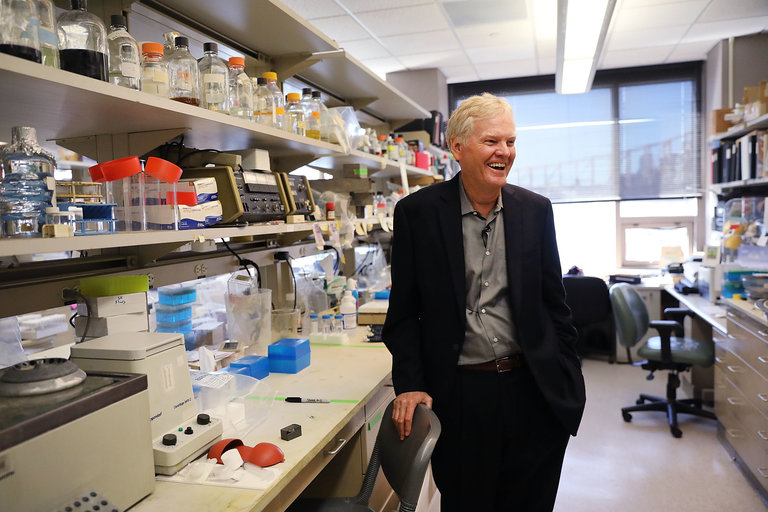
Rockefeller University biologist Michael Young stands in his lab after winning the Nobel Prize in Physiology or Medicine on October 2, 2017 in New York City. Young discovered the molecular mechanism of circadian rhythm, which governs biological clocks that regulate sleep, eating behavior, and metabolism.
US geneticists Jeffrey C. Hall, Michael Rosbash, and Michael W. Young were awarded the Nobel Medicine Prize on Monday for shedding light on the biological clock that governs the sleep-wake cycles of most living things.

The team's work revealed the role of genes in setting the “circadian clock” that regulates sleep and eating patterns, hormones and body temperature, the Nobel committee said.

“Their discoveries explain how plants, animals and humans adapt their biological rhythm so that it is synchronized with the Earth's revolutions.”

All life on Earth is tuned to the rotation of our planet. Scientists have long known that living organisms, including humans, have an internal timekeeper that helps them anticipate and adapt to the rhythm of the day.

Hall, 72, Rosbash, 73, and Young, 68, “were able to peek inside our biological clock and elucidate its inner workings,” the jury said.

They identified genes that regulate the clock, and the mechanism by which light can synchronize it.

Rosbash told Swedish Radio he was rattled when the committee's call woke him from his sleep at 5:10 am.

“I was called on the landline next to my bed which never rings unless someone has died or something of this magnitude happens,” he recounted. “I was breathless, both literally and figuratively. My wife said: 'Please start to breathe'.”

Young told reporters in New York the prize “really did take me by surprise.”

“I really had trouble even getting my shoes on this morning. You know, I'd go and pick up the shoes and then I'd realize I needed socks and then I'd realize I needed to put my pants on first.”

'Every dimension of health'

A disrupted circadian clock is what causes jetlag -- which happens when the internal clock and external environment move out of sync as people rapidly change time zones.

The clock also regulates sleep, which is critical for normal brain function. Circadian dysfunction has been linked to depression, bipolar disorder, cognitive function, poor memory formation and some neurological diseases.

Studies have indicated that a chronic misalignment between a person's lifestyle and the circadian clock -- when doing irregular shift work, for example -- might be associated with an increased risk for cancer, neurodegenerative diseases, metabolic disorders and inflammation.

Scientists are working hard on methods to alter the rhythm of errant clocks as a means to “improve human health,” the Nobel jury said.

Using the fruit fly as a model organism, this year's laureates isolated a gene that controls the daily biological rhythm, called the period gene.

“They showed that this gene encodes a protein that accumulates in the cell during the night and is then degraded during the day,” the Nobel statement said. “Subsequently they identified additional protein components of this machinery, exposing the mechanism governing the self-sustaining clockwork inside the cell.”

The three scientists will share the prize of nine million Swedish kronor (about $1.1 million or 937,000 euros).

“Just about every facet of our body changes predictably over the course of the day and night and these changes are driven by this internal timing mechanism,” Michael Hastings of the Medical Research Council Laboratory of Molecular Biology in Cambridge told AFP. “Every dimension of our health, every dimension of our personality or reactions to medicines, our reactions to disease are variable and are on the very precise program set by this internal body clock,” he said.

Next up: Waves or exoplanets?

Rosbash, born in 1944 in Kansas City, Missouri, to parents who had fled Nazi Germany, received his doctoral degree in 1970 at the Massachusetts Institute of Technology, and has since 1974 been on faculty at Brandeis University, where he worked closely with Hall on his prize-winning research.

Hall had originally planned to attend medical school when he entered Amherst College in Massachusetts in 1963, but halfway through his bachelor's degree his curiosity for medicine was replaced by one for basic science.

He went on to earn his doctoral degree in 1971 at the University of Washington, before joining Brandeis University in 1974. He is now retired.

Read more at Seeker