Showing posts with label Minerals. Show all posts

Aug 14, 2024

Rocks from Mars' Jezero Crater, which likely predate life on Earth, contain signs of water

In a new study appearing today in the journal AGU Advances, scientists at MIT and NASA report that seven rock samples collected along the "fan front" of Mars' Jezero Crater contain minerals that are typically formed in water. The findings suggest that the rocks were originally deposited by water, or may have formed in the presence of water.

The seven samples were collected by NASA's Perseverance rover in 2022 during its exploration of the crater's western slope, where some rocks were hypothesized to have formed in what is now a dried-up ancient lake. Members of the Perseverance science team, including MIT scientists, have studied the rover's images and chemical analyses of the samples, and confirmed that the rocks indeed contain signs of water, and that the crater was likely once a watery, habitable environment.

Whether the crater was actually inhabited is yet unknown. The team found that the presence of organic matter -- the starting material for life -- cannot be confirmed, at least based on the rover's measurements. But judging from the rocks' mineral content, scientists believe the samples are their best chance of finding signs of ancient Martian life once the rocks are returned to Earth for more detailed analysis.

"These rocks confirm the presence, at least temporarily, of habitable environments on Mars," says the study's lead author, Tanja Bosak, professor of geobiology in MIT's Department of Earth, Atmospheric, and Planetary Sciences (EAPS). "What we've found is that indeed there was a lot of water activity. For how long, we don't know, but certainly for long enough to create these big sedimentary deposits."

What's more, some of the collected samples may have originally been deposited in the ancient lake more than 3.5 billion years ago -- before even the first signs of life on Earth.

"These are the oldest rocks that may have been deposited by water, that we've ever laid hands or rover arms on," says co-author Benjamin Weiss, the Robert R. Shrock Professor of Earth and Planetary Sciences at MIT. "That's exciting, because it means these are the most promising rocks that may have preserved fossils, and signatures of life."

The study's MIT co-authors include postdoc Eva Scheller, and research scientist Elias Mansbach, along with members of the Perseverance science team.

At the front

The new rock samples were collected in 2022 as part of the rover's Fan Front Campaign -- an exploratory phase during which Perseverance traversed Jezero Crater's western slope, where a fan-like region contains sedimentary, layered rocks. Scientists suspect that this "fan front" is an ancient delta that was created by sediment that flowed with a river and settled into a now bone-dry lakebed. If life existed on Mars, scientists believe that it could be preserved in the layers of sediment along the fan front.

In the end, Perseverance collected seven samples from various locations along the fan front. The rover obtained each sample by drilling into the Martian bedrock and extracting a pencil-sized core, which it then sealed in a tube to one day be retrieved and returned to Earth for detailed analysis.

Prior to extracting the cores, the rover took images of the surrounding sediments at each of the seven locations. The science team then processed the imaging data to estimate a sediment's average grain size and mineral composition. This analysis showed that all seven collected samples likely contain signs of water, suggesting that they were initially deposited by water.

Specifically, Bosak and her colleagues found evidence of certain minerals in the sediments that are known to precipitate out of water.

"We found lots of minerals like carbonates, which are what make reefs on Earth," Bosak says. "And it's really an ideal material that can preserve fossils of microbial life."

Interestingly, the researchers also identified sulfates in some samples that were collected at the base of the fan front. Sulfates are minerals that form in very salty water -- another sign that water was present in the crater at one time -- though very salty water, Bosak notes, "is not necessarily the best thing for life." If the entire crater was once filled with very salty water, then it would be difficult for any form of life to thrive. But if only the bottom of the lake were briny, that could be an advantage, at least for preserving any signs of life that may have lived further up, in less salty layers, that eventually died and drifted down to the bottom.

"However salty it was, if there were any organics present, it's like pickling something in salt," Bosak says. "If there was life that fell into the salty layer, it would be very well-preserved."

Fuzzy fingerprints


But the team emphasizes that organic matter has not been confidently detected by the rover's instruments. Organic matter can be signs of life, but can also be produced by certain geological processes that have nothing to do with living matter. Perseverance's predecessor, the Curiosity rover, had detected organic matter throughout Mars' Gale Crater, which scientists suspect may have come from asteroids that made impact with Mars in the past.

And in a previous campaign, Perseverance detected what appeared to be organic molecules at multiple locations along Jezero Crater's floor. These observations were taken by the rover's Scanning Habitable Environments with Raman and Luminescence for Organics and Chemicals (SHERLOC) instrument, which uses ultraviolet light to scan the Martian surface. If organics are present, they can glow, similar to material under a blacklight. The wavelengths at which the material glows act as a sort of fingerprint for the kind of organic molecules that are present.

In Perseverance's previous exploration of the crater floor, SHERLOC appeared to pick up signs of organic molecules throughout the region, and later, at some locations along the fan front. But a careful analysis, led by MIT's Eva Scheller, has found that while the particular wavelengths observed could be signs of organic matter, they could just as well be signatures of substances that have nothing to do with organic matter.

"It turns out that cerium metals incorporated in minerals actually produce very similar signals as the organic matter," Scheller says. "When investigated, the potential organic signals were strongly correlated with phosphate minerals, which always contain some cerium."

Scheller's work shows that the rover's measurements cannot be interpreted definitively as organic matter.

"This is not bad news," Bosak says. "It just tells us there is not very abundant organic matter. It's still possible that it's there. It's just below the rover's detection limit."

When the collected samples are finally sent back to Earth, Bosak says laboratory instruments will have more than enough sensitivity to detect any organic matter that might lie within.

Read more at Science Daily

Feb 11, 2024

Understanding the moon's history with Chang'e-5 sample

Earth's moon achieved its Swiss cheese appearance from celestial objects crashing into its surface, forming impact craters. But craters weren't all that was left behind; the intense pressure and temperature of such a collision also impacts the rocks and dust covering the lunar surface, known as regolith, altering its mineral composition and structure. Analyzing the resulting minerals provides modern researchers clues to the moon's past.

China's Chang'e-5, the first lunar sample return mission since the Soviet Union's Luna 24 in 1976, delivered 1.73 kilograms of regolith from the Oceanus Procellarum, a plane named for its vast size.

The sample landed with Chang'e-5 (CE-5) in late 2020 and included a new mineral, Changesite-(Y), as well as a perplexing combination of silica minerals.

In Matter and Radiation at Extremes, an AIP Publishing journal, researchers from the Chinese Academy of Sciences compared CE-5's material composition to other lunar and Martian regolith samples.

They examined potential causes and origins for the lunar sample's unique makeup.

Asteroids and comets collide with the moon at extreme velocities, causing impact (shock) metamorphism in the lunar rocks.

This temperature and pressure change occurs rapidly and has distinctive features, including the formation of silica polymorphs like stishovite and seifertite, which are chemically identical to quartz but have different crystalline structures.

"Although the lunar surface is covered by tens of thousands of impact craters, high-pressure minerals are uncommon in lunar samples," said author Wei Du. "One of the possible explanations for this is that most high-pressure minerals are unstable at high temperatures. Therefore, those formed during impact could have experienced a retrograde process."

However, a silica fragment in the CE-5 sample contains both stishovite and seifertite, minerals that theoretically only coexist at much higher pressures than the sample seemingly experienced.

The authors determined that seifertite exists as the phase between stishovite and a third silica polymorph, α-cristobalite, also present in the sample.

"In other words, seifertite could form from α-cristobalite during the compressing process, and some of the sample transformed to stishovite during the subsequent temperature-increasing process," said Du.

This mission also returned a new lunar mineral, Changesite-(Y), a phosphate mineral characterized by colorless, transparent columnar crystals.

The researchers estimated the peak pressure (11-40 GPa) and impact duration (0.1-1.0 second) of the collision that shaped the sample.

Combining that information with shock wave models, they estimated the resulting crater to be anywhere from 3 to 32 kilometers wide, depending on the impact angle.

Remote observations show that distant ejecta in CE-5 regolith mainly come from four impact craters, and the Aristarchus crater is the youngest among the four distant craters.

Because seifertite and stishovite are easily disturbed by thermal metamorphism, they inferred the silica fragment likely originated from the collision that formed the Aristarchus crater.

Read more at Science Daily

Jan 8, 2024

Three iron rings in a planet-forming disk

The origin of Earth and the Solar System inspires scientists and the public alike. By studying the present state of our home planet and other objects in the Solar System, researchers have developed a detailed picture of the conditions when they evolved from a disk made of dust and gas surrounding the infant sun some 4.5 billion years ago.

Three rings hinting at two planets

With the breathtaking progress made in star and planet formation research aiming at far-away celestial objects, we can now investigate the conditions in environments around young stars and compare them to the ones derived for the early Solar System. Using the European Southern Observatory's (ESO) Very Large Telescope Interferometer (VLTI), an international team of researchers led by József Varga from the Konkoly Observatory in Budapest, Hungary, did just that. They observed the planet-forming disk of the young star HD 144432, approximately 500 light-years away.

"When studying the dust distribution in the disk's innermost region, we detected for the first time a complex structure in which dust piles up in three concentric rings in such an environment," says Roy van Boekel. He is a scientist at the Max Planck Institute for Astronomy (MPIA) in Heidelberg, Germany and a co-author of the underlying research article to appear in the journal Astronomy & Astrophysics. "That region corresponds to the zone where the rocky planets formed in the Solar System," van Boekel adds. Compared to the Solar System, the first ring around HD 144432 lies within Mercury's orbit, and the second is close to Mars's trajectory. Moreover, the third ring roughly corresponds to Jupiter's orbit.

Up to now, astronomers have found such configurations predominantly on larger scales corresponding to the realms beyond where Saturn circles the Sun. Ring systems in the disks around young stars generally point to planets forming within the gaps as they accumulate dust and gas on their way. However, HD 144432 is the first example of such a complex ring system so close to its host star. It occurs in a zone rich in dust, the building block of rocky planets like Earth. Assuming the rings indicate the presence of two planets forming within the gaps, the astronomers estimated their masses to resemble roughly that of Jupiter.

Conditions may be similar to the early Solar System

The astronomers determined the dust composition across the disk up to a separation from the central star that corresponds to the distance of Jupiter from the Sun. What they found is very familiar to scientists studying Earth and the rocky planets in the Solar System: various silicates (metal-silicon-oxygen compounds) and other minerals present in Earth's crust and mantle, and possibly metallic iron as is present in Mercury's and Earth's cores. If confirmed, this study would be the first to have discovered iron in a planet-forming disk.

"Astronomers have thus far explained the observations of dusty disks with a mixture of carbon and silicate dust, materials that we see almost everywhere in the Universe," van Boekel explains. However, from a chemical perspective an iron and silicate mixture is more plausible for the hot, inner disk regions. And indeed, the chemical model that Varga, the main author of the underlying research article, applied to the data yields better-fitting results when introducing iron instead of carbon.

Furthermore, the dust observed in the HD 144432 disk can be as hot as 1800 Kelvin (approx. 1500 degrees Celsius) at the inner edge and as moderate as 300 Kelvin (approx. 25 degrees Celsius) farther out. Minerals and iron melt and recondense, often as crystals, in the hot regions near the star. In turn, carbon grains would not survive the heat and instead be present as carbon monoxide or carbon dioxide gas. However, carbon may still be a significant constituent of the solid particles in the cold outer disk, which the observations carried out for this study cannot trace.

Iron-rich and carbon-poor dust would also fit nicely with the conditions in the Solar System. Mercury and Earth are iron-rich planets, while the Earth contains relatively little carbon. "We think that the HD 144432 disk may be very similar to the early Solar System that provided lots of iron to the rocky planets we know today," says van Boekel. "Our study may pose as another example showing that the composition of our Solar System may be quite typical."

Interferometry resolves tiny details

Retrieving the results was only possible with exceptionally high-resolution observations, as provided by the VLTI. By combining the four VLT 8.2-metre telescopes at ESO's Paranal Observatory, they can resolve details as if astronomers would employ a telescope with a primary mirror of 200 metres in diameter. Varga, van Boekel and their collaborators obtained data using three instruments to achieve a broad wavelength coverage ranging from 1.6 to 13 micrometres, representing infrared light.

MPIA provided vital technological elements to two devices, GRAVITY and the Multi AperTure mid-Infrared SpectroScopic Experiment (MATISSE). One of MATISSE's primary purposes is to investigate the rocky planet-forming zones of disks around young stars. "By looking at the inner regions of protoplanetary disks around stars, we aim to explore the origin of the various minerals contained in the disk -- minerals that later will form the solid components of planets like the Earth," says Thomas Henning, MPIA director and co-PI of the MATISSE instrument.

However, producing images with an interferometer like the ones we are used to obtaining from single telescopes is not straightforward and very time-consuming. A more efficient use of precious observing time to decipher the object structure is to compare the sparse data to models of potential target configurations. In the case of the HD 144432 disk, a three-ringed structure represents the data best.

Read more at Science Daily

Sep 1, 2023

Tiny mineral inclusions picture the chemical exchange between Earth's mantle and atmosphere

Using synchrotron techniques, scientists have unveiled important information on The Great Oxidation Event by studying apatite inclusions in zircon crystals from old magmas with the ESRF -- Extremely Brilliant Source. The results are published in Nature Geoscience.

Around 2.4 billion years ago, a pivotal moment in Earth's history took place: The Great Oxidation Event. During this period, a significant amount of oxygen accumulated in the atmosphere. This surge in oxygen production led to a dramatic shift in the composition of the atmosphere, altering the chemistry of the planet. The event marked a turning point as oxygen levels rose, enabling the development of more complex multicellular life forms and fundamentally reshaping Earth's ecosystems.

Plate tectonics are an effective mechanism for the cycling and interchange of elements among Earth's surface, atmosphere, and mantle. As mountains undergo weathering and erosion through interactions with water and the atmosphere, they break down into sediments. These sediments are then partially returned to the mantle through subduction processes (one tectonic plate sinking beneath another). The formation of magmas in the mantle above subduction zones provides a unique opportunity to explore how the atmosphere could have impacted the mantle by assimilating materials from subducted sediments, offering insights into this intriguing geological relationship.

Scientists have long tried to study the interaction between atmosphere and the Earth's mantle. The mission is already complicated to be accomplished in the modern Earth, and even more so in the early Earth, when the atmosphere and plate tectonics were changing at rapid rates. A team led by the University of Montpellier and University of Portsmouth teamed up with the ESRF -- The European Synchrotron- and found a way to overcome obstacles by studying apatite inclusions in zircon from subduction zones.

"In 2017, a paper on the mineral apatite unveiled that when it grows at reduced conditions, meaning there is little or no free oxygen for chemical reactions, its sulphur would show a very specific signature. However, if it crystalised in oxidised conditions, the sulphur inside the apatite would look very different. This means that apatite is a proxy for redox conditions," explains Hugo Moreira, a CNRS postdoctoral researcher at the University of Montpellier and first author of the paper.

Moreira and colleagues decided to explore inclusions of phosphate-mineral apatite in zircon grains that are crystallized in magmas formed in an ancient subduction zone, and measured their sulphur valence speciation using X-ray absorption near edge structure (XANES) at the ESRF, the brightest synchrotron light source.

Sulphur incorporation and speciation in apatite is intrinsically dependent on the oxygen fugacity of the magma and therefore ideal for assessing the oxidation state during the evolution of magmatic systems. "Using apatite inclusions in zircons rather than apatite from the rock matrix was paramount, as the inclusions have been shielded by the extremely robust zircon crystals, preserving their original composition," explains Moreira.

The experiment results show that apatite inclusions in zircons from magmas that crystallised prior to the Great Oxidation Event have a relatively reduced sulphur redox state, whereas after the Great Oxidation Event they are more oxidised. The analysis on zircon shows that these magmas shared a similar source and that the younger samples had incorporated a sediment component. Overall, the clear implication is that sediments affected by an increasingly oxidised atmosphere modified the mantle and shifted the fugacity of magmas towards more oxidised conditions.

"Our study shows that investigating apatite inclusions in zircon using synchrotron X-rays is a powerful tool to constraint a critical magma parameter," concludes Moreira.

Read more at Science Daily

Apr 21, 2023

Greenhouse gas release from permafrost is influenced by mineral binding processes

About a quarter of the organic carbon contained in ice-rich Arctic permafrost is more difficult for microorganisms to utilize. The reason for this is a strong binding of the organic material originating from dead plant remains to mineral soil particles. That is the result of a study conducted by a research group led by Professor Dr Janet Rethemeyer and Dr Jannik Martens at the University of Cologne's Institute of Geology and Mineralogy. Accurate predictions of the release of greenhouse gases from permafrost deposits are therefore more complex than previously assumed.

The results of the joint project, which was funded by the German Federal Ministry of Education and Research (BMBF), are published in the article 'Stabilization of mineral-associated organic carbon in Pleistocene permafrost' in the journal Nature Communications.

The Arctic is warming dramatically fast compared to other parts of the world. Much of it is covered by permafrost and contains large amounts of carbon, almost twice as much as the atmosphere. This carbon comes from plants that have grown over thousands of years, decomposed in the soil and then become 'frozen'. Due to strongly rising temperatures in the Arctic, this gigantic freezer is thawing fast. The old carbon stored in it can now be degraded by microorganisms, releasing carbon dioxide and methane into the atmosphere. These greenhouse gases accelerate global warming. The warmer it gets, the more greenhouse gases are in turn released from the permafrost, causing temperatures to rise further and frozen soils and sediments to thaw even faster. "There is a feedback of carbon in permafrost with climate, the strength of which depends largely on those factors that influence microbial degradation," said Janet Rethemeyer.

In the joint research project, scientists from the Institute of Zoology at the University of Cologne, the University of Tübingen, the Technical University of Munich and the Alfred-Wegener-Institute in Potsdam studied long permafrost cores from the Siberian Arctic. The cores come from very ice-rich, fine-grained sediments -- similar to loess in our latitudes -- that were deposited in large areas of Siberia and Alaska during the last ice age. The cores, up to 12 metres long, comprise sediments deposited over a period of up to 55,000 years.

The analyses of the permafrost cores show that a significant part (25-35 %) of the carbon is associated with the mineral particles and thus more difficult to access for microorganisms. "Predictions of interactions between thawing permafrost and climate are very complicated because the microbial degradability of the organic material in the sediments has varied greatly over the last 55,000 years. This is due to the different climatic conditions during this long period of deposition," Janet Rethemeyer explained. Warmer and wetter conditions resulted in poorer binding of carbon to the mineral particles, while a colder and drier climate led to stronger binding, primarily to iron oxides. Stronger binding to iron oxides means that the decomposition rates of old plant material are lower, as Professor Dr. Michael Bonkowski from the Institute of Zoology, Department of Terrestrial Ecology at the University of Cologne has shown in laboratory experiments.

Read more at Science Daily

Apr 13, 2023

Lightning strike creates phosphorus material

After lightning struck a tree in a New Port Richey neighborhood, a University of South Florida professor discovered the strike led to the formation of a new phosphorus material. It was found in a rock -- the first time in solid form on Earth -- and could represent a member of a new mineral group.

"We have never seen this material occur naturally on Earth -- minerals similar to it can be found in meteorites and space, but we've never seen this exact material anywhere," said geoscientist Matthew Pasek.

In a recent study published in Communications Earth & Environment, Pasek examines how high-energy events, such as lightning, can cause unique chemical reactions, and in this instance, result in a new material -- one that is transitional between space minerals and minerals found on Earth.

"When lightning strikes a tree, the ground typically explodes out and the surrounding grass dies, forming a scar and sending electric discharge through nearby rock, soil and sand, forming fulgurites, also known as 'fossilized lightning'," Pasek said.

When the New Port Richey homeowners discovered the 'lightning scar', they found a fulgurite and decided to sell it, assuming it had value. Pasek purchased it, and later began a collaboration with Luca Bindi, a professor of mineralogy and crystallography at the University of Florence in Italy.

Together, the team set out to investigate unusual minerals that bear the element phosphorus, especially those formed by lightning, to better understand high-energy phenomena.

"It's important to understand how much energy lightning has because then we know how much damage a lightning strike can cause on average and how dangerous it is," Pasek said. "Florida is the lightning capital of the world and lightning safety is important -- if lightning is strong enough to melt rock, it can certainly melt people too."

In wet environments, such as in Florida, Pasek says iron will often accumulate and encrust tree roots. In this case, not only did the lightning strike combust the iron on the tree roots, but it combusted the naturally occurring carbon in the tree as well. The two elements led to a chemical reaction that created a fulgurite that looked like a metal 'glob.'

Inside the fulgurite, a colorful, crystal-like matter revealed a material never before discovered.

Co-principal investigator Tian Feng, a graduate of USF's geology program, attempted to remake the material in a lab. The experiment was unsuccessful and indicates the material likely forms quickly under precise conditions, and if heated too long, will turn into the mineral found in meteorites.

"Previous researchers indicate that lightning reduction of phosphate to have been a widespread phenomenon on the early Earth," Feng said. "However, there is an environmental phosphite reservoir issue in Earth that these solid phosphite materials are hard to restore."

Feng says this research may reveal other forms of reduced minerals are plausible and many could have been important in the development of life on Earth.

Read more at Science Daily

Nov 19, 2021

'Volcanic winter' likely contributed to ecological catastrophe 250 million years ago

A team of scientists has identified an additional force that likely contributed to a mass extinction event 250 million years ago. Its analysis of minerals in southern China indicate that volcano eruptions produced a "volcanic winter" that drastically lowered earth's temperatures -- a change that added to the environmental effects resulting from other phenomena at the time.

The research, which appears in the journal Science Advances, examined the end-Permian mass extinction (EPME), which was the most severe extinction event in the past 500 million years, wiping out 80 to 90 percent of species on land and in the sea.

"As we look closer at the geologic record at the time of the great extinction, we are finding that the end-Permian global environmental disaster may have had multiple causes among marine and non-marine species," says Michael Rampino, a professor in New York University's Department of Biology and one of the authors of the paper.

For decades, scientists have investigated what could have caused this global ecological catastrophe, with many pointing to the spread of vast floods of lava across what is known as the Siberian Traps -- a large region of volcanic rock in the Russian province of Siberia. These eruptions caused environmental stresses, including severe global warming from volcanic releases of carbon dioxide and related reduction in oxygenation of ocean waters -- the latter causing the suffocation of marine life.

The team for the Science Advances work, composed of more than two dozen researchers, including scientists from China's Nanjing University and Guangzhou Institute of Geochemistry as well as Smithsonian Institution's National Museum of Natural History and Montclair State University, considered other factors that may have contributed to the end of the Permian Period, which stretched from 300 million to 250 million years ago.

Specifically, they found mineral and related deposits on land in the south China region -- notably copper and mercury -- whose age coincided with the end-Permian mass extinction in non-marine localities. Specifically, these deposits were marked by anomalies in their composition likely due to sulfur-rich emissions from nearby volcanic eruptions -- they were covered by layers of volcanic ash.

"Sulfuric acid atmospheric aerosols produced by the eruptions may have been the cause of rapid global cooling of several degrees, prior to the severe warming seen across the end-Permian mass-extinction interval," explains Rampino.

Read more at Science Daily

Nov 3, 2020

New mineral discovered in moon meteorite

 A team of European researchers discovered a new high-pressure mineral in the lunar meteorite Oued Awlitis 001, named donwilhelmsite [CaAl4Si2O11]. The team around Jörg Fritz from the Zentrum für Rieskrater und Impaktforschung Nördlingen, Germany and colleagues at the German Research Centre for Geoscience GFZ in Potsdam, Museum für Naturkunde Berlin, Natural History Museum Vienna, Institute of Physics of the Czech Academy of Science, Natural History Museum Oslo, University of Manchester, and Deutsches Zentrum für Luft und Raumfahrt Berlin published their findings in the scientific journal American Mineralogist.

Besides the about 382 kilograms of rocks and soils collected by the Apollo and Luna missions, lunar meteorites allow valuable insights into the formation of the Moon. They are ejected by impacts onto the lunar surface and subsequently delivered to Earth.

Some of these meteorites experienced particularly high temperatures and pressures. The extreme physical conditions often led to shock melting of microscopic areas within these meteorites. These shocked areas are of great relevance as they mirror pressure and temperature regimes similar to those prevailing in the Earth's mantle. Therefore, the microscopic shock melt areas are natural crucibles hosting minerals that are otherwise naturally inaccessible at the Earth's surface. Minerals like wadsleyite, ringwoodite, and bridgmanite, constitute large parts of the Earth's mantle. Theses crystals were synthesized in high-pressure laboratory experiments. As natural minerals they were first described and named based on their occurrences in meteorites.

The new mineral donwilhelmsite is the first high-pressure mineral found in meteorites with application for subducted terrestrial sediments. It is mainly composed of calcium, aluminum, silicon, and oxygen atoms. Donwilhelmsite was discovered within shock melt zones of the lunar meteorite Oued Awlitis 001 found in 2014 in the Western Sahara. This meteorite is compositionally similar to rocks comprising the Earth's continents. Eroded sediments from these continents are transported by wind and rivers to the oceans, and subducted into the Earth's mantle as part of the dense oceanic crust. While being dragged deeper into the Earth mantle the pressure and temperature increases, and the minerals transform into denser mineral phases. The newly discovered mineral donwilhelmsite forms in 460 to 700 kilometre depth. In the terrestrial rock cycle, donwilhelmsite is therefore an important agent for transporting crustal sediments through the transition zone separating the upper and lower Earth's mantle.

This pan-European collaboration was essential to obtain the lunar meteorite, recognize the new mineral, understand its scientific relevance, and to determine the crystal structure of the tiny, the thousands part of a millimeter thick, mineral crystal with high accuracy. "At the GFZ, we used transmission electron microscopy to investigate microstructural aspects of the samples," says Richard Wirth from the section "Interface Geochemistry." "Our investigations and the crystal structure analyses of the colleagues from the Czech Republic once again underline the importance of transmission electron microscopy in the geosciences."

Read more at Science Daily

Nov 13, 2019

At future Mars landing spot, scientists spy mineral that could preserve signs of past life

Next year, NASA plans to launch a new Mars rover to search for signs of ancient life on the Red Planet. A new study shows that the rover's Jezero crater landing site is home to deposits of hydrated silica, a mineral that just happens to be particularly good at preserving biosignatures.

"Using a technique we developed that helps us find rare, hard-to-detect mineral phases in data taken from orbiting spacecraft, we found two outcrops of hydrated silica within Jezero crater," said Jesse Tarnas, a Ph.D. student at Brown University and the study's lead author. "We know from Earth that this mineral phase is exceptional at preserving microfossils and other biosignatures, so that makes these outcrops exciting targets for the rover to explore."

The research is published in Geophysical Research Letters.

NASA announced late last year that its Mars 2020 rover would be headed to Jezero, which appears to have been home to an ancient lake. The star attraction at Jezero is a large delta deposit formed by ancient rivers that fed the lake. The delta would have concentrated a wealth of material from a vast watershed. Deltas on Earth are known to be good at preserving signs of life. Adding hydrated silica to the mix at Jezero increases that preservation potential, the researchers say. One of the silica deposits was found on the edge of the delta at low elevation. It's possible that the minerals formed in place and represent the bottom layer of the delta deposit, which is a great scenario for preserving signs of life.

"The material that forms the bottom layer of a delta is sometimes the most productive in terms of preserving biosignatures," said Jack Mustard, a professor at Brown and study co-author. "So if you can find that bottomset layer, and that layer has a lot of silica in it, that's a double bonus."

For the study, researchers used data from the Compact Reconnaissance Imaging Spectrometer for Mars (CRISM) instrument that flies aboard NASA's Mars Reconnaissance Orbiter. The technique applied to the CRISM data used big data analysis methods to tease out the weak spectral signature of the silica deposits.

While the geologic context of the deposits suggests they could have formed at the base of the delta, it's not the only possibility, the researchers say. The minerals could have formed upstream in the watershed that fed Jezero and been washed subsequently into the crater, by volcanic activity or later episodes of water saturation in the Jezero crater lake. The rover should be able to isolate the real source, the researchers say.

"We can get amazing high-resolution images and compositional data from orbit, but there's a limit on what we can discern in terms of how these minerals formed," Tarnas said. "Given instruments on the rover, however, we should be able to constrain the origin of these deposits."

The rover will be able to perform fine-scale chemical analysis of the deposits and provide a close-up view of how the deposits are situated in relation to surrounding rock units. It will also have a sensor similar to CRISM to link orbital and lander data. That will go a long way to determining how the deposits formed. What's more, one instrument aboard the rover is able to look for complex organic material. If the silica deposits have high concentrations of organics, it would be an especially intriguing find, the researchers say.

And in addition to the work the rover does on site, it will also cache samples to be returned to Earth by future missions.

Read more at Science Daily

Mar 20, 2019

Water-bearing minerals on asteroid Bennu

This mosaic image of the asteroid Bennu is composed of 12 PolyCam images collected by the OSIRIS-REx spacecraft from 15 miles away. An SwRI-led team is looking at the spectral data from the surface to better understand the composition of the asteroid.
A Southwest Research Institute-led team discovered evidence of abundant water-bearing minerals on the surface of the near-Earth asteroid (101955) Bennu. Using early spectral data from NASA's OSIRIS-REx spacecraft orbiting the asteroid, the team identified infrared properties similar to those in a type of meteorite called carbonaceous chondrites.

"Scientists are interested in the composition of Bennu because similar objects may have seeded the Earth with water and organic materials," said SwRI's Dr. Victoria Hamilton, a mission co-investigator and lead author of a paper outlining the discovery published March 19 in Nature Astronomy. "OSIRIS-REx data confirm previous ground-based observations pointing to aqueously altered, hydrated minerals on the surface of the asteroid."

Typical planetary models show that around 4.6 billion years ago, the solar system formed from the gravitational collapse of a giant nebular cloud. The Sun, planets and other objects such as asteroids and comets formed as materials within the collapsing cloud clumped together in a process known as accretion. Carbonaceous chondrites, which come from asteroids, show evidence for post-accretion interactions with water and/or ice that led to chemical reactions that produce hydrated minerals. Because these meteorites and their parent bodies formed close to the beginning of the solar system, they may provide clues to the distribution, abundance and movements of water in the solar disk at these times.

"During planetary formation, scientists believe that water was one of many chemical components that accreted to form Earth; however, most scientists think additional water was delivered in part by comets and pieces of asteroids, including water-bearing carbonaceous meteorites," Hamilton said. "Many of these meteorites also contain prebiotic organic chemicals and amino acids, which are precursors to the origin of life. The details of water delivery to Earth as well as the larger issue of the different inventories of water ice in the early solar system affect how we view solar system formation."

Two types of carbonaceous chondrites called CI and CM chondrites contain several percent by weight of organic compounds and some also contain water in abundances of 10-15 percent and as much as 20 percent in rare cases. The presence of volatile organic chemicals and water indicates that they have not undergone substantial heating.

"Because asteroids with hydrated minerals are found throughout the main asteroid belt, significant ice must have been present in the disk during and shortly after the time of carbonaceous asteroid accretion," Hamilton said.

In summer of 2020, OSIRIS-REx will touch Bennu's surface to collect a sample the surface regolith for return to Earth. The spectral measurements used in this study will be confirmed by lab experiments when a sample of Bennu's surface materials arrives back at Earth in 2023.

The geological characteristics of Bennu's surface indicate that it is an old rubble pile of gravitationally bound, unconsolidated fragments, left over from an ancient collision in the asteroid belt. These and future, higher-resolution spectral observations from OSIRIS-REx will provide vital context for analyzing the returned sample to evaluate the aqueous alteration experienced by Bennu's parent body based on details of mineral distribution, abundance and composition.

Read more at Science Daily

Jun 6, 2018

New data-mining technique offers most-vivid picture of Martian mineralogy

A panorama of Gale crater on Mars taken from Vera Rubin ridge.
A team of scientists led by Carnegie's Shaunna Morrison and including Bob Hazen have revealed the mineralogy of Mars at an unprecedented scale, which will help them understand the planet's geologic history and habitability. Their findings are published in two American Mineralogist papers.

Minerals form from novel combinations of elements. These combinations can be facilitated by geological activity, including volcanoes and water-rock interactions. Understanding the mineralogy of another planet, such as Mars, allows scientists to backtrack and understand the forces that shaped their formation in that location.

An instrument on NASA's Mars Curiosity Rover called the Chemistry and Mineralogy Instrument, or CheMin, is the first tool of its kind ever to operate on another planet. But there are limitations to how much it can tell scientists about the Red Planet's minerals -- how they formed and what they can illuminate about Martian history.

But Morrison found a way to glean even more information from the CheMin data, information which paints a detailed picture of the minerals the rover encountered on Mars.

CheMin is able to discern what types of minerals exist on Mars and in what proportions they are found. But until this latest work from Morrison, scientists didn't have the calibration capabilities to measure the precise composition or crystal chemistry of those minerals from CheMin data alone. For example, CheMin told Earth-bound scientists that certain types of feldspar exist on Mars, but it did not provide the level of detail that can give mineralogists vital clues about the conditions under the feldspars formed.

Crystals, by definition, have a long-range repetitive structure. The smallest unit of the geometry of this crystal lattice is called the unit cell, comprised of repeating atomic units. Morrison realized that because the unit cell dimensions for minerals found in the 13 samples CheMin took of the soils, sandstones, and formations of Mar's Gale Crater are known, she could use them as a key to unlock more information about the minerals sampled by CheMin.

"I scoured the literature, gathering and analyzing thousands of measurements of both mineral compositions and unit cell dimensions and then determined a mathematical connection between them," Morrison explained. "Once this relationship was established, it could be used to glean much more detail about the minerals in the Martian samples taken by CheMin."

For example, CheMin was able to measure that Mars' Gale Crater contains the minerals feldspar and olivine. Using Morrison's connection between unit cells and compositions, the team was able to determine how the composition of feldspar varies between the different sampling locations, which can offer information about its igneous origins. In addition, the percentage of magnesium found in olivine samples range from 52 to 72 percent, which when compared with Martian meteorites may offer information about aqueous alteration of the material.

"Thanks to Shaunna's creative approach, we have improved CheMin's resolution by an order of magnitude," Hazen explained. "The result is the most vivid picture yet of the mineralogy of another planet."

Read more at Science Daily

May 29, 2018

Most popular vitamin and mineral supplements provide no health benefit, study finds

A variety of supplements.
The most commonly consumed vitamin and mineral supplements provide no consistent health benefit or harm, suggests a new study led by researchers at St. Michael's Hospital and the University of Toronto.

Published today in the Journal of the American College of Cardiology, the systematic review of existing data and single randomized control trials published in English from January 2012 to October 2017 found that multivitamins, vitamin D, calcium and vitamin C -- the most common supplements -- showed no advantage or added risk in the prevention of cardiovascular disease, heart attack, stroke or premature death. Generally, vitamin and mineral supplements are taken to add to nutrients that are found in food.

"We were surprised to find so few positive effects of the most common supplements that people consume," said Dr. David Jenkins*, the study's lead author. "Our review found that if you want to use multivitamins, vitamin D, calcium or vitamin C, it does no harm -- but there is no apparent advantage either."

The study found folic acid alone and B-vitamins with folic acid may reduce cardiovascular disease and stroke. Meanwhile, niacin and antioxidants showed a very small effect that might signify an increased risk of death from any cause.

"These findings suggest that people should be conscious of the supplements they're taking and ensure they're applicable to the specific vitamin or mineral deficiencies they have been advised of by their healthcare provider," Dr. Jenkins said.

His team reviewed supplement data that included A, B1, B2, B3 (niacin), B6, B9 (folic acid), C, D and E; and ?-carotene; calcium; iron; zinc; magnesium; and selenium. The term 'multivitamin' in this review was used to describe supplements that include most vitamins and minerals, rather than a select few.

Read more at Science Daily

Feb 24, 2018

Researchers Recreate Clay Minerals Found on Mars

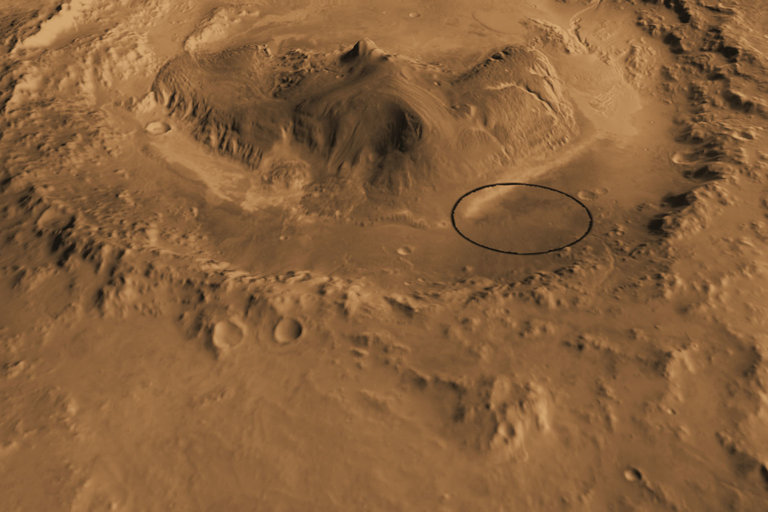
This computer-generated view, based on multiple orbital observations, shows Mars's Gale crater as if seen from an aircraft north of the crater.
The Curiosity rover made big news in late 2014 when it first detected organic matter on Mars. But in detailed studies of the sites in Gale Crater studied by Curiosity, called Yellowknife Bay and Sheepbed Mudstone, the concentration of organic molecules were much lower than scientists had expected.

It was thought that the iron and magnesium-rich clay minerals in Gale Crater — which has also provided evidence of a long-term presence of liquid water in Mars’ past — would be a good place for organic matter to be preserved, as well.

But it turns out, according to a new study by a team of geoscientists at the University of Nevada Las Vegas, certain features of the clay minerals on Mars may not be conducive to the preservation of organic matter after all.

“We were able to show that the clay minerals formed from oxidized iron, rather than the reduced iron that had previously been thought,” lead author Elizabeth Hausrath said in an email to Seeker. “This suggests that if organic matter were present in the past on Mars, it might not be preserved to be detected today. So this might help explain why larger concentrations of organic matter haven't been detected on Mars, at least not yet!”

UNLV Researcher Libby Hausrath works with student Seth Grainey in her lab.
Hausrath and her team were able to recreate clay minerals in their lab analogous to what might be found in Gale Crater.

From previous experiments, it was thought that anoxic conditions — an environment without oxygen — were required for iron-magnesium clay minerals to form. On Earth, a hydrothermal vent would be an example of an anoxic environment. These vents are home to mostly microbes, and oxygen is actually toxic to most of them. Therefore, since thousands of locations on Mars have rock units containing iron-magnesium minerals it was thought any organics would be well preserved.

But Hausrath and colleagues were also able to synthesize clay minerals under oxidized conditions — where oxygen was present — which would destroy organic molecules. What they found is that these types of minerals actually formed faster when oxygen was present.

“The results suggested that the iron and magnesium-rich clay minerals formed quickly under oxidized conditions, which could help explain low concentrations of organics within some rocks or sediments on Mars,” former Ph.D. student Seth Gainey said in a statement.

Therefore, past organic matter, including possible signs of life, may not be well-preserved on Mars. But that doesn’t mean that life never formed on Mars. As we know on Earth, life seems to adapt to the conditions in which it was formed, and life on Mars may have perhaps developed to adapt to the oxidized conditions in the soil.

“Terrestrial life has certainly adapted to very challenging conditions,” Hausrath said. “For example, we have recently published work on how snow algae, which grow to very high concentrations in very challenging low nutrient snowy environments, are able to use minerals as nutrient sources. So certainly what we know of life from Earth is that it seems to be very able to adapt to challenging circumstances.”

The study Hausrath mention was published last month in the journal of the American Society for Microbiology. Her lab's latest findings were published in the journal Nature.

From all the evidence gathered by the Curiosity rover, scientists think Gale Crater was once the site of a lake billions of years ago, and rocks like mudstone formed from sediment in the lake. While organics were found there, there is not enough evidence to tell if the matter found by the rover team came from ancient Martian life or from a non-biological process. Some examples of non-biological sources include chemical reactions in water at ancient Martian hot springs or delivery of organic material to Mars by interplanetary dust or fragments of asteroids and comets.

But the discovery of organics shows that the ancient Martian environment offered a supply of organic molecules for use as building blocks for life and an energy source for life. Curiosity's earlier analysis of this same mudstone revealed that the environment offered water and chemical elements essential for life and a different chemical energy source.

Read more at Seeker

Sep 17, 2017

Measuring a crucial mineral in the mantle

Olivine, the most abundant mineral found in the Earth's mantle, is considered to be a robust model of the interior of the Earth's composition.
University of Delaware professor Jessica Warren and colleagues from Stanford University, Oxford University and University of Pennsylvania, reported new data that material size-effects matter in plate tectonics.

Plate tectonics, the way the Earth's plates move apart and come back together, has been used since the 1960s to explain the location of volcanoes and earthquakes.

The study (link here) published Wednesday, Sept. 13 in the American Association for the Advancement of Science journal Science Advances, resolves 40 years of disagreement in datasets about the strength of olivine, the most abundant mineral found in the upper 250 miles or so of the Earth, known as the mantle.

"Measuring the strength of olivine is critical to understanding how strong tectonic plates are, which, in turn, matters to how plates break and create subduction zones like those along the Cascadia plate, which runs down the west coast of Canada to the west coast of the United States," said Warren, a geologist in the College of Earth, Ocean, and Environment. It's also important for understanding how plates move around over the million-year time scales.

The paper demonstrated that olivine's strength is size-sensitive and that olivine is stronger the smaller the volume that is measured, something that has been known in materials science for many metals and ceramics, but has not been studied in a geological material before.

Warren explained that the problem with studying rocks on the earth's surface is that they are no longer subjected to the high pressures found inside the earth that cause materials to flow (like ice in a glacier). Recreating these elevated pressures in the laboratory is difficult, making it hard for scientists to study material strength in the lab.

The researchers used a technique, called instrumented nanoindentation, to measure olivine's strength. The technique allowed them to recreate pressure conditions similar to those inside the earth by pressing a diamond tip that was carefully machined to a specific geometry into the olivine crystal to measure the material's response. The diamond tips ranged in size from 5 to 20 microns (0.000001 meter). The researchers performed hundreds of indentation tests on tiny olivine crystals less than a centimeter square and found that the olivine crystal became weaker as the size of the diamond tip increased.

To validate this size-effect, the researchers reviewed the available literature data on the strength of olivine to determine the sizes and areas that had been tested in previous experiments dating to the late 1970s. The size-effect showed up in the old data, too.

"The reason 40 years' worth of data don't agree from one experiment to the next is because scientists were measuring different sizes or areas of olivine," Warren said. "But if you plot the same information as a function of the sample size, the datasets, in fact agree, and display the same general trend -- the larger the indentation in the material tested, the weaker the olivine becomes."

Now that Warren and her colleagues understand this size-effect, they are turning their attention to how temperature affects the strength of olivine, and more broadly, on where tectonic plates might break and give rise to potential subduction zones.

Temperatures inside the earth are much hotter than on the surface and can range from 1,470 to 2,200 degrees Fahrenheit (800 to 1,200 degrees Celsius).

The team also will consider what role water plays in the structure of olivine minerals and rocks in the earth. According to Warren, current estimates suggest the earth contains the equivalent of 50 percent to 4 times the amount of water found in the global ocean.

Read more at Science Daily

Jul 15, 2017

Mica provides clue to how water transports minerals

Researchers at Argonne looked at the dynamics of the transport of certain elements -- especially rubidium -- at the interface between water and mica, a flat transparent mineral pictured here.
In order to understand various environmental processes and learn to better address the effects of pollution, scientists have been interested in tracking the movement of elements through the environment, particularly at interfaces between water and minerals.

In a new study from the U.S. Department of Energy's (DOE) Argonne National Laboratory, in collaboration with the University of Illinois and Chicago and the University of Delaware, chemists have been able to look at the interface between water and muscovite mica, a flat mineral commonly found in granite, soils and many sediments. In particular, the researchers looked at the capture and release of rubidium -- a metal closely related to but more easily singled out than common elements like potassium and sodium.

Essentially, it's like looking for a goldfinch in a tree, and using a technique that only shows you where yellow things are."

In the experiment, the researchers flowed a rubidium-containing solution over the mica, which caused rubidium atoms to replace the potassium that occurs naturally near the surface of the mica. Then the rubidium solution was replaced for one containing sodium, which in turn replaced the rubidium atoms.

According to Argonne chemist Sang Soo Lee, who led the study, the dynamics of the ion transport were largely controlled by electrostatic properties at the interface between the mica and the water. Essentially, the rubidium atoms "clung" to the mica's surface similarly to how lint clings to clothing. The strength of the clinging behavior was determined mainly by how many water molecules were in between the mica's surface and the rubidium -- the fewer water molecules, the tighter the cling.

Lee and his Argonne colleague, chemist Paul Fenter, used Argonne's Advanced Photon Source, a DOE Office of Science User Facility, to observe the activity of the rubidium using a technique called resonant anomalous X-ray reflectivity. This technique allows scientists to probe the position of a single element at an interface.

"Essentially, it's like looking for a goldfinch in a tree, and using a technique that only shows you where yellow things are," Fenter said.

By using the technique, the researchers were able to condense the timeframe it takes to measure the signal from the data. "Normally these data take hours to measure, but now we can have a time resolution of one or two seconds," Fenter said.

Read more at Science Daily

Jun 12, 2017

NASA's Curiosity Rover Traces Ancient Environmental Changes on Mars

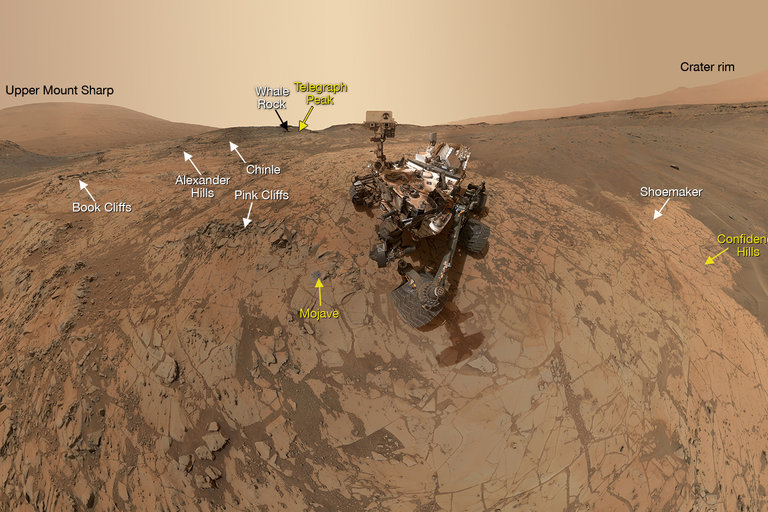
This self-portrait of NASA's Curiosity Mars rover shows the vehicle at the "Mojave" site, where its drill collected the mission's second taste of Mount Sharp.
What is history of the climate on Mars, and what were the conditions like long ago, before the Red Planet lost its atmosphere? Were they possibly favorable for life to have taken hold?

Data gathered by NASA’s Curiosity rover over the past five years have allowed scientists to construct a detailed portrait of the history of Gale Crater and the lowermost layers of Mount Sharp where the rover has been traversing. Rocks studied during the mission have shown that this site was once a muddy lakebed, filled with water.

The latest research suggests with even more certainty that this was once likely a habitable environment. The diversity of minerals in the rock samples collected by Curiosity are also revealing details about the ancient environmental changes that occurred as Mars started to shed its atmosphere millions of years ago and much of the water on the planet's surface was lost to space.

“We went to Gale Crater to investigate these lower layers of Mount Sharp that have these minerals that precipitated from water and suggest different environments,” said Elizabeth Rampe, a NASA exploration mission scientist at Johnson Space Center and lead author of a new study, in a press statement. “These layers were deposited about 3.5 billion years ago, coinciding with a time on Earth when life was beginning to take hold. We think early Mars may have been similar to early Earth, and so these environments might have been habitable.”

The researchers looked specifically at four samples that were collected from the lower layers of Mount Sharp using the rover’s drill and studied with the onboard chemistry lab, the Chemistry and Mineralogy (CheMin) instrument. They looked specifically at the mineralogy of a layered mudstone called lacustrine, which is formed by lake sedimentation. (On Earth, lacustrine environments are a major contributor of petroleum source rocks.)

A rock’s various layers can tell the story of the geologic and climate history of Mars, yielding information about the planet’s past likelihood of habitability. Determining what minerals can be found in the layers of Martian sedimentary rock can also yield much data about the environment in which they formed.

The team said that the minerals found in the four different samples vary widely within the various layers of the rocks, which suggests that several different environments were present in ancient Gale Crater. There is evidence for waters with different pH and other varying conditions.

At the base are minerals that are volcanic in origin that are rich in iron and magnesium, similar to basalts in Hawaii. Moving higher in the section, scientists saw more silica-rich minerals. In the Telegraph Peak sample, scientists found minerals similar to quartz. In the Buckskin sample, scientists found tridymite. Tridymite is found on Earth, for example, in rocks that formed from partial melting of Earth’s crust or in the continental crust. Scientists say this is a strange finding because Mars never had plate tectonics.

NASA's Curiosity Mars rover examined a mudstone outcrop area called "Pahrump Hills" on lower Mount Sharp, in 2014 and 2015. This view shows locations of some targets the rover studied there. The blue dots indicate where drilled samples of powdered rock were collected for analysis.
In the Confidence Hills and Mojave 2 samples, scientists found clay minerals, which generally form in the presence of liquid water with a near-neutral pH, and therefore could be good indicators of past environments that were conducive to life. The other mineral discovered here was jarosite, a salt that forms in acidic solutions. The jarosite finding indicates that there were acidic fluids at some point in time in this region.

Additionally, there are different iron-oxide minerals in the samples, reflecting the oxidation of the rock minerals as they reacted with oxygen. This tells scientists the water in the lake changed over time.

In their paper, published in Earth and Planetary Science Letters, the researchers discuss two hypotheses to explain this mineralogical diversity. The lake waters themselves at the base were oxidizing, so either there was more oxygen in the atmosphere or other factors encouraged oxidation.

Another hypothesis is that the groundwater changed over time, and that the environmental conditions present in the lake and in later groundwater were quite different. But both offered liquid water and a chemical diversity that could have been favorable for microbial life.

“We have all this evidence that Mars was once really wet but now is dry and cold,” Rampe said. “Today, much of the water is locked up in the poles and in the ground at high latitudes as ice. We think that the rocks Curiosity has studied reveal ancient environmental changes that occurred as Mars started to lose its atmosphere.”

The question is, how long did the water remain on Mars, and was it long enough for life to flourish?

These findings, along with all of the data gathered during Curiosity’s mission, are helping to give scientists a full picture of ancient Mount Sharp, where the rocks appear to be made from the silt that settled out from the lakes.

Read more at Discovery News

Aug 31, 2015

Earth Has More Than 1,500 Yet-Undiscovered Minerals

If you thought your rock and mineral collection was reasonably complete, guess again.

A team of researchers, led by the Carnegie Institute for Science’s Robert M. Hazen, used a sophisticated statistical modeling system to calculate that the Earth has a lot of undiscovered minerals — 1,563, to be precise — to add to the nearly 5,000 that already are known. Moreover, the scientists predict that Earth’s mineral diversity is unique, and is not duplicated anywhere else in the universe — even on Earth-like rocky exoplanets.

Those findings are contained in an quartet of recently published articles in Canadian Mineralogist, Mathematical Geoscience, American Mineralogist, and Earth and Planetary Science Letters.

Minerals are naturally occurring, inorganic substances that are crystalline — that is, have an ordered arrangement of atoms — and definite chemical compositions. They can be formed with the help of a variety of different types of geological activity, ranging from volcanoes and plate tectonics to water-rock interactions, as well as by biologically-based chemical reactions.

The latter are particularly important, according to Hazen, who has long theorized the Earth’s diversity of minerals is related primarily to the development of life on this planet. More than two thirds of known minerals can be linked directly or indirectly to biological activity, such as the carbonate minerals created by freshwater bacteria. The rise of bacterial photosynthesis 2.4 billion years ago, which dramatically increased the atmosphere’s oxygen concentration, also expanded the number of mineral species.

Hazen and his colleagues used statistical models of ecosystems and compared them to mineralogical databases in order to predict that thousands of mineral species that have been created during the Earth’s history. Some have been lost due to burial, erosion or subduction back into the Earth’s mantle, but by the team’s calculations, 1,563 of them still exist and are waiting to be discovered.

Another weird fact: Most of the earth’s mineral types are rare, and found at five or fewer locations on the planet.

From Discovery News

Dec 14, 2014

Earth's most abundant mineral finally has a name

An ancient meteorite and high-energy X-rays have helped scientists conclude a half century of effort to find, identify and characterize a mineral that makes up 38 percent of the Earth.

And in doing so, a team of scientists led by Oliver Tschauner, a mineralogist at the University of Las Vegas, clarified the definition of the Earth's most abundant mineral -- a high-density form of magnesium iron silicate, now called Bridgmanite -- and defined estimated constraint ranges for its formation. Their research was performed at the Advanced Photon Source, a U.S. Department of Energy (DOE) Office of Science User Facility located at DOE's Argonne National Laboratory.

The mineral was named after 1964 Nobel laureate and pioneer of high-pressure research Percy Bridgman. The naming does more than fix a vexing gap in scientific lingo; it also will aid our understanding of the deep Earth.

To determine the makeup of the inner layers of the Earth, scientists need to test materials under extreme pressure and temperatures. For decades, scientists have believed a dense perovskite structure makes up 38 percent of the Earth's volume, and that the chemical and physical properties of Bridgmanite have a large influence on how elements and heat flow through the Earth's mantle. But since the mineral failed to survive the trip to the surface, no one has been able to test and prove its existence -- a requirement for getting a name by the International Mineralogical Association.

Shock-compression that occurs in collisions of asteroid bodies in the solar system create the same hostile conditions of the deep Earth -- roughly 2,100 degrees Celsius (3,800 degrees Farenheit) and pressures of about 240,000 times greater than sea-level air pressure. The shock occurs fast enough to inhibit the Bridgmanite breakdown that takes place when it comes under lower pressure, such as the Earth's surface. Part of the debris from these collisions falls on Earth as meteorites, with the Bridgmanite "frozen" within a shock-melt vein. Previous tests on meteorites using transmission electron microscopy caused radiation damage to the samples and incomplete results.

So the team decided to try a new tactic: non-destructive micro-focused X-rays for diffraction analysis and novel fast-readout area-detector techniques. Tschauner and his colleagues from Caltech and the GeoSoilEnviroCARS, a University of Chicago-operated X-ray beamline at the APS at Argonne National Laboratory, took advantage of the X-rays' high energy, which gives them the ability to penetrate the meteorite, and their intense brilliance, which leaves little of the radiation behind to cause damage.

The team examined a section of the highly shocked L-chondrite meteorite Tenham, which crashed in Australia in 1879. The GSECARS beamline was optimal for the study because it is one of the nation's leading locations for conducting high-pressure research.

Bridgmanite grains are rare in the Tenhma meteorite, and they are smaller than 1 micrometer in diameter. Thus the team had to use a strongly focused beam and conduct highly spatially resolved diffraction mapping until an aggregate of Bridgmanite was identified and characterized by structural and compositional analysis.

This first natural specimen of Bridgmanite came with some surprises: It contains an unexpectedly high amount of ferric iron, beyond that of synthetic samples. Natural Bridgmanite also contains much more sodium than most synthetic samples. Thus the crystal chemistry of natural Bridgmanite provides novel crystal chemical insights. This natural sample of Bridgmanite may serve as a complement to experimental studies of deep mantle rocks in the future.

Read more at Science Daily

Jun 13, 2014

Oceans of Water Locked 400 Miles Inside Earth

Deep within the Earth's rocky mantle lies oceans' worth of water locked up in a type of mineral called ringwoodite, new research shows.

The results of the study will help scientists understand Earth's water cycle, and how plate tectonics moves water between the surface of the planet and interior reservoirs, researchers say.

The Earth's mantle is the hot, rocky layer between the planet's core and crust. Scientists have long suspected that the mantle's so-called transition zone, which sits between the upper and lower mantle layers 255 to 410 miles (410 to 660 kilometers) below Earth's surface, could contain water trapped in rare minerals. However, direct evidence for this water has been lacking, until now.

To see if the transition zone really is a deep reservoir for water, researchers conducted experiments on water-rich ringwoodite, analyzed seismic waves travelling through the mantle beneath the United States, and studied numerical models. They discovered that downward-flowing mantle material is melting as it crosses the boundary between the transition zone and the lower mantle layer.

"If we are seeing this melting, then there has to be this water in the transition zone," said Brandon Schmandt, a seismologist at the University of New Mexico and co-author of the new study published today (June 12) in the journal Science. "The transition zone can hold a lot of water, and could potentially have the same amount of H2O as all the world's oceans." (Melting is a way of getting rid of water, which is unstable under conditions in Earth's lower mantle, the researchers said.)

A water-rich mineral

Ringwoodite is a rare type of mineral that forms from olivine under very high pressures and temperatures, such as those present in the mantle's transition zone. Laboratory studies have shown that the mineral can contain water, which isn't present as liquid, ice or vapor; instead, it is trapped in the ringwoodite's molecular structure as hydroxide ions (bonded oxygen and hydrogen atoms).

In March, another research group discovered an unusual diamond from the mantle that encased hydrous ringwoodite. Though the find suggested the transition zone could contain a lot of water, it was the first and only ringwoodite specimen from the mantle scientists have ever analyzed (all other samples were produced in the lab or found in meteorites), and may not be representative of other mantle ringwoodite.

"Right now, we're one-for-one, because that ringwoodite had some H2O in it, but we didn't know if it was normal," Schmandt told Live Science. So Schmandt and geophysicist Steven Jacobsen of Northwestern University in Illinois set out to observationally test if other mantle ringwoodite also contains water.

The researchers knew the crystal structure of ringwoodite allows the transition zone to hold water, but that structure changes if the material moves across the boundary to the lower mantle (due to increasing pressures and temperatures). Because the structure of minerals in the lower mantle can't trap water the way ringwoodite can, Schmandt and Jacobsen reasoned the rocks would melt as they flowed from the transition zone to the lower mantle. "Melting is just a mechanism of getting rid of the water," Schmandt said.

To test this hypothesis, Jacobsen and his colleagues conducted lab experiments to simulate what would happen to transition zone ringwoodite as it travels deeper into the Earth. They synthesized hydrous ringwoodite and recreated the temperatures and pressures it would experience in the transition zone by heating it with lasers and compressing it between hard, anvil-like diamonds.

Using their setup, they then slowly increased the temperature and pressure to mimic the conditions in the lower mantle. The ringwoodite transformed into another mineral called silicate perovskite, and transmission electron microscopy showed that the mineral contained silicate melt around single crystals of perovskite.

"What that tells us is if there is similarly hydrated ringwoodite in the transition zone that's dragged down, we would expect it to produce melt," Schmandt said. "Because melt changes how seismic waves propagate, that's a target I can hunt for [with seismometers]."

Finding the melt

Using the Earthscope USArray, a network of portable seismometers across the United States, Schmandt analyzed seismic waves as they passed from the transition zone to the lower mantle. He found the waves slowed as they crossed into the lower mantle, suggesting that melt was present in the boundary. Importantly, the decrease in seismic velocity didn't happen everywhere — models showed the wave velocity decreased only where material was flowing downward from the transition zone to the lower mantle, as the researchers predicted. [Infographic: Earth's Tallest Mountain to Its Deepest Ocean Trench]

The melt produced in the boundary likely then flows back upward, returning to minerals that can hold the water, Schmandt said, adding that this mechanism allows the transition zone to be a stable water reservoir.

"[The study] provides critical experimental support for the important role that the transition zone plays in controlling the melting behavior and flux of hydrogen in the deep Earth," Graham Pearson, a mantle geochemist at the University of Alberta, who wasn't involved in the work, told Live Science in an email.

Anna Kelbert, a geophysicist at Oregon State University who also wasn't involved in the study, notes that scientists have previously used numerous approaches to look for evidence of Earth's interior water reservoir, but this is the first time researchers have searched for clues of the reservoir by focusing on the potential water-induced melting at the bottom of the transition zone. "It provides an important multidisciplinary perspective on this problem," Kelbert said. "It has important implications on our understanding of the behavior of subducting slabs deep in the mantle, and on our understanding of overall water budget/distribution in the Earth."

Read more at Discovery News