High-energy 'relativistic' electrons -- so-called "killer" electrons -- are a major source of radiation damage to satellites and so understanding their patterns of activity is crucial. Bursts of charged particles and magnetic fields from the Sun can tear open the Earth's magnetic field, giving rise to geomagnetic storms. During these events the number of killer electrons in the outer radiation belt can increase by orders of magnitude and become a significant space weather hazard.
Dr Nigel Meredith of BAS led an international team who analysed 20 years of data from a US GPS satellite to determine the 1 in 10, 1 in 50, and 1 in 100-year event levels. A 1 in 100-year event is an event of a size that will be equalled or exceeded on average once every 100 years.
Satellite operators, manufacturers, insurers, and governments need to prepare and mitigate against the risks posed by these electrons. Society is increasingly reliant on satellites for a variety of applications including communication, navigation, Earth observation and defence. As of April 2022, there were 5,465 operational satellites in Earth orbit, and most are exposed to energetic electrons for at least some of their orbit. In 2021, the overall global space economy generated revenues of $386 billion, an increase of four percent compared to the previous year.
Dr Nigel Meredith, space weather scientist and lead author of the study says:
"The 1 in 100 year event levels reported in this study are important for industry and government. They serve as benchmarks against which to compare other extreme space weather events and to assess the potential impact of an extreme event."
These findings are vitally important to the satellite industry as engineers and operators require realistic estimates of the largest electron fluxes encountered in GPS orbit to prepare for the impacts of these extreme events and to improve the resilience of future satellites. The findings are essential for satellite insurers to help them ensure satellite operators are doing all they can to reduce risk and to evaluate realistic disaster scenarios
The difference between the 1 in 10 year and 1 in 100-year event varies depending on the energy of the electrons and the distance from Earth. These differences are largest at the highest energies furthest from the planet, varying between a factor of 3 and 10 for some of the highest electron energies over 35,000 km from the Earth's surface. Such substantial increases could pose a significant additional risk to satellites operating in this region.
Like weather on our planet, space weather can vary greatly over minutes, days, seasons and the 11-year solar cycle. The researchers found that the majority of these killer electron events occurred during the solar cycle's declining phases -- seen twice during the 20-year period they studied -- but the largest event was elsewhere, showing that extreme events can happen at any time.
Solar flares and other types of space weather can wreak havoc with spaceflight and with telecommunications and other types of satellites orbiting the Earth. But, to date, scientists' ability to research ways to overcome that challenge has been severely limited. That's because experiments they conduct in laboratories here on Earth are affected by gravity in ways that are so different from conditions in space.
But a new study by UCLA physicists could, at last, help conquer that issue -- which could be a big step toward safeguarding humans (and equipment) during space expeditions, and to ensuring the proper functioning of satellites. The paper is published in Physical Review Letters.
The UCLA researchers effectively reproduced the type of gravity that exists on or near stars and other planets inside of a glass sphere measuring 3 centimeters in diameter (about 1.2 inches). To do so, they used sound waves to create a spherical gravitational field and generate plasma convection -- a process in which gas cools as it nears the surface of a body and then reheats and rises again as it nears the core -- creating a fluid current that in turn generates a magnetic current.
The achievement could help scientists overcome the limiting role of gravity in experiments that are intended to model convection that occurs in stars and other planets.
"People were so interested in trying to model spherical convection with laboratory experiments that they actually put an experiment in the space shuttle because they couldn't get a strong enough central force field on the ground," said Seth Putterman, a UCLA physics professor and the study's senior author. "What we showed is that our system of microwave-generated sound produced gravity so strong that Earth's gravity wasn't a factor. We don't need to go into space to do these experiments anymore."
UCLA researchers used microwaves to heat sulfur gas to 5,000 degrees Fahrenheit inside the glass sphere. The sound waves inside the ball acted like gravity, constraining movement of the hot, weakly ionized gas, known as plasma, into patterns that resemble the currents of plasma in stars.
"Sound fields act like gravity, at least when it comes to driving convection in gas," said John Koulakis, a UCLA project scientist and the study's first author. "With the use of microwave-generated sound in a spherical flask of hot plasma, we achieved a gravity field that is 1,000 times stronger than Earth's gravity."
On Earth's surface, hot gas rises because gravity holds denser, colder gas closer to the planet's center.
Indeed, the researchers found that hot, bright gas near the outer half of the sphere also moved outward toward the walls of the sphere. The strong, sustained gravity generated turbulence that resembled that seen near the Sun's surface. In the inner half of the sphere, the acoustic gravity changed direction and pointed outward, which causes hot gas to sink to the center. In the experiment, acoustic gravity naturally held the hottest plasma at the center of the sphere, where it also occurs in stars.
The ability to control and manipulate plasma in ways that mirror solar and planetary convection will help researchers understand and predict how solar weather affects spacecraft and satellite communications systems. Last year, for example, a solar storm knocked out 40 SpaceX satellites. The phenomenon has also been problematic for military technology: the formation of turbulent plasma around hypersonic missiles, for example, can interfere with weapons systems communications.
A West Virginia University postdoctoral researcher in the Department of Physics and Astronomy has made a breakthrough in the study of magnetic reconnection, which could prevent space storms from wreaking havoc on the Earth's satellite and power grid systems.
Peiyun Shi's research is the first-of-its-kind in the laboratory setting and is part of the PHASMAproject, a complex experiment composed of advanced diagnostics, electromagnets and lab-created plasma to reveal new details about how the universe functions.
For his experiment, Shi uses a laser-based diagnostic to probe plasma. Laser beams are directed in the diagnostic and the light scatters off of electrons. The way the light scatters gives insight into how fast the electrons are moving. And because the plasma is more than 10,000 degrees Fahrenheit, the lasers allow for measuring particles without using a probe or a thermometer which would melt at such high temperatures.
According to Shi, the technique is analogous to the Doppler effect, which is an increase or decrease in the frequency of sound or light waves emanating from a source as an observer moves towards or away from the source.
Shi's findings were published in Physical Review Letters.
"It's like a radar gun for particles," said Earl Scime, director of the WVU Center for Kinetic Experiment, Theory and Integrated Computation Physics and Oleg D. Jefimenko professor of physics. According to Scime, similar studies are only able to determine the average properties of the electrons, but with the technology available as part of the PHASMA project, Shi is able to measure the actual speeds of the electrons.
"Our work proves to the fundamental plasma community that advanced laser diagnostics can measure important kinetic features not accessible to any other conventional diagnostics," Shi said. "This is essential for understanding various plasma physics processes and for complementing modern satellite observations. It's a great privilege to work on such a promising project with a fantastic team here, and the productive collaboration with Paul Cassak and his graduate M. Hasan Barbhuiya is also critical for this work and much appreciated."
This research has a big impact on broader issues such as predicting space weather events. Magnetic reconnection plays a major role in how eruptions of plasma occur on the sun. Those eruptions can result in solar flares which increase X-ray and ultraviolent emissions, which poses a threat to astronauts in the International Space Station. The eruptions can also result in large masses of plasma that travel through space and slam into the Earth's magnetosphere. Those space storms can play havoc with satellite and power grid systems on Earth.
"Every time we understand more about magnetic reconnection, it has applications from space weather to thermonuclear fusion, to a basic understanding of how the universe works," Scime said.
The PHASMA project is located in the Center for KINETIC Plasma Physics. PHASMA -- or the PHAse Space MApping experiment as it's officially dubbed -- is the focus of the WVU Center for Kinetic Experiment, Theory and Integrated Computation Plasma Physics.
PHASMA is designed to make three-dimensional measurements of the motion of the ions and electrons in a plasma at very small scales and is the only facility in the world capable of performing these detailed measurements.
Violent activity on our Sun leads to some of the most extreme space weather events on Earth, impacting systems such as satellites, communications systems, power distribution and aviation. The roughly 11 year cycle of solar activity has three 'seasons', each of which affects the space weather felt at Earth differently: (i) solar maximum, the sun is active and disordered, when space weather is stormy and events are irregular (ii) the declining phase, when the sun and solar wind becomes ordered, and space weather is more moderate and (iii) solar minimum, when activity is quiet.
In a new study led by the University of Warwick and published in The Astrophysical Journal, scientists found that the change from solar maximum to the declining phase is fast, happening within a few (27 day) solar rotations. They also showed that the declining phase is twice as long in even-numbered solar cycles as it is in odd-numbered cycles.
No two solar cycles are the same in amplitude or duration. To study the solar seasons, the scientists built a sun clock from the daily sunspot number record available since 1818. This maps the irregular solar cycles onto a regular clock. The magnetic polarity of the sun reverses after each roughly 11 year solar cycle giving a roughly 22 year magnetic cycle (named after George Ellery Hale) and to explore this, a 22 year clock was constructed. The effect on space weather at earth can be tracked back using the longest continuous records of geomagnetic activity over the past 150 years, and once the clock is constructed, it can be used to study multiple observations of seasonal solar activity which affect the earth.
With the greater detail afforded by the sun clock, the scientists could see that the switch from solar maximum to the declining phase is fast, occurring within a few (27 day) solar rotations. There was also a clear difference in the duration of the declining phase when the sun's magnetic polarity is 'up' compared to 'down': in even-numbered cycles it is around twice as long as odd-numbered cycles. As we are about to enter cycle 25, the scientists anticipate that the next declining phase will be short.
Lead author Professor Sandra Chapman of the University of Warwick Department of Physics said: "By combining well known methods in a new way, our clock resolves changes in the Sun's climate to within a few solar rotations. Then you find the changes between some phases can be really sharp.
"If you know you've had a long cycle, you know the next one's going to be short, we can estimate how long it's going to last. Knowing the timing of the climate seasons helps to plan for space weather. Operationally it is useful to know when conditions will be active or quiet, for satellites, power grids, communications."
The results also provide a clue to understanding how the Sun reverses polarity after every cycle.
"There are only two natural disasters that could impact the entire U.S.," according to Gabor Toth, professor of Climate and Space Sciences and Engineering at the University of Michigan. "One is a pandemic and the other is an extreme space weather event."
We're currently seeing the effects of the first in real-time.
The last major space weather event struck the Earth in 1859. Smaller, but still significant, space weather events occur regularly. These fry electronics and power grids, disrupt global positioning systems, cause shifts in the range of the Aurora Borealis, and raise the risk of radiation to astronauts or passengers on planes crossing over the poles.
"We have all these technological assets that are at risk," Toth said. "If an extreme event like the one in 1859 happened again, it would completely destroy the power grid and satellite and communications systems -- the stakes are much higher."
Motivated by the White House National Space Weather Strategy and Action Plan and the National Strategic Computing Initiative, in 2020 the National Science Foundation (NSF) and NASA created the Space Weather with Quantified Uncertainties (SWQU) program. It brings together research teams from across scientific disciplines to advance the latest statistical analysis and high performance computing methods within the field of space weather modeling.
"We are very proud to have launched the SWQU projects by bringing together expertise and supports across multiple scientific domains in a joint effort between NSF and NASA," said Vyacheslav (Slava) Lukin, the Program Director for Plasma Physics at NSF. "The need has been recognized for some time, and the portfolio of six projects, Gabor Toth's among them, engages not only the leading university groups, but also NASA Centers, Department of Defense and Department of Energy National Laboratories, as well as the private sector."
Toth helped develop today's preeminent space weather prediction model, which is used for operational forecasting by the National Oceanic and Atmospheric Administration (NOAA). On February 3, 2021, NOAA began using the Geospace Model Version 2.0, which is part of the University of Michigan's Space Weather Modeling Framework, to predict geomagnetic disturbances.
"We're constantly improving our models," Toth said. The new model replaces version 1.5 which has been in operations since November 2017. "The main change in version 2 was the refinement of the numerical grid in the magnetosphere, several improvements in the algorithms, and a recalibration of the empirical parameters."
The Geospace Model is based on a global representation of Earth's Geospace environment that includes magnetohydrodynamics -- the properties and behavior of electrically conducting fluids like plasma interacting with magnetic fields, which plays a key role in the dynamics of space weather.
The Geospace model predicts magnetic disturbances on the ground resulting from geospace interactions with solar wind. Such magnetic disturbances induce a geoelectric field that can damage large-scale electrical conductors, such as the power grid.
Short-term advanced warning from the model provides forecasters and power grid operators with situational awareness about harmful currents and allows time to mitigate the problem and maintain the integrity of the electric power grid, NOAA announced at the time of the launch.
As advanced as the Geospace Model is, it provides only about 30 minutes of advanced warning. Toth's team is one of several groups working to increase lead time to one to three days. Doing so means understanding how activity on the surface of the Sun leads to events that can impact the Earth.
"We're currently using data from a satellite measuring plasma parameters one million miles away from the Earth," Toth explained. Researchers hope to start from the Sun, using remote observation of the Sun's surface -- in particular, coronal mass ejections that produce flares that are visible in X-rays and UV light. "That happens early on the Sun. From that point, we can run a model and predict the arrival time and impact of magnetic events."
Improving the lead time of space weather forecasts requires new methods and algorithms that can compute far faster than those used today and can be deployed efficiently on high performance computers. Toth uses the Frontera supercomputer at the Texas Advanced Computing Center -- the fastest academic system in the world and the 10th most powerful overall -- to develop and test these new methods.
"I consider myself really good at developing new algorithms," Toth said. "I apply these to space physics, but many of the algorithms I develop are more general and not restricted to one application."
A key algorithmic improvement made by Toth involved finding a novel way to combine the kinetic and fluid aspects of plasmas in one simulation model. "People tried it before and failed. But we made it work. We go a million times faster than brute-force simulations by inventing smart approximations and algorithms," Toth said.
The new algorithm dynamically adapts the location covered by the kinetic model based on the simulation results. The model identifies the regions of interests and places the kinetic model and the computational resources to focus on them. This can result in a 10 to 100 time speed up for space weather models.
As part of the NSF SWQU project, Toth and his team has been working on making the Space Weather Modeling Framework run efficiently on future supercomputers that rely heavily on graphical processing units (GPUs). As a first goal, they set out to port the Geospace model to GPUs using the NVIDIA Fortran compiler with OpenACC directives.
They recently managed to run the full Geospace model faster than real-time on a single GPU. They used TACC's GPU-enabled Longhorn machine to reach this milestone. To run the model with the same speed on traditional supercomputer requires at least 100 CPU cores.
"It took a whole year of code development to make this happen, Toth said. "The goal is to run an ensemble of simulations fast and efficiently to provide a probabilistic space weather forecast."
This type of probabilistic forecasting is important for another aspect of Toth's research: localizing predictions in terms of the impact on the surface of Earth.
"Should we worry in Michigan or only in Canada? What is the maximum induced current particular transformers will experience? How long will generators need to be shut off? To do this accurately, you need a model you believe in," he said. "Whatever we predict, there's always some uncertainty. We want to give predictions with precise probabilities, similar to terrestrial weather forecasts."
Toth and his team run their code in parallel on thousands of cores on Frontera for each simulation. They plan to run thousands of simulations over the coming years to see how model parameters affect the results to find the best model parameters and to be able to attach probabilities to simulation results.
Space weather often manifests as substorms, where a beautiful auroral display such as the Northern Lights is accompanied by an electrical current in space which has effects at earth that can interfere with and damage power distribution and electrical systems. Now, the lifecycle of these auroral substorms has been revealed using social media-inspired mathematical tools to analyse space weather observations across the Earth's surface.
Analysis by researchers led by the University of Warwick has revealed that these substorms manifest as global-scale electrical current systems associated with the spectacular aurora, reaching across over a third of the globe at high latitudes.
New research which involves the University of Warwick, John Hopkins University -- Applied Physics Laboratory, University of Bergen and Cranfield University, and published today (23 March) in the journal Nature Communications processes data on disturbances in the Earth's magnetic field from over a hundred magnetometers in the Northern hemisphere using a new technique that enables them to find 'like-minded friends'.
Magnetometers register changes in the Earth's magnetic field. When charged particles from our Sun bombard the Earth's magnetic field, it stores up energy like a battery. Eventually, this energy is released leading to large-scale electrical currents in the ionosphere which generate disturbances of magnetic fields on the ground. At extremes, this can disrupt power lines, electronic and communications systems and technologies such as GPS.
Using historical data from the SuperMAG collaboration of magnetometers, the researchers applied algorithms from network science to find correlations between magnetometer signals during 41 known substorms that occurred between 1997-2001. These use the same principles that allow a social networking site to recommend new friends, or to push relevant advertisements to you as you browse the internet.
Magnetometers detecting coherent signals were linked into communities, regardless of where they were located on the globe. As time progressed, they saw each substorm develop from many smaller communities into a single large correlated system or community at its peak. This led the authors to conclude that substorms are one coherent current system which extends over most of the nightside high latitude globe, rather than a number of individual small and disjointed current systems.
Dr Lauren Orr, who led the research as part of her PhD at the University of Warwick Department of Physics and is now based at Lancaster University, said: "We used a well-established method within network science called community detection and applied it to a space weather problem. The idea is that if you have lots of little subgroups within a big group, it can pick out the subgroups.
"We applied this to space weather to pick out groups within magnetometer stations on the Earth. From that, we were trying to find out whether there was one large current system or lots of separate individual current systems.
"This is a good way of letting the data tell us what's going on, instead of trying to fit observations to what we think is occurring."
Some recent work has suggested that auroral substorms are composed of a number of smaller electrical current systems and remain so throughout their lifecycle. This new research demonstrates that while the substorm begins as lots of smaller disturbances, it quite rapidly becomes a large system over the course of around ten minutes. The lack of correlation in its early stages may also suggest that there is no single mechanism at play in how these substorms evolve.
The results have implications for models designed to predict space weather. Space weather was included in the UK National Risk Register in 2012 and updated in 2017 with a recommendation for more investment in forecasting.
Rice University physicists have discovered a way to trap the world's coldest plasma in a magnetic bottle, a technological achievement that could advance research into clean energy, space weather and astrophysics.
"To understand how the solar wind interacts with the Earth, or to generate clean energy from nuclear fusion, one has to understand how plasma -- a soup of electrons and ions -- behaves in a magnetic field," said Rice Dean of Natural Sciences Tom Killian, the corresponding author of a published study about the work in Physical Review Letters.
Using laser-cooled strontium, Killian and graduate students Grant Gorman and MacKenzie Warrens made a plasma about 1 degree above absolute zero, or approximately -272 degrees Celsius, and trapped it briefly with forces from surrounding magnets. It is the first time an ultracold plasma has been magnetically confined, and Killian, who's studied ultracold plasmas for more than two decades, said it opens the door for studying plasmas in many settings.
"This provides a clean and controllable testbed for studying neutral plasmas in far more complex locations, like the sun's atmosphere or white dwarf stars," said Killian, a professor of physics and astronomy. "It's really helpful to have the plasma so cold and to have these very clean laboratory systems. Starting off with a simple, small, well-controlled, well-understood system allows you to strip away some of the clutter and really isolate the phenomenon you want to see."
That's important for study co-author Stephen Bradshaw, a Rice astrophysicist who specializes in studying plasma phenomena on the sun.
"Throughout the sun's atomosphere, the (strong) magnetic field has the effect of altering everything relative to what you would expect without a magnetic field, but in very subtle and complicated ways that can really trip you up if you don't have a really good understanding of it," said Bradshaw, an associate professor of physics and astronomy.
Solar physicists rarely get a clear observation of specific features in the sun's atmosphere because part of the atmosphere lies between the camera and those features, and unrelated phenomena in the intervening atmosphere obscures what they'd like to observe.
"Unfortunately, because of this line-of-sight problem, observational measurements of plasma properties are associated with quite a lot of uncertainty," Bradshaw said. "But as we improve our understanding of the phenomena, and crucially, use the laboratory results to test and calibrate our numerical models, then hopefully we can reduce the uncertainty in these measurements."
Plasma is one of four fundamental states of matter, but unlike solids, liquids and gases, plasmas aren't generally part of everyday life because they tend to occur in very hot places like the sun, a lightning bolt or candle flame. Like those hot plasmas, Killian's plasmas are soups of electrons and ions, but they're made cold by laser-cooling, a technique developed a quarter century ago to trap and slow matter with light.
Killian said the quadrupole magnetic setup that was used to trap the plasma is a standard part of the ultracold setup that his lab and others use to make ultracold plasmas. But finding out how to trap plasma with the magnets was a thorny problem because the magnetic field plays havoc with the optical system that physicists use to look at ultracold plasmas.
"Our diagnostic is laser-induced fluorescence, where we shine a laser beam onto the ions in our plasma, and if the frequency of the beam is just right, the ions will scatter photons very effectively," he said. "You can take a picture of them and see where the ions are, and you can even measure their velocity by looking at the Doppler shift, just like using a radar gun to see how fast a car is moving. But the magnetic fields actually shift around the resonant frequencies, and we have to disentangle the shifts in the spectrum that are coming from the magnetic field from the Doppler shifts we're interested in observing."
That complicates experiments significantly, and to make matters even more complicated, the magnetic fields change dramatically throughout the plasma.
"So we have to deal with not just a magnetic field, but a magnetic field that's varying in space, in a reasonably complicated way, in order to understand the data and figure out what's happening in the plasma," Killian said. "We spent a year just trying to figure out what we were seeing once we got the data."
The plasma behavior in the experiments is also made more complex by the magnetic field. Which is precisely why the trapping technique could be so useful.
"There is a lot of complexity as our plasma expands across these field lines and starts to feel the forces and get trapped," Killian said. "This is a really common phenomenon, but it's very complicated and something we really need to understand."
One example from nature is the solar wind, streams of high-energy plasma from the sun that cause the aurora borealis, or northern lights. When plasma from the solar wind strikes Earth, it interacts with our planet's magnetic field, and the details of those interactions are still unclear. Another example is fusion energy research, where physicists and engineers hope to recreate the conditions inside the sun to create a vast supply of clean energy.
Killian said the quadrupole magnetic setup that he, Gorman and Warrens used to bottle their ultracold plasmas is similar to designs that fusion energy researchers developed in the 1960s. The plasma for fusion needs to be about 150 million degrees Celsius, and magnetically containing it is a challenge, Bradshaw said, in part because of unanswered questions about how the plasma and magnetic fields interact and influence one another.
"One of the major problems is keeping the magnetic field stable enough for long enough to actually contain the reaction," Bradshaw said. "As soon as there's a small sort of perturbation in the magnetic field, it grows and 'pfft,' the nuclear reaction is ruined.
A 'great' space weather super-storm large enough to cause significant disruption to our electronic and networked systems occurred on average once in every 25 years according to a new joint study by the University of Warwick and the British Antarctic Survey.
By analysing magnetic field records at opposite ends of the Earth (UK and Australia), scientists have been able to detect super-storms going back over the last 150 years.
This result was made possible by a new way of analysing historical data, pioneered by the University of Warwick, from the last 14 solar cycles, way before the space age began in 1957, instead of the last five solar cycles currently used.
The analysis shows that 'severe' magnetic storms occurred in 42 out of the last 150 years, and 'great' super-storms occurred in 6 years out of 150. Typically, a storm may only last a few days but can be hugely disruptive to modern technology. Super-storms can cause power blackouts, take out satellites, disrupt aviation and cause temporary loss of GPS signals and radio communications.
Lead author Professor Sandra Chapman, from the University of Warwick's Centre for Fusion, Space and Astrophysics, said: "These super-storms are rare events but estimating their chance of occurrence is an important part of planning the level of mitigation needed to protect critical national infrastructure.
"This research proposes a new method to approach historical data, to provide a better picture of the chance of occurrence of super-storms and what super-storm activity we are likely to see in the future."
The Carrington storm of 1859 is widely recognised as the largest super-storm on record, but predates even the data used in this study. The analysis led by Professor Chapman estimates what amplitude it would need to have been to be in the same class as the other super-storms- and hence with a chance of occurrence that can be estimated.
Professor Richard Horne, who leads Space Weather at the British Antarctic Survey, said: "Our research shows that a super-storm can happen more often than we thought. Don't be misled by the stats, it can happen any time, we simply don't know when and right now we can't predict when."
Space weather is driven by activity from the sun. Smaller scale storms are common, but occasionally larger storms occur that can have a significant impact.
One way to monitor this space weather is by observing changes in the magnetic field at the earth's surface. High quality observations at multiple stations have been available since the beginning of the space age (1957). The sun has an approximately 11-year cycle of activity which varies in intensity and this data, which has been extensively studied, covers only five cycles of solar activity.
If we want a better estimate of the chance of occurrence of the largest space storms over many solar cycles, we need to go back further in time. The aa geomagnetic index is derived from two stations at opposite ends of the earth (in UK and Australia) to cancel out the earth's own background field. This goes back over 14 solar cycles or 150 years, but has poor resolution.
Using annual averages of the top few percent of the aa index the researchers found that a 'severe' super-storm occurred in 42 years out of 150 (28%), while a 'great' super-storm occurred in 6 years out of 150 (4%) or once in every 25 years. As an example, the 1989 storm that caused a major power blackout of Quebec was a great storm.
In 2012 the Earth narrowly avoided trouble when a coronal mass ejection from the Sun missed the Earth and went off in another direction. According to satellite measurements if it had hit the Earth it would have caused a super-storm.
Artist impression of an outflow of molecular gas from an active star-forming galaxy.
For the first time, a powerful "wind" of molecules has been detected in a galaxy located 12 billion light-years away. Probing a time when the universe was less than 10 percent of its current age, University of Texas at Austin astronomer Justin Spilker's research sheds light on how the earliest galaxies regulated the birth of stars to keep from blowing themselves apart. The research will appear in the Sept. 7 issue of the journal Science.
"Galaxies are complicated, messy beasts, and we think outflows and winds are critical pieces to how they form and evolve, regulating their ability to grow," Spilker said.
Some galaxies such as the Milky Way and Andromeda have relatively slow and measured rates of starbirth, with about one new star igniting each year. Other galaxies, known as starburst galaxies, forge hundreds or even thousands of stars each year. This furious pace, however, cannot be maintained indefinitely.
To avoid burning out in a short-lived blaze of glory, some galaxies throttle back their runaway starbirth by ejecting -- at least temporarily -- vast stores of gas into their expansive halos, where the gas either escapes entirely or slowly rains back in on the galaxy, triggering future bursts of star formation.
Until now, however, astronomers have been unable to directly observe these powerful outflows in the very early universe, where such mechanisms are essential to prevent galaxies from growing too big, too fast.
Spilker's observations with the Atacama Large Millimeter/submillimeter Array (ALMA), show -- for the first time -- a powerful galactic wind of molecules in a galaxy seen when the universe was only 1 billion years old. This result provides insights into how certain galaxies in the early universe were able to self-regulate their growth so they could continue forming stars across cosmic time.
Astronomers have observed winds with the same size, speed and mass in nearby starbursting galaxies, but the new ALMA observation is the most distant unambiguous outflow ever seen in the early universe.
The galaxy, known as SPT2319-55, is more than 12 billion light-years away. It was discovered by the National Science Foundation's South Pole Telescope.
ALMA was able to observe this object at such tremendous distance with the aid of a gravitational lens provided by a different galaxy that sits almost exactly along the line of sight between Earth and SPT2319-55. Gravitational lensing -- the bending of light due to gravity -- magnifies the background galaxy to make it appear brighter, which allows the astronomers to observe it in more detail than they would otherwise be able to. Astronomers use specialized computer programs to unscramble the effects of gravitational lensing to reconstruct an accurate image of the more-distant object.
This lens-aided view revealed a powerful wind of star-forming gas exiting the galaxy at nearly 800 kilometers per second. Rather than a constant, gentle breeze, the wind is hurtling away in discrete clumps, removing the star-forming gas just as quickly as the galaxy can turn that gas into new stars.
The outflow was detected by the millimeter-wavelength signature of a molecule called hydroxyl (OH), which appeared as an absorption line: essentially, the shadow of an OH fingerprint in the galaxy's bright infrared light.
Molecular winds are an efficient way for galaxies to self-regulate their growth, the researchers note. These winds are probably triggered by either the combined effects of all the supernova explosions that go along with rapid, massive star formation, or by a powerful release of energy as some of the gas in the galaxy falls down onto the supermassive black hole at its center.
Particles from the sun are constantly hitting the surface of mercury.
The planets and moons of our solar system are continuously being bombarded by particles hurled away from the sun. On Earth this has hardly any effect, apart from the fascinating northern lights, because the dense atmosphere and the magnetic field of the Earth protect us from these solar wind particles. But on the Moon or on Mercury things are different: There, the uppermost layer of rock is gradually eroded by the impact of sun particles.
New results of the TU Wien now show that previous models of this process are incomplete. The effects of solar wind bombardment are in some cases much more drastic than previously thought. These findings are important for the ESA mission BepiColombo, Europe's first Mercury mission. The results have now been published in the planetology journal Icarus.
An Exosphere of Shattered Rock
"The solar wind consists of charged particles -- mainly hydrogen and helium ions, but heavier atoms up to iron also play a role," explains Prof. Friedrich Aumayr from the Institute of Applied Physics at TU Wien. These particles hit the surface rocks at a speed of 400 to 800 km per second and the impact can eject numerous other atoms. These particles can rise high before they fall back to the surface, creating an "exosphere" around the Moon or Mercury -- an extremely thin atmosphere of atoms sputtered from the surface rocks by solar wind bombardment.
This exosphere is of great interest for space research because its composition allows scientists to deduce the chemical composition of the rock surface -- and it is much easier to analyse the exosphere than to land a spacecraft on the surface. In October 2018, ESA will send the BepiColombo probe to Mercury, which is to obtain information about the geological and chemical properties of Mercury from the composition of the exosphere.
Charge matters
However, this requires a precise understanding of the effects of the solar wind on the rock surfaces, and this is precisely where decisive gaps in knowledge still exist. Therefore, the TU Wien investigated the effect of ion bombardment on wollastonite, a typical moon rock. "Up to now it was assumed that the kinetic energy of the fast particles is primarily responsible for atomization of the rock surface," says Paul Szabo, PhD student in Friedrich Aumayr's team and first author of the current publication. "But this is only half the truth: we were able to show that the high electrical charge of the particles plays a decisive role. It is the reason that the particles on the surface can do much more damage than previously thought."
When the particles of the solar wind are multiply charged, i.e. when they lack several electrons, they carry a large amount of energy which is released in a flash on impact. "If this is not taken into account, the effects of the solar wind on various rocks are misjudged," says Paul Szabo. Therefore, it is not possible to draw exact conclusions about the surface rocks with an incorrect model from the composition of the exosphere.
Galaxy-scale outflow driven by the central black hole.
The existence of large numbers of molecules in winds powered by supermassive black holes at the centers of galaxies has puzzled astronomers since they were discovered more than a decade ago. Molecules trace the coldest parts of space, and black holes are the most energetic phenomena in the universe, so finding molecules in black hole winds was like discovering ice in a furnace.
Astronomers questioned how anything could survive the heat of the energetic outflows, but a new theory from researchers in Northwestern University's Center for Interdisciplinary Research and Exploration in Astrophysics (CIERA) predicts that these molecules are not survivors at all, but brand-new molecules, born in the winds with unique properties that enable them to adapt to and thrive in the hostile environment.
The theory, published in the Monthly Notices of the Royal Astronomical Society, is the work of Lindheimer post-doctoral fellow Alexander Richings, who developed the computer code that, for the first time, modeled the detailed chemical processes that occur in interstellar gas accelerated by radiation emitted during the growth of supermassive black holes. Claude-André Faucher-Giguère, who studies galaxy formation and evolution as an assistant professor in Northwestern's Weinberg College of Arts and Sciences, is a co-author.
"When a black hole wind sweeps up gas from its host galaxy, the gas is heated to high temperatures, which destroy any existing molecules," Richings said. "By modeling the molecular chemistry in computer simulations of black hole winds, we found that this swept-up gas can subsequently cool and form new molecules."
This theory answers questions raised by previous observations made with several cutting-edge astronomical observatories including the Herschel Space Observatory and the Atacama Large Millimeter Array, a powerful radio telescope located in Chile.
In 2015, astronomers confirmed the existence of energetic outflows from supermassive black holes found at the center of most galaxies. These outflows kill everything in their path, expelling the food -- or molecules -- that fuel star formation. These winds are also presumed to be responsible for the existence of "red and dead" elliptical galaxies, in which no new stars can form.
Then, in 2017, astronomers observed rapidly moving new stars forming in the winds -- a phenomenon they thought would be impossible given the extreme conditions in black hole-powered outflows.
New stars form from molecular gas, so Richings and Faucher-Giguère's new theory of molecule formation helps explain the formation of new stars in winds. It upholds previous predictions that black hole winds destroy molecules upon first collision but also predicts that new molecules -- including hydrogen, carbon monoxide and water -- can form in the winds themselves.
"This is the first time that the molecule formation process has been simulated in full detail, and in our view, it is a very compelling explanation for the observation that molecules are ubiquitous in supermassive black hole winds, which has been one of the major outstanding problems in the field," Faucher-Giguère said.
Artist's impression of the hot massive supergiant Zeta Puppis. The
rotation period of the star indicated by the new BRITE observations is
1.78 d, and its spin axis is inclined by (24 ± 9)° with respect to the
line of sight.
A Canadian-led international team of astronomers recently discovered that spots on the surface of a supergiant star are driving huge spiral structures in its stellar wind. Their results are published in a recent edition of Monthly Notices of the Royal Astronomical Society.
Massive stars are responsible for producing the heavy elements that make up all life on Earth. At the end of their lives they scatter the material into interstellar space in catastrophic explosions called supernovae -- without these dramatic events, our solar system would never have formed.
Zeta Puppis is an evolved massive star known as a 'supergiant'. It is about sixty times more massive than our sun, and seven times hotter at the surface. Massive stars are rare, and usually found in pairs called 'binary systems' or small groups known as 'multiple systems'. Zeta Puppis is special however, because it is a single massive star, moving through space alone, at a velocity of about 60 kilometers per second. "Imagine an object about sixty times the mass of the Sun, travelling about sixty times faster than a speeding bullet!" the investigators say. Dany Vanbeveren, professor at Vrije Universiteit Brussel, gives a possible explanation as to why the star is travelling so fast; "One theory is that Zeta Puppis has interacted with a binary or a multiple system in the past, and been thrown out into space at an incredible velocity."
Using a network of 'nanosatellites' from the "BRIght Target Explorer" (BRITE) space mission, astronomers monitored the brightness of the surface of Zeta Puppis over a six-month period, and simultaneously monitored the behavior of its stellar wind from several ground-based professional and amateur observatories.
Tahina Ramiaramanantsoa (PhD student at the Université de Montréal and member of the Centre de Recherche en Astrophysique du Québec; CRAQ) explains the authors' results: "The observations revealed a repeated pattern every 1.78 days, both at the surface of the star and in the stellar wind. The periodic signal turns out to reflect the rotation of the star through giant 'bright spots' tied to its surface, which are driving large-scale spiral-like structures in the wind, dubbed 'co-rotating interaction regions' or 'CIRs'."
"By studying the light emitted at a specific wavelength by ionized helium from the star's wind," continued Tahina, "we clearly saw some 'S' patterns caused by arms of CIRs induced in the wind by the bright surface spots!." In addition to the 1.78-day periodicity, the research team also detected random changes on timescales of hours at the surface of Zeta Puppis, strongly correlated with the behavior of small regions of higher density in the wind known as "clumps" that travel outward from the star. "These results are very exciting because we also find evidence, for the first time, of a direct link between surface variations and wind clumping, both random in nature," comments investigating team member Anthony Moffat, emeritus professor at Université de Montréal, and Principal Investigator for the Canadian contribution to the BRITE mission.
After several decades of puzzling over the potential link between the surface variability of very hot massive stars and their wind variability, these results are a significant breakthrough in massive star research, essentially owing to the BRITE nanosats and the large contribution by amateur astronomers. "It is really exciting to know that, even in the era of giant professional telescopes, dedicated amateur astronomers using off-the-shelf equipment in their backyard observatories can play a significant role at the forefront of science," says investigating team member Paul Luckas from the International Centre for Radio Astronomy Research (ICRAR) at the University of Western Australia. Paul is one of six amateur astronomers who intensively observed Zeta Puppis from their homes during the observing campaign, as part of the 'Southern Amateur Spectroscopy initiative'.
While we know that human activity is affecting Earth’s climate, can the influence of our actions also reach beyond our planet? The answer is yes, according to a new wide-ranging research paper that looks at the history of “human-induced space weather.”
“Space weather is thought by many scientists, lay people, and policy makers as something that is driven only by the Sun and its outputs,” said Dan Baker director of the University of Colorado’s Laboratory for Atmospheric and Space Physics, via email to Seeker. “What we wanted to show is that humans have in the past — and may into the future — cause important effects that can also be rightly considered to be space weather.”
The paper written by Baker and several colleagues, titled “Anthropogenic Space Weather” and published in the journal Space Science Reviews, outlines how human activity has affected the region around our planet — the near-Earth space where satellites and astronauts on the International Space Station reside. Some human activities have created changes in the magnetosphere and the radiation belts that surround Earth. Some effects have been short-term, while others may have created permanent environmental alterations.
Baker said that the goal of this research was to map out “the broader view that will help all of us deal with — and prepare for — space weather in its many forms.”
Scientists have been studying the effects of the sun on Earth’s atmosphere ever since geomagnetic disturbances started causing telegraph outages in the 19th century. But recently declassified data on high-altitude nuclear explosion tests in the 1950s and 60s details the research that was being done at the time in order to understand the effects this human activity was having on the space environment.
The nuclear tests were carried out by the United States and the Soviet Union. From 1958 to 1962 explosives were detonated at heights from 16 to 250 miles above the planet’s surface. The effects were similar to natural effects from the sun, as the explosions created an expanding gas of electrically charged particles that created a geomagnetic disturbance, sometimes distorting Earth’s magnetic field lines and inducing an electric field on the surface. This sometimes caused power and communications outages, while other nuclear tests produced artificial auroras that could be seen around the world.
Some of the tests even created artificial radiation belts, somewhat similar to the natural Van Allen radiation belts, a layer of charged particles held in place by Earth’s magnetic fields. Research showed the artificially trapped charged particles remained in significant numbers for weeks, and in one case, years. Some early satellites were affected by the tests, with damage to electronics causing some of them to fail.
Other human impacts on the space environment include chemical release experiments and high-frequency wave heating of the ionosphere.
“The tests were a human-generated and extreme example of some of the space weather effects frequently caused by the sun,” said Phil Erickson, assistant director at MIT’s Haystack Observatory, Westford, Massachusetts, and co-author on the paper. “If we understand what happened in the somewhat controlled and extreme event that was caused by one of these man-made events, we can more easily understand the natural variation in the near-space environment.”
Another, unexpected impact of the high-altitude nuclear tests came from the electromagnetic pulse (EMP) produced by the blasts, which can have devastating effects over a large geographic area. The burst of electromagnetic radiation created by nuclear explosions and the resulting rapidly changing electric and magnetic fields can produce damaging current and voltage surges in electrical grids and electronics.
Given mankind’s current reliance on electronics, the researchers wrote that “the EMP generated by a high altitude nuclear explosion is one of a small number of threats that can hold our society at risk of catastrophic consequences,” since the EMP signal will cover the wide geographic region.
“This broad band, high amplitude EMP, when coupled into sensitive electronics,” the paper says, “has the capability to produce widespread and long lasting disruption and damage to the critical infrastructures that underpin the fabric of U.S. society.”
But one type of human activity seems to have had the unintended consequence of actually helping protect Earth from harmful radiation.
A certain variety of communications, called very low frequency (VLF) radio communications, have been found to interact with particles in space, affecting how and where they move. At times, these interactions can create an extra protective barrier around Earth against natural high energy particle radiation in space.
VLF signals are transmitted from ground stations at huge powers to communicate with submarines deep in the ocean. While these waves are intended for communications below the surface, they also extend out beyond our atmosphere, shrouding Earth in a VLF bubble. This bubble can be seen by spacecraft high above Earth’s surface, such as NASA’s Van Allen Probes, which study electrons and ions in the near-Earth environment.
The probes have detected that the outward extent of the VLF bubble corresponds almost exactly to the inner edge of the Van Allen radiation belts. Baker called this inner edge an “impenetrable barrier,” and speculates that if there were no human VLF transmissions, the boundary would likely stretch closer to Earth. In fact, the researchers compared the modern extent of the radiation belts with satellite data from the 1960s, when VLF transmissions were more limited, and found that the bubble had expanded.
The scientists suggested that VLF transmissions may serve as a way to remove excess radiation from the near-Earth environment. Plans are already underway to test VLF transmissions in the upper atmosphere to see if they could remove excess charged particles from intense, naturally induced space weather.
The researchers did stress that despite these human impacts, space weather is dominated by natural phenomena from the sun. Our local star sends out millions of high-energy particles, called the solar wind, which races out across the solar system before reaching Earth. Our planet’s magnetosphere provides a protective magnetic field that surrounds us, deflecting most of the charged particles.
During stronger solar storm events such as solar flares and coronal mass ejections some particles can make their way into near-Earth space and can impact our satellites by damaging onboard electronics and disrupting communications or GPS signals. These particles, along with electromagnetic energy that accompanies them, can also cause auroras, while changes in the magnetic field can induce currents that damage power grids.
These natural events from the sun pose a risk mainly to the advanced technology we’ve developed. Even in the largest events, no “killer” solar storm that would strip away Earth’s atmosphere is possible. The relatively thick atmosphere and the planet’s magnetosphere can stop the harmful radiation.
But even if the VLF radio emissions could help protect Earth, the consensus is that it is best not to interfere with natural phenomena, as any human-caused changes to this region could ultimately have disastrous effects. Even the further expansion of this protective VLF bubble could have consequences in the future.
Space weather can be a nightmare for planetary atmospheres, particularly for ones that don't have a magnetic field to protect them — unlike Earth's, which has a powerful magnetosphere acting as a shield. It might therefore be strange to hear that dwarf planet Pluto, which isn't known for its powerful global magnetic field, is able to possess an atmosphere at all. But like other planets in the solar system, the sun erodes Pluto's atmosphere — albeit at a slower rate than expected.
Although astronomical measurements detected the presence of an atmosphere at Pluto long before the NASA New Horizons flyby in July 2015, very little was known about how much was being eroded into space by the continuous stream of solar wind particles. New Horizons measurements, however, proved that the rate of atmospheric loss was 100 times less than expected and, in new research published this week in the journal Icarus, researchers think they know what might be protecting Pluto's tenuous atmospheric gases.
Researchers from Georgia Institute of Technology have shown that when Charon orbits between Pluto and the sun, its presence can modify the dwarf planet's bow shock — a standing shock wave that appears "upstream" of Pluto as the solar wind particles encounter Pluto's thin atmosphere, like the wave that roils in front of a boat's bow when it powers through water — thereby shielding Pluto's atmosphere for a short time. Charon maximizes this protection should it also have an atmosphere, but its protective impact is minimal when it either doesn't have an atmosphere or when it is positioned "downstream" of Pluto.
As Pluto and Charon orbit so close to one another, the pair are believed to share atmospheric gases and when Charon passes behind Pluto particles originating from Pluto are deposited at the moon's poles, appearing as a dark brown deposit in New Horizons observations.
As Pluto is located so far away from the sun in the Kuiper Belt, the impact of the solar wind is much lower than its impact on planets closer to the sun. The space weather impact has been reduced even further with the help of Charon.
"As a result, Pluto still has more of its volatile elements, which have long since been blown off the inner planets by solar wind," said Georgia Tech student John Hale. "Even at its great distance from the sun, Pluto is slowly losing its atmosphere. Knowing the rate at which Pluto's atmosphere is being lost can tell us how much atmosphere it had to begin with, and therefore what it looked like originally. From there, we can get an idea of what the solar system was made of during its formation."
As Pluto and Charon orbit so close, and Charon is roughly half the size of its dwarf planet buddy, the pair orbit a common point in space known as the "barycenter." This orbital oddity added fuel to the debate as to whether Pluto should be called a dwarf planet, or whether Pluto and Charon should be designated a "binary planet." Now, with more findings about the pair's atmospheric interactions, it could be argued that the case for calling Pluto a binary planet is as valid as ever.
Like watching an ominous storm brew on the horizon, solar astronomers have spied a large coronal hole emerge deep inside the sun's magnetized atmosphere (known as the corona), signalling that turbulent space weather is possibly headed our way. But don't prepare your tornado shelters or board up your windows, this kind of storm will have minimal impacts on the ground and could actually generate some timely auroral fireworks to kick of 2017 in style.
As reported by Spaceweather.com, NASA's Solar Dynamics Observatory (SDO) has been tracking a dark region in the sun's lower corona rotate into view. Coronal holes are associated with streams of fast-moving superheated plasma that emerges from the sun's interior and then accelerated into space, following magnetic fields that reach from the lower corona and flow out into interplanetary space.
As the sun rotates, it sweeps magnetic streams out into the solar system, like a spinning garden sprinkler, sending these high-energy particles along with it as the fast solar wind. The sun also sweeps out slow-moving streams of plasma (the slow solar wind), which can create a barrier to these fast streams. The regions where these two streams interact are known as co-rotating interaction regions (CIRs) and they are known to cause plasma to "bunch up", creating dense flows of shocked plasma. And as we are basically staring into a fast stream's sprinkler's head, a CIR is likely on its way.
The SDO observes the sun's hot atmosphere through many different filters that are sensitive to different wavelengths of light. Each wavelength represents a different plasma temperature and in the observation above, the SDO is looking at plasma that is glowing at a temperature of 2.25 million Fahrenheit (1.25 million Kelvin). At this wavelength, coronal holes become obvious — they appear dark as the density of plasma is very low (as the particles are being lost to space very quickly); bright regions are dense with plasma at this temperature as they are trapped in closed magnetic field lines, features known as coronal loops.
Typically, solar wind particles in fast streams coming from coronal holes take a couple of days to travel from the sun to the Earth, so by using these SDO observations, solar physicists can make predictions as to what might happen when a CIR washes over Earth. Although we can expect more dramatic impacts if the sun unleashed an explosive event, like a coronal mass ejection or solar flare, CIRs are known to intensify space weather conditions, likely sparking auroras.
When solar particles hit our planet's powerful magnetic field, these electrically charged particles (known as ions) are deflected by the global magnetosphere and channeled to polar regions where Earth's magnetic field passes into the planet's crust. When a solar storm hits, these particles rain through the Earth's atmosphere at high latitudes, hitting atmospheric gases. This is when the magic happens. As solar plasma hits the atmosphere, light is produced. This light is known as the aurora. And as we are seeing this coronal hole emerge now, it could mean auroral activity on New Year's Eve.
Imagine stepping outside on a clear day and looking up at the sun. However, that isn't our sun; it appears much closer in the sky and, wait, if you squint, you can see there's something not quite right about the light it's emitting. This star appears to have vast, ominous dark patches shimmering against the bright solar disk. That's because this star is Proxima Centauri and, though it sounds like it has a horrible case of rot, these black spots actually make this tiny red dwarf more "sun-like" than we ever imagined.
"If intelligent aliens were living on Proxima b, they would have a very dramatic view," said Brad Wargelin, of the Harvard-Smithsonian Center for Astrophysics (CfA) and lead author of research to be published in the journal Monthly Notices of the Royal Astronomical Society.
Proxima Centauri shot to fame in recent months as the location of the nearest Earth-mass exoplanet to the solar system. Astronomers of the ESO's La Silla Observatory in Chile made the discovery of the Earth-mass world by measuring the "wobble" of the star as the small exoplanet's gravity tugged during its short 11-day orbit. This orbit places Proxima b smack-bang in the middle of Proxima Centauri's "habitable zone" — the distance from a star that is neither too hot or too cold for liquid water to exist on a rocky planet's surface. On Earth, where there's liquid water, there's life.
Exciting as this may sound for the prospect of Proxima b hosting aliens, or even a possible destination for future human colonists, there are some serious problems with assuming Proxima b is even remotely "Earth-like". For starters, we have no clue if the planet has an atmosphere. We also have zero idea as to whether or not the exoplanet possesses water. But another problem for Proxima b is the fact it orbits very close to a star that is known to generate powerful flares, likely drenching any surrounding planets in powerful radiation. Radiation, as we all know, is generally a bad thing for life.
So it may come as a surprise to hear that Proxima Centauri does, actually, have some sun-like qualities. But these qualities probably wouldn't make Proxima b any more "habitable" and actually creates a mystery for solar physicists.
Magnetic Stress
Using ground-based observatories including the All Sky Automated Survey and space telescopes (including NASA's Swift and Chandra missions and the European XMM-Newton observatory) measuring the X-ray emissions from Proxima Centauri, Wargelin's team was able to detect a regular 7-year cycle, which is a little strange.
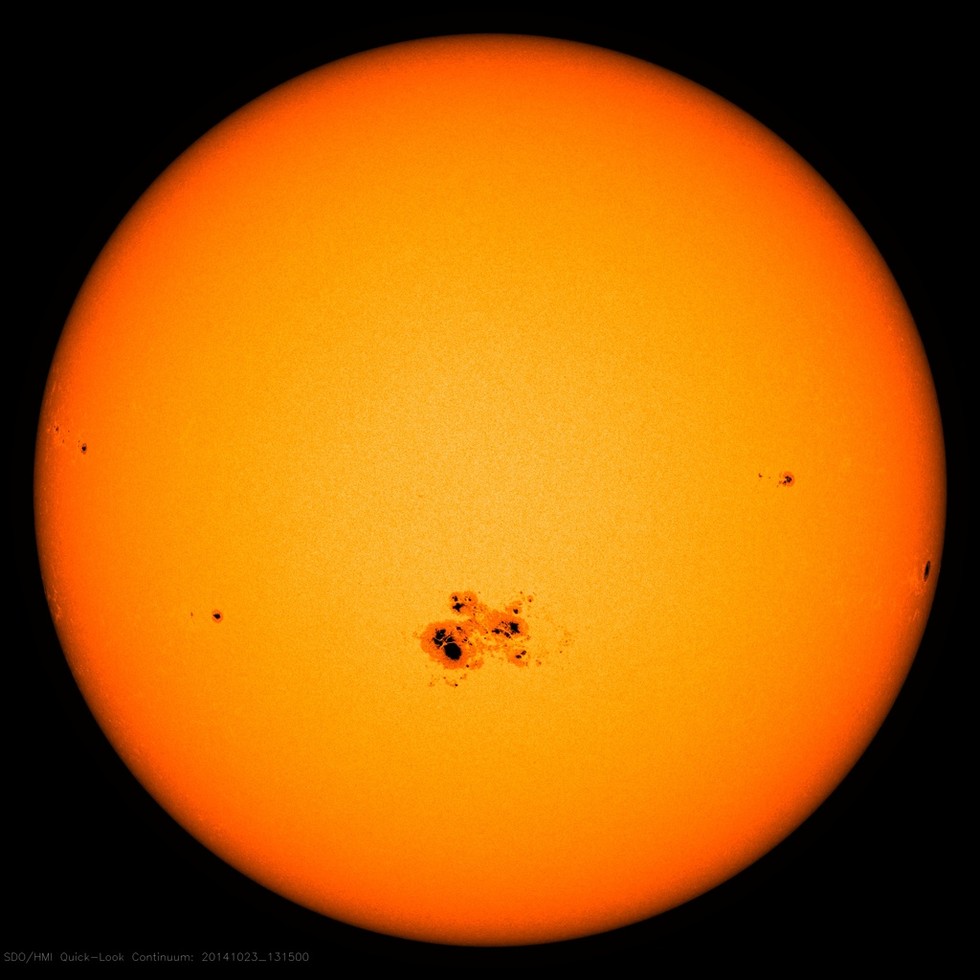
Proxima Centauri is a tiny, cool star one-tenth the size of our sun. Our sun has a regular "solar cycle" lasting approximately 11 years where magnetic activity will wax and wane. During periods of intense magnetic activity (called solar maximum) in the sun's lower atmosphere (known as the corona), we can expect frequent flares and coronal mass ejections. At this time, the sun's surface can become peppered with dark sunspots, highlighting regions where the sun's inner magnetic field is erupting through the surface (pictured above). Though dramatic, at solar maximum only around 1 percent of the sun's surface will be covered with these blemishes.
After studying Proxima Centauri, however, measurements show that a whopping 20 percent of the tiny star's surface may be covered with very dramatic-looking star spots.
This is interesting on many levels, but it may have exposed a gap in our knowledge of how our own sun works.
The key theory that drives our sun's 11-year cycle is differential rotation. Basically, the sun's upper layer rotates faster at its equator than at the poles. As its magnetic field travels from north to south, it is thought the internal magnetic field at the equator becomes "wrapped" around the sun, like an elastic band being wrapped around a ball. At a certain point, when the magnetic field is at its most stressed (solar max), the pressure is released when the magnetic polarity flips. The sun's magnetic "north" replaces the "south" and vice versa and the cycle begins again.
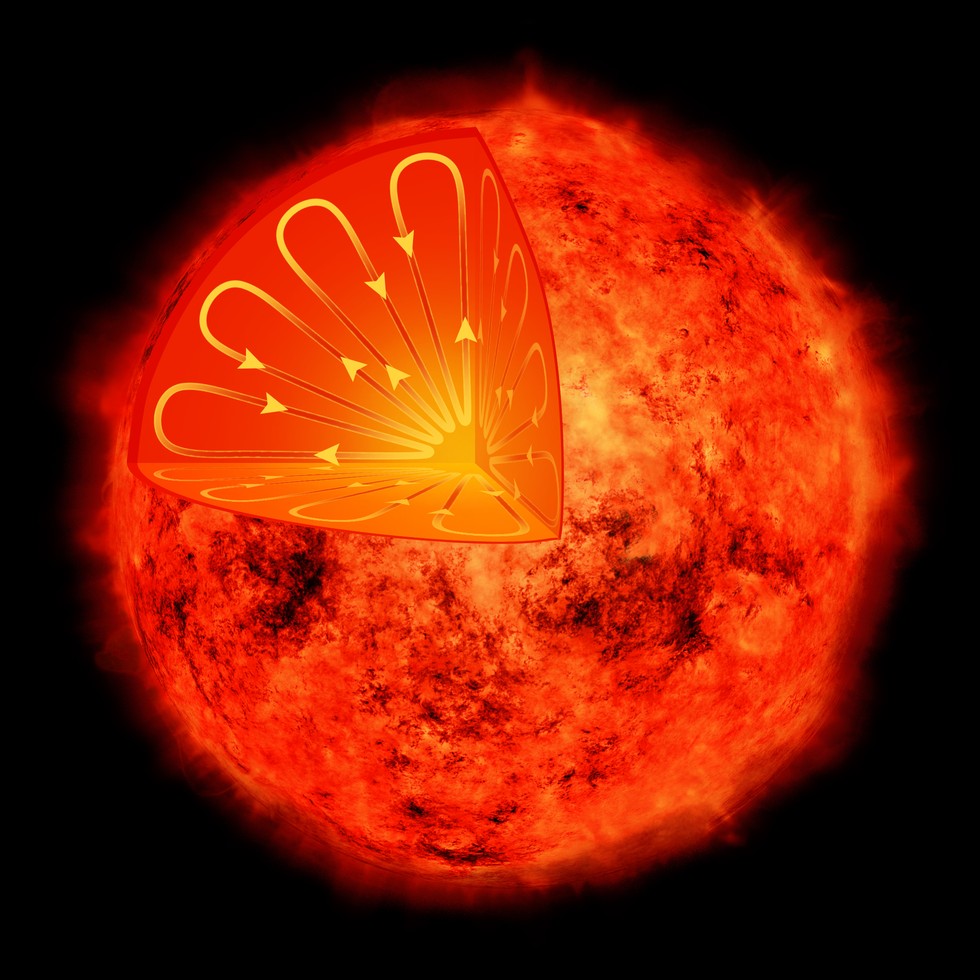
But red dwarfs like Proxima Centauri aren't thought to possess this uppermost differential rotation layer as they are too small; instead it is thought they experience convection from the core to the uppermost layer (pictured above). Without differential rotation, it's a mystery how Proxima Centauri can have a cycle, let alone a regular 7-year stellar cycle.
NASA has finally re-established contact with a sun-watching probe that was thought to be lost in space after it abruptly went silent in 2014.
A signal from the long-lost spacecraft, called STEREO-B, was detected Sunday evening (Aug. 21) by NASA's Deep Space Network, a collection of space tracking stations that follows the agency's space missions across the solar system and beyond. NASA scientists had kept vigil for STEREO-B, making monthly searches for the probe until it phoned home Sunday at 6:57 p.m. EDT (2257 GMT).
Right now, it's unclear how healthy the spacecraft is after drifting in space for nearly two years. NASA lost contact with it on Oct. 1, 2014, after commanding a reset from Earth. The spacecraft's twin, STEREO-A, is still working normally.
"The STEREO Missions Operations team plans further recovery processes to assess observatory health, re-establish attitude control, and evaluate all subsystems and instruments," NASA officials wrote in a statement.
The STEREO spacecraft twins (their name is short for Solar and Terrestrial Relations Observatory) were launched in October 2006 and were originally supposed to last until 2008. With an extended mission, however, came challenges. For example, the orbits of both STEREO spacecraft went behind the sun in 2015, for three months each.
STEREO-B was initially lost when NASA was testing a command loss timer, which is a reset triggered during solar conjunction. Conjunction was expected to happen between January and March 2015, when STEREO-B's orbit took it behind the sun, putting it out of contact with Earth.Both STEREO spacecraft have a command loss timer that resets the spacecraft every 72 hours when it is not communicating with Earth. In 2014, controllers deliberately stopped communicating with STEREO-A to test this process, and it worked perfectly after reorienting itself with respect to certain guide stars, and sending a signal to Earth.
With STEREO-B, however, the test did not play out as planned. The hard reset did occur, and STEREO-B sent a weak signal to Earth. But the spacecraft quickly faded into silence.
Only a few packets of data made it to Earth, but from that, the team concluded in December 2015 that the inertial measurement unit (which tells the spacecraft if it is rotating, and how fast) gave incorrect information into STEREO-B's guidance computer. At the time, NASA concluded that this set the spacecraft into a spin that left its solar panels out of sunlight most of the time, making it difficult to recharge the battery.
Earth's magnetosphere, the region of space dominated by Earth's magnetic field, protects our planet from the harsh battering of the solar wind. Like a protective shield, the magnetosphere absorbs and deflects plasma from the solar wind which originates from the Sun. When conditions are right, beautiful dancing auroral displays are generated. But when the solar wind is most violent, extreme space weather storms can create intense radiation in the Van Allen belts and drive electrical currents which can damage terrestrial electrical power grids. Earth could then be at risk for up to trillions of dollars of damage.
Announced today in Nature Physics, a new discovery led by researchers at the University of Alberta shows for the first time how the puzzling third Van Allen radiation belt is created by a "space tsunami." Intense so-called ultra-low frequency (ULF) plasma waves, which are excited on the scale of the whole magnetosphere, transport the outer part of the belt radiation harmlessly into interplanetary space and create the previously unexplained feature of the third belt.
"Remarkably, we observed huge plasma waves," says Ian Mann, physics professor at the University of Alberta, lead author on the study and former Canada Research Chair in Space Physics. "Rather like a space tsunami, they slosh the radiation belts around and very rapidly wash away the outer part of the belt, explaining the structure of the enigmatic third radiation belt."
The research also points to the importance of these waves for reducing the space radiation threat to satellites during other space storms as well. "Space radiation poses a threat to the operation of the satellite infrastructure upon which our twenty-first century technological society relies," adds Mann. "Understanding how such radiation is energized and lost is one of the biggest challenges for space research."
For the last 50 years, and since the accidental discovery of the Van Allen belts at the beginning of the space age, forecasting this space radiation has become essential to the operation of satellites and human exploration in space.
The Van Allen belts, named after their discoverer, are regions within the magnetosphere where high-energy protons and electrons are trapped by Earth's magnetic field. Known since 1958, these regions were historically classified into two inner and outer belts. However, in 2013, NASA's Van Allen Probes reported an unexplained third Van Allen belt that had not previously been observed. This third Van Allen belt lasted only a few weeks before it vanished, and its cause remained inexplicable.
Mann is co-investigator on the NASA Van Allen Probes mission. One of his team's main objectives is to model the process by which plasma waves in the magnetosphere control the dynamics of the intense relativistic particles in the Van Allen belts--with one of the goals of the Van Allen Probes mission being to develop sufficient understanding to reach the point of predictability. The appearance of the third Van Allen belt, one of the first major discoveries of the Van Allen Probes era, had continued to puzzle scientists with ever increasingly complex explanation models being developed. However, the explanation announced today shows that once the effects of these huge ULF waves are included, everything falls into place.
"We have discovered a very elegant explanation for the dynamics of the third belt," says Mann. "Our results show a remarkable simplicity in belt response once the dominant processes are accurately specified."
Many of the services we rely on today, such as GPS and satellite-based telecommunications, are affected by radiation within the Van Allen belts. Radiation in the form of high-energy electrons, often called "satellite killer" electrons because of their threat to satellites, is a high profile focus for the International Living with a Star (ILWS) Program and international cooperation between multiple international space agencies. Recent socio-economic studies of the impact of a severe space weather storm have estimated that the cost of the overall damage and follow-on impacts on space-based and terrestrial infrastructure could be as large as high as $2 trillion USD.
Politicians are also starting to give serious consideration to the risk from space weather. The White House recently announced the implementation of a Space Weather Action Plan highlighting the importance of space weather research like this recent discovery. The action plan seeks to mitigate the effects of extreme space weather by developing specific actions targeting mitigation and promoting international collaboration.
an artistic view of the accretion disc surrounding the black hole V404
Cygni, where the intense wind detected by GTC becomes evident.
An international team of astrophysicists, including Professor Phil Charles from the University of Southampton, have detected an intense wind from one of the closest known black holes to the Earth.
During observations of V404 Cygni, which went into a bright and violent outburst in June 2015 after more than 25 years of quiescence, the team began taking optical measurements of the black hole's accretion disc using the 10.4m Gran Telescopio CANARIAS (GTC) -- the biggest optical-infrared telescope in the world, situated at the Roque de los Muchachos Observatory (Garafía, La Palma) in the Canary Islands.
The results, which are published today in Nature, show the presence of a wind of neutral material (unionised hydrogen and helium), which is formed in the outer layers of the accretion disc, regulating the accretion of material by the black hole. This wind, detected for the first time in a system of this type, has a very high velocity (3,000 kilometres per second) so that it can escape from the gravitational field around the black hole.
Professor Charles, from Physics and Astronomy at the University of Southampton, said: "Its presence allows us to explain why the outburst, in spite of being bright and very violent, with continuous changes in luminosity and ejections of mass in the form of jets, was also very brief, lasting only two weeks."
At the end of this outburst the GTC observations revealed the presence of a nebula formed from material expelled by the wind. This phenomenon, which has been observed for the first time in a black hole, also allows scientists to estimate the quantity of mass ejected into the interstellar medium.
Teo Muñoz Darias, a researcher at the Instituto de Astrofísica de Canarias (IAC) and the lead author of the study (and also a former Marie Curie Fellow at Southampton), said: "The brightness of the source and the large collecting area of the GTC allowed us not only to detect the wind, but also to measure the variation of its properties on time-scales of minutes. The database obtained is probably the best ever observed for an object of this kind.
"This outburst of V404 Cygni, because of its complexity and because of the high quantity and quality of the observations, will help us understand how black holes swallow material via their accretion discs."
"We think that what we have observed with the GTC in V404 Cygni happens, at least, in other black holes with large accretion discs," concluded Professor Charles and Jorge Casares from IAC, two of the discoverers of V404 Cygni in 1992, and co-authors of the study.
V404 Cygni is a black hole within a binary system located in the constellation of Cygnus. In such systems, of which less than 50 are known, a black hole of around 10 times the mass of the Sun is swallowing material from a very nearby star, its companion star. During this process material falls onto the black hole and forms an accretion disc, whose hotter, innermost zones emit in X-rays. In the outer regions, however, we can study the disc in visible light, which is the part of the spectrum observable with the GTC.
V404 Cygni, at only 8,000 light years away, is one of the closest known black holes to the Earth, and has a particularly large accretion disc (with a radius of about ten million kilometres), making its outbursts especially bright at all wavelengths (X-rays, visible, infrared and radio waves).
On 15 June 2015, V404 Cygni went into outburst after a quiescence of over 25 years. During this period its brightness increased one million fold in a few days, becoming the brightest X-ray source in the sky. The GTC began taking spectroscopic observations on 17 June via the activation of a "target of opportunity" programme, designed by IAC researchers for this kind of event.
Powerful solar storms are the engine behind the intense X-ray auroras seen at Jupiter, a new study has found. This discovery was revealed after a coronal mass ejection — a vast stream of particles ejected from the sun during a magnetic storm — was observed heading out to Jupiter in October 2011.
Across two 11-hour observations on Oct. 2 and 4, researchers gathered data to create a 3-D spherical image of Jupiter. This showed where X-ray activity was most intense. They also found that during the storm, the solar wind compresses the boundary of Jupiter’s magnetosphere and creates the high-energy X-rays.
“We want to understand this interaction and what effect it has on the planet,” said lead author William Dunn, a Ph.D. candidate at University College London, in a statement.
Artist’s impression of the solar wind hitting Mars and stripping ions off the upper atmosphere.
“By studying how the aurora changes, we can discover more about the region of space controlled by Jupiter’s magnetic field, and if or how this is influenced by the Sun. Understanding this relationship is important for the countless magnetic objects across the galaxy, including exoplanets, brown dwarfs and neutron stars,” he added.
The researchers said that this will have particular relevance for the Juno mission, which is en route to Jupiter and will arrive at the planet later this year. The spacecraft is designed to study the magnetic environment around Jupiter.
The study was published in the Journal of Geophysical Research — Space Physics.