Showing posts with label 9/11. Show all posts

Sep 2, 2021

Decades after toxic exposure, 9/11 first responders may still lower their risk of lung injury

Losing weight and treating excess levels of fat in the blood may help prevent lung disease in firefighters exposed to dangerous levels of fine particles from fire, smoke, and toxic chemicals on Sept. 11, 2001, a new study shows. Experts have long feared that this exposure would later lead to lung disease in first responders. High body mass index (BMI), an indicator of obesity, and exposure to the highest levels of toxins from the attack on the World Trade Center were the two greatest risk factors for lowered lung function, according to the study authors.

After two decades of research analyzing thousands of first responders, a new investigation led by researchers at NYU Grossman School of Medicine identified a cluster of five factors that predicted lung disease in these patients. Along with excess body fat, the combination of insulin resistance, high blood pressure, and increased levels of sugar and cholesterol in the blood are components of so-called metabolic syndrome, a group of medical issues known to raise the risk of heart disease, stroke, and diabetes.

Adjusting at least one of these factors, the study investigators found, can greatly lower the risk of firefighters' developing lung disease within five years, even 20 years after toxic exposures at Ground Zero. For example, for a male firefighter of average height, a 7-pound weight loss could decrease his risk for lung injury by 20 percent.

"Our findings should reassure World Trade Center first responders that there are steps they can take to protect their lungs even decades after exposure," says study co-lead author Sophia Kwon, DO, MPH. Kwon is a fellow in the Division of Pulmonary, Critical Care, and Sleep at NYU Langone Health.

In work presented earlier this year on 100 overweight 9/11 firefighters, the team found that placing patients on a calorie-restricted Mediterranean diet featuring unrefined grains, olive oil, fruits, and fish reduced their risk of lung disease. Those following the regimen for six months lost nearly 2 BMI points (from an average BMI of about 33 to an average of 31) and had fewer signs of lung disease than they had reported before the study period.

"These results offer firefighters a concrete way to lose weight and achieve the lung-health benefits predicted by our risk model," says study co-lead author George Crowley, BA, a predoctoral fellow at NYU Langone.

Experts had previously understood that first responders who developed metabolic syndrome shortly after 9/11 were more likely to have higher rates of asthma. However, lung injury risks for a firefighter whose metabolic syndrome instead appeared later in life remained unclear until now.

The new study, publishing Sept. 2 in the American Journal of Respiratory and Critical Care Medicine, is part of what is likely the longest-running and most thorough exploration of the impact of metabolic syndrome on lung injury in 9/11 firefighters, according to the study authors. In addition, the investigation is the first to date to quantify how adjusting one or more of these risk factors changes lung disease risk.

For the investigation, the research team analyzed 20 years of data from more than 5,700 firefighters active on 9/11, of whom 1,475 later developed lung disease. Along with BMI, the data collected included smoking history, and whether they had served at the World Trade Center in early morning when pollutant exposure was at its peak.

"The lessons from our investigation can be applied not only to firefighters but to the millions of city dwellers exposed to air pollution on a daily basis," says study senior author and pulmonologist Anna Nolan, MD. "They should be aware that while their environment poses real health risks, they may still minimize their risk of lung disease even if they cannot change their exposure."

Nolan, a professor in the Departments of Medicine and Environmental Health at NYU Langone, cautions that while promising, the Mediterranean diet investigation only examined a small, specific group.

As a result, the research team next plans to expand the study to determine whether the diet could benefit a more diverse population who have been similarly exposed to urban pollutants. They also plan to explore how metabolic syndrome may affect other measures of lung function like asthma, says Nolan.

Read more at Science Daily

Sep 11, 2017

Children Exposed to Toxic 9/11 Dust Show Signs of Heart Disease as Young Adults

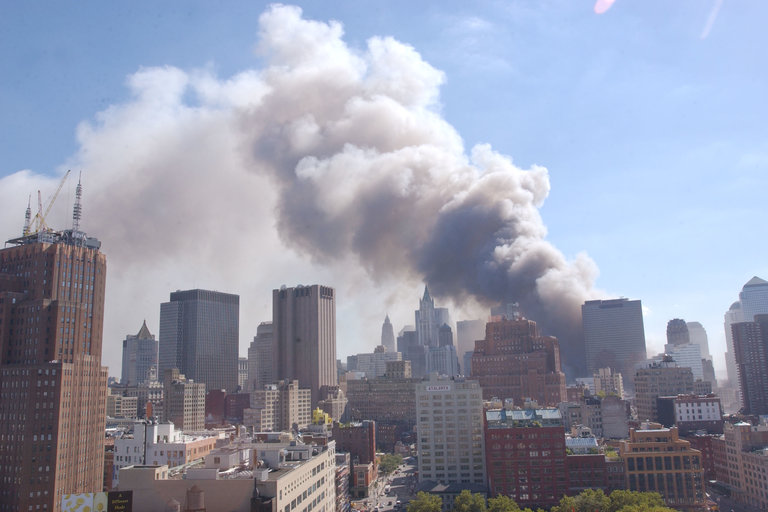
Dust swirls around south Manhattan after a tower of the World Trade Center collapses September 11, 2001 in New York City after two airplanes slammed into the twin towers in a terrorist attack.
Americans still contend year-to-year with the legacy of the 2001 terror attack that destroyed the World Trade Center in New York. According to a recent study, several hundred young adults who were exposed to toxic dust and debris on 9/11 as children are now showing early signs of risk for heart disease.

Researchers at NYU Langone Health examined the blood of 308 people who had either lived or studied in Lower Manhattan as children on the day of the attacks. Nearly half of the participants came into direct contact with dust and debris from ground zero.

The analysis, which was conducted by a team led by Dr. Leonardo Trasande, a health epidemiologist and associate professor at NYU School of Medicine, found that those with higher levels of the chemicals known to be in debris from the World Trade Center also had greater levels of artery-hardening fats in their blood.

Several studies have examined the mental health effects of witnessing the tragedy on 9/11 and studied the toxic impact on the health of first responders, but according to Trasande, this is the first study to look at the long-term cardiovascular health risks of children exposed to chemicals when the World Trade Center was attacked.

“Children are a vulnerable population that was unfortunately exposed to the debris and dust from ground zero on 9/11,” Dr. Trasande told Seeker. “There is still a big gap of research when it comes to the potential risks that may have an impact on their physical health.”

The study participants are part of the World Trade Center Health Registry (WTCHR), which is tracking both the physical and mental health effects of 2,900 children who lived or went to school in Lower Manhattan on 9/11.

Children cover their mouths in the SoHo neighborhood of New York on September 12, 2001. Smoke filled the air all over lower Manhattan in the aftermath of Tuesday's terrorist attack and destruction of the World Trade Center.
In January, a Langone analysis of several WTCHR participants showed that those who were present near ground zero on 9/11 had higher levels of PFAS (perfluoroalkyl substances) in their blood than the participants who were not in the city on that day.

“We found that higher serum levels of PFAS are associated with increased blood lipids,” Trasande said. “Blood lipids are an early marker of cardiovascular risk, and if ignored may lead to adverse outcomes later in life like coronary artery disease or stroke.”

Luckily, these risk factors “can be avoided if identified earlier on,” Trasande noted, explaining that they can be somewhat controlled with diet and exercise.

“Understanding these risks is essential for continuous monitoring and early interventions to prevent adverse cardio-metabolic outcomes in the future,” he said.

The presence of PFAS in the air on the day of the attacks came from the many electronics and furniture that burned in the World Trade Center after terrorists flew airliners into the two towers. PFAS was once widely used in the US to make plastics more flexible but the government discontinued it after learning its many adverse health effects, including lower-than-normal birth weights and brain damage.

“Our study showed that there was an association with PFAS and increased blood lipid levels in children exposed to WTC debris and dust,” Trasande said. “During this unfortunate tragedy it was nearly impossible to avoid the chemicals that were being released into the environment, however, there were various chemical pollutants that were released that day. Further studies are clearly needed to identify which other pollutants or collection of pollutants may have affected physical health.”

Another study from the Journal of Psychiatric Research found that people exposed to dust on 9/11 also had raised blood levels of C-reactive protein (CRP). CRP can cause inflammation and is linked to higher rates of post-traumatic stress disorder. It was discovered that people with high levels of CRP had a 12 percent greater risk of PTSD than people whose CRP was not elevated.

Since the World Trade Center collapse 16 years ago, thousands of firefighters, emergency personnel, and other first responders have suffered illnesses related to 9/11. More than 5,400 people have been diagnosed with cancer caused by breathing in the toxic chemicals in the air during the hours and days after the attacks. On Monday’s anniversary, 32 FDNY firefighters, whose deaths were caused by 9/11-related illnesses, will be added to the list of the fallen.

Payouts by the 9/11 Victim Compensation Fund have reached nearly $3 billion since it was reopened. The VCF was created in 2001 to support families of those injured and killed on 9/11 and paid out $7 billion before it was closed in 2004. Due to the abundance of illnesses related to the attacks, it reopened in 2011 to provide additional financial support for victims and their loved ones.

From Seeker

Sep 11, 2016

15 Years After 9/11, Americans Don't Feel Safe

Today marks 15 years since the 9/11 attacks, and memorials will be held around the country in remembrance of the nearly 3,000 lives lost in New York, Washington, D.C. and Pennsylvania that day. Arriving in time for the anniversary are a pair of polls that show that Americans are increasingly concerned about the possibility of a terrorist attack on U.S. soil.

According to a CNN/ORC poll (PDF) released on Friday, half of Americans expressed the feeling that an act of terrorism during the days surrounding Sept. 11 this year is "very" or "somewhat" likely. Five years ago, 39 percent of Americans had the same premonition.

In the last five years, there have been a number of large-scale terrorist attacks both in the United States and internationally, many of which are tied to the rise of ISIS. Within the U.S., the Boston Marathon bombing in 2013, San Benardino shooting last year and the Pulse nightclub massacre earlier this summer were mass-casualty events in the past half decade that increased Americans' sense of unease. In Europe within the last 12 months, terrorists struck in series of coordinated attacks in Paris, airport bombings in Brussels and a truck attack at a Bastille Day event in Nice.

These new attacks are also contributing to the increasing sense of fear and anger Americans feel when reflecting on 9/11, the CNN/ORC polls finds. Forty percent of Americans said they felt fear and around three-quarters anger when looking back to 9/11. Five years ago, those numbers stood at 62 percent and 30 percent, respectively.

A Pew Research Center poll released Wednesday paints a similar picture. Forty percent of Americans says that the ability of terrorists to strike in the United States is greater than it was on Sept. 11, 2001, and 31 percent believes terrorists' ability to launch an attack are about the same.

In Pew's numbers, there is also a sharp partisan divide in terms of how Americans feel about the liklihood of a major terrorist attack, reflecting an increasingly polarized political landscape during an election year.

Nearly 60 percent of Republicans consider the ability of terrorists to attack as greater than at the time of 9/11, Pew finds, while 34 percent of independents and 31 percent of Democrats felt the same.

"Opinions about terrorists' capabilities to attack the U.S. have long been divided along partisan lines," the center writes. "During George W. Bush's presidency, Democrats were often more likely than Republicans to say the ability to terrorists to launch a major strike was greater than at the time of 9/11, while the reverse has been true during Barack Obama's administration."

"But this marks the first time in the past 14 years that a majority in either party has expressed this view," the report continues.

From Discovery News

Sep 11, 2015

Last Surviving 9/11 Rescue Dog Gets a Birthday Bash

A female golden retriever named Bretagne is the last living rescue dog that worked in lower Manhattan in the rubble of the fallen Twin Towers after the September 11, 2001 terrorist attacks.

In honor of her 16th birthday, the website BarkPost.com threw her a birthday bash in the Big Apple.

Bretagne's handler and owner Denise Corliss, a member of the Texas Task Force 1 rescue team, worked with Bretagne searching for survivors after the attack. It was Bretagne's first deployment, according to BarkPost, and the pair have been together ever since.

In the BarkPost video above, you can get a front-row seat for Bretagne's trip to New York with Corliss, her party, and even her trip to Times Square.

Happy Birthday, Bretagne! And thanks to Corliss, Texas Task Force 1, and all of the rescue workers out there for all you do!

From Discovery News

No 'Specific or Credible Threats' on 9/11 Anniversary: FBI Chief

The Federal Bureau of Investigation said Thursday that it has picked up no “specific or credible threats” linked to the anniversary of the September 11, 2001 attacks on the United States.

FBI director James Comey said it was closely watching for threats from Al-Qaeda or Islamic State, but told a conference on intelligence “there are not any specific or credible threats tied to tomorrow.”

Friday is the 14th anniversary of the attacks that brought down the World Trade Center in New York and destroyed part of the Pentagon, killing nearly 3,000 people.

The attack by Al-Qaeda militants flying hijacked airliners was the deadliest ever on US soil, and propelled the United States into an era of wars in Afghanistan and Iraq.

Admiral Michael Rogers, head of the National Security Agency, said September 11 was “clearly a date that resonates for a lot of people.”

“You hear groups talking about the significance of that date,” he said at the same conference. “But I wouldn’t say that it is as high as I have seen… in the last 14 years.”

From Discovery News

The Near-Impossible Challenge of Designing the 9/11 Museum

One of the last photos taken of the intact Twin Towers, snapped minutes before they were struck on September 11. It hangs in the new ­museum’s concourse lobby.
You descend into the museum on a long ramp, sloped so gradually that you barely feel your steps gathering momentum. It’s as if you’re gently being pulled into orbit. Then you walk out onto an underground balcony overlooking the museum floor, some 40 feet below, and gaze out into a vast, nearly empty space punctuated by the Last Column—the final piece of steel hauled away from Ground Zero during cleanup. Weighing 60 tons and standing nearly 40 feet high, it’s still covered in spray-painted messages, tributes to the dead left by those who did the work. (“My brothers, you ran into hell,” one reads.) You get an overwhelming sense of absence and awe. There may be no public space more cavernous in New York City, and the vista was designed to preserve the dizzying experience of looking into the gaping pit left when the cleanup was complete in the spring of 2002.

To your left is the Slurry Wall, a 3-foot-thick concrete barrier studded with iron pilings that once girded the foundations of the site and managed to hold even after the towers fell. The wall still seems both immovable and ­fragile. It’s what keeps the Hudson River from drowning this space, which is an unprecedented hybrid of archaeological site, cathedral, and tourist attraction.

As you keep walking downward, the ramp switches back, and you pass by a quote rendered in metal letters 15 inches high and cast from steel recovered from the original Twin Towers: NO DAY SHALL ERASE YOU FROM THE MEMORY OF TIME. It’s a line by Virgil, who, in the Inferno, serves as Dante’s guide through hell. Stepping off the ramp and passing down a flight of stairs and a hallway, you are now 70 feet belowground, standing on the bedrock that rooted the Twin Towers.

Twenty feet above your head hangs a piece of steel more than 35 feet long and weighing nearly 5 tons. It’s positioned vertically on the side of a massive silvery cube that marks the outline of where the North Tower once stood. Twisted like a ribbon blown in the wind, it has a ter­rible beauty. This and a counterpart down the hall are the “impact steel,” the columns hit by the first passenger jet when it slammed into the North Tower almost 13 years ago. You pass under one of the steel pieces and through a pair of plain glass doors to enter the main exhibits of the National September 11 Memorial Museum.


Watch this video on The Scene.

 Historical museums typically serve as a way to tell the official story of something that happened and what it means. This one is different. “It is a story that has no end,” says Paula Grant Berry, a ­museum-­planning-­committee member whose husband died in the South Tower. The events of 9/11 are still raw in our memories and alive in our political and cultural climate.

For the museum’s designers and curators, that tension led to a ­tangle of quandaries: How can you present a lasting memorial to an event whose impact is still unspooling through developments such as the Edward Snowden leaks and the Senate’s torture report? How can you speak to 9/11’s polarizing effects, such as the ­bungled search for WMD, without alienating some significant portion of your audience? How can you create a meaningful tribute that will resonate with every visitor: the school­children who know almost nothing of what happened, survivors who ran from the buildings covered in ash, and all those—more than a billion worldwide—who experienced the attack live on TV? “Conventional narrative wouldn’t cut it,” says Alice Green­wald, director of the museum, which opens in May.

Perhaps the most vexing problem of the project’s design, which incorporates thousands of artifacts, is that it risked becoming one massive trigger for victims and a trauma in its own right for everyone else. “This is not the Disney World of 9/11,” says Green­wald, a petite, dark-haired woman whose room-­filling good cheer belies the material she has absorbed and calibrated. “We weren’t going to immerse ­people in the experience.” As Jake Barton, founder of Local Projects, which helped design the space, says, “That was the first, panicking challenge: How do you rise to the event itself for the ­people who lived it without overwhelming everyone else?” The fear of seeming hasty or naive was almost paralyzing. “Usually, as designers, you try to create meaning. Here there was almost too much of it,” Barton says.

The museum’s creative team ­tackled these emotional and psychological challenges through a combination of sophisticated design and artfully deployed technologies: a data-mining algorithm, onsite digital recording booths, a web-based platform for gathering crowdsourced testimony, touchscreens that let you access remembrances of the dead. The result isn’t so much a record of an event as a testament to how much we’ve all witnessed—no one more so than the survivors and family members, whose experiences are almost impos­sible to imagine until you hear from them yourself.

Foundation Hall | The last column stands wrapped in protective canvas. The installation called timescape is projected on the wall behind it.
 The museum began to take shape eight years ago in a generic office on the 20th floor of One Liberty Plaza. In late 2001, the room, which features a view of Ground Zero, was set aside by the Lower Manhattan Development Corporation as an interim memorial space for the families of victims. The windows and walls were soon papered over with remembrances. To glimpse Ground Zero at all, you had to peer through the narrow spaces between pictures of ­people who had died. Many were small framed photos like the ones you’d see on a nightstand; a few were kids’ drawings with pictures ­stapled to them. At the center of the room was a podium bearing an oversize guest book filled with notes written to the dead. It remains in place today, off-­limits to everyone except families. (A new private family room in the museum will replace this one later in 2014.)

Tom Hennes first visited the room in 2007, soon after his firm, Thinc, won the original museum commission. It felt like a time capsule. Hennes remembers that the notes were written in the present tense; one woman wrote to a relative asking for his approval of her new boyfriend, whom she’d brought with her. “The room tuned us in to what trauma means,” Hennes says. “Time had stood still.”

To the designers, the very rawness and variety of expression suggested an answer to a central challenge: how best to present events when, as William Faulkner once wrote, “the past is never dead. It’s not even past.” Instead of providing its own interpretive explanations, the designers realized, the museum could focus on direct testaments from the ­people who had experienced it. The hope was to avoid a ­single story line and instead allow visitors to reconstruct narratives on their own, using the artifacts on display. “Witnesses are the way into the museum,” Green­wald says.

It was an approach that Barton had been inching toward for more than a decade, influenced by such Anna Deavere Smith plays as Twilight: Los Angeles, 1992. For that meditation on post–­Rodney King racial resentments, Smith conducted more than 300 interviews and then condensed the material into four dozen characters. She portrayed each of them herself, one blending into the next. “It was a lightning bolt,” Barton says. “It was really an exercise in empathy, in trying to find the humanity of everyone involved.” Ever since, Barton has used this as his inspiration in commissions that integrate mul­tiple narrators. For ­example, Local Projects designed the oral history booths for Story­Corps, a project that is collecting thousands of personal stories and archiving them at the Library of Congress.

The Goal: Create A Meaningful Tribute to the Victims without Traumatizing the Visitors.

Voices are the first thing you hear in the museum, in the vestibule that precedes the entrance ramp: 417 ­people completing one another’s sentences. These are not from the victims but ­from people around the world who contributed their own 9/11 recollections via phone, video, or a web-based platform. Their words are mapped to hundreds of cities across the globe and then projected onto a series of staggered panels. As you walk around and stand in front of the screens, the words project around you, enveloping you in their stories.

Visitors are invited to bear witness again as part of Reflecting on 9/11, one of the museum’s signal installations. It consists of videos projected on massive walls and featuring interviews with figures who shaped our responses to 9/11, from the head of the ACLU to then defense secretary Donald Rumsfeld. They answer intentionally broad questions such as, how do you balance national security and personal freedom? Visitors, in turn, can answer the same questions in their own booths next to the installation. The curators can then pick visitor responses to display on the main wall.

But the same intimacy that makes all these voices so powerful can also make them overwhelming. The curators had access to thousands of hours of recordings of witnesses, survivors, and victims—voicemails, 911 calls, even radio call-ins. These posed a dilemma: Experts like Billie Pivnick, a clinical psychologist who worked closely with the designers, warned that hearing victims’ voices in the throes of terror could traumatize listeners. Even for the designers, direct access to the material proved difficult. “It felt like being a war correspondent,” Barton says. He recalls having persistent nightmares about buildings crumbling. Some ­people on Hennes’ team burst into tears at unexpected moments, unable to explain why the material, which seemed so familiar one day, was intolerable the next.

With this in mind, the curators had to decide which recordings were appropriate. For ­example, they opted not to include a 911 call from a woman trapped on a high floor who knew she wasn’t going to survive; the call ends with her simply praying with the operator. They did decide to include a voicemail that 24-year-old Brad Fetchet left for his mother minutes after the first plane hit the North Tower. “Hey, Mom. I’m obviously alive and well but obviously pretty scared … Love you.” Fetchet died in the South Tower. Green­wald admits that these were judgment calls. The choices usually favored the recordings in which ­people, even those who died, seemed most in control.

Chosen Paths

The 9/11 Memorial Museum uses technology and artful curatorial techniques to bring personal testimony to the fore without overwhelming visitors’ emotions. Here’s how the curators pulled it off. —C.K.

Historical Exhibition The bulk of the material lies in a chronological exhibit of media and artifacts about 9/11. 1 | Day of the Attacks Visitors follow the day’s events starting at 8:46 am on September 11, 2001, the moment the first plane hit the North Tower. Alcoves house the most emotionally sensitive material. The toughest exhibit to create was the one that depicts the people who jumped or fell from the towers. To avoid aestheticizing the event, designers stripped the display of nearly all adornment. 2 | Looking Back The museum then turns back the clock to understand the history leading up to 9/11, showcasing artifacts like a laptop used by the FBI as evidence linking the 1993 World Trade Center bombing to al Qaeda and the 2001 attacks. 3 | Aftermath This is where visitors follow the recovery after the attacks, viewing such artifacts as a preserved storefront covered in dust, and steel that was mangled in the burning towers’ collapse. 4 | Reflecting on 9/11 Here visitors can watch key figures such as Eric Holder and Donald Rumsfeld answer questions about how the attacks affected government and society.

Location The National September 11 Memorial’s twin reflecting pools (squares) mark the footprints of the North and South Towers aboveground. The 9/11 Memorial Museum lies below.

Memorial Exhibition The ­people who died on 9/11 and in the 1993 World Trade Center attack are remembered in pictures mounted on the perimeter of the room. Visitors can see and hear materials from an ever-­expanding archive in an inner chamber designed to encourage eye contact among visitors.

Last Column Standing nearly 40 feet high, the Last Column was the final piece of steel removed from Ground Zero. At the museum, touchscreens allow you to pan around images of the entire column so you can read inscriptions alongside annotations of the stories behind them.

Exposed Box Columns The original steel columns, once used to anchor the North Tower to the bedrock, have been sheared to floor level here.

Timescape An algorithm collects headlines related to 9/11 and projects them on a concrete wall, evoking the attacks’ effect on current events.

That element of control is emphasized in the museum’s layout, which allows visitors to decide how much of the most emotionally provocative moments they will experience. The main path through the historical exhibit is dominated by physical artifacts—a storefront preserved from a block adjacent to Ground Zero (complete with dust-­covered blue jeans and sweatshirts emblazoned with American flags), the hand rakes used to sift the site for remains, mangled steel from the building. But the curators ­struggled most with how to present hundreds of more personal audio recordings and visual records. In the end, they decided to put this sensitive material inside alcoves placed off the main pathway through the exhibit. To confront these collections, you have to seek them out.

The most difficult alcove to design was the one dedicated to the ­50 to 200 men and women—the exact number is not known—who, overwhelmed with heat and smoke, jumped or fell from the buildings. “Those ­people were on a ledge and feeling like they had no option but to step into a sky that would not support them,” says Joe Daniels, president of the 9/11 Memorial and Museum. “It is so unbelievable. Maybe you don’t show it.” And yet, after much intense debate, the board overseeing the museum, including Daniels, voted unani­mously to dedi­cate an exhibit to those victims.

Some suggested a ­simple text panel and a statistic printed on the wall, nothing more. Others thought the video footage had to be used. Between these poles of detachment and immediacy, Green­­wald says, was a limit­less range of possibilities. One initial, commonsense idea gathered support: Mount pictures of ­people falling, in ­simple frames. And yet the effect, once tested, was horrifying. “It was the equivalent of a gallery display,” Green­wald says. “It aestheticized the moment. We recoiled from it.” They tried video in turn, and this created a gruesome loop as the event ran to its awful conclusion over and over.

The exhibit that finally emerged after dozens of prototypes is so artful that it seems almost totally undesigned. The entrance is marked by a photo of a small group of ­people on the street, looking up in shock. One woman is gazing just past the camera, covering her mouth. “There were a ­couple of instances when we said, there is no other photo pos­sible,” Green­wald says. “You know from this photograph what they’re looking at.” Once you step into the alcove, you see a ­single picture, mounted on a stout column that dominates the center of the room. Titled “Trapped,” it shows men and women leaning out of the towers’ broken windows, with black smoke streaming out from behind them. On the walls surrounding you are quotes from ­people who witnessed victims jumping or falling:

They were ending their life without a choice, and to turn away from them would have been wrong.

This woman stood there for what seemed like minutes, then she held down her skirt and then stepped off the ledge. I thought, how human, how modest, to hold down her skirt before she jumped.

You won’t see anyone falling unless you make your way around the big column to a nook at the back of the room. There, 3 feet above your head, are projected a series of five still photographs of ­different people falling from the towers. They fade from one to the next, in a slow progression that gathers no rhythm. “We don’t ask the person jumping to repeat the act over and over again,” Green­wald says.

That room, designed by David Layman, made it pos­sible to present potentially explosive imagery without glossing it over or causing offense. But when it came to presenting the ways that 9/11 shapes political debate, current events, and news coverage, the curators resorted to a different tool altogether: an algorithm. “The system lets the curators say they haven’t set an agenda,” Barton says. The algorithm, coded by Local Projects, sifts through the news of the day, finding nuggets relating to 9/11 and extracting connections among them. Its output is projected on a concrete wall as an enormous graph some 34 feet across. Dubbed Times­cape, it is a constantly evolving chart of news ­articles connected to 9/11. At times it looks like a spray of data points charted against two axes: time versus frequency. Each point is labeled according to a topic or theme, from lead hijacker Mohammed Atta to the Snowden leaks. As the display cycles, each theme is unfurled in a new, more detailed chart that reveals the series of headlines that relate to it.

Academic researchers and even the Associated Press have experimented with using similar data-­mining technologies to sift through massive document archives such as the Chelsea Manning leaks. But Local Projects wasn’t sure any of them would work for the museum. Confirmation came suddenly when Dylan Fried, one of the programmers coding the algorithm, was checking the themes and ­articles the machine was culling line by line. Fried, only 11 years old at the time of the 9/11 attacks, came upon a funny acronym and Skyped a colleague: “Who’s this KSM guy?” He was, of course, Khalid Sheikh Mohammed, master­mind of the attacks, and he kept popping up as a detainee at Guantanamo Bay and linked to the 2002 Bali nightclub bombing. “This algorithm showed Dylan a whole world of connections,” says Sundar Raman, Fried’s colleague. In other words, it worked.

The algorithm’s precision offers startlingly sharp insights about the ebb and flow of current affairs. It doesn’t elide what’s there, and it doesn’t overplay or underplay some themes for emphasis, as a curator inevitably would. It simply shows events for what they are, in news headlines. In that way, its effect is akin to the polished black granite of the Vietnam Veterans Memorial, which allows visitors to see their own reflections atop the inscribed names. Architectural critics have given almost metaphysical weight to the fact that the memorial’s ­marble literally mirrors the present day. At the 9/11 Museum, the mirror is a math equation.

Moral philosopher Avishai Margalit, in his meticulously reasoned book The Ethics of Memory, wrote, “We need morality not so much to counter evil as to counter indifference.” By that measure, a museum like this one must aim to shake the familiarity that robs us of our shock and horror, blunting our moral reactions. Tom Hennes, who’s something of a museum radical, echoed that idea from the start. He doesn’t believe museums should be venues for education but rather places of encounter. He offers an ­example: “Natural history museums are lousy at teaching natural history,” he says. “But they can provide a new sense of wonder that changes your next walk in the woods.”

Hennes is proudest of the museum’s memorial, which lies apart from the historical exhibit, in the footprint of the South Tower. He and Barton designed the space, which presents stories and artifacts provided by the fami­lies of victims. The challenge was to somehow satisfy all the families, each of whom may have envisioned a different form of memorial. Hennes and Barton’s solution is not a grand architectural gesture, just a ­simple square room of about 3,000 square feet.

Upon entering, you are surrounded by the faces of those who died, shown in mounted photos arrayed in neat alphabetical rows, from floor to ceiling, on all four walls of the room. In the center are the four walls of another, smaller room of about 700 square feet. In the space between the outer and inner walls there are waist-high tables embedded with touchscreen versions of the portraits on the walls. Touch one and you can see more pictures of that person, audio recordings of their family’s remembrances, and an obituary. (The archive will grow over time as loved ones add more artifacts.) You can then choose to pro­ject or play those items in the inner room.

Impact Steel | These exterior columns bore the blow when flight 11 slammed into the north tower.
As you walk into the inner chamber, the perimeter is lined with benches facing inward. The floor is glass, and below your feet you can see the scarred bedrock that once supported the towers. The recorded material you selected plays across two opposite walls, which are covered in ultrasuede to ­muffle the sound and lend the room a hushed stillness. The entire space is designed for eye contact, like a Quaker meetinghouse: On the perimeter, you meet the gazes of the other visitors. The experience is communal—but also intimate.

It’s hard to miss the resemblance to the original memorial room at One Liberty Plaza overlooking Ground Zero. Just as that room had windows papered over with pictures and a ledger in the center for family remembrances, this new memorial has a perimeter of pictures and an inner chamber for displaying family recollections of the lost. Hennes says the similarity wasn’t strictly intentional, but he allows that the original memorial room may well have exerted an unconscious influence on him and his colleagues.

Read more at Wired Science

Jun 25, 2015

Near-Death Experiences Change the Brain

On Aug. 24, 2001, Air Transat Flight 236, bound for Lisbon from Toronto, rain out of fuel over the ocean. For 30 minutes, the 306 passengers and crew on board lived with the realization that their plane could crash — and they could all die.

The plane eventually crash-landed in the Azores and all survived (80 were hospitalized), but the experience became seared in the survivors’ brains.

Now brain imaging shows the trauma literally changed the survivors’ brains.

Brain imaging of eight of those passengers, conducted nine years later, revealed the memories of that terrifying experience remained crystal clear and lit up distinct areas of the brain related to memory, emotion and visual processing.

The event also appears to have heightened their reactions to other negative life events.

“This traumatic incident still haunts passengers regardless of whether they have PTSD or not,” lead researcher Daniela Palombo, a post-doctoral researcher at the Boston University School of Medicine, told the Toronto Star.

“They remember the event as though it happened yesterday, when in fact it happened almost a decade ago (at the time of the scans).”

The neuroimaging study — believed to be the first examination of a group of people who all experienced the same trauma — was published online in the journal Clinical Psychological Science (CPS).

“Research on highly traumatic memory relies on animal studies, where brain responses to fear can be experimentally manipulated and observed,”  Brian Levine, senior scientist at Baycrest’s Rotman Research Institute, professor of psychology at the University of Toronto, and senior author on the paper, said in a press release. “Thanks to the passengers who volunteered, we were able to examine the human brain’s response to traumatic memory at a degree of vividness that is generally impossible to attain.”

For the study, eight survivors were placed inside a functional magnetic resonance imaging (fMRI) scanner. While inside the machine, they watched a video containing news clips related to the Air Transat flight and recalled their harrowing experience a decade ago.

The scanner showed that areas of the brain associated with emotional memory — the amygdala, hippocampus, and midline frontal and posterior regions – lit up very distinctly as they remembered the event.

The timing of the Air Transat incident permitted researchers to introduce another factor in their study. Since the attacks of 9/11 occurred just three weeks later, the researchers then asked the subjects to recall the less personal trauma of the terror attacks.

Read more at Discovery News

Sep 11, 2014

Faces of 9/11: Where are they now?

A voice on the phone. A cry in the dark. A flag raised amid death and devastation.

These are the stories forever linked with the September 11, 2001, terror attacks in New York, Washington and western Pennsylvania.

In some cases, they are tales of ordinary people caught in extraordinary circumstances -- people who became symbols of comfort and hope for a grieving nation.

Then there were those who were behind the attacks, people who have become the emblem of evil.

On the 13th anniversary of the attacks, here is a look at some of those people -- then and now:


Lisa Jefferson, the voice

Then:


Hers was the voice on the other end of the line for Todd Beamer, the passenger aboard United Flight 93 whose last purported words -- "let's roll" -- became a rallying cry for the nation in the days following the terror attacks.

It was 9:45 a.m., when Beamer placed a call to an operator at a Verizon Airfone call center in Chicago and relayed that the airplane bound for San Francisco had been hijacked. The operator turned the call over to Jefferson, the supervisor on duty.

Beamer was calm as he detailed how three men had taken over the flight. Two had knives and had locked themselves in the cockpit, and one had a bomb strapped to his waist.

He told Jefferson about his children and his wife, Lisa.

"I had asked him, did he want me to place his call through to his wife for him. He told me that he didn't want me to put him through to her in case he didn't have to. He had hoped on landing that plane safely. And he told me if I didn't make it, would I please call her and let her know how much he loved her and his family," she told CNN in 2002.

"... After we said 'The Lord's Prayer,' the plane took another dive. And Todd said they had a plan. The next thing he said, 'Are you ready? OK, let's roll,'" she told CNN in 2001.

"And that's the last I heard from him.''

In the days that followed, she relayed Beamer's message to his wife.

Now:

Jefferson, 57, no longer answers telephone calls at the call center. She's changed jobs.

Most of her colleagues now don't know that she was the calm, caring voice who prayed with Beamer in his final minutes.

Sure, she's talked about it in the years since. At the urging of others, she even told her story in the book "Called: Hello, My Name is Mrs. Jefferson, I Understand Your Plane is Being Hijacked?"

The story of that conversation has been told and retold -- in books and articles, in movies and television shows.

But during a recent interview, Jefferson asked that no details about her current job or employer be made public.

"Every time I tell the story, it's like the first time," she said. "... I'm not a hero. I was just doing my job."

That day, after she took over the call, she said she turned around to hand off the phone to someone else. But, she says, there was no one there.

"I had to stay on the line," she said. "I stayed with him until the end."

She has credited her faith with giving her the strength to offer comfort and care during that 15-minute call.

"God had a purpose for me with the Beamer family," she said.


 Josephine Harris, the angel

Then:


Her story of survival is wrapped up with six firefighters who say they made it through the collapse of the World Trade Center's North Tower because they were trying to rescue her.

Harris, like so many, was trying to make her way down the stairwell of the North Tower.

Flight after flight, she descended. She stopped on the 20th floor, physically unable to take another step on her own.

The firefighters of Ladder Company 6 were on the 27th floor or so of the building and still climbing when then-Capt. Jay Jonas got a call on the radio that the South Tower had collapsed and he needed to get his men out of the North Tower.

"It was an almost empty feeling that we couldn't help anyone," Jonas, now a deputy chief, said this week.

As they were making their way down the stairwell, they found Harris. There she was, crying in the doorway, Jonas said.

"Hey Cap, what do you want us to do?" one of the firefighters asked. "Take her with us," Jonas said.

Half-carrying Harris, the firefighters continued to make their way down, slowly.

The clock was ticking.

By the time they made it to the fourth floor, Harris fell to the ground.

Leave me, she ordered the firefighters. They, of course, refused.

Then it happened. The 110-story building collapsed.

"It seemed like forever," Jonas said. It was only 13 seconds.

When it was over, Harris and the men of Ladder 6 were alive, entombed in the debris.

"There was only one time she lost her composure," Jonas said. "She said she was afraid, and she started to cry."

Without orders from the captain, the firefighters took turns caring for Harris until hours later when the thick dust settled and they were able to see a way to get out and get help.

"She was definitely alive because of us," Jonas said.

And they were alive because of her.

"She chose the fourth floor to stop, to fall to the floor," he said. "... Nobody survived above the fifth floor or on the first floor. If we hadn't stopped there, who knows? We probably wouldn't have survived."

Now:

In the years that followed, Harris became known at the "Angel of Ladder Company 6," and she and the firefighters stayed in contact.

Their story resonated with many people post-September 11, and they made appearances together at parades and dedications.

"If Josephine got a call to do an interview or an appearance, she would always call and make sure we were OK with it," Jonas said. "We would always tell her yes, and we'll be there with you."

On Jan. 12, 2011, Harris called 911 from her Brooklyn apartment.

By the time firefighters arrived, she had died of an apparent heart attack.

Jonas got the news in a telephone call from a firefighter. "It was like losing a member of your family, and she really was a member of the (Ladder 6) family," he said.

What neither he nor the other firefighters knew was that Harris was destitute. "She was an intensely private person," Jonas said.

For days, her body lay uncollected at the city morgue. Her family didn't have enough money to bury her.

"I thought 'Man, she's going to Potter's Field, if we don't do something," Jonas said.

So he got on the phone to the other firefighters, and they started to spread the word across the city.

They were soon contacted by the owner of Greenwich Village Funeral Home, who had heard of Harris' death. He remembered the story of the "guardian angel" of Ladder 6 and offered to pick up the entire cost of the service.

Jonas and the firefighters carried Harris one last time. They served as pallbearers, carrying her casket engraved with the words "guardian angel.''


http://www.cnn.com/video/data/2.0/video/bestoftv/2013/09/04/missing-911-flag-carroll-newday.cnn.html

George Johnson, Daniel McWilliams and William Eisengrein, the firefighters

Then:

It was late afternoon, hours after the attacks, and the three firefighters joined the rush to what would become known as ground zero.

Eisengrein was sitting on his truck when he saw McWilliams carrying an American flag, he told ABCNews.com in 2011. Walking alongside McWilliams was another firefighter, Johnson.

Eisengrein knew McWilliams but had never met Johnson.

It is believed McWilliams found the flag from a yacht, "Star of America," docked nearby on the Hudson River, according to the CNN documentary "The Flag."

Eisengrein told ABC News he just knew McWilliams was going to hang it somewhere, and shouted out to him: "Do you need help?"

The three men found a flagpole leaning against a construction trailer, he said.

"So we put a piece of tin on the ground up to the trailer and hiked up that, and raised it," Eisengrein said.

"... We stood there and looked at it for a second and went about our ways."

None of them knew that their picture had been taken by Tom Franklin, a photographer with The Record in Bergen County, New Jersey.

Soon the picture was picked up by The Associated Press and splashed across newspaper front pages, becoming one of the iconic images associated with September 11.

Now:

Much has been made about the flag, and its whereabouts.

Within hours of its raising, the flag disappeared from the World Trade Center site.

The makers of "The Flag" spoke with several photographers about going to ground zero and the heartbreaking scenes that awaited.

Among those interviewed was the couple who owned the yacht from which the flag was taken.

The couple wanted to donate the flag to the Smithsonian Institution and asked about a year after the attacks to borrow the signed flag briefly for a ceremony.

"When we got the flag, we were quite stunned that it was the wrong flag," said Shirley Dreifus. "... This wraps around the two of us, and we're not the thinnest people on Earth ... So we knew right away it was the wrong flag."

While the search for the flag continues, Johnson, McWilliams and Eisengrein rarely talk publicly about that day and the flag. They have routinely declined media requests for interviews over the years.

The firefighters "in question have repeatedly expressed no interest in interviews or additional media coverage," the FDNY said in an email response to a CNN request this week.

Maybe we know all we need to know about the three men: They did their job, and they reminded everyone by raising the flag that the country was still standing.


Rudy Giuliani, the mayor

Then:


Giuliani was in the final days of his second term as mayor when an airplane crashed into the World Trade Center's North Tower. Giuliani was at the World Trade Center, getting an update on the rescue effort, when a second plane struck the South Tower.

The mayor, like many that day, was forced to run for his life when the tower came down.

He was engulfed in a cloud of debris, but famously kept his composure.

"This is a vicious, unprovoked act, a horrible attack on innocent men, women and children. It's one of the most heinous acts, certainly, in world history," he told CNN that day.

As New York mourned the loss of thousands of lives and cleaned up the debris, Giuliani seemed to be everywhere -- holding news conferences, giving interviews and attending funerals and fundraisers.

In the aftermath of the attacks, he earned the moniker "America's mayor" for the comfort he offered not only to city of more than 8 million, but to a shell-shocked nation.

Now:

Giuliani's popularity soared, spurring him to make a bid for the Republican presidential nomination in 2008.

But his campaign stumbled, badly.

Giuliani skipped the early primary states, staking his bid on a win in Florida. He finished third and pulled out of the campaign.

He quickly reinvented himself as a political pundit, becoming a regular on television news programs.

These days, the former mayor balances running Giuliani Partners, a security consulting firm, and working as a managing partner in the Bracewell & Giuliani law firm.

He even did a stint as a pitchman for LifeLock, the identify theft protection company. The company was a client of Giuliani Partners, he has said.

Even now, more than a decade later, the events of September 11 are never far from his thoughts.

"I think the most difficult moment I had as mayor of New York City was when I arrived at the World Trade Center," Giuliani said during a 2013 interview on "Oprah: Where Are They Now."

"Not really knowing how bad it was, not really emotionally grasping all of that until I saw a man throw himself out of the 100th floor. And that's an image -- that's an image that stayed with me forever, almost every day it comes up in my mind somehow. And then, after that, I just decided well, it's part of me and I have to live with it."

Read more at CNN

Jun 13, 2014

9/11 Conspiracies: Social Media And Their Enduring Appeal

Over the past week, a video claiming to prove that no planes actually hit the Twin Towers on September 11, 2001, circulated widely on Facebook and other social media. Despite a self-evidently absurd premise (thousands of people saw the event, both on television and in real life above them in Manhattan), the video now has been seen almost 3 million times.

The video was soon definitively debunked; it was not a hoax nor faked, but nor was it what it was claimed to be. A 9/11 conspiracy theorist "truther" had reviewed the footage and while slowing down and manipulating the video, decided that there was something suspicious about that footage: part of a plane seemed to disappear before impact.

Researcher Mike Hall analyzed the video "proof" and discussed the results on a podcast called Skeptics with a K (as distinguished, for example, by "sceptics" who populate countries who use the Queen's English). As Slate writer Scott Huler explained, Hall found that the hijacked plane "disappeared exactly the way you disappear when you step behind a tree: The building came between the camera and the airplane. The building is a good six blocks south of the tower—in front of it, not behind it. The single supposed fact on which the video based its 2 million–hit paranoid parade was provably wrong, in minutes."

Interestingly, it did not occur to the conspiracy theorist that the video he was analyzing might have been faked or inaccurate in some way; in classic conspiracy thinking, one video that seems to show something different than dozens of others (not to mention thousands of eyewitness accounts) is hailed as the one true and accurate evidence.

Sharing the Conspiracy

So what explains the wild popularity of the video? Part of the answer lies in the unquenchable thirst for conspiracy theories, and the fact that they are impervious to debunking. 9/11 conspiracies, in part because they trade on politics and what was arguably America's greatest tragedy, are not going away any time soon.

While certain specific claims central to conspiracy theories can be, and have been, disproven (ranging from Barack Obama's "faked" birth certificate to Osama bin Laden's "faked" death to the appearance of supposedly dead Sandy Hook school shooting victims), conspiracy theories themselves, for the most part, are immune to debunking. True believers will dismiss any information that proves them wrong as simply a part of the cover-up. It's a closed information system, a self-reinforcing echo chamber that insulates beliefs from skeptical analysis.

Though the casual ambivalence with which this patently false conspiracy misinformation video spread through social media is concerning, it's important not to overstate its influence. Though the video was made by a conspiracy theorist, just because nearly 3 million people saw and/or shared the video does not mean that they endorsed it; most just passed it along as another "interesting" video, which for all they cared might as well have been of a kitten astonished by a mirror.

In fact many—perhaps most—people probably didn't get past the headline. Research has found that most people don't actually bother to read what they share on Facebook or Twitter. As a Time magazine piece (that I didn't read every single word of) notes, "Just because a story gets a lot of tweets doesn’t mean people are reading it.

"Chartbeat, a company that measures real-time traffic for websites, says its data indicate that many people only spend a few seconds on an article page before tweeting it out. Chartbeat measures things like how far people scroll down, amount of time spent on a page and where they click next in order to determine whether people are actually reading content. 'We've found effectively no correlation between social shares and people actually reading,' Chartbeat CEO Tony Hailie tweeted."

Thus it's easy to overestimate the influence of these conspiracy videos when the psychology of social media plays a bigger role. In fact, the public ambivalence seen in the social sharing of the video (reflected in accompanying messages such as "I don't know if it's real, but check this out..." or "Something to think about...") is typical of conspiracy theory propaganda, which often includes disingenuous disclaimers along the lines of "I'm not saying it's true, just asking questions!"

In both cases the effect is the same: the "disclaimers" allow both conspiracy theorists and non-conspiracy theorists to spread misinformation and speculation under the guise of sharing an outrageous claim without having to formally and personally vouch for its validity.

Slate's Huler reminds readers "to think-- and above all check -- before you share. If it's a lie, by perpetuating it you claim at least a portion of the responsibility."

Read more at Discovery News

Nov 10, 2013

Kidney Damage in First Responders Linked to 9/11

For the first time, researchers have linked high levels of inhaled particulate matter by first responders at Ground Zero to kidney damage. Researchers from the WTC-CHEST Program, a subset of the World Trade Center Health Program Clinical Center for Excellence at Icahn School of Medicine at Mount Sinai, presented their new findings at the 2013 American Society of Nephrology meeting on Nov. 9 during National Kidney Week.

After the 9/11 tragedy, first responders at Ground Zero were exposed to varying levels of a dust cloud of air filled with cement dust, smoke, glass fibers, and heavy metals. The WTC-CHEST Program at Mount Sinai has previously linked this particulate matter exposure to lung and heart abnormalities. However, its effects on the kidney health of first responders have never been explored until now.

In their new study, Mount Sinai researchers examined urine samples of 183 first responders exposed to particulate matter at Ground Zero taking into account each first responder's time of arrival, proximity, duration, and level of exposure at Ground Zero. To assess their kidney damage, researchers measured the level of the protein called albumin in their urine, which when this main blood protein is found in urine it is abnormal and an indicator of renal damage. Research results show a significant link between a high level of exposure to particulate matter by first responders at Ground Zero and the increased level of the protein albumin in their urine.

"Our study shows the first responders with the highest exposure to the 9/11 particulate matter had significantly greater levels of albumin in their urine than the first responders in the study with low exposure levels," says Mary Ann McLaughlin, MD, principal investigator for the WTC-CHEST Program at Icahn School of Medicine at Mount Sinai who also serves as medical director of the Cardiac Health Program and co-director of the Women's Cardiac Assessment and Risk Evaluation Program at The Mount Sinai Hospital. "We believe high exposure to the massive dust cloud of air pollution at Ground Zero may have extremely inflamed the endothelial lining of blood vessels leading to the kidneys causing kidney malfunction and the development of kidney damage in first responders."

Albumin may leak into the urine when kidney function is compromised from inflammation or kidney damage. When albumin starts to spill incorrectly into the urine it is called "albuminuria." A high-level of albuminuria can signal kidney disease from diabetes, high blood pressure, heart failure, and kidney inflammation. Standard medical assessments test for albuminuria to catch kidney disease early. When kidney disease progresses, it can lead to kidney failure, kidney dialysis, or even potentially a kidney transplant.

"We observed a statistically significant and independent relationship between first responder's high exposure to particulate matter and albuminuria," says Dr. McLaughlin. "Our novel research findings will pave the way for the future early diagnosis and care of these first responders' impaired kidney health. Also, in addition, it will lead to further exploration of the impact of environmental exposures and inflammation in the pathogenesis of albuminuria."

This research study was funded by the Centers for Disease Control and Prevention (CDC) and the National Institute of Occupational Safety and Health (NIOSH).

Read more at Science Daily

Sep 11, 2013

The Falling Man

Do you remember this photograph? In the United States, people have taken pains to banish it from the record of September 11, 2001. The story behind it, though, and the search for the man pictured in it, are our most intimate connection to the horror of that day.

In the picture, he departs from this earth like an arrow. Although he has not chosen his fate, he appears to have, in his last instants of life, embraced it. If he were not falling, he might very well be flying. He appears relaxed, hurtling through the air. He appears comfortable in the grip of unimaginable motion. He does not appear intimidated by gravity's divine suction or by what awaits him. His arms are by his side, only slightly outriggered. His left leg is bent at the knee, almost casually. His white shirt, or jacket, or frock, is billowing free of his black pants. His black high-tops are still on his feet. In all the other pictures, the people who did what he did -- who jumped -- appear to be struggling against horrific discrepancies of scale. They are made puny by the backdrop of the towers, which loom like colossi, and then by the event itself. Some of them are shirtless; their shoes fly off as they flail and fall; they look confused, as though trying to swim down the side of a mountain. The man in the picture, by contrast, is perfectly vertical, and so is in accord with the lines of the buildings behind him. He splits them, bisects them: Everything to the left of him in the picture is the North Tower; everything to the right, the South. Though oblivious to the geometric balance he has achieved, he is the essential element in the creation of a new flag, a banner composed entirely of steel bars shining in the sun. Some people who look at the picture see stoicism, willpower, a portrait of resignation; others see something else -- something discordant and therefore terrible: freedom. There is something almost rebellious in the man's posture, as though once faced with the inevitability of death, he decided to get on with it; as though he were a missile, a spear, bent on attaining his own end. He is, fifteen seconds past 9:41 a.m. EST, the moment the picture is taken, in the clutches of pure physics, accelerating at a rate of thirty-two feet per second squared. He will soon be traveling at upwards of 150 miles per hour, and he is upside down. In the picture, he is frozen; in his life outside the frame, he drops and keeps dropping until he disappears.

The photographer is no stranger to history; he knows it is something that happens later. In the actual moment history is made, it is usually made in terror and confusion, and so it is up to people like him -- paid witnesses -- to have the presence of mind to attend to its manufacture. The photographer has that presence of mind and has had it since he was a young man. When he was twenty-one years old, he was standing right behind Bobby Kennedy when Bobby Kennedy was shot in the head. His jacket was spattered with Kennedy's blood, but he jumped on a table and shot pictures of Kennedy's open and ebbing eyes, and then of Ethel Kennedy crouching over her husband and begging photographers -- begging him -- not to take pictures.

Richard Drew has never done that. Although he has preserved the jacket patterned with Kennedy's blood, he has never not taken a picture, never averted his eye. He works for the Associated Press. He is a journalist. It is not up to him to reject the images that fill his frame, because one never knows when history is made until one makes it. It is not even up to him to distinguish if a body is alive or dead, because the camera makes no such distinctions, and he is in the business of shooting bodies, as all photographers are, unless they are Ansel Adams. Indeed, he was shooting bodies on the morning of September 11, 2001. On assignment for the AP, he was shooting a maternity fashion show in Bryant Park, notable, he says, "because it featured actual pregnant models." He was fifty-four years old. He wore glasses. He was sparse in the scalp, gray in the beard, hard in the head. In a lifetime of taking pictures, he has found a way to be both mild-mannered and brusque, patient and very, very quick. He was doing what he always does at fashion shows -- "staking out real estate" -- when a CNN cameraman with an earpiece said that a plane had crashed into the North Tower, and Drew's editor rang his cell phone. He packed his equipment into a bag and gambled on taking the subway downtown. Although it was still running, he was the only one on it. He got out at the Chambers Street station and saw that both towers had been turned into smokestacks. Staking out his real estate, he walked west, to where ambulances were gathering, because rescue workers "usually won't throw you out." Then he heard people gasping. People on the ground were gasping because people in the building were jumping. He started shooting pictures through a 200mm lens. He was standing between a cop and an emergency technician, and each time one of them cried, "There goes another," his camera found a falling body and followed it down for a nine- or twelve-shot sequence. He shot ten or fifteen of them before he heard the rumbling of the South Tower and witnessed, through the winnowing exclusivity of his lens, its collapse. He was engulfed in a mobile ruin, but he grabbed a mask from an ambulance and photographed the top of the North Tower "exploding like a mushroom" and raining debris. He discovered that there is such a thing as being too close, and, deciding that he had fulfilled his professional obligations, Richard Drew joined the throng of ashen humanity heading north, walking until he reached his office at Rockefeller Center.

There was no terror or confusion at the Associated Press. There was, instead, that feeling of history being manufactured; although the office was as crowded as he'd ever seen it, there was, instead, "the wonderful calm that comes into play when people are really doing their jobs." So Drew did his: He inserted the disc from his digital camera into his laptop and recognized, instantly, what only his camera had seen -- something iconic in the extended annihilation of a falling man. He didn't look at any of the other pictures in the sequence; he didn't have to. "You learn in photo editing to look for the frame," he says. "You have to recognize it. That picture just jumped off the screen because of its verticality and symmetry. It just had that look."

He sent the image to the AP's server. The next morning, it appeared on page seven of The New York Times. It appeared in hundreds of newspapers, all over the country, all over the world. The man inside the frame -- the Falling Man -- was not identified.

They began jumping not long after the first plane hit the North Tower, not long after the fire started. They kept jumping until the tower fell. They jumped through windows already broken and then, later, through windows they broke themselves. They jumped to escape the smoke and the fire; they jumped when the ceilings fell and the floors collapsed; they jumped just to breathe once more before they died. They jumped continually, from all four sides of the building, and from all floors above and around the building's fatal wound. They jumped from the offices of Marsh & McLennan, the insurance company; from the offices of Cantor Fitzgerald, the bond-trading company; from Windows on the World, the restaurant on the 106th and 107th floors -- the top. For more than an hour and a half, they streamed from the building, one after another, consecutively rather than en masse, as if each individual required the sight of another individual jumping before mustering the courage to jump himself or herself. One photograph, taken at a distance, shows people jumping in perfect sequence, like parachutists, forming an arc composed of three plummeting people, evenly spaced. Indeed, there were reports that some tried parachuting, before the force generated by their fall ripped the drapes, the tablecloths, the desperately gathered fabric, from their hands. They were all, obviously, very much alive on their way down, and their way down lasted an approximate count of ten seconds. They were all, obviously, not just killed when they landed but destroyed, in body though not, one prays, in soul. One hit a fireman on the ground and killed him; the fireman's body was anointed by Father Mychal Judge, whose own death, shortly thereafter, was embraced as an example of martyrdom after the photograph -- the redemptive tableau -- of firefighters carrying his body from the rubble made its way around the world.

From the beginning, the spectacle of doomed people jumping from the upper floors of the World Trade Center resisted redemption. They were called "jumpers" or "the jumpers," as though they represented a new lemminglike class. The trial that hundreds endured in the building and then in the air became its own kind of trial for the thousands watching them from the ground. No one ever got used to it; no one who saw it wished to see it again, although, of course, many saw it again. Each jumper, no matter how many there were, brought fresh horror, elicited shock, tested the spirit, struck a lasting blow. Those tumbling through the air remained, by all accounts, eerily silent; those on the ground screamed. It was the sight of the jumpers that prompted Rudy Giuliani to say to his police commissioner, "We're in uncharted waters now." It was the sight of the jumpers that prompted a woman to wail, "God! Save their souls! They're jumping! Oh, please God! Save their souls!" And it was, at last, the sight of the jumpers that provided the corrective to those who insisted on saying that what they were witnessing was "like a movie," for this was an ending as unimaginable as it was unbearable: Americans responding to the worst terrorist attack in the history of the world with acts of heroism, with acts of sacrifice, with acts of generosity, with acts of martyrdom, and, by terrible necessity, with one prolonged act of -- if these words can be applied to mass murder -- mass suicide.

Read more at Esquire

Tributes to victims of the 9/11 attacks

The Tribute in Light shines  into the night sky next to the Statue of Liberty and One World Trade Center during events marking the 12th anniversary of the 9/11 attacks on the World Trade Center in New York
The Tribute in Light rises above buildings in lower Manhattan
This year marks the twelfth anniversary of the attacks, but the tenth for the lights themselves. They are made up of 88 individual light sources.
A girl plants some of the 3000 flags placed in memory of the lives lost in the September 11, 2001 attacks, at a park in Winnetka, Illinois
New York Fire Department firefighters Andrew Esposito (L) and his brother Michael Esposito (R) make a rubbing of their father's name, Michael A. Esposito, of the South reflecting pool at the 9/11 Memorial
A photo of New York City Firefighter Robert James Crawford who died in the 2001 attacks, placed by his family as they came to participate in ceremonies for the twelfth anniversary
Michelle Murray of Rockaway, New Jersey looks up while standing at the 9/11 Memorial
A woman touches the stone in New York with names of the 9/11 victims
Daniel Henry, a Port Authority of New York/New Jersey police officer, pauses during a moment of silence at 9:01 am EDT, at the South reflecting pool of the 9/11 Memorial
Two people with shirts commemorating New York City Fire Department firefighter Frankie Esposito sit at the South reflecting pool

See more pictures at The Telegraph

May 2, 2013

Why Do Some Believe Conspiracies at All Costs?

Amidst the grief, shock and confusion that followed the Boston marathon bombings last month, efforts to explain the senseless act inevitably led to theories of conspiracy and suspicious intrigue.

The bombers themselves may have been acting against what they saw as a conspiracy. Even the mother of the two brothers who planted the bomb declared the innocence of her sons, accusing the United States government of conspiring to kill her eldest.

What is it that motivates people to latch on to conspiracy theories, often in spite of evidence to the contrary?

In some ways, it may be inherent in human nature to invest in certain beliefs at all costs, experts said, whether it’s about the health consequences of vaccines or the death of John F. Kennedy. Several basic psychological processes are at work.

For one thing, people feel better if they think they’re right, said Gary Marcus, a cognitive psychologist at New York University who wrote about conspiracy theorists for The New Yorker. In a phenomenon called “motivated reasoning,” it’s also common for people to both notice and seek out details that support their views and to reject evidence that might contradict what they want to believe.

Over time, people generally lose track of why they believe things in the first place, Marcus added, while continuing to strengthen their resolve. If there is strong emotional investment in an idea, such as the belief by a mother that she has raised a good son who would never bomb a public event, people will go to great extremes to resist evidence that their belief might be wrong.

Smokers are a classic example, Marcus said. When the Surgeon General released its first report about the dangers of cigarettes in the 1960s, non-smokers quickly agreed that smoking could cause lung-cancer. Smokers, on the other hand, were eager to point out that other things could kill you, too, that many smokers live long lives and that smoking is beneficial in other ways.

In his book “Kluge: The Haphazard Evolution of the Human Mind,” Marcus argued that the tendency for the human mind to retrieve information that confirms its thoughts is a design flaw -- making people feel good about themselves in the short term but reinforcing poor reasoning skills in the long term and ultimately leading to conflict.

“We’re pretty much all by default tending to notice things that fit with our theories,” Marcus said. “I think it’s a bug. We can’t search our memories for negatives. In a society where everyone gets a vote, when our brains work this way, it leads to gridlock.”

Conspiracy theories seem to hold particular appeal for Americans, said Robert Goldberg, a historian at the University of Utah, Salt Lake City. One reason is that we’ve been raised on a diet of Hollywood movies that are full of sabotage, double agents and convoluted plots.

At the same time, he said, the U.S. government has long invoked conspiracy to disparage its enemies, from Communist supporters to militia groups. Even Hillary Clinton talked about the vast right-wing conspiracy that was out to get her husband.

Eighty percent of Americans believe that conspiracy was involved in JFK’s death, Goldberg said. And more than a third believe that the United States either had a hand in the 9/11 attacks or stood aside when they occurred.

Only about 20 percent of Americans trust the government to do what’s right all or most of the time, according to a recent poll, he added. That decline of faith, combined with the appeal of a good story, sets people up to believe theories that involve secret plots.

Conspiracy theories also appeal when an event is especially horrible and when available explanations are plagued by ambiguity.

“Conspiracy theories give us a rationale, they give us reason to remove the randomness from what seem to be random, senseless acts,” Goldberg said. “They provide emotional sustenance and retaining power. They tell us what happened and why it happened and they point fingers at perpetrators. They give us targets that we can do something about.”

For some people, conspiracy theories are a fun way to speculate about what-ifs. But at their root, Goldberg said, suspicious hypotheses symbolize a lack of trust in an institution. Taken to an extreme, that same sentiment can motivate terrible acts like the Boston bombing.

Read more at Discovery News

Sep 11, 2012

9/11 Monuments on Mars

Rocks are phenomenal time keepers. Their composition, shape, and age can make an otherwise barren environment reveal its secrets.

On Mars, rocks are front and center in the ongoing quest to uncover the planet's history and find evidence of past life. Unfortunately, we haven’t been able to send men to Mars yet; men with their built-in geology kits: eyes, hammer-wielding hands, and clever brains.

Instead, we send geology-capable surrogates in the form of rovers like Spirit and Opportunity. And in the case of these two rovers, their geologic instruments are also a tribute to the victims of the September 11 attacks on the World Trade Center.

Smashing a rock with a rover's arm is a little dicey and potentially very problematic. So the MER team behind Spirit and Opportunity (both of which landed on Mars in 2004) came up with an easier and safer way to see inside a rock: scrape away its weathered surface. Then individual instruments -- spectrometers to determine composition, magnets to collect magnetic dust particles, and a microscopic imager for high resolution photos -- could do the science. The tool for this first step, scraping into the rocks, was the rock abrasion tool or RAT.

The small tube-shaped RAT, about the size of a soda can, was designed to grind and brush away dirt from a rock’s surface. The result was a small circular depression revealing the rock’s interior. Because the tool’s small parts were prone to clogging with dust and rock shavings, each instrument also included a wire brush to keep the “teeth” clean and maintain its cutting power. This quick fix also had the benefit of avoiding cross contaminating between different rocks.

The RATs were designed and built by Honeybee Robotics, a New York City company created and led Steve Gorevan. Founded in 1983, Honeybee got its first NASA contract in 1986. Since then, the company has worked on over 100 NASA projects with nearly all the the agency’s centers -- fitting since Gorevan pursued engineering because of a childhood desire to work for NASA.

But Gorevean isn’t just clever about engineering, he’s also clever about his health and fitness. In 2001, though he lived just blocks away from Honeybee’s Manhattan offices, he biked to work along a circuitous route that took him through the plaza at the World Trade Center.

On the morning of Sept. 11, he heard jet engines on his ride. Not the sound of a regular approach to LaGuardia or JFK Airports, either, but the out-of place sound of engines accelerating and flying too low to the ground. Then he heard a crash. He stopped and got off his bike. Standing in the street with a dozen or so others, he stared at the flames spewing out of the North tower. After a minute, he hopped back on his bike and pedaled the mile north to Honeybee.

Honeybee employees watched the morning’s events unfold from their building’s rooftop. They saw the towers fall and watched as masses migrated away from the site, ghostlike from a layer of soot. But work at Honeybee couldn’t stop; employees couldn't put their work on hold to help the city recover. They had to go to Mars.

Steve Kondos, the JPL engineer in charge of the Honeybee RAT contract, came up with the way for the New York company to honor the victims: include material from the wreckage of the World Trade Center on the rovers. A lasting tribute on Spirit and Opportunity from the whole MER team.

Rather than having a Honeybee employee walk over to a fire station and ask for a piece of metal, the idea went through formal channels all the way to mayor Rudy Giuliani who approved the idea. Less than three months later, a representative from the mayor’s office arrived at Honeybee’s building with a box. It contained debris from both towers: a steel bracket, two large bolts, and a twisted plate of aluminum. The acrid smell that had permeated the city after the attacks was also preserved in that small box.

Read more at Discovery News

Aftermath of World Trade Center Attack

These two images show New York City in the aftermath of the World Trade center attack in 2001.

Above, is a true-color image taken from the Landsat 7 satellite using the Enhanced Thematic Mapper Plus (ETM+) on Sept. 12, 2001, at roughly 11:30 a.m. Eastern Daylight Savings Time.

Image courtesy USGS Landsat 7 team, at the EROS Data Center. Credit: NASA Earth Observatory.

Below is the perspective seen from the International Space Station on the morning of Sept. 11, 2001.

"It's horrible to see smoke pouring from wounds in your own country from such a fantastic vantage point. The dichotomy of being on a spacecraft dedicated to improving life on the earth and watching life being destroyed by such willful, terrible acts is jolting to the psyche, no matter who you are," said ISS Commander Frank Culbertson of Expedition 3.

From Discovery News

Aug 31, 2012

Fear and Driving Opportunity Motivated Changes in Driving Behavior After 9/11

A catastrophic event -- such as a terrorist attack, a natural disaster, or market collapse -- often strikes twice. There is the damage caused by the event itself, as lives are lost or left in ruin. But there is also the second act, catalyzed by our response to the catastrophic event. This second act has the potential to cause just as much damage as the first.

In the year following the terrorist attacks of September 11, 2001, there were approximately 1,600 more traffic fatalities in the United States than expected. This figure suggests the possibility that fear may have been a strong motivator for many people, leading them to choose driving over flying. This change in behavior, motivated by fear, may have ultimately led to additional deaths through traffic fatalities.

But fear does not tell the whole story. As Wolfgang Gaissmaier and Gerd Gigerenzer of the Harding Center for Risk Literacy at the Max Planck Institute for Human Development in Berlin, Germany, observe, the changes in driving behavior observed after 9/11 varied widely across different regions of the United States and did not just occur in those states closest to the attacks where fear was presumably strongest.

Gaissmaier and Gigerenzer hypothesized that another factor might have played a central role: driving opportunity. While fear provides a motivational explanation, in order for people to substitute driving for flying there had to be an environmental structure that allowed fear to manifest in a behavior change.

The researchers explore this hypothesis in a new research article to be published in Psychological Science, a journal of the Association for Psychological Science.

They collected data on the number of miles driven and the number of traffic fatalities per month from each of the 50 states and the District of Columbia. They also gathered data on fear and driving opportunity. They used proximity to New York City to get an approximate measure of post-9/11 fear, as previous research had shown that proximity was linked with substantial stress reactions after the attacks. To measure driving opportunity, they assessed the length of nationally significant highways in each state in the National Highway System, divided by the number of state inhabitants and they also looked at the number of car registrations per inhabitant.

The results of the analyses show that people did in fact drive more following 9/11: Across all states, the average monthly increase in miles driven per inhabitant was 27.2 miles in the three months following the attacks. This increase was significantly greater than that observed in the same three-month period in the five years leading up to 2001.

Interestingly, people who were closer to New York City showed only a slight increase in driving. Increase in miles driven was strongly associated, however, with greater driving opportunity. Most importantly, increased driving was associated with an increase in traffic fatalities. These findings suggest that fear can lead people to engage in potentially dangerous behaviors, such as increased driving, but that understanding fear is not enough.

"To be able to foresee where the secondary effects of catastrophic events could have fatal consequences, we need to look at the environmental structures that allow fear to actually manifest in dangerous behaviors."

Read more at Science Daily