Showing posts with label Uranus. Show all posts

Jan 6, 2024

New images reveal what Neptune and Uranus really look like

Neptune is fondly known for being a rich blue and Uranus green -- but a new study has revealed that the two ice giants are actually far closer in colour than typically thought.

The correct shades of the planets have been confirmed with the help of research led by Professor Patrick Irwin from the University of Oxford, which has been published today in the Monthly Notices of the Royal Astronomical Society.

He and his team found that both worlds are in fact a similar shade of greenish blue, despite the commonly-held belief that Neptune is a deep azure and Uranus has a pale cyan appearance.

Astronomers have long known that most modern images of the two planets do not accurately reflect their true colours.

The misconception arose because images captured of both planets during the 20th century -- including by NASA's Voyager 2 mission, the only spacecraft to fly past these worlds -- recorded images in separate colours.

The single-colour images were later recombined to create composite colour images, which were not always accurately balanced to achieve a "true" colour image, and -- particularly in the case of Neptune -- were often made "too blue."

In addition, the early Neptune images from Voyager 2 were strongly contrast enhanced to better reveal the clouds, bands, and winds that shape our modern perspective of Neptune.

Professor Irwin said: "Although the familiar Voyager 2 images of Uranus were published in a form closer to 'true' colour, those of Neptune were, in fact, stretched and enhanced, and therefore made artificially too blue."

"Even though the artificially-saturated colour was known at the time amongst planetary scientists -- and the images were released with captions explaining it -- that distinction had become lost over time."

"Applying our model to the original data, we have been able to reconstitute the most accurate representation yet of the colour of both Neptune and Uranus."

In the new study, the researchers used data from Hubble Space Telescope's Space Telescope Imaging Spectrograph (STIS) and the Multi Unit Spectroscopic Explorer (MUSE) on the European Southern Observatory's Very Large Telescope. In both instruments, each pixel is a continuous spectrum of colours.

This means that STIS and MUSE observations can be unambiguously processed to determine the true apparent colour of Uranus and Neptune.

The researchers used these data to re-balance the composite colour images recorded by the Voyager 2 camera, and also by the Hubble Space Telescope's Wide Field Camera 3 (WFC3).

This revealed that Uranus and Neptune are actually a rather similar shade of greenish blue. The main difference is that Neptune has a slight hint of additional blue, which the model reveals to be due to a thinner haze layer on that planet.

The study also provides an answer to the long-standing mystery of why Uranus's colour changes slightly during its 84-year orbit of the Sun.

The authors came to their conclusion after first comparing images of the ice giant to measurements of its brightness, which were recorded by the Lowell Observatory in Arizona from 1950 -- 2016 at blue and green wavelengths.

These measurements showed that Uranus appears a little greener at its solstices (i.e. summer and winter), when one of the planet's poles is pointed towards our star. But during its equinoxes -- when the Sun is over the equator -- it has a somewhat bluer tinge.

Part of the reason for this was known to be because Uranus has a highly unusual spin.

It effectively spins almost on its side during its orbit, meaning that during the planet's solstices either its north or south pole points almost directly towards the Sun and Earth.

This is important, the authors said, because any changes to the reflectivity of the polar regions would therefore have a big impact on Uranus's overall brightness when viewed from our planet.

What astronomers were less clear about is how or why this reflectivity differs.

This led the researchers to develop a model which compared the spectra of Uranus's polar regions to its equatorial regions.

It found that the polar regions are more reflective at green and red wavelengths than at blue wavelengths, partly because methane, which is red absorbing, is about half as abundant near the poles than the equator.

However, this wasn't enough to fully explain the colour change so the researchers added a new variable to the model in the form of a 'hood' of gradually thickening icy haze which has previously been observed over the summer, sunlit pole as the planet moves from equinox to solstice.

Astronomers think this is likely to be made up of methane ice particles.

When simulated in the model, the ice particles further increased the reflection at green and red wavelengths at the poles, offering an explanation as to why Uranus is greener at the solstice.

Professor Irwin said: "This is the first study to match a quantitative model to imaging data to explain why the colour of Uranus changes during its orbit."

"In this way, we have demonstrated that Uranus is greener at the solstice due to the polar regions having reduced methane abundance but also an increased thickness of brightly scattering methane ice particles."

Dr Heidi Hammel, of the Association of Universities for Research in Astronomy (AURA), who has spent decades studying Neptune and Uranus but was not involved in the study, said: "The misperception of Neptune's colour, as well as the unusual colour changes of Uranus, have bedevilled us for decades. This comprehensive study should finally put both issues to rest."

The ice giants Uranus and Neptune remain a tantalising destination for future robotic explorers, building on the legacy of Voyager in the 1980s.

Professor Leigh Fletcher, a planetary scientist from the University of Leicester and co-author of the new study, said: "A mission to explore the Uranian system -- from its bizarre seasonal atmosphere, to its diverse collection of rings and moons -- is a high priority for the space agencies in the decades to come."

However, even a long-lived planetary explorer, in orbit around Uranus, would only capture a short snapshot of a Uranian year.

Read more at Science Daily

Dec 20, 2023

Ringing in the holidays with ringed planet Uranus

NASA's James Webb Space Telescope recently trained its sights on unusual and enigmatic Uranus, an ice giant that spins on its side. Webb captured this dynamic world with rings, moons, storms, and other atmospheric features -- including a seasonal polar cap. The image expands upon a two-color version released earlier this year, adding additional wavelength coverage for a more detailed look.

With its exquisite sensitivity, Webb captured Uranus' dim inner and outer rings, including the elusive Zeta ring -- the extremely faint and diffuse ring closest to the planet.

It also imaged many of the planet's 27 known moons, even seeing some small moons within the rings.

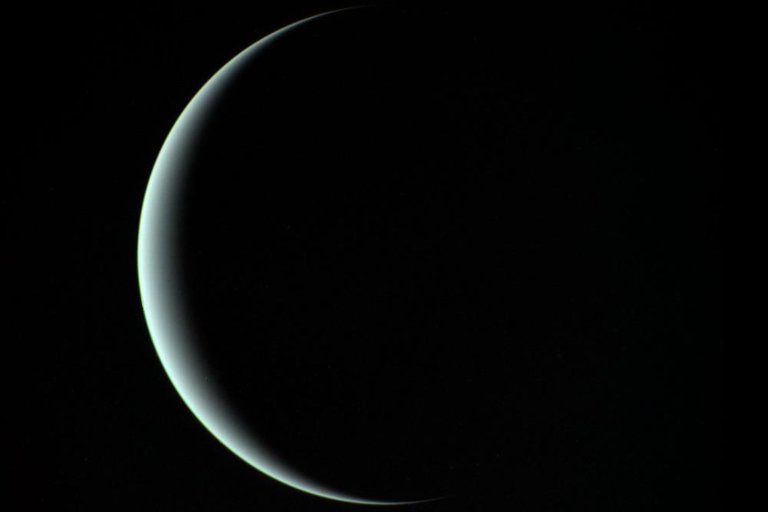
In visible wavelengths as seen by Voyager 2 in the 1980s, Uranus appeared as a placid, solid blue ball.

In infrared wavelengths, Webb is revealing a strange and dynamic ice world filled with exciting atmospheric features.

One of the most striking of these is the planet's seasonal north polar cloud cap.

Compared to the Webb image from earlier this year, some details of the cap are easier to see in these newer images.

These include the bright, white, inner cap and the dark lane in the bottom of the polar cap, toward the lower latitudes.

Several bright storms can also be seen near and below the southern border of the polar cap.

The number of these storms, and how frequently and where they appear in Uranus's atmosphere, might be due to a combination of seasonal and meteorological effects.

The polar cap appears to become more prominent when the planet's pole begins to point toward the Sun, as it approaches solstice and receives more sunlight.

Uranus reaches its next solstice in 2028, and astronomers are eager to watch any possible changes in the structure of these features.

Webb will help disentangle the seasonal and meteorological effects that influence Uranus's storms, which is critical to help astronomers understand the planet's complex atmosphere.

Because Uranus spins on its side at a tilt of about 98 degrees, it has the most extreme seasons in the solar system.

For nearly a quarter of each Uranian year, the Sun shines over one pole, plunging the other half of the planet into a dark, 21-year-long winter.

With Webb's unparalleled infrared resolution and sensitivity, astronomers now see Uranus and its unique features with groundbreaking new clarity.

These details, especially of the close-in Zeta ring, will be invaluable to planning any future missions to Uranus.

Read more at Science Daily

Oct 27, 2023

Uranus aurora discovery offers clues to habitable icy worlds

The presence of an infrared aurora on the cold, outer planet of Uranus has been confirmed for the first time by University of Leicester astronomers.

The discovery could shed light on the mysteries behind the magnetic fields of the planets of our solar system, and even on whether distant worlds might support life.

The team of scientists, supported by the Science and Technology Facilities Council (STFC), have obtained the first measurements of the infrared (IR) aurora at Uranus since investigations began in 1992. While the ultraviolet (UV) aurorae of Uranus has been observed since 1986, no confirmation of the IR aurora had been observed until now. The scientists' conclusions have been published in the journal Nature Astronomy.

The ice giants Uranus and Neptune are unusual planets in our solar system as their magnetic fields are misaligned with the axes in which they spin. While scientists have yet to find an explanation for this, clues may lie in Uranus's aurora.

Aurorae are caused by highly energetic charged particles, which are funnelled down and collide with a planet's atmosphere via the planet's magnetic field lines. On Earth, the most famous result of this process are the spectacles of the Northern and Southern Lights. At planets such as Uranus, where the atmosphere is predominately a mix of hydrogen and helium, this aurora will emit light outside of the visible spectrum and in wavelengths such as the infrared (IR).

The team used infrared auroral measurements taken by analysing specific wavelengths of light emitted from the planet, using the Keck II telescope. From this, they can analyse the light (known as emission lines) from these planets, similar to a barcode. In the infrared spectrum, the lines emitted by a charged particle known as H3+ will vary in brightness depending on how hot or cold the particle is and how dense this layer of the atmosphere is. Hence, the lines act like a thermometer into the planet.

Their observations revealed distinct increases in H3+ density in Uranus's atmosphere with little change in temperature, consistent with ionisation caused by the presence of an infrared aurora. Not only does this help us better understand the magnetic fields of the outer planets of our own solar system, but it may also help in identifying other planets that are suitable of supporting life.

Lead author Emma Thomas, a PhD student in the University of Leicester School of Physics and Astronomy, said: "The temperature of all the gas giant planets, including Uranus, are hundreds of degrees Kelvin/Celsius above what models predict if only warmed by the sun, leaving us with the big question of how these planets are so much hotter than expected? One theory suggests the energetic aurora is the cause of this, which generates and pushes heat from the aurora down towards the magnetic equator.

"A majority of exoplanets discovered so far fall in the sub-Neptune category, and hence are physically similar to Neptune and Uranus in size. This may also mean similar magnetic and atmospheric characteristics too. By analysing Uranus's aurora which directly connects to both the planet's magnetic field and atmosphere, we can make predictions about the atmospheres and magnetic fields of these worlds and hence their suitability for life.

"This paper is the culmination of 30 years of auroral study at Uranus, which has finally revealed the infrared aurora and begun a new age of aurora investigations at the planet. Our results will go on to broaden our knowledge of ice giant auroras and strengthen our understanding of planetary magnetic fields in our solar system, at exoplanets and even our own planet."

The results may also give scientists an insight into a rare phenomenon on Earth, in which the north and south pole switch hemisphere locations known as geomagnetic reversal.

Read more at Science Daily

May 31, 2022

Gemini North telescope helps explain why Uranus and Neptune are different colors

Astronomers may now understand why the similar planets Uranus and Neptune are different colors. Using observations from the Gemini North telescope, the NASA Infrared Telescope Facility, and the Hubble Space Telescope, researchers have developed a single atmospheric model that matches observations of both planets. The model reveals that excess haze on Uranus builds up in the planet's stagnant, sluggish atmosphere and makes it appear a lighter tone than Neptune.

Neptune and Uranus have much in common -- they have similar masses, sizes, and atmospheric compositions -- yet their appearances are notably different. At visible wavelengths Neptune has a distinctly bluer color whereas Uranus is a pale shade of cyan. Astronomers now have an explanation for why the two planets are different colors.

New research suggests that a layer of concentrated haze that exists on both planets is thicker on Uranus than a similar layer on Neptune and 'whitens' Uranus's appearance more than Neptune's. If there were no haze in the atmospheres of Neptune and Uranus, both would appear almost equally blue.

This conclusion comes from a model that an international team led by Patrick Irwin, Professor of Planetary Physics at Oxford University, developed to describe aerosol layers in the atmospheres of Neptune and Uranus. Previous investigations of these planets' upper atmospheres had focused on the appearance of the atmosphere at only specific wavelengths. However, this new model, consisting of multiple atmospheric layers, matches observations from both planets across a wide range of wavelengths. The new model also includes haze particles within deeper layers that had previously been thought to contain only clouds of methane and hydrogen sulfide ices.

"This is the first model to simultaneously fit observations of reflected sunlight from ultraviolet to near-infrared wavelengths," explained Irwin, who is the lead author of a paper presenting this result in the Journal of Geophysical Research: Planets. "It's also the first to explain the difference in visible color between Uranus and Neptune."

The team's model consists of three layers of aerosols at different heights. The key layer that affects the colors is the middle layer, which is a layer of haze particles (referred to in the paper as the Aerosol-2 layer) that is thicker on Uranus than on Neptune. The team suspects that, on both planets, methane ice condenses onto the particles in this layer, pulling the particles deeper into the atmosphere in a shower of methane snow. Because Neptune has a more active, turbulent atmosphere than Uranus does, the team believes Neptune's atmosphere is more efficient at churning up methane particles into the haze layer and producing this snow. This removes more of the haze and keeps Neptune's haze layer thinner than it is on Uranus, meaning the blue color of Neptune looks stronger.

"We hoped that developing this model would help us understand clouds and hazes in the ice giant atmospheres," commented Mike Wong, an astronomer at the University of California, Berkeley, and a member of the team behind this result. "Explaining the difference in color between Uranus and Neptune was an unexpected bonus!"

To create this model, Irwin's team analyzed a set of observations of the planets encompassing ultraviolet, visible, and near-infrared wavelengths (from 0.3 to 2.5 micrometers) taken with the Near-Infrared Integral Field Spectrometer (NIFS) on the Gemini North telescope near the summit of Maunakea in Hawai'i -- which is part of the international Gemini Observatory, a Program of NSF's NOIRLab -- as well as archival data from the NASA Infrared Telescope Facility, also located in Hawai'i, and the NASA/ESA Hubble Space Telescope.

The NIFS instrument on Gemini North was particularly important to this result as it is able to provide spectra -- measurements of how bright an object is at different wavelengths -- for every point in its field of view. This provided the team with detailed measurements of how reflective both planets' atmospheres are across both the full disk of the planet and across a range of near-infrared wavelengths.

"The Gemini observatories continue to deliver new insights into the nature of our planetary neighbors," said Martin Still, Gemini Program Officer at the National Science Foundation. "In this experiment, Gemini North provided a component within a suite of ground- and space-based facilities critical to the detection and characterization of atmospheric hazes."

Read more at Science Daily

May 12, 2022

Traveling to the centre of planet Uranus: Materials synthesis research and study in terapascal range

Jules Verne could not even dream of this: A research team from the University of Bayreuth, together with international partners, has pushed the boundaries of high-pressure and high-temperature research into cosmic dimensions. For the first time, they have succeeded in generating and simultaneously analyzing materials under compression pressures of more than one terapascal (1,000 gigapascals). Such extremely high pressures prevail, for example, at the center of the planet Uranus; they are more than three times higher than the pressure at the center of the Earth. In Nature, the researchers present the method they have developed for the synthesis and structural analysis of novel materials.

Theoretical models predict very unusual structures and properties of materials under extreme pressure-temperature conditions. But so far, these predictions could not be verified in experiments at compression pressures of more than 200 gigapascals. On the one hand, complex technical requirements are necessary to expose material samples to such extreme pressures, and on the other hand, sophisticated methods for simultaneous structural analyses were lacking. The experiments published in Nature therefore open up completely new dimensions for high-pressure crystallography: materials can now be created and studied in the laboratory that exist -- if at all -- only under extremely high pressures in the vastness of the universe.

"The method we have developed enables us for the first time to synthesize new material structures in the terapascal range and to analyze them in situ -- that is: while the experiment is still running. In this way, we learn about previously unknown states, properties and structures of crystals and can significantly deepen our understanding of matter in general. Valuable insights can be gained for the exploration of terrestrial planets and the synthesis of functional materials used in innovative technologies," explains Prof. Dr. Leonid Dubrovinsky of the Bavarian Geoinstitute (BGI) at the University of Bayreuth, the first author of the publication.

In their new study, the researchers show how they have generated and visualized in situ novel rhenium compounds using the now discovered method. The compounds in question are a novel rhenium nitride (Re₇N₃) and a rhenium-nitrogen alloy. These materials were synthesized under extreme pressures in a two-stage diamond anvil cell heated by laser beams. Synchrotron single-crystal X-ray diffraction enabled full chemical and structural characterization. "Two and a half years ago, we were very surprised in Bayreuth when we were able to produce a superhard metallic conductor based on rhenium and nitrogen that could withstand even extremely high pressures. If we apply high-pressure crystallography in the terapascal range in the future, we may make further surprising discoveries in this direction. The doors are now wide open for creative materials research that generates and visualizes unexpected structures under extreme pressures," says the study's lead author, Prof. Dr. Natalia Dubrovinskaia from the Laboratory of Crystallography at the University of Bayreuth.

Read more at Science Daily

Oct 17, 2021

Evidence of superionic ice provides new insights into unusual magnetic fields of Uranus and Neptune

Not all ice is the same. The solid form of water comes in more than a dozen different -- sometimes more, sometimes less crystalline -- structures, depending on the conditions of pressure and temperature in the environment. Superionic ice is a special crystalline form, half solid, half liquid -- and electrically conductive. Its existence has been predicted on the basis of various models and has already been observed on several occasions under -- very extreme -- laboratory conditions. However, the exact conditions at which superionic ices are stable remain controversial. A team of scientists led by Vitali Prakapenka from the University of Chicago, which also includes Sergey Lobanov from the German Research Center for Geosciences GFZ Potsdam, has now measured the structure and properties of two superionic ice phases (ice XVIII and ice XX). They brought water to extremely high pressures and temperatures in a laser-heated diamond anvil cell. At the same time, the samples were examined with regard to structure and electrical conductivity. The results were published today in the journal Nature Physics. They provide another piece of the puzzle in the spectrum of the manifestations of water. And they may also help to explain the unusual magnetic fields of the planets Uranus and Neptune, which contain a lot of water.

Hot ice?

Ice is cold. At least type I ice from our freezer, snow or from a frozen lake. In planets or in laboratory high-pressure devices, there are different species of ice, type VII or VIII, for example, which exist at several hundred or thousand degrees Celsius. However, this is only because of very high pressures of several ten Gigapascal.

Pressure and temperature span the space for the so-called phase diagram of a substance: Depending on these two parameters, the various manifestations of water and the transitions between solid, gaseous, liquid and hybrid states are recorded here -- as they are predicted theoretically or have already been proven in experiments.

Linking fundamental physics with geological questions

The higher the pressure and temperature, the more difficult such experiments are. And so the phase diagram of water -- with ice as its solid phase -- still has quite a few inaccuracies and inconsistencies in the extreme ranges.

"Water is actually a relatively simple chemical compound consisting of one oxygen and two hydrogen atoms. Nevertheless, with its often unusual behaviour, it is still not fully understood. In the case of water, the fundamental physical and geoscientific interests come together because water plays an important role inside many planets. Not only in terms of the formation of life and landscapes, but -- in the case of the gaseous planets Uranus and Neptune -- also for the formation of their unusual planetary magnetic fields," says Sergey Lobanov, geophysicist at GFZ Potsdam.

Unique conditions in the lab

Sergey Lobanov is part of the team led by first author Vitali Prakapenka and Nicholas Holtgrewe, both from the University of Chicago, and Alexander Goncharov from the Carnegie Institution of Washington. They have now further characterized the phase diagram of water at its extremes. Using laser-heated diamond anvil cells -- the size of a computer mouse -- they have generated high pressures of up to 150 Gigapascal (about 1.5 million times atmospheric pressure) and temperatures of up to 6,500 Kelvin (about 6,227 degrees Celsius). In the sample chamber, which is only a few cubic millimetres in size, conditions then prevail that occur at the depth of several thousand kilometres inside Uranus or Neptune.

The scientists used X-ray diffraction to observe how the crystal structure changes under these conditions. They carried out these experiments using the extremely bright synchrotron X-rays at the Advanced Photon Source (APS) of the Argonne National Laboratory at the University of Chicago. A second series of experiments at the Earth and Planets Laboratory of the Carnegie Institution of Washington used optical spectroscopy to determine the electronic conductivity.

Structural changes in ice as it passes through phase space: formation of superionic ice

The researchers first produced ice VII or X from water at room temperature by increasing the pressure to several tens of Gigapascal (see the phase diagram). And then, at constant pressure, they increased the temperature by heating it with laser light. In the process, they observed how the crystalline ice structure changed: First, the oxygen and hydrogen atoms moved a little around their fixed positions. Then only the oxygen remained fixed and formed its own cubic crystal lattice. As the temperature rose, the hydrogen ionised, i.e. gave up its only electron to the oxygen lattice. Its atomic nucleus -- a positively charged proton -- then whizzed through this solid, making it electrically conductive. In this way, a hybrid of solid and liquid is created: superionic ice.

Its existence was predicted on the basis of various models and has already been observed on several occasions under laboratory conditions. The scientists have now been able to synthesize and identify two superionic ice phases -- ice XVIII and ice XX -, and to delineate the pressure and temperature conditions of their stability. "Due to their distinct density and increased optical conductivity, we assign the observed structures to the theoretically predicted superionic ice phases," explains Lobanov.

Consequences for the explanation of the magnetic field of Uranus and Neptune

In particular, the phase transition to a conducting liquid has interesting consequences for the open questions surrounding the magnetic field of Uranus and Neptune, which presumably consist of more than sixty percent water. Their magnetic field is unusual in that it does not run quasi parallel and symmetrically to the axis of rotation -- as it does on Earth -- but is skewed and off-centre. Models of its formation therefore assume that it is not generated -- as on Earth -- by the motion of molten iron in the core, but by a conductive water-rich liquid in the outer third of Uranus or Neptune.

"In the phase diagram, we can draw the pressure and temperature in the interiors of Uranus and Neptune. Here, the pressure can roughly be taken as a measure of the depth inside. Based on the refined phase boundaries we have measured, we see that about the upper third of both planets is liquid, but deeper interiors contain solid superionic ices. This confirms the predictions about the origin of the observed magnetic field," Lobanov sums up.

Read more at Science Daily

Apr 1, 2021

First X-rays from Uranus discovered

Astronomers have detected X-rays from Uranus for the first time, using NASA's Chandra X-ray Observatory. This result may help scientists learn more about this enigmatic ice giant planet in our solar system.

Uranus is the seventh planet from the Sun and has two sets of rings around its equator. The planet, which has four times the diameter of Earth, rotates on its side, making it different from all other planets in the solar system. Since Voyager 2 was the only spacecraft to ever fly by Uranus, astronomers currently rely on telescopes much closer to Earth, like Chandra and the Hubble Space Telescope, to learn about this distant and cold planet that is made up almost entirely of hydrogen and helium.

In the new study, researchers used Chandra observations taken in Uranus in 2002 and then again in 2017. They saw a clear detection of X-rays from the first observation, just analyzed recently, and a possible flare of X-rays in those obtained fifteen years later. The main graphic shows a Chandra X-ray image of Uranus from 2002 (in pink) superimposed on an optical image from the Keck-I Telescope obtained in a separate study in 2004. The latter shows the planet at approximately the same orientation as it was during the 2002 Chandra observations.

What could cause Uranus to emit X-rays? The answer: mainly the Sun. Astronomers have observed that both Jupiter and Saturn scatter X-ray light given off by the Sun, similar to how Earth's atmosphere scatters the Sun's light. While the authors of the new Uranus study initially expected that most of the X-rays detected would also be from scattering, there are tantalizing hints that at least one other source of X-rays is present. If further observations confirm this, it could have intriguing implications for understanding Uranus.

One possibility is that the rings of Uranus are producing X-rays themselves, which is the case for Saturn's rings. Uranus is surrounded by charged particles such as electrons and protons in its nearby space environment. If these energetic particles collide with the rings, they could cause the rings to glow in X-rays. Another possibility is that at least some of the X-rays come from auroras on Uranus, a phenomenon that has previously been observed on this planet at other wavelengths.

On Earth, we can see colorful light shows in the sky called auroras, which happen when high-energy particles interact with the atmosphere. X-rays are emitted in Earth's auroras, produced by energetic electrons after they travel down the planet's magnetic field lines to its poles and are slowed down by the atmosphere. Jupiter has auroras, too. The X-rays from auroras on Jupiter come from two sources: electrons traveling down magnetic field lines, as on Earth, and positively charged atoms and molecules raining down at Jupiter's polar regions. However, scientists are less certain about what causes auroras on Uranus. Chandra's observations may help figure out this mystery.

Read more at Science Daily

Jul 3, 2018

'Cataclysmic' collision shaped Uranus' evolution

The collision with Uranus of a massive object twice the size of Earth that caused the planet's unusual spin, from a high-resolution simulation using over ten million particles, coloured by their internal energy.
Uranus was hit by a massive object roughly twice the size of Earth that caused the planet to tilt and could explain its freezing temperatures, according to new research.

Astronomers at Durham University, UK, led an international team of experts to investigate how Uranus came to be tilted on its side and what consequences a giant impact would have had on the planet's evolution.

The team ran the first high-resolution computer simulations of different massive collisions with the ice giant to try to work out how the planet evolved.

The research confirms a previous study which said that Uranus' tilted position was caused by a collision with a massive object -- most likely a young proto-planet made of rock and ice -- during the formation of the solar system about 4 billion years ago.

The simulations also suggested that debris from the impactor could form a thin shell near the edge of the planet's ice layer and trap the heat emanating from Uranus' core. The trapping of this internal heat could in part help explain Uranus' extremely cold temperature of the planet's outer atmosphere (-216 degrees Celsius, -357 degrees Fahrenheit), the researchers said.

The findings are published in The Astrophysical Journal.

Lead author Jacob Kegerreis, PhD researcher in Durham University's Institute for Computational Cosmology, said: "Uranus spins on its side, with its axis pointing almost at right angles to those of all the other planets in the solar system. This was almost certainly caused by a giant impact, but we know very little about how this actually happened and how else such a violent event affected the planet.

"We ran more than 50 different impact scenarios using a high-powered super computer to see if we could recreate the conditions that shaped the planet's evolution.

"Our findings confirm that the most likely outcome was that the young Uranus was involved in a cataclysmic collision with an object twice the mass of Earth, if not larger, knocking it on to its side and setting in process the events that helped create the planet we see today."

There has been a question mark over how Uranus managed to retain its atmosphere when a violent collision might have been expected to send it hurtling into space.

According to the simulations, this can most likely be explained by the impact object striking a grazing blow on the planet. The collision was strong enough to affect Uranus' tilt, but the planet was able to retain the majority of its atmosphere.

The research could also help explain the formation of Uranus' rings and moons, with the simulations suggesting the impact could jettison rock and ice into orbit around the planet. This rock and ice could have then clumped together to form the planet's inner satellites and perhaps altered the rotation of any pre-existing moons already orbiting Uranus.

The simulations show that the impact could have created molten ice and lopsided lumps of rock inside the planet. This could help explain Uranus' tilted and off-centre magnetic field.

Uranus is similar to the most common type of exoplanets -- planets found outside of our solar system -- and the researchers hope their findings will help explain how these planets evolved and understand more about their chemical composition.

Co-author Dr Luis Teodoro, of the BAER/NASA Ames Research Center, said: "All the evidence points to giant impacts being frequent during planet formation, and with this kind of research we are now gaining more insight into their effect on potentially habitable exoplanets."

Read more at Science Daily

Apr 25, 2018

If the Rotten Egg Smell Doesn’t Kill You, the Negative 200°C Temperature of Uranus Will

View of Uranus from NASA's Voyager 2 probe
There's a lot of really smelly stuff wafting around Uranus.

The clouds in Uranus' upper atmosphere are composed largely of hydrogen sulfide, the molecule that makes rotten eggs so stinky, a new study suggests.

"If an unfortunate human were ever to descend through Uranus' clouds, they would be met with very unpleasant and odiferous conditions," study lead author Patrick Irwin of Oxford University in England said in a statement.

But that wayward pioneer would have bigger problems, he added: "Suffocation and exposure in the negative 200 degrees Celsius (minus 328 degrees Fahrenheit) atmosphere, made of mostly hydrogen, helium, and methane, would take its toll long before the smell."

Researchers have long wondered about the composition of the clouds high up in Uranus's sky — specifically, whether they're dominated by ammonia ice, as at Jupiter and Saturn, or by hydrogen sulfide ice. The answer has proved elusive because it's tough to make observations with the required detail on distant Uranus. (Not only are Jupiter and Saturn closer to Earth, they have also hosted dedicated orbiter missions. Uranus has been visited just once — a brief flyby by NASA's Voyager 2 probe in January 1986.)

Irwin and his colleagues studied Uranus's air using the Near-Infrared Integral Field Spectrometer (NIFS), an instrument on the 26-foot (8 meters) Gemini North telescope in Hawaii. NIFS scrutinized sunlight reflected from the atmosphere just above Uranus' cloud tops — and spotted the signature of hydrogen sulfide.

"Only a tiny amount remains above the clouds as a saturated vapor," study co-author Leigh Fletcher, from the University of Leicester in England, said in the same statement. "And this is why it is so challenging to capture the signatures of ammonia and hydrogen sulfide above cloud decks of Uranus. The superior capabilities of Gemini finally gave us that lucky break."

Neptune's clouds are likely similar to those of Uranus, the researchers said. The big difference between the clouds of these two "ice giants" and those of Jupiter and Saturn probably trace to the worlds' formation environments: Uranus and Neptune coalesced much farther from the sun than the two gas giants did.

Read more at Seeker

Experiments Confirm the Interiors of Uranus and Neptune Are Made of Superionic Ice

Uranus, on the left, Neptune, on the right
A unique form of water ice that is both solid and liquid at the same time might be found inside Uranus and Neptune, according to a recent set of experiments that mimicked the conditions inside the icy giants. 

The results, published in the journal Nature Physics, confirmed a 30-year old theory that a form of water ice called superionic ice likely exists in certain planetary conditions where liquids endure extreme heat and pressure. This includes the ice giants in our own solar system, as well as similar exoplanets discovered in other solar systems throughout our galaxy.  Superionic ice, however, is not found naturally on Earth.

“We wanted to see if we could confirm the prediction for superionic water ice and measure its properties in the laboratory,” lead author Marius Millot, a researcher at Lawrence Livermore National Laboratory, said in an email to Seeker. “It is such an unusual state of matter, we wanted to see if we could create it with shock waves.”

There are perhaps 17 — or more — types of water ice, although some remain theoretical. On Earth’s surface, only one kind of ice occurs naturally — the ice in your drink or that makes up the Antarctic ice sheets — called ice lh (pronounced “ice one h”). As water freezes and turns from a liquid into a solid, the water molecules crystalize into a hexagonal shape.

But depending on the pressure and temperature, the water molecules can line up into different shapes, creating different types of ice. Even water at high temperatures can turn solid when compressed under enough pressure. Ice of this type, called ice VII (pronounced “ice eight”), is known to exist deep within Earth, and it was recently found inside of diamonds. Ice VII has also been created in laboratories.

Superionic ice is thought to form at extreme temperatures and pressures, where oxygen atoms are locked into a crystal structure, but the hydrogen ions move around, making the ice simultaneously solid and liquid, somewhat similar to lava. Over the years, various research groups have explored the properties of water under high pressure using computer simulations of the structure of water.

“These simulations showed that when water is compressed to millions of [Earth] atmospheres and heated to thousands of degrees it forms a crystal of oxygen ions with hydrogen ions moving rapidly through the crystal in a fluid-like manner,” co-author Sebastien Hamel, also from LLNL, said in an email. “However, such simulations have been approximations and so we wanted to verify those predictions by reaching those pressure and temperature conditions for a sample of water in the lab and measuring whether or not it solidified and whether or not the hydrogen ions were fluid-like.”

Millot, Hamel, and their colleagues first created ice VII in their laboratory by putting a small, sub-millimeter-sized water sample inside a diamond anvil cell (DAC), a high-pressure device made up of two opposing diamonds, which places water under extreme pressure. They then hand-carried the sample to a laser facility at the University of Rochester.

“What was novel about our experiment was to combine the compressed ice with a laser-generated shock wave to compress and heat up the water sample to reach the conditions of pressure and temperature that we wanted,” Hamel said.

The water was pre-compressed in the DAC to about 30,000 atmospheres and the shockwave briefly increased the pressure to 2,000,000 atmospheres, while heating the sample to about 4,000 degrees Kelvin.

Over a year, the researchers conducted multiple tests and were able to confirm that the extreme pressure and temperatures created superionic ice. They measured the optical reflectivity and absorption levels, showing the samples were opaque, suggesting that the ions were moving.

“Physicist often measure the optical properties to understand the electronic structure,” Millot explained. “Superionic water ice is a semiconductor, and because there are not enough ‘free electrons’ able to carry electrical current, it is not shiny like a metal. Instead, it absorbs visible light and looks black, opaque if there is a thick enough layer.”

These results were consistent with the computer-simulated predictions and Hamel said the researchers are now working on developing a general capability for performing this type of experiment for various other materials.

Interestingly, the team brought the DAC carrying the ice sample inside a carry-on case on a commercial flight from LLNL in California to the laser facility in New York. Asked if that method of transport was nerve-wracking, Millot and Hamel said “not at all. “

“We often hand-carry our targets for laser experiments, so there is always a chance that one cell will break during the trip, but they are usually okay,” Millot said, adding that they usually bring multiple samples. “The final countdown for the laser shots is more stressful, because each cell is destroyed once we have fired the laser. So if the diagnostic did not record, the whole time preparing the target and setting up the laser shot is lost!”

But the researchers said understanding superionic ice could also solve a mystery about the odd, lopsided magnetic fields of Uranus and Neptune detected by the Voyager 2 mission in the 1980’s. Planetary magnetic fields are produced by the movement of electrically conducting internal fluids at high pressures, and any unusual magnetic fields are thought to be related to the consistency of the fluids that generate them.

“Given how we think planets like Neptune and Uranus form, a large fraction of their mass is water,” Hamel said. “Under the pressures and temperatures achieved in the interior of those giant planets, water will be a fluid for the outer part of the planet and a super-ionic solid for the deeper layers of the planet.”

Read more at Seeker

Jul 11, 2017

Uranus May Have a Magnetic Field that Flickers On and Off Like a Strobe Light

The planet Uranus just keeps getting weirder.

The icy gas world that strangely orbits the sun on its side may also have a wonky magnetic field that constantly flickers on and off, new research suggests.

Magnetic fields around planets, or magnetospheres, create shields against the bombardment of radiation from the sun known as solar wind. On Earth, for example, the magnetosphere lines up pretty closely with the planet's axis of rotation, and magnetic field lines emerge from Earth's north and south poles. On Uranus, however, the magnetosphere is a bit more chaotic.

Uranus' spin axis is tilted by a whopping 98 degrees, and the planet's off-center magnetic field is tilted by another 60 degrees. Every time the planet rotates (about every 17.24 hours), this lopsided magnetic field tumbles around, opening and closing periodically as the magnetic field lines disconnect and reconnect, the study found.

Researchers at the Georgia Institute of Technology (Georgia Tech) in Atlanta figured this out by simulating Uranus' messy magnetosphere using numerical models and data from NASA's Voyager 2 spacecraft, which flew by the planet in 1986.

"Uranus is a geometric nightmare," Carol Paty, an associate professor at Georgia Tech's School of Earth & Atmospheric Sciences and co-author of the study, said in a statement. "The magnetic field tumbles very fast, like a child cartwheeling down a hill head over heels. When the magnetized solar wind meets this tumbling field in the right way, it can reconnect, and [so] Uranus' magnetosphere goes from open to closed to open on a daily basis."

When the magnetosphere opens up, it allows solar particles to bombard the planet. Then, when the magnetic field lines reconnect, this natural shield can continue to block the solar wind.

This process may be related to auroras on Uranus. Just like the auroras on Earth and other planets, Uranus' atmosphere lights up when particles from the solar wind enter it and interact with gases like nitrogen and oxygen.

NASA's Hubble Space Telescope has previously observed auroras on Uranus, but astronomers face difficulties in studying how these auroras interact with the magnetosphere, because the planet is so far away — nearly 2 billion miles (3.2 billion kilometers) from Earth. The space agency is currently considering sending another spacecraft to Uranus and Neptune to investigate those planet's magnetic fields, among other things.

Xin Cao, a Ph.D. candidate at Georgia Tech who led the study, said that studying Uranus can teach scientists a lot about planets outside of the solar system. "The majority of exoplanets [worlds outside the solar system] that have been discovered appear to also be ice giants in size," he said. "Perhaps what we see on Uranus and Neptune is the norm for planets: very unique magnetospheres and less-aligned magnetic fields.

Read more at Seeker