Feb 27, 2018

Hunter-Gatherer Skulls Mounted on Stakes Reveal Symbolic Ritual Practice

Healed wound on the skull of a man found in an unusual burial display at Kanaljorden, Sweden
Fredrik Hallgren of the Cultural Heritage Foundation in Sweden has pretty much seen it all when it comes to early human burials, since he and his colleagues regularly study them. So, when he and his team found human bones in 2009 at the site of a former lake in Kanaljorden, Sweden, it seemed like research as usual.

The bones at first appeared to have been scattered from a once-complete body, perhaps due to animals, water flow, or some other occurrence.

Upon closer examination, Hallgren and his associates noticed that the remains consisted of select bones — mostly skulls — from a larger number of individuals.

"That was in itself an amazing realization, as it hinted at a ritual complexity unknown for this time period and region," Hallgren told Seeker, mentioning that the site dates to between 9,000–6,000 years ago.

As he and his team continued to study the remains and related artifacts, a more complete picture came to light of this extraordinary burial.

"The fact that the skulls were deposited on a massive man-made stone packing built by some 3,000 stones, that two skulls were mounted on wooden stakes still embedded in the crania, that one skull contained a large skull fragment from another individual, and that the depositions also included beautiful artifacts made of bone, antler, stone, wood, and bark, as well as parts of animals, created an unreal feeling," Hallgren said, still in awe of the discovery.

"As an archaeological context," he added, "this was almost too good to be true."

A human skull on a stake found at Kanaljorden, Sweden
The remains belonged to Scandinavian hunter-gatherers, report Hallgren and colleagues Sara Gummesson and Anna Kjellström in the journal Antiquity.

Kjellström, a researcher at Stockholm University's Department of Archaeology and Classical Studies, told Seeker that the remains of at least 10 individuals — 9 adults and an infant — were found at the site.

At least seven of them — 2 women, 4 men, and 1 whose sex remains undetermined — showed clear evidence for blunt force trauma to the head that happened before death and had healed. The researchers therefore do not think that the head blows caused the deaths of the people.

"The cause of death is unknown, but may be due to natural causes," Hallgren said. "There are no indications of decapitation, only of removal of skulls from bodies and graves."

The excavation site at Kanaljorden, Sweden, where an unusual collection of human and animal remains, plus other artifacts, were discovered
It could be that all of the skulls were originally mounted on wooden stakes, but the researchers are not sure.

The stone structure upon which the remains were placed must have taken considerable time and effort to build. It measured about 39 feet by 46 feet, was constructed out of large, densely packed stones, and was located at the bottom of the former lake. Today, the site lies at the margin of a small lake close to the river Motala Ström.

The scientists believe that the associated animal bones and artifacts were placed intentionally on the structure and at the same time as the human remains were arranged there. The objects are thought to have been grave gifts or offerings.

Hallgren explained that the depositions of parts of animals were done in a structured way that refers to some kind of symbolism, the meaning of which still eludes interpretation. He explained that while the humans are mostly represented by crania without mandibles, the opposite is true for the animals; they are represented by mandibles and post-cranial bones.

"Furthermore," he said, "the human and animal bones were placed in different spatial zones on the stone-packing according to species and category, with humans in one zone, brown bears in one zone, and big forest game — wild boar, red deer, roe deer, and moose — in one zone."

He continued, "While we cannot decipher the meaning of these patterns, it is clear that the depositions were structured by norms and symbolic intention."

The image of skulls mounted on stakes is, to modern eyes, an inherently gory one. In the past, some ancient cultures displayed the heads of victims to warn off enemies or to otherwise control people. Europeans did something similar, by letting the public view the remains of individuals beheaded by guillotine. Headhunters in places like South America and Africa would line up heads of victims, placing their remains in unmistakable view of potential enemies.

The unusual Swedish burial, however, does not seem to be connected to these practices.

"The individuals in Kanaljorden appear to have died some time before the crania were mounted or deposited in the lake," Kjellström said. "This separates them from the more 'common' headhunter practice where usually 'fresh' heads were used."

She added that the associated artifacts further strengthen the view that the Swedish burial was a "complex practice with ceremonial features."

The precise meaning of the burial remains unknown, but the researchers pose some possibilities.

Since both men and women experienced head trauma that healed before death, it is possible that the individuals were all slaves. The authors, however, note that slavery is rare among mobile hunter-gatherers. It also would have been a logistical challenge for a group with such a low-density population to have held captives for any length of time.

Raiding and warfare, on the other hand, are common occurrences among hunter-gatherers. Interestingly, the Swedish women victims were hit over the head differently: front-to-top versus back-to-side for men.

These same patterns of head trauma have been observed among prehistoric Native Americans, according to the authors. The patterns have been interpreted as resulting from the different roles and behaviors that men and women have traditionally held in some cultures in combat.

It is possible then that the Swedish individuals were victims of warfare who survived. Gummesson, also of Stockholm University, told Seeker that "the deposition of their skulls could be related to reverence of these individuals or their accomplishments during life."

Archaeologist Tove Stjärna of Stockholm University and another researcher study an ancient cranium found at Kanaljorden, Sweden.
She and her team point out that, in traditional societies, medical disorders caused by head trauma may be interpreted as an altered state of consciousness, a gift that gives a special ability to commune with spiritual entities.

Robert Kaplan, an Australia-based forensic psychiatrist, has studied this subject, particularly as it relates to ancient shamanism.

Kaplan explained, "Hunter-gatherer shamanism is based on altered states of consciousness, induced by a variety of means."

Those could include conditions related to head trauma; inherited disorders such as epilepsy, schizophrenia, and other psychoses; as well as drug-induced states. The latter could be intentional, or not.

It has long been suspected that the Oracle of Delphi — an ancient Greek priestess who had visions — either took drugs that placed her in a trance-like state, or breathed in naturally emitted vapors. The truth behind her story, like that of the ancient Swedish individuals, has yet to be fully determined.

Read more at Seeker

Feb 26, 2018

Plants evolve away from obsolete defenses when attacked by immune herbivores, study shows

Do you know what caused soldiers to stop wearing chainmail and steel plate armor? Evolution.

Really, guns made armies drop steel gauntlets and breastplates. Bullets that could punch through armor quickly made it obsolete. So, armies evolved away from armor because it wasn't working any longer and there was no point in spending the resources on it. "Adapt or die," as the saying goes.

Now, new research out of the Academy of Natural Sciences of Drexel University shows that plants similarly adapt away from obsolete defenses.

The study, published in New Phytologist and led by Tatyana Livshultz, PhD, assistant curator of Botany at the Academy and an assistant professor in the College of Arts and Sciences, found genetic evidence that multiple lineages of plants, whose ancestors produced a chemical that may deter herbivores, evolved to stop producing it, potentially as a response to a prime foe's immunity.

Livshultz and her team traced the evolution of a gene that is involved in the production of a class of chemicals that are highly toxic to humans and other mammals, called pyrrolizidine alkaloids, in Apocynaceae, a flowering plant family commonly known as the dogbanes and milkweeds. By tracing the gene back, they were able to find out when production of the chemicals first evolved and how many times it was discontinued.

After identifying a single origin of the gene (and, by inference, the chemicals) in the most recent common ancestor of more than 75 percent of current Apocynaceae species, the researchers found evidence that the gene became nonfunctional (and the chemicals "lost" to evolution) at least four different times among that plant's descendants.

Looking for a correlation between the gene's distribution in the plants and interactions with animals unfazed by the defense alkaloids, Livshultz and her team found a significant connection with Danainae (milkweed and clearwing) butterflies.

Almost every species of Apocynaceae eaten by larvae of Danainae is descended from that alkaloid-producing ancestor. Knowing that most species of this lineage of butterflies actually seek out pyrrolizidine alkaloids, it appears that some species in this branch of Apocynaceae may have stopped producing the alkaloids because they were actually attracting milkweed butterflies, not repelling them.

"Pyrrolizidine alkaloids are likely an ineffective defense against Danainae. Furthermore, they are actually beneficial to them since they take in these chemicals for their own defense against their predators," Livshultz explained.

These findings support the "defense de-escalation" hypothesis, which posits that organisms will evolve to stop using precious resources on defense mechanisms if they're not working anymore.

One benefit of defense de-escalation is potentially diverting resources to defenses that do work.

"Apocynaceae species of this lineage produce a number of different classes of defensive chemicals, including cardenolides and other types of alkaloids," Livshultz explained. "It has been shown that cardenolides are at least partially effective defenses against adapted herbivores such as the monarch butterfly, the most familiar species of Danainae to Americans."

Why do any Apocynaceae species still produce pyrrolizidine alkaloids? -- "perhaps because they suffer more from other insects that are deterred by these chemicals," Livshultz offered.

Livshultz and her colleagues will further test the hypothesis by reconstructing a very detailed history of the pattern of retention and loss of pyrrolizidine alkaloids in this lineage and ask if exploitation by Danainae is a good predictor of loss.

A better understanding of the dynamics of defense de-escalation is important to understanding co-evolution, the theory that associated species driving each other's adaptations.

"Co-evolution explains how interactions between species can drive the origin of novelty and diversity," Livshultz said.

Additionally, implications from these theories extend beyond plants to humans.

Read more at Science Daily

Ineffectiveness of 'wonder drug' for alcohol use disorders

A new study, published in the Addiction journal, conducted by researchers from the University of Liverpool highlights the ineffectiveness of a specific drug treatment for alcohol use disorders.

Baclofen is a medication which has been used since the 1970s as an anti-spasticity treatment. More recently it has been used as a treatment for alcohol use disorders.

Baclofen has a key advantage compared with currently licensed medications: it is excreted largely through the kidneys. It is therefore possible to give baclofen to people suffering alcohol-related liver disease, a patient population with very high needs, and who often can't tolerate licensed drug treatments.

'Wonder drug'

Many studies have found baclofen to be successful in treating alcohol use disorders, some have claimed it a wonder drug capable of curing alcoholism.

Following a number of successful clinical trials the use of use of baclofen increased massively and sales of the drug have soared in some countries.

In more recent years, there have been a growing number of studies which directly compare baclofen against placebo on a number of outcome measures. Often these outcome measures are drink-related, e.g. rate of abstinence at the end of the medication trial, or number of heavy drinking or abstinent days during the trial.

However, there are other measures, potentially related to why baclofen might work (i.e. its mechanism of action). Several possibilities have been identified; firstly baclofen may reduce craving for alcohol, secondly there are reports that baclofen reduces negative mood states, such as anxiety and depression, which are known risk factors for harmful drinking.

Abstinent rates

Researchers, Dr Abi Rose and Dr Andy Jones, from the University's Addiction Research Team conducted a meta-analysis on all 12 clinical trials comparing baclofen with placebo on at least one of the described drinking outcomes, craving, anxiety, or depression.

Meta-analysis is an advanced statistical procedure that allows the researcher to merge the results of all the studies regarding a specific topic into a quantitative measure representing the size of the overall effect of one variable on another variable. Thus, meta-analysis provides more accurate and reliable outcomes compared to the single experiment.

The researchers found that baclofen led to higher abstinent rates compared with placebo, and that eight individuals would need to be treated with baclofen for one to remain abstinent due to the medication.

However, all other outcomes failed to show an effect of baclofen: baclofen did not increase abstinent days or decrease number of heavy drinking days during treatment, neither did it reduce rates of alcohol craving, anxiety or depression.

Issues highlighted

Dr Rose, said: "Our research highlights several issues with the existing body of trials. Many of the studies only recruited a limited number of patients, so maybe too small to find an effect.

"The existing trials also differ on a number of factors, such as the dose of baclofen given and the length of treatment. Importantly, the pharmacokinetics of baclofen (how it moves in the body) are not well-understood, so there may be individual factors influencing the effectiveness of baclofen that we do not yet understand."

Read more at Science Daily

Proxima Centauri's no good, very bad day

An artist’s impression of a flare from Proxima Centauri, modeled after the loops of glowing hot gas seen in the largest solar flares. An artist’s impression of the exoplanet Proxima b is shown in the foreground. Proxima b orbits its star 20 times closer than the Earth orbits the Sun. A flare 10 times larger than a major solar flare would blast Proxima b with 4,000 times more radiation than the Earth gets from our Sun’s flares.
A team of astronomers led by Carnegie's Meredith MacGregor and Alycia Weinberger detected a massive stellar flare -- an energetic explosion of radiation -- from the closest star to our own Sun, Proxima Centauri, which occurred last March. This finding, published in Astrophysical Journal Letters, raises questions about the habitability of our Solar System's nearest exoplanetary neighbor, Proxima b, which orbits Proxima Centauri.

MacGregor, Weinberger and their colleagues -- the Harvard-Smithsonian Center for Astrophysics' David Wilner and Adam Kowalski and Steven Cranmer of the University of Colorado Boulder -- discovered the enormous flare when they reanalyzed observations taken last year by Atacama Large Millimeter/submillimeter Array, or ALMA, a radio telescope made up of 66 antennae.

At peak luminosity it was 10 times brighter than our Sun's largest flares when observed at similar wavelengths. Stellar flares have not been well studied at the wavelengths detected by ALMA, especially around stars of Proxima Centauri's type, called M dwarfs, which are the most common in our galaxy.

"March 24, 2017 was no ordinary day for Proxima Cen," said lead author MacGregor.

The flare increased Proxima Centauri's brightness by 1,000 times over 10 seconds. This was preceded by a smaller flare; taken together, the whole event lasted fewer than two minutes of the 10 hours that ALMA observed the star between January and March of last year.

Stellar flares happen when a shift in the star's magnetic field accelerates electrons to speeds approaching that of light. The accelerated electrons interact with the highly charged plasma that makes up most of the star, causing an eruption that produces emission across the entire electromagnetic spectrum.

"It's likely that Proxima b was blasted by high energy radiation during this flare," MacGregor explained, adding that it was already known that Proxima Centauri experienced regular, although smaller, x-ray flares. "Over the billions of years since Proxima b formed, flares like this one could have evaporated any atmosphere or ocean and sterilized the surface, suggesting that habitability may involve more than just being the right distance from the host star to have liquid water."

A November paper that also used these ALMA data interpreted its average brightness, which included the light output of both the star and the flare together, as being caused by multiple disks of dust encircling Proxima Centauri, not unlike our own Solar System's asteroid and Kuiper belts. The authors of that study said that the presence of dust pointed to the existence of more planets or planetary bodies in the stellar system.

But when MacGregor, Weinberger, and their team looked at the ALMA data as a function of observing time, instead of averaging it all together, they were able to see the transient explosion of radiation emitted from Proxima Centauri for what it truly was.

"There is now no reason to think that there is a substantial amount of dust around Proxima Cen," Weinberger said. "Nor is there any information yet that indicates the star has a rich planetary system like ours."

Read more at Science Daily

Exotic state of matter: An atom full of atoms

The electron (blue) orbits the nucleus (red) -- and its orbit encloses many other atoms of the Bose-Einstein-condensate (green).
What is inside an atom, between the nucleus and the electron? Usually there is nothing, but why could there not be other particles too? If the electron orbits the nucleus at a great distance, there is plenty of space in between for other atoms. A "giant atom" can be created, filled with ordinary atoms. All these atoms form a weak bond, creating a new, exotic state of matter at cold temperatures, referred to as "Rydberg polarons."

A team of researchers has now presented this state of matter in the journal Physical Review Letters. The theoretical work was done at TU Wien (Vienna) and Harvard University, the experiment was performed at Rice University in Houston (Texas).

Ultracold Physics

Two very special fields of atomic physics, which can only be studied at extreme conditions, have been combined in this research project: Bose-Einstein condensates and Rydberg atoms. A Bose-Einstein condensate is a state of matter created by atoms at ultracold temperatures, close to absolute zero. Rydberg atoms are atoms, in which one single electron is lifted into a highly excited state and orbits the nucleus at a very large distance.

"The average distance between the electron and its nucleus can be as large as several hundred nanometres -- that is more than a thousand times the radius of a hydrogen atom," says Professor Joachim Burgdörfer. Together with Prof. Shuhei Yoshida (both TU Wien, Vienna), he has been studying the properties of such Rydberg atoms for years. The idea for the new research project was developed in their long-standing cooperation with Rice University in Houston.

First, a Bose-Einstein condensate was created with strontium atoms. Using a laser, energy was transferred to one of these atoms, turning it into a Rydberg atom with a huge atomic radius. The perplexing thing about this atom: the radius of the orbit, on which the electron moves around the nucleus, is much larger than the typical distance between two atoms in the condensate. Therefore the electron does not only orbit its own atomic nucleus, numerous other atoms lie inside its orbit too. Depending on the radius of the Rydberg atom and the density of the Bose-Einstein condensate, as many as 170 additional strontium atoms may be enclosed by the huge electronic orbit.

Neutral Atoms do not Disturb the Electron's Orbit

These atoms hardly have an influence on this Rydberg electron's path. "The atoms do not carry any electric charge, therefore they only exert a minimal force on the electron," says Shuhei Yoshida. But to a very small degree, the electron still feels the presence of the neutral atoms along its path. It is scattered at the neutral atoms, but only very slightly, without ever leaving its orbit. The quantum physics of slow electrons permits this kind of scattering, which does not transfer the electron into a different state.

As computer simulations show, this comparatively weak kind of interaction decreases the total energy of the system, and so a bond between the Rydberg atom and the other atoms inside the electronic orbit is created. "It is a highly unusual situation," says Shuhei Yoshida. "Normally, we are dealing with charged nuclei, binding electrons around them. Here, we have an electron, binding neutral atoms."

Read more at Science Daily

Feb 25, 2018

Model based on hydrothermal sources evaluate possibility of life on Jupiter's icy moon

Europa has an enormous ocean of warm liquid water under its frozen crust. The bottom of this ocean could be a similar environment to primitive Earth, potentially hosting microorganisms.
Jupiter's icy moon Europa is a major target of astrobiology research in light of the possibility that it offers a habitable environment in the Solar System. Under its ice crust, estimated to be 10 km thick, is an ocean of liquid water of over 100 km deep. A huge source of energy deriving from gravitational interaction with Jupiter keeps this water warm.

Theoretical research to evaluate the microbial habitability of Europa using data collected from analogous environments on Earth has been conducted by a group of Brazilian researchers linked to the University of São Paulo (USP) that jointly authored an article published in Scientific Reports.

"We studied the possible effects of a biologically usable energy source on Europa based on information obtained from an analogous environment on Earth," said Douglas Galante, a researcher at Brazil's National Synchrotron Light Laboratory (LNLS) and the Astrobiology Research Center (NAP-Astrobio) of the University of São Paulo's Institute of Astronomy, Geophysics & Atmospheric Sciences (IAG-USP).

Galante coordinates the study, supported by the São Paulo Research Foundation -- FAPESP through a Master's fellowship from chemist Thiago Pereira, co-author of the article who has in Galante his supervisor, and through a Thematic Project which aims at investigating places in Brazil and Africa with possible vestiges of geochemical and isotopical transformations related to the emergence of multicelular life in Neoproterozoic Age.

Similarities with primitive earth

In the Mponeng gold mine near Johannesburg, South Africa, at a depth of 2.8 km, the research project not only found traces of major changes linked to history of life on Earth, but also a terrestrial context analogous to Europa. It was recently discovered that the bacterium Candidatus Desulforudis audaxviator survives inside the mine without sunlight by means of water radiolysis, the dissociation of water molecules by ionizing radiation.

"This very deep subterranean mine has water leaking through cracks that contain radioactive uranium," Galante said. "The uranium breaks down the water molecules to produce free radicals [H+, OH-, and others]. The free radicals attack the surrounding rocks, especially pyrite [iron disulfide, FeS2], producing sulfate. The bacteria use the sulfate to synthesize ATP [adenosine triphosphate], the nucleotide responsible for energy storage in cells. This is the first time an ecosystem has been found to survive directly on the basis of nuclear energy."

According to Galante and colleagues, the environment colonized by bacteria in the Mponeng mine is an excellent analogue of the environment assumed to exist at the bottom of Europa's ocean.

Although the temperature in Europa's surface is next to absolute zero, there is an enormous amount of thermal energy in its core, as an effect of Europa's interaction with Jupiter's powerful gravitational attraction, which causes the satellite's orbit to be extremely elliptical, meaning Europa finds itself either to close or too far from the Gas Giant. That makes the icy moon to suffer geometrical deformation as it moves at the mercy of Jupiter's immense tidal force. The energy released by the alternating states of elongation and relaxation makes Europa's subsurface capable of hosting an ocean of liquid water.

"However, it's not enough for there to be heated liquid water," said Galante. According to the researcher, the basis for all biological activity known to Earth are the chemical gradients, i.e., differences in concentrations of molecules, ions or electrons in distinct regions which produce a flow in a certain direction, allowing the occurrence of cellular respiration, photosynthesis, ATP production and other processes common to living beings.

"Hydrothermal emanations -- of molecular hydrogen [H2], hydrogen sulfide [H2S], sulfuric acid [H2SO4], methane [CH4] and so on -- are important sources of chemical imbalance and potential factors of 'biological transduction', i.e., transformation of the imbalance into biologically useful energy," Galante said. "These hydrothermal sources are the most plausible scenario for the origin of life on Earth."

Investigating conditions in Europa for ATP production

The group evaluated how chemical imbalance in Europa could be initiated through the emanation of water leading to chain reactions between water and chemical elements found in Europa's crust -- however, a total lack of empirical data prevents scientists from unequivocally presuming any of these events (an "Europa Mission" may take place as late as 2030, stated Nasa, the US space agency). "That's why we looked for a more universal physical effect that was highly likely to occur. That effect was precisely the action of radioactivity," Galante said.

Celestial bodies in the Solar System with rocky cores share the same radioactive materials, ejected in space by the Supernova explosion that originated the Sun and the planets. Uranium, thorium and potassium are the radioactive elements considered by the research, which estimated the concentrations for these materials in Europa, based on the quantities already observed and measured on Earth, in meteorites and in Mars.

"From these amounts, we were able to estimate the energy released, how this energy interacts with the surrounding water, and the efficiency of the water radiolysis resulting from this interaction in generating free radicals," Galante said.

According to the study, along with radionuclides, pyrite is a crucial ingredient whose presence is indispensable for life in Europa. "One of the proposals deriving from our study is that traces of pyrite should be looked for as part of any assessment of the habitability of a celestial body," stated Galante. Chances for finding pyrite in a hypothetical mission to Europa are good, since sulfur (S) and iron (Fe) are elements found in abundance across the Solar System.

Read more at Science Daily

Improved Hubble yardstick gives fresh evidence for new physics in the universe

These Hubble Space Telescope images showcase 2 of the 19 galaxies analyzed in a project to improve the precision of the universe's expansion rate, a value known as the Hubble constant. The color-composite images show NGC 3972 (left) and NGC 1015 (right), located 65 million light-years and 118 million light-years, respectively, from Earth. The yellow circles in each galaxy represent the locations of pulsating stars called Cepheid variables.
Astronomers have used NASA's Hubble Space Telescope to make the most precise measurements of the expansion rate of the universe since it was first calculated nearly a century ago. Intriguingly, the results are forcing astronomers to consider that they may be seeing evidence of something unexpected at work in the universe.

That's because the latest Hubble finding confirms a nagging discrepancy showing the universe to be expanding faster now than was expected from its trajectory seen shortly after the big bang. Researchers suggest that there may be new physics to explain the inconsistency.

"The community is really grappling with understanding the meaning of this discrepancy," said lead researcher and Nobel Laureate Adam Riess of the Space Telescope Science Institute (STScI) and Johns Hopkins University, both in Baltimore, Maryland.

Riess's team, which includes Stefano Casertano, also of STScI and Johns Hopkins, has been using Hubble over the past six years to refine the measurements of the distances to galaxies, using their stars as milepost markers. Those measurements are used to calculate how fast the universe expands with time, a value known as the Hubble constant. The team's new study extends the number of stars analyzed to distances up to 10 times farther into space than previous Hubble results.

But Riess's value reinforces the disparity with the expected value derived from observations of the early universe's expansion, 378,000 years after the big bang -- the violent event that created the universe roughly 13.8 billion years ago. Those measurements were made by the European Space Agency's Planck satellite, which maps the cosmic microwave background, a relic of the big bang. The difference between the two values is about 9 percent. The new Hubble measurements help reduce the chance that the discrepancy in the values is a coincidence to 1 in 5,000.

Planck's result predicted that the Hubble constant value should now be 67 kilometers per second per megaparsec (3.3 million light-years), and could be no higher than 69 kilometers per second per megaparsec. This means that for every 3.3 million light-years farther away a galaxy is from us, it is moving 67 kilometers per second faster. But Riess's team measured a value of 73 kilometers per second per megaparsec, indicating galaxies are moving at a faster rate than implied by observations of the early universe.

The Hubble data are so precise that astronomers cannot dismiss the gap between the two results as errors in any single measurement or method. "Both results have been tested multiple ways, so barring a series of unrelated mistakes," Riess explained, "it is increasingly likely that this is not a bug but a feature of the universe."

Explaining a Vexing Discrepancy

Riess outlined a few possible explanations for the mismatch, all related to the 95 percent of the universe that is shrouded in darkness. One possibility is that dark energy, already known to be accelerating the cosmos, may be shoving galaxies away from each other with even greater -- or growing -- strength. This means that the acceleration itself might not have a constant value in the universe but changes over time in the universe. Riess shared a Nobel Prize for the 1998 discovery of the accelerating universe.

Another idea is that the universe contains a new subatomic particle that travels close to the speed of light. Such speedy particles are collectively called "dark radiation" and include previously known particles like neutrinos, which are created in nuclear reactions and radioactive decays. Unlike a normal neutrino, which interacts by a subatomic force, this new particle would be affected only by gravity and is dubbed a "sterile neutrino."

Yet another attractive possibility is that dark matter (an invisible form of matter not made up of protons, neutrons, and electrons) interacts more strongly with normal matter or radiation than previously assumed.

Any of these scenarios would change the contents of the early universe, leading to inconsistencies in theoretical models. These inconsistencies would result in an incorrect value for the Hubble constant, inferred from observations of the young cosmos. This value would then be at odds with the number derived from the Hubble observations.

Riess and his colleagues don't have any answers yet to this vexing problem, but his team will continue to work on fine-tuning the universe's expansion rate. So far, Riess's team, called the Supernova H0 for the Equation of State (SH0ES), has decreased the uncertainty to 2.3 percent. Before Hubble was launched in 1990, estimates of the Hubble constant varied by a factor of two. One of Hubble's key goals was to help astronomers reduce the value of this uncertainty to within an error of only 10 percent. Since 2005, the group has been on a quest to refine the accuracy of the Hubble constant to a precision that allows for a better understanding of the universe's behavior.

Building a Strong Distance Ladder

The team has been successful in refining the Hubble constant value by streamlining and strengthening the construction of the cosmic distance ladder, which the astronomers use to measure accurate distances to galaxies near to and far from Earth. The researchers have compared those distances with the expansion of space as measured by the stretching of light from receding galaxies. They then have used the apparent outward velocity of galaxies at each distance to calculate the Hubble constant.

But the Hubble constant's value is only as precise as the accuracy of the measurements. Astronomers cannot use a tape measure to gauge the distances between galaxies. Instead, they have selected special classes of stars and supernovae as cosmic yardsticks or milepost markers to precisely measure galactic distances.

Among the most reliable for shorter distances are Cepheid variables, pulsating stars that brighten and dim at rates that correspond to their intrinsic brightness. Their distances, therefore, can be inferred by comparing their intrinsic brightness with their apparent brightness as seen from Earth.

Astronomer Henrietta Leavitt was the first to recognize the utility of Cepheid variables to gauge distances in 1913. But the first step is to measure the distances to Cepheids independent of their brightness, using a basic tool of geometry called parallax. Parallax is the apparent shift of an object's position due to a change in an observer's point of view. This technique was invented by the ancient Greeks who used it to measure the distance from Earth to the Moon.

The latest Hubble result is based on measurements of the parallax of eight newly analyzed Cepheids in our Milky Way galaxy. These stars are about 10 times farther away than any studied previously, residing between 6,000 light-years and 12,000 light-years from Earth, making them more challenging to measure. They pulsate at longer intervals, just like the Cepheids observed by Hubble in distant galaxies containing another reliable yardstick, exploding stars called Type Ia supernovae. This type of supernova flares with uniform brightness and is brilliant enough to be seen from relatively farther away. Previous Hubble observations studied 10 faster-blinking Cepheids located 300 light-years to 1,600 light-years from Earth.

Scanning the Stars

To measure parallax with Hubble, the team had to gauge the apparent tiny wobble of the Cepheids due to Earth's motion around the Sun. These wobbles are the size of just 1/100 of a single pixel on the telescope's camera, which is roughly the apparent size of a grain of sand seen 100 miles away.

Therefore, to ensure the accuracy of the measurements, the astronomers developed a clever method that was not envisioned when Hubble was launched. The researchers invented a scanning technique in which the telescope measured a star's position a thousand times a minute every six months for four years.

The team calibrated the true brightness of the eight slowly pulsating stars and cross-correlated them with their more distant blinking cousins to tighten the inaccuracies in their distance ladder. The researchers then compared the brightness of the Cepheids and supernovae in those galaxies with better confidence, so they could more accurately measure the stars' true brightness, and therefore calculate distances to hundreds of supernovae in far-flung galaxies with more precision.

Another advantage to this study is that the team used the same instrument, Hubble's Wide Field Camera 3, to calibrate the luminosities of both the nearby Cepheids and those in other galaxies, eliminating the systematic errors that are almost unavoidably introduced by comparing those measurements from different telescopes.

"Ordinarily, if every six months you try to measure the change in position of one star relative to another at these distances, you are limited by your ability to figure out exactly where the star is," Casertano explained. Using the new technique, Hubble slowly slews across a stellar target, and captures the image as a streak of light. "This method allows for repeated opportunities to measure the extremely tiny displacements due to parallax," Riess added. "You're measuring the separation between two stars, not just in one place on the camera, but over and over thousands of times, reducing the errors in measurement."

Read more at Science Daily

Feb 24, 2018

Metalens combined with an artificial muscle

This is a photo of the metalens (made of silicon) mounted on a transparent, stretchy polymer film, without any electrodes. The colorful iridescence is produced by the large number of nanostructures within the metalens.
Inspired by the human eye, researchers at the Harvard John A. Paulson School of Engineering and Applied Sciences (SEAS) have developed an adaptive metalens, that is essentially a flat, electronically controlled artificial eye. The adaptive metalens simultaneously controls for three of the major contributors to blurry images: focus, astigmatism, and image shift.

The research is published in Science Advances.

"This research combines breakthroughs in artificial muscle technology with metalens technology to create a tunable metalens that can change its focus in real time, just like the human eye," said Alan She, a graduate student at SEAS and first author of the paper. "We go one step further to build the capability of dynamically correcting for aberrations such as astigmatism and image shift, which the human eye cannot naturally do."

"This demonstrates the feasibility of embedded optical zoom and autofocus for a wide range of applications including cell phone cameras, eyeglasses and virtual and augmented reality hardware," said Federico Capasso, Robert L. Wallace Professor of Applied Physics and Vinton Hayes Senior Research Fellow in Electrical Engineering at SEAS and senior author of the paper. "It also shows the possibility of future optical microscopes, which operate fully electronically and can correct many aberrations simultaneously."

The Harvard Office of Technology Development has protected the intellectual property relating to this project and is exploring commercialization opportunities.

To build the artificial eye, the researchers first needed to scale-up the metalens.

Prior metalenses were about the size of a single piece of glitter. They focus light and eliminate spherical aberrations through a dense pattern of nanostructures, each smaller than a wavelength of light.

"Because the nanostructures are so small, the density of information in each lens is incredibly high," said She. "If you go from a 100 micron-sized lens to a centimeter sized lens, you will have increased the information required to describe the lens by ten thousand. Whenever we tried to scale-up the lens, the file size of the design alone would balloon up to gigabytes or even terabytes."

To solve this problem, the researchers developed a new algorithm to shrink the file size to make the metalens compatible with the technology currently used to fabricate integrated circuits. In a paper recently published in Optics Express, the researchers demonstrated the design and fabrication of metalenses up to centimeters or more in diameter.

"This research provides the possibility of unifying two industries: semiconductor manufacturing and lens-making, whereby the same technology used to make computer chips will be used to make metasurface-based optical components, such as lenses," said Capasso.

Next, the researchers needed to adhere the large metalens to an artificial muscle without compromising its ability to focus light. In the human eye, the lens is surrounded by ciliary muscle, which stretches or compresses the lens, changing its shape to adjust its focal length. Capasso and his team collaborated with David Clarke, Extended Tarr Family Professor of Materials at SEAS and a pioneer in the field of engineering applications of dielectric elastomer actuators, also known as artificial muscles.

The researchers chose a thin, transparent dielectic elastomer with low loss -- meaning light travels through the material with little scattering -- to attach to the lens. To do so, they needed to developed a platform to transfer and adhere the lens to the soft surface.

"Elastomers are so different in almost every way from semiconductors that the challenge has been how to marry their attributes to create a novel multi-functional device and, especially how to devise a manufacturing route," said Clarke. "As someone who worked on one of the first scanning electron microscopes (SEMs) in the mid 1960's, it is exhilarating to be a part of creating an optical microscope with the capabilities of an SEM, such as real-time aberration control."

The elastomer is controlled by applying voltage. As it stretches, the position of nanopillars on the surface of the lens shift. The metalens can be tuned by controlling both the position of the pillars in relation to their neighbors and the total displacement of the structures. The researchers also demonstrated that the lens can simultaneously focus, control aberrations caused by astigmatisms, as well as perform image shift.

Together, the lens and muscle are only 30 microns thick.

"All optical systems with multiple components -- from cameras to microscopes and telescopes -- have slight misalignments or mechanical stresses on their components, depending on the way they were built and their current environment, that will always cause small amounts of astigmatism and other aberrations, which could be corrected by an adaptive optical element," said She. "Because the adaptive metalens is flat, you can correct those aberrations and integrate different optical capabilities onto a single plane of control."

Next, the researchers aim to further improve the functionality of the lens and decrease the voltage required to control it.

Read more at Science Daily

Researchers Recreate Clay Minerals Found on Mars

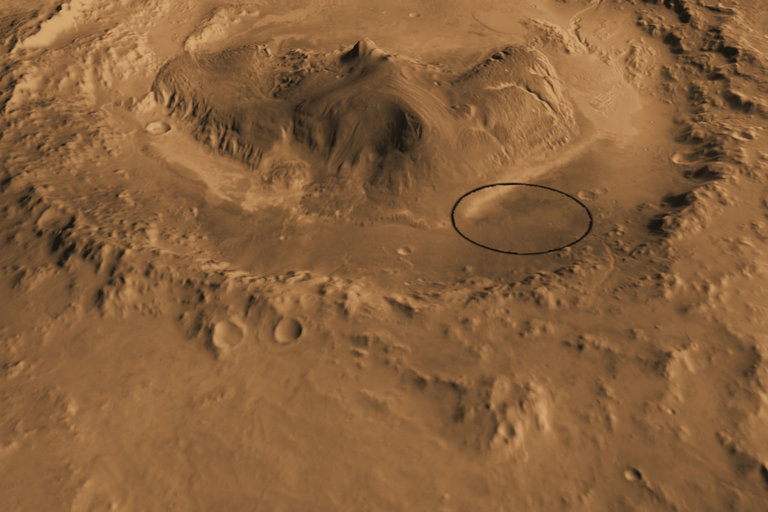
This computer-generated view, based on multiple orbital observations, shows Mars's Gale crater as if seen from an aircraft north of the crater.
The Curiosity rover made big news in late 2014 when it first detected organic matter on Mars. But in detailed studies of the sites in Gale Crater studied by Curiosity, called Yellowknife Bay and Sheepbed Mudstone, the concentration of organic molecules were much lower than scientists had expected.

It was thought that the iron and magnesium-rich clay minerals in Gale Crater — which has also provided evidence of a long-term presence of liquid water in Mars’ past — would be a good place for organic matter to be preserved, as well.

But it turns out, according to a new study by a team of geoscientists at the University of Nevada Las Vegas, certain features of the clay minerals on Mars may not be conducive to the preservation of organic matter after all.

“We were able to show that the clay minerals formed from oxidized iron, rather than the reduced iron that had previously been thought,” lead author Elizabeth Hausrath said in an email to Seeker. “This suggests that if organic matter were present in the past on Mars, it might not be preserved to be detected today. So this might help explain why larger concentrations of organic matter haven't been detected on Mars, at least not yet!”

UNLV Researcher Libby Hausrath works with student Seth Grainey in her lab.
Hausrath and her team were able to recreate clay minerals in their lab analogous to what might be found in Gale Crater.

From previous experiments, it was thought that anoxic conditions — an environment without oxygen — were required for iron-magnesium clay minerals to form. On Earth, a hydrothermal vent would be an example of an anoxic environment. These vents are home to mostly microbes, and oxygen is actually toxic to most of them. Therefore, since thousands of locations on Mars have rock units containing iron-magnesium minerals it was thought any organics would be well preserved.

But Hausrath and colleagues were also able to synthesize clay minerals under oxidized conditions — where oxygen was present — which would destroy organic molecules. What they found is that these types of minerals actually formed faster when oxygen was present.

“The results suggested that the iron and magnesium-rich clay minerals formed quickly under oxidized conditions, which could help explain low concentrations of organics within some rocks or sediments on Mars,” former Ph.D. student Seth Gainey said in a statement.

Therefore, past organic matter, including possible signs of life, may not be well-preserved on Mars. But that doesn’t mean that life never formed on Mars. As we know on Earth, life seems to adapt to the conditions in which it was formed, and life on Mars may have perhaps developed to adapt to the oxidized conditions in the soil.

“Terrestrial life has certainly adapted to very challenging conditions,” Hausrath said. “For example, we have recently published work on how snow algae, which grow to very high concentrations in very challenging low nutrient snowy environments, are able to use minerals as nutrient sources. So certainly what we know of life from Earth is that it seems to be very able to adapt to challenging circumstances.”

The study Hausrath mention was published last month in the journal of the American Society for Microbiology. Her lab's latest findings were published in the journal Nature.

From all the evidence gathered by the Curiosity rover, scientists think Gale Crater was once the site of a lake billions of years ago, and rocks like mudstone formed from sediment in the lake. While organics were found there, there is not enough evidence to tell if the matter found by the rover team came from ancient Martian life or from a non-biological process. Some examples of non-biological sources include chemical reactions in water at ancient Martian hot springs or delivery of organic material to Mars by interplanetary dust or fragments of asteroids and comets.

But the discovery of organics shows that the ancient Martian environment offered a supply of organic molecules for use as building blocks for life and an energy source for life. Curiosity's earlier analysis of this same mudstone revealed that the environment offered water and chemical elements essential for life and a different chemical energy source.

Read more at Seeker

Feb 23, 2018

On second thought, the Moon's water may be widespread and immobile

If the Moon has enough water, and if it's reasonably convenient to access, future explorers might be able to use it as a resource.
A new analysis of data from two lunar missions finds evidence that the Moon's water is widely distributed across the surface and is not confined to a particular region or type of terrain. The water appears to be present day and night, though it's not necessarily easily accessible.

The findings could help researchers understand the origin of the Moon's water and how easy it would be to use as a resource. If the Moon has enough water, and if it's reasonably convenient to access, future explorers might be able to use it as drinking water or to convert it into hydrogen and oxygen for rocket fuel or oxygen to breathe.

"We find that it doesn't matter what time of day or which latitude we look at, the signal indicating water always seems to be present," said Joshua Bandfield, a senior research scientist with the Space Science Institute in Boulder, Colorado, and lead author of the new study published in Nature Geoscience. "The presence of water doesn't appear to depend on the composition of the surface, and the water sticks around."

The results contradict some earlier studies, which had suggested that more water was detected at the Moon's polar latitudes and that the strength of the water signal waxes and wanes according to the lunar day (29.5 Earth days). Taking these together, some researchers proposed that water molecules can "hop" across the lunar surface until they enter cold traps in the dark reaches of craters near the north and south poles. In planetary science, a cold trap is a region that's so cold, the water vapor and other volatiles which come into contact with the surface will remain stable for an extended period of time, perhaps up to several billion years.

The debates continue because of the subtleties of how the detection has been achieved so far. The main evidence has come from remote-sensing instruments that measured the strength of sunlight reflected off the lunar surface. When water is present, instruments like these pick up a spectral fingerprint at wavelengths near 3 micrometers, which lies beyond visible light and in the realm of infrared radiation.

But the surface of the Moon also can get hot enough to "glow," or emit its own light, in the infrared region of the spectrum. The challenge is to disentangle this mixture of reflected and emitted light. To tease the two apart, researchers need to have very accurate temperature information.

Bandfield and colleagues came up with a new way to incorporate temperature information, creating a detailed model from measurements made by the Diviner instrument on NASA's Lunar Reconnaissance Orbiter, or LRO. The team applied this temperature model to data gathered earlier by the Moon Mineralogy Mapper, a visible and infrared spectrometer that NASA's Jet Propulsion Laboratory in Pasadena, California, provided for India's Chandrayaan-1 orbiter.

The new finding of widespread and relatively immobile water suggests that it may be present primarily as OH, a more reactive relative of H2O that is made of one oxygen atom and one hydrogen atom. OH, also called hydroxyl, doesn't stay on its own for long, preferring to attack molecules or attach itself chemically to them. Hydroxyl would therefore have to be extracted from minerals in order to be used.

The research also suggests that any H2O present on the Moon isn't loosely attached to the surface.

"By putting some limits on how mobile the water or the OH on the surface is, we can help constrain how much water could reach the cold traps in the polar regions," said Michael Poston of the Southwest Research Institute in San Antonio, Texas.

Sorting out what happens on the Moon could also help researchers understand the sources of water and its long-term storage on other rocky bodies throughout the solar system.

The researchers are still discussing what the findings tell them about the source of the Moon's water. The results point toward OH and/or H2O being created by the solar wind hitting the lunar surface, though the team didn't rule out that OH and/or H2O could come from the Moon itself, slowly released from deep inside minerals where it has been locked since the Moon was formed.

Read more at Science Daily