A new study finds that listening to motivational music during sport activities and exercise increases risk-taking behavior but does not improve overall performance. The effect was more noticeable among men and participants who selected their own playlist. The study, published in Frontiers in Psychology, also found that self-selected music had the power to enhance self-esteem among those who were already performing well, but not among participants who were performing poorly.
Listening to motivational music has become a popular way of enhancing mood, motivation and positive self-evaluation during sports and exercise. There is an abundance of anecdotal evidence of music being used in this way, such as the famous Maori "Haka" performed by New Zealand's national rugby team to get into the right mindset before games. However, the psychological processes and mechanisms that explain the motivational power of music are poorly understood.
"While the role of music in evoking emotional responses and its use for mood regulation have been a subject of considerable scientific interest, the question of how listening to music relates to changes in self-evaluative cognitions has rarely been discussed," says Dr. Paul Elvers of the Max Planck Institute for Empirical Aesthetics and one of the study's authors. "This is surprising, given that self-evaluative cognitions and attitudes such as self-esteem, self-confidence and self-efficacy are considered to be sensitive to external stimuli such as music."
The research team investigated whether listening to motivational music can boost performance in a ball game, enhance self-evaluative cognition and/or lead to riskier behavior. The study divided 150 participants into three groups that performed a ball-throwing task from fixed distances and filled in questionnaires while listening to either participant-selected music, experimenter-selected music or no music at all. To assess risk-taking behavior, the participants were also allowed to choose the distances to the basket themselves. The participants received monetarily incentivized points for each successful trial.
The data show that listening to music did not have any positive or negative impact on overall performance or on self-evaluative cognitions, trait self-esteem or sport-related anxiety. However, it did increase the sense of self-esteem in participants who were performing well and also increased risk-taking behavior -- particularly in male participants and participants who could choose their own motivational music. Moreover, the researchers also found that those who made riskier choices earned higher monetary rewards.
"The results suggest that psychological processes linked to motivation and emotion play an important role for understanding the functions and effects of music in sports and exercise," says Dr. Elvers. "The gender differences in risk-taking behavior that we found in our study align with what previous studies have documented."
However, more research is required to fully understand the impact of motivational music on the intricate phenomena of self-enhancement, performance and risky behavior during sports and exercise.
Read more at Science Daily
Jan 29, 2018

What happens to language as populations grow? It simplifies, say researchers
Languages have an intriguing paradox. Languages with lots of speakers, such as English and Mandarin, have large vocabularies with relatively simple grammar. Yet the opposite is also true: Languages with fewer speakers have fewer words but complex grammars.
Why does the size of a population of speakers have opposite effects on vocabulary and grammar?
Through computer simulations, a Cornell University cognitive scientist and his colleagues have shown that ease of learning may explain the paradox. Their work suggests that language, and other aspects of culture, may become simpler as our world becomes more interconnected.
Their study was published in the Proceedings of the Royal Society B: Biological Sciences.
"We were able to show that whether something is easy to learn -- like words -- or hard to learn -- like complex grammar -- can explain these opposing tendencies," said co-author Morten Christiansen, professor of psychology at Cornell University and co-director of the Cognitive Science Program.
The researchers hypothesized that words are easier to learn than aspects of morphology or grammar. "You only need a few exposures to a word to learn it, so it's easier for words to propagate," he said.
But learning a new grammatical innovation requires a lengthier learning process. And that's going to happen more readily in a smaller speech community, because each person is likely to interact with a large proportion of the community, he said. "If you have to have multiple exposures to, say, a complex syntactic rule, in smaller communities it's easier for it to spread and be maintained in the population."
Conversely, in a large community, like a big city, one person will talk only to a small proportion the population. This means that only a few people might be exposed to that complex grammar rule, making it harder for it to survive, he said.
This mechanism can explain why all sorts of complex cultural conventions emerge in small communities. For example, bebop developed in the intimate jazz world of 1940s New York City, and the Lindy Hop came out of the close-knit community of 1930s Harlem.
The simulations suggest that language, and possibly other aspects of culture, may become simpler as our world becomes increasingly interconnected, Christiansen said. "This doesn't necessarily mean that all culture will become overly simple. But perhaps the mainstream parts will become simpler over time."
Read more at Science Daily
New Egyptian dinosaur reveals ancient link between Africa and Europe
 |
| Skeletal reconstruction of the new titanosaurian dinosaur Mansourasaurus shahinae from the Late Cretaceous of the Dakhla Oasis, Egypt. Bones shown in color are those that are preserved in the original fossil; other bones are based on those of closely related dinosaurs. |
The fossilized remains of Mansourasaurus were unearthed by an expedition undertaken by the Mansoura University Vertebrate Paleontology (MUVP) initiative, an effort led by Dr. Hesham Sallam of the Department of Geology at Mansoura University in Mansoura, Egypt. Sallam is the lead author of the paper published today in the journal Nature Ecology and Evolution that names the new species. The field team included several of his students, many of whom -- Ms. Iman El-Dawoudi, Ms. Sanaa El-Sayed, and Mrs. Sara Saber -- also participated in the study of the new dinosaur. The creature's name honors both Mansoura University and Ms. Mona Shahin for her integral role in developing the MUVP. According to Sallam, "The discovery and extraction of Mansourasaurus was such an amazing experience for the MUVP team. It was thrilling for my students to uncover bone after bone, as each new element we recovered helped to reveal who this giant dinosaur was."
"Mansourasaurus shahinae is a key new dinosaur species, and a critical discovery for Egyptian and African paleontology," says Dr. Eric Gorscak, a postdoctoral research scientist at The Field Museum and a contributing author on the study. Gorscak, who began work on the project as a doctoral student at Ohio University, where his research focused on African dinosaurs, adds, "Africa remains a giant question mark in terms of land-dwelling animals at the end of the Age of Dinosaurs. Mansourasaurus helps us address longstanding questions about Africa's fossil record and paleobiology -- what animals were living there, and to what other species were these animals most closely related?"
Late Cretaceous dinosaur fossils in Africa are hard to come by -- much of the land where their fossils might be found is covered in lush vegetation, rather than the exposed rock of dinosaur treasure troves such as those in the Rocky Mountain region, the Gobi Desert, or Patagonia. The lack of a Late Cretaceous fossil record in Africa is frustrating for paleontologists since, at that time, the continents were undergoing massive geological and geographic changes.
During the earlier years of the dinosaurs, throughout much of the Triassic and Jurassic periods, all the continents were joined together as the supercontinent of Pangaea. During the Cretaceous Period, however, the continents began splitting apart and shifting towards the configuration we see today. Historically, it hasn't been clear how well-connected Africa was to other Southern Hemisphere landmasses and Europe during this time -- to what degree Africa's animals may have been cut off from their neighbors and evolving on their own separate tracks. Mansourasaurus, as one of the few African dinosaurs known from this time period, helps to answer that question. By analyzing features of its bones, Sallam and his team determined that Mansourasaurus is more closely related to dinosaurs from Europe and Asia than it is to those found farther south in Africa or in South America. This, in turn, shows that at least some dinosaurs could move between Africa and Europe near the end of these animals' reign. "Africa's last dinosaurs weren't completely isolated, contrary to what some have proposed in the past," says Gorscak. "There were still connections to Europe."
Mansourasaurus belongs to the Titanosauria, a group of sauropods (long-necked plant-eating dinosaurs) that were common throughout much of the world during the Cretaceous. Titanosaurs are famous for including the largest land animals known to science, such as Argentinosaurus, Dreadnoughtus, and Patagotitan. Mansourasaurus, however, was moderate-sized for a titanosaur, roughly the weight of an African bull elephant. Its skeleton is important in being the most complete dinosaur specimen so far discovered from the end of the Cretaceous in Africa, preserving parts of the skull, the lower jaw, neck and back vertebrae, ribs, most of the shoulder and forelimb, part of the hind foot, and pieces of dermal plates. Says study coauthor and dinosaur paleontologist Dr. Matt Lamanna of Carnegie Museum of Natural History, "When I first saw pics of the fossils, my jaw hit the floor. This was the Holy Grail -- a well-preserved dinosaur from the end of the Age of Dinosaurs in Africa -- that we paleontologists had been searching for for a long, long time."
Also contributing to the Mansourasaurus research were experts on African paleontology from other institutions in Egypt and the US. MUVP student Iman El-Dawoudi played a particularly important role in the analysis of the new titanosaur, making numerous observations on its skeleton. "The combined effort of multiple institutions across the globe, not to mention the absolutely key role played by students on the project from the field, to the laboratory, to the final analysis and writeup of the results, exemplifies the collaborative nature of expeditionary sciences today," notes Dr. Patrick O'Connor, study coauthor and professor of anatomy at the Ohio University Heritage College of Osteopathic Medicine.
Funding for the Mansourasaurus study was provided by grants from Mansoura University, the Jurassic Foundation, the Leakey Foundation, the National Geographic Society/Waitt Foundation, and the National Science Foundation (NSF).
"The discovery of rare fossils like this sauropod dinosaur helps us understand how creatures moved across continents, and gives us a greater understanding of the evolutionary history of organisms in this region," says Dena Smith, a program director in NSF's Division of Earth Sciences, which partially funded the laboratory portion of the research.
Scientific discoveries are often compared to finding the last missing puzzle piece to complete a picture; Gorscak says that since so little is known about African dinosaurs, Mansourasaurus is better likened to an earlier step in the puzzle-solving process. "It's like finding an edge piece that you use to help figure out what the picture is, that you can build from. Maybe even a corner piece."
Read more at Science Daily
Jan 27, 2018
Rainfall and ocean circulation linked in past and present
 |
| Kaustubh Thirumalai (Brown University) helping retrieve a CTD instrument, which collects water samples and measures physical parameters of oceanic waters such as temperature, aboard the R/V Point Sur in the northern Gulf of Mexico. |
The findings, published on Jan. 26 in Nature Communications, are important because the detailed look into Earth's past climate and the factors that influenced it could help scientists understand how these same factors may influence our climate today and in the future.
"The mechanisms that seem to be driving this correlation [in the past] are the same that are at play in modern data as well," said lead author Kaustubh Thirumalai, postdoctoral researcher at Brown University who conducted the research while earning his Ph.D. at the UT Austin Jackson School of Geosciences. "The Atlantic Ocean surface circulation, and however that changes, has implications for how the rainfall changes on continents."
Thirumalai conducted the work at The University of Texas Institute for Geophysics (UTIG), a research unit at the UT Jackson School of Geosciences. Co-authors include UTIG scientists, and researchers from the U.S. Geological Survey St. Petersburg Coastal and Marine Science Center and the Massachusetts Institute of Technology.
The Atlantic Ocean surface circulation is an important part of the Earth's global climate, moving warm water from the tropics towards the poles. The foundation of the research involved tracking the changes in ocean circulation in new detail by studying three sediment cores extracted from the seafloor of the Gulf of Mexico in 2010 during a scientific cruise. The samples give insight into factors that influenced the strength of the ocean current in about 30-year increments over the past 4,400 years.
"If we go back in increments of 30, we're well positioned to understand things on the order of centuries," Thirumalai said. "And the question we decided to ask was what can those reconstructions of temperature and salinity tell us about the greater Atlantic Ocean surface circulation."
The small time increments scientists were able to capture in the cores are due to the large amounts of sediment that empty into the Gulf from rivers in Mexico and North America. The scientists extracted data about temperature and salinity data -- factors that influence ocean current strength -- from ocean-dwelling microorganisms called foraminifera preserved in the sediments.
The data showed that, in comparison to today, the Atlantic Ocean surface circulation was much weaker during the Little Ice Age, a cool period thought to be triggered by volcanic activity that lasted from 1450-1850. Since these set of ocean currents are known to influence global climate, the researchers were interested to see if it correlated with rainfall in the Western Hemisphere, and how such a correlation could change over time.
To calculate the correlation during the Little Ice Age, researchers compared the core data with proxies for precipitation data, such as data from tree rings, cave formations and other natural records. And to calculate the modern correlation, they compared data collected by humans during the last century on the temperature and salinity of the Gulf and rainfall in the Western Hemisphere. They also analyzed data from a climate model developed by the Max-Planck Institute for Meteorology in Germany to predict what the correlation between the current and rainfall would be expected to be during the Little Ice Age.
The results indicate that in present and past the Atlantic Ocean surface currents correlate with rainfall patterns in the Western Hemisphere. Thirumalai said that this finding is important for two reasons. It shows that a correlation exists between the current and rainfall patterns, and that the correlation is evident in data sets that cover different time scales.
"It was remarkable," Thirumalai said. "These patterns that are based on decadal analysis of modern data, and then the hydroclimate proxies that give the salinity in the oceans and the rainfall on land seem to show the same picture."
The findings emphasize the importance of the Atlantic Ocean surface circulation to rainfall, and that changes in the current can have far reaching impacts. That means that future changes to the Gulf's salinity and temperature could be expected to influence the climate in other ways.
"The study demonstrates a robust century-scale link between ocean circulation changes in the Atlantic basin and rainfall in the adjacent continents during the past 4,000 years," said UTIG Director Terry Quinn, a co-author on the study. "And hence it provides a baseline for predictions on how that part of the climate system may behave in the future."
Read more at Science Daily
From stem cells to a functional heart: The role of the Mesp1 gene
 |
| This is a mosaically labeled embryonic heart. Each colored patch is derived from the early labeling of a cardiac progenitor cell expressing the key gene Mesp1. |
The heart is the first organ that forms during development and contains four different regions (ventricles and atria), which contain different cells that perform specialized functions: the beating cardiomyocytes ensure the pumping activity, vascular cells represent the inner lining and blood vessels and the pacemaker cells set the heartbeat. Unless the progenitor cells that will form the heart are specified at the correct time, migrate to the correct location, and differentiate into the correct cell types, severe malformations of the heart occur. In human patients, these are recognized as congenital heart diseases, which represent the most common cause of severe birth defects in newborne babies. Previous studies had shown that a diverse range of heart progenitor cells arises from different pools of cells expressing the Mesp1 gene. However, it remained unclear how the various progenitors can be distinguished at the molecular level, and what molecular mechanisms promote specification into a particular heart region or cardiac lineage.
In a new study published in early release of Science, researchers led by Pr. Cédric Blanpain, Laboratory of Stem Cells and Cancer, Université libre de Bruxelles, Belgium, and Pr. Berthold Göttgens, the Universtity of Cambridge, identified the role of Mesp1 in the earliest step of cardiovascular lineage segregation by single cell molecular profiling and lineage tracking.
Fabienne Lescroart and colleagues isolated Mesp1 expressing cells at different stages of embryonic development and performed single cell transcriptomic analysis of these early cardiac progenitors to identify the molecular features associated with regional and cell type identity of cardiac progenitors. They demonstrated that the different populations of cardiac progenitors are molecularly distinct.
To determine the role of the transcription factor Mesp1 in regulating the cardiovascular differentiation program and the heterogeneity of early cardiovascular progenitors, they also performed single cell molecular profiling of these early progenitors in a Mesp1 deficient context. These experiments showed that Mesp1 is required for the exit from the pluripotent state and the induction of the cardiovascular gene expression program.
Bioinformatic analysis identified, among these early Mesp1 progenitors, distinct populations of cells corresponding to progenitors committed to different cell lineages and regions of the heart, identifying the molecular features associated with early lineage restriction and regional segregation of the heart. While progenitor cells are not yet differentiated, this new analysis shows that cardiovascular progenitors are already "primed" or pre-specified to give rise to cardiac muscle cells or vascular cells. The researchers found that these different populations are also born at different time points and are located at specific locations at this early stage of development. Finally, the researchers have identified the earliest branching point between the cardiac and vascular lineages, and shown that Notch1 marks the early progenitor committed to the vascular lineage during early embryonic development.
Understanding the molecular features associated with early cardiovascular lineage commitment and heart regions will be important to design new strategies to instruct cardiovascular progenitors to adopt cardiac or vascular identity from different heart regions that can be used for cellular therapy of cardiac diseases. " Future studies will be required to determine whether the paradigm of early lineage segregation identified here controls the formation of the different lineages in different organs and tissues. It will also be important to determine whether the molecular features uncovered here play a role in congenital cardiac malformations and can be used to push cardiovascular progenitors into a particular lineage, which can have important implications for improving cell therapy for cardiac repair" comments Pr Cédric Blanpain, one of the senior authors of this study.
Read more at Science Daily
Jan 26, 2018
Humans take up too much space -- and it's affecting how mammals move
 |
| One of the lions in Tsavo, Kenya, whose movements were tracked for this study. |
A study recently published by Science found that, on average, mammals living in human-modified habitats move two to three times less far than their counterparts in areas untouched by humans. What's more, this pattern persists globally: from African forest elephants to white-tailed antelope squirrels in North America, the human footprint infringes upon the footprints of mammal species both big and small. The study, led by Marlee Tucker of the Senckenberg Biodiversity and Climate Research Centre in Germany, is the first of its kind to log movement behaviors for such a wide range of mammals globally.
"All organisms need space," Bruce Patterson, a co-author of this study and MacArthur Curator of Mammals at The Field Museum in Chicago, explained. "They need space to gather their resources, find mates, and perform their ecological services." For instance, bats need room to find and consume insects and pollinate plants (which amount to $3.5 to 50 billion worth of agricultural labor annually in the US alone), and apex predators need room to hunt and control other species' populations.
In the study, more than 100 researchers contributed information on 803 individual mammals representing 57 species in total. Patterson offered up data on the movement of lions in a pristine wilderness area of Tsavo, Kenya. From 2002-09, he followed three lions using high-tech collars that continuously tracked individuals' movement via GPS -- the data he contributed to the Science study. One of those lions, in its natural habitat, patrolled an area twice the size of Chicago (1400 km2) to find food, attract mates, and repel intruders.
But habitat loss and fragmentation disrupt these critical animal behaviors. Clearing rainforest is an example of habitat loss -- the destruction and loss of usable area for a given species. Constructing a road through the savannah, on the other hand, constitutes habitat fragmentation -- the division of habitat area into smaller, discontinuous spaces. When suitable habitat spaces become too small or too isolated, animals can no longer afford to visit them, changing their space use.
As habitats become compromised, resources like food and living space that animals rely on become scarce. Sometimes, when resources are limited, animals traverse larger areas to get what they need -- if there's not enough food in a five-mile radius, they might move to a ten-mile radius. However, this study shows that on the whole, that sort of additional movement tends not to be an option -- if there's no uninterrupted landscape available, then the affected animals simply can't live there.
To that end, the Science study found "strong negative effects of the human footprint on median and long-distance displacements of terrestrial mammals." Patterson put it more simply: "Human dominion over Earth's landscapes gets in the way of animals doing their thing." Some species, like mice, can make do with less room, but animals that need lots of space, like lions, tigers, and elephants, simply can't live in areas with lots of humans.
"It is important that animals move, because in moving they carry out important ecological functions like transporting nutrients and seeds between different areas. Additionally, mammalian movements bring different species together and thus allow for interactions in food webs that might otherwise not occur. If mammals move less this could alter any of these ecosystem functions," says lead author Marlee Tucker.
Across the wide array of species its data encompasses, the study points to a singular, and grim, conclusion: For mammal species, the effects of habitat loss and habitat fragmentation don't discriminate by geographic location, body size, or where that species sits on the food chain -- the human footprint threatens most other mammals.
Read more at Science Daily
Paleontology: The eleventh Archaeopteryx
 |
| The geologically oldest, but most recently discovered specimen of Archaeopteryx. |
Some 150 million years ago in what is now Northern Bavaria, Archaeopteryx -- the oldest bird species yet discovered -- inhabited a subtropical environment characterized by reef islands and lagoons set in a shallow sea that was part of the primordial Mediterranean. All the specimens of Archaeopteryx so far recovered were found in the valley of the Altmühl River, in geological settings that represent this habitat -- the Jurassic Solnhofen Archipelago. The latest find was made there in 2010, and this new specimen has now been analyzed by a team of researchers led by LMU paleontologist Oliver Rauhut, a professor in the Department of Earth and Environmental Sciences who is also affiliated with the Bavarian State Collections for Paleontology and Geology in Munich. Stratigraphic analysis of the find locality reveals that the fossil is the oldest known representative of the genus Archaeopteryx.
"Specimens of Archaeopteryx are now known from three distinct rock units, which together cover a period of approximately 1 million years," Rauhut explains. Notably, the oldest example exhibits features that were so far not known from the other specimens. "Among other things, they reveal that Archaeopteryx was very similar to advanced predatory dinosaurs in many respects," says Rauhut. Moreover, in the new study, he and his colleagues provide a diagnosis that allows to reliably distinguish Archaeopteryx from its closest relatives, both non-avialan theropod dinosaurs and basal birds. This key will be very valuable, as a whole series of bird-like predatory dinosaurs has been described in recent years, mainly from China, which has greatly complicated the taxonomical classification of the group.
The new specimen is the 12th fossil to be attributed to the genus. However, in a study published in the online journal BMC Evolutionary Biology last year, Rauhut's group reported that the first of these to come to light -- the so-called Haarlem specimen discovered in 1861 -- does not actually belong to the group. This result thus reduces the number of Archaeopteryx fossils to 11, although some doubts remain concerning the assignment of two of these. This underlines the necessity for a diagnosis to clearly identify Archaeopteryx.
Moreover, the investigation of the 11th specimen demonstrates that the known specimens span a remarkable range of anatomical variation. Potential explanations for the broad spectrum of variation extend from intraspecific developmental polymorphism to evolutionary differentiation, i.e., the possibility that the fossil material so far recovered represents more than one species. "The high degree of variation in the teeth is particularly striking -- none of the specimens shows the same pattern of dentition as any other, which could reflect differences in diet," Rauhut points out. "This is very reminiscent of the famous case of Darwin's finks on the Galapagos, which show remarkable variation in their beak shapes. It is even conceivable that this primeval bird genus might, in a similar fashion, have diversified into several specialized forms on the islands of the Solnhofener Archipelago. In that case, the Archaeopteryx fossils could represent a species flock, a Jurassic analog of Darwin's finches."
From Science Daily
Archaeologists say they may have discovered one of the earliest examples of a 'crayon'
 |
| The crayon revealed a sharpened end. |
The ochre crayon was discovered near an ancient lake, now blanketed in peat, near Scarborough, North Yorkshire. An ochre pebble was found at another site on the opposite side of the lake.
The pebble had a heavily striated surface that is likely to have been scraped to produce a red pigment powder. The crayon measures 22mm long and 7mm wide.
Ochre is an important mineral pigment used by prehistoric hunter-gatherers across the globe. The latest finds suggest people collected ochre and processed it in different ways during the Mesolithic period.
The ochre objects were studied as part of an interdisciplinary collaboration between the Departments of Archaeology and Physics at the University of York, using state-of-the-art techniques to establish their composition.
The artefacts were found at Seamer Carr and Flixton School House. Both sites are situated in a landscape rich in prehistory, including one of the most famous Mesolithic sites in Europe, Star Carr.
A pendant was discovered at Star Carr in 2015 and is the earliest known Mesolithic art in Britain. Here, more than 30 red deer antler headdresses were found which may have been used as a disguise in hunting, or during ritual performances by shamans when communicating with animal spirits.
Lead author, Dr Andy Needham from the University of York's Department of Archaeology, said the latest discoveries helped further our understanding of Mesolithic life.
He commented: "Colour was a very significant part of hunter-gatherer life and ochre gives you a very vibrant red colour. It is very important in the Mesolithic period and seems to be used in a number of ways.
"One of the latest objects we have found looks exactly like a crayon; the tip is faceted and has gone from a rounded end to a really sharpened end, suggesting it has been used.
"For me it is a very significant object and helps us build a bigger picture of what life was like in the area; it suggests it would have been a very colourful place."
The research team say Flixton was a key location in the Mesolithic period and the two objects help paint a vibrant picture of how the people interacted with the local environment.
Read more at Science Daily
Greenpeace Submarine Catalogs Life on Antarctica’s Seafloor
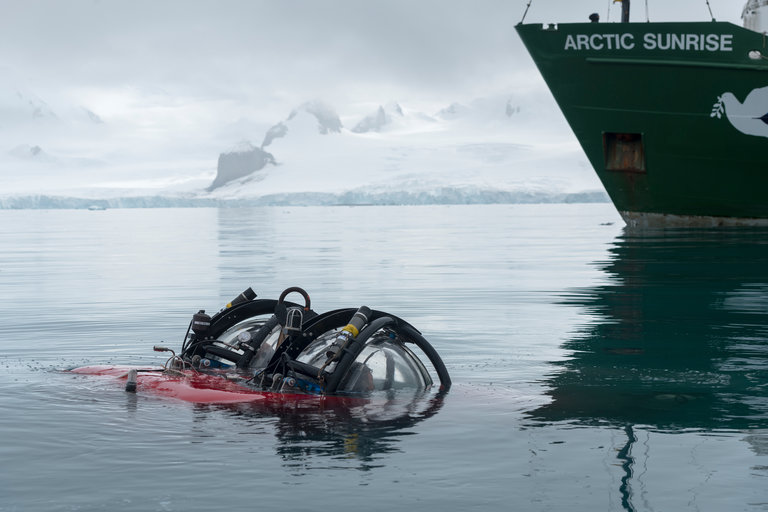 |
| TA two person submarine at the surface after a dive, next to Greenpeace ship the Arctic Sunrise at Livingston Island, Antarctica. Greenpeace is conducting submarine-based scientific research to strengthen the proposal to create the largest protected area on the planet, an Antarctic Ocean Sanctuary. |
Researchers from Greenpeace recently dove to the seafloor off the Antarctic peninsula in a small submarine and cataloged a rich variety of species in an area the environmental organization hopes to see protected.
“It really looks like a garden, although it’s all animals,” Greenpeace marine biologist John Hocevar told Seeker. “It’s too deep for light to penetrate, so there are no plants. But we’re seeing really dense assemblages of sponges, corals, sea squirts, bryozoans, and all kinds of relatives of sea stars.”
At more than 1,000 feet (305 meters) below the surface, the population is mostly invertebrates. The water temperature is too cold for most fish, Hocevar said. The surrounding ocean is about 1 degree below zero Celsius (30 degrees Fahrenheit), kept from freezing by the salt in the water.
The fish that do survive in the waters carry a protein in their blood that serves as a kind of natural antifreeze. The Greenpeace expedition spotted a few, including a species of crocodile icefish that researchers are still trying to identify, since few have been cataloged alive.
“You try to identify it at the species level from existing images, and they’re nearly all from specimens collected in trawls or on hooks,” Hocevar said. “Comparing this fish in its natural habitat to something that’s dead and desiccated is a little bit more challenging than I would have thought. Even the experts on some of these species have never seen one alive.”
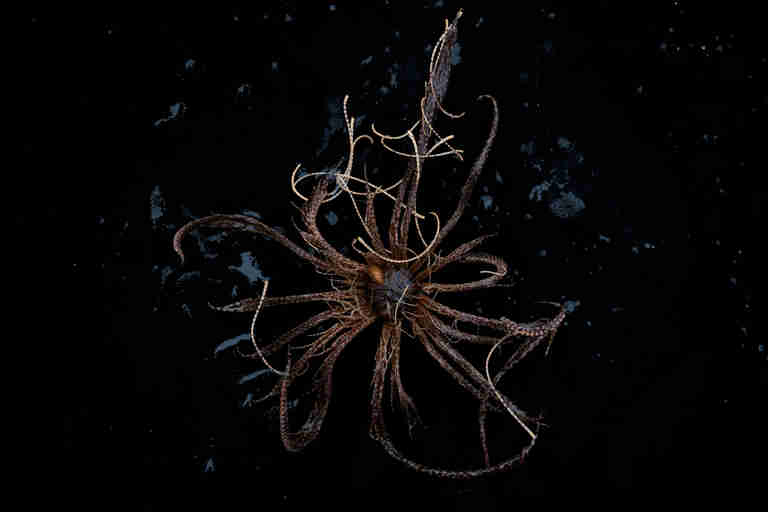 |
| The Antarctic feather star, Promachocrinus kerguelensis, found at approximately 300 meters depth at Kinnes Cove, Antarctic Sound found at approximately 300 meters depth at Kinnes Cove in the Antarctic Sound. Greenpeace is conducting submarine-based scientific research to strengthen the proposal to create the largest protected area on the planet, an Antarctic Ocean Sanctuary. |
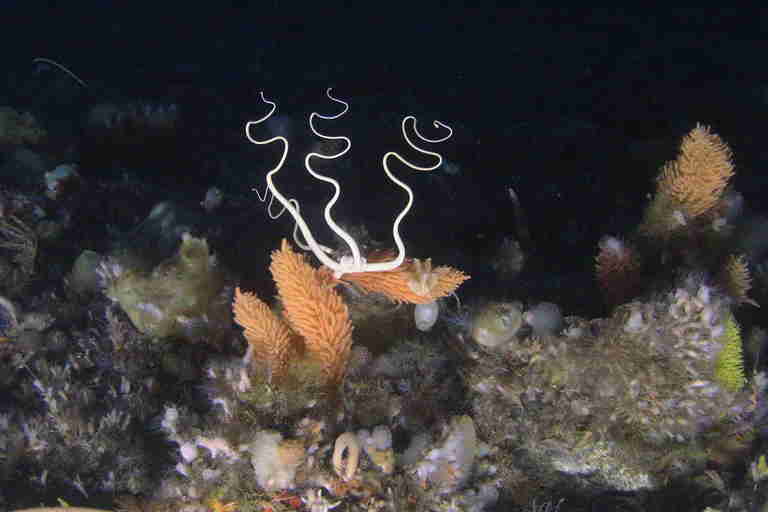 |
| Image of the Antarctic seafloor |
The expedition was aimed at building evidence to support the establishment of a protected marine reserve off Antarctica by an international body that oversees commercial fisheries in the high Southern latitudes. That group, the Commission for the Conservation of Antarctic Marine Living Resources, is expected to revisit the proposal in October after failing to agree on previous attempts.
Read more at Seeker
Oldest Human Fossil Outside of Africa Discovered
 |
| Close-up view of the Misliya-1 teeth |
Analysis over the past several years of fossils discovered nearly a century ago in the Qafzeh and Es-Skhul Caves in Israel, however, classified them as Homo sapiens dating to about 120,000 years ago. This means that our species was clearly in the Middle East of Asia long before 60,000 years ago.
Now comes the announcement that an international team of researchers has just discovered a modern human fossil — upper jawbone and teeth — from a modern human who lived 177,000–200,000 years ago in Israel. The fossil, called "Misliya" since it was found in Misliya Cave on the western slopes of Mount Carmel, is described in the journal Science.
"Misliya is not just the oldest modern human outside Africa," lead author Israel Hershkovitz of Tel Aviv University told Seeker. "It is the oldest modern human that we know of."
Modern, in reference to Homo sapiens evolution, refers to early members of our species that are most like people today, but the term is a broad one and open to different interpretations.
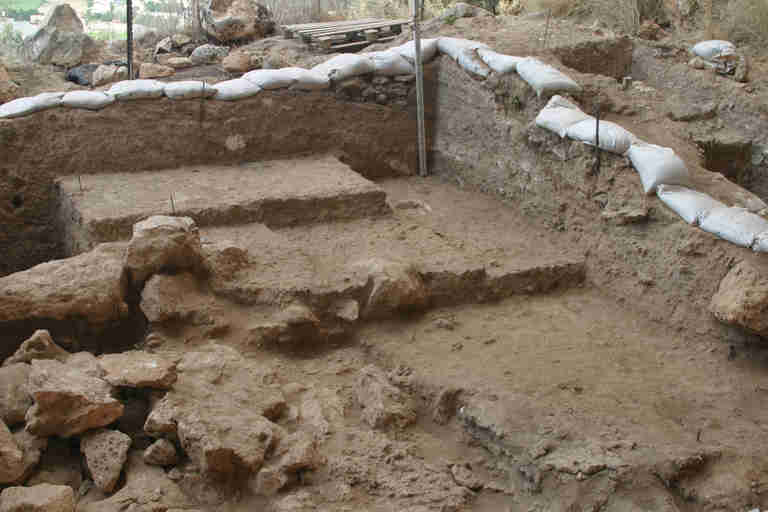 |
| Excavation of part of Misliya Cave. Evidence for a hearth is at the bottom central-right part of the picture. |
3D virtual models of the fossil were also created and compared with other hominin fossils from Africa, Europe, and Asia.
"All of the anatomical features in the Misliya fossil are consistent with it being a modern human," co-author Rolf Quam of Binghamton University told Seeker. "There is nothing in the fossil that says to us that it cannot be a Homo sapiens."
The incisor and canine teeth appear to be unique to anatomically modern humans, as does a lack of "shoveling," a thickening of the tooth crown along the edges on the inside surface of the incisor and canine. The latter characteristic has often been seen in archaic human fossils. Quam and his colleagues, though, did identify other features in Misliya that are known to additional human groups, such as Neanderthals.
"However," Quam said, "this does not mean Misliya is a hybrid specimen."
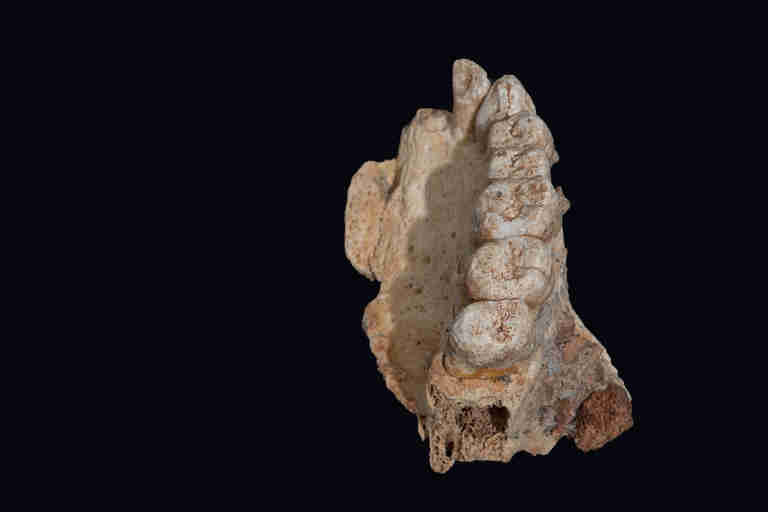 |
| Upper jawbone with teeth from an anatomically modern Homo sapiens found at Misliya Cave, Israel. The remains have been dated to 177,000–194,000 years ago. |
"The most common tools were flint points, many of which were exquisitely retouched and fashioned," Hershkovitz said. "The points were either hafted to serve as the tips of hunting projectiles, or were used for plant processing through the scraping or cutting of plant material, or the digging of plant tubers."
He continued, "The occupants of the site were capable hunters of gazelles, fallow deer, aurochs, wild goats, and other species of deer. Ostrich egg shells were also found."
The scientists determined that the people at Misliya Cave could control the production of fire, based on the remains of a hearth and its ashy sediment. Hearths were repeatedly constructed over many years at the site, suggesting that the cave was in continuous, or near-continuous, use over multiple generations.
Plant materials appear to have been used for bedding or matting, constituting the earliest known evidence for such items.
Hershkovitz and his colleagues are in agreement that the ancestors of Misliya likely originated in North Africa before migrating through the Levant, a region in the Middle East south of the Taurus Mountains, bounded by the Mediterranean Sea on the west and by the northern Arabian Desert and Upper Mesopotamia to the east.
Quam said that the precise source population for the Misliya humans is unknown, "but the oldest fossils attributed to modern humans come from a site known as Jebel Irhoud in Morocco, and date to about 315,000 years ago."
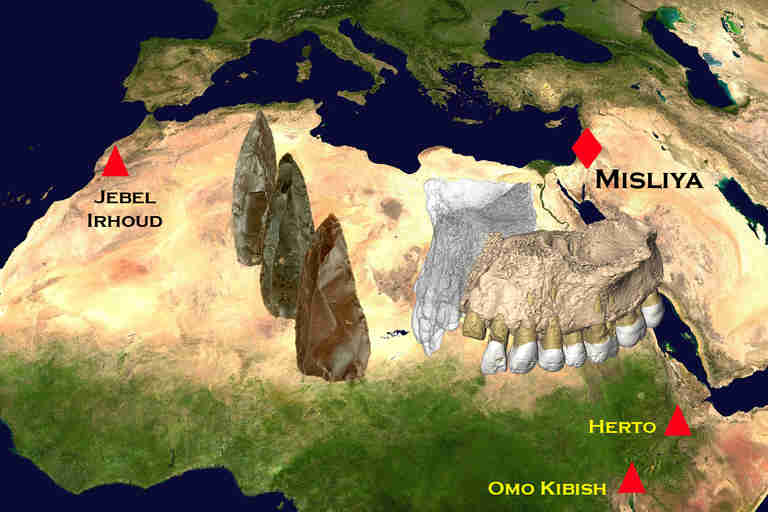 |
| Location of early modern human fossils in Africa and the Middle East |
The fossils from Morocco, however, exhibit "more primitive neurocranial and endocranial morphology" too, according to Hublin and his team.
Modern, in terms of our species, appears to encompass both an earlier period, represented by the Moroccan finds, and a later period, represented by the Misliya fossils. Which of these ancient groups of humans most resembled people that live today, however, remains in question.
The bigger picture, based on the new findings and prior studies, is that primates first evolved in Asia before some migrated out of the continent. Fossils such as 7.2-million-year-old Graecopithecus freybergi, aka "El Graeco" from Greece and Bulgaria, controversially exhibit human features. The primary hominin lineage leading to the dawn of modern humans, however, is widely thought to have originated in Africa, but not in Morocco.
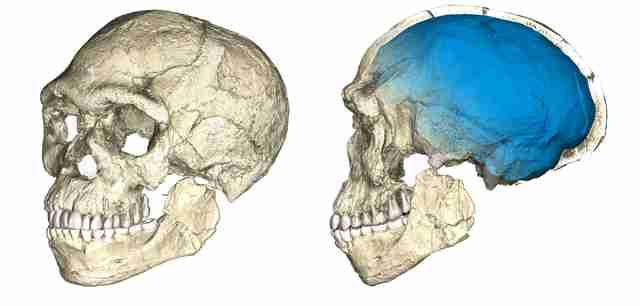 |
| Composite reconstruction of the Homo sapiens fossils from Jebel Irhoud, Morocco |
As these populations dispersed, they likely interbred with other human species in Africa. Homo naledi, for example, may have coexisted for a period of time with Homo sapiens in South Africa, fossils suggest.
Similarly, in Europe and Asia, "modern humans overlapped for a long period of time with existing hominin groups such as Neanderthals, Denisovans, Homo heidelbergensis, and even Homo erectus," Hershkovitz said. "Modern morphology evolved through this interaction."
Read more at Seeker
Subscribe to:
Posts (Atom)