Jan 15, 2018

Print a 200-million-year-old dinosaur 'fossil' in your own home

The profile view of the Massospondylus skull.
The digital reconstruction of the skull of a 200-million-year-old South African dinosaur, Massospondylus, has made it possible for researchers to make 3D prints and in this way facilitate research on other dinosaurs all over the world.

Kimi Chapelle, a PhD student at the Evolutionary Studies Institute at the University of the Witwatersrand in Johannesburg, South Africa (Wits), has used the Wits MicroFocus CT facility to peer inside the skull of the dinosaur Massospondylus.

Chapelle was able to use the CT facility to rebuild every bone of Massospondylus's cranium, and to even look at tiny features like nerves exiting the brain and the balance organs of the inner ear. Her research is published today in the open-access journal, PeerJ.

Along with the paper, which is open for anybody to download and read, a 3D surface file of the skull is available to be downloaded.

"This means any researcher or member of the public can print their own Massospondylus skull at home," says Chapelle.

Massospondylus is one of the most famous dinosaurs from South Africa and was named in 1854 by the celebrated anatomist Sir Richard Owen. Fossils of Massospondylus have been found in many places in South Africa, including Golden Gate National Park, where James Kitching discovered fossil eggs and embryos in 1976. Surprisingly, the skull of Massospondylus has never been the focus of an in-depth anatomical investigation.

"I was amazed when I started digitally reconstructing Massospondylus' skull, and found all these features that had never been described," said Chapelle, "it just goes to show that researchers still have a lot to learn about South Africa's dinosaurs."

Some of the most interesting discoveries from the skull, which is described in Chapelle's paper include:

  • details on how the inner ear and the middle ear contacted each other and what these looked like
  • Where the nerves connecting different parts of the skull to the brain were and which bones they went through
  • that replacement teeth don't erupt in a specific pattern and are present on all teeth, and
  • that the bones that surround the brain in this specific fossil were not fully fused

"By comparing the inner ear to that of other dinosaurs, we can try and interpret things like how they held their heads and how they moved. You can actually see tiny replacement teeth in the bones of the jaws, showing us that Massospondylus continuously replaced its teeth, like crocodiles do, but unlike humans that can only do it once," says Chapelle.

"Also, the fact that the bones of the braincase aren't fully fused means that this particular fossil is that of an individual that is not fully grown yet. This allows us to understand how Massospondylus grew, how fast it grew and how big it could grow."

Hundreds of Massospondylus fossils have been found in South Africa, ranging in size from hatchlings to adult. Chapelle is using CT technology to study these additional fossils for her PhD. "I'll be using scans of other specimens to answer new questions," said Chapelle, "for example, how did Massospondylus babies weighing less than 100g grow up to be half-tonne adults?."

Read more at Science Daily

New source of world’s deadliest toxin discovered

Predicted protein structure of novel botulinum neurotoxin eBonT/J.
Researchers from the Quadram Institute have identified genes encoding a previously undiscovered version of the botulinum neurotoxin in bacteria from a cow's gut.

This is the first time that an intact cluster of genes for making botulinum neurotoxin have been found outside of the bacterium Clostridium botulinum or its close relatives, and only the second report of a new botulinum toxin in the past 40 years.

Clostridium botulinum is a dangerous pathogen that forms the highly potent botulinum toxin, which when ingested causes botulism, a deadly neuroparalytic disease. But botulinum neurotoxin is now also used in a range of medical procedures, as well as for cosmetic purposes. The discovery of this new type of botulinum neurotoxin, from an unexpected source, has the potential to widen the range of medical uses even further.

The genes that encode the botulinum toxin protein along with accessory proteins that protect the botulinum toxin and ensure it functions, are organised as a gene cluster. In new research, published in the journal FEBS Letters, scientists at the Quadram Institute carried out a search of the National Centre for Biotechnology Information's Whole Genome Sequence database. Using bioinformatics techniques, Dr Jason Brunt and Dr Andrew Carter, working with Professor Mike Peck and Dr Sandra Stringer, screened this database for other entries that were similar to the predicted proteins that the botulinum toxin gene would produce. The study was funded by the Biotechnology and Biological Sciences Research Council.

This search identified a previously undiscovered gene cluster encoding a new botulinum neurotoxin and accessory proteins in the genome of a species of Enterococcus bacteria isolated from cow faeces.

Enterococcus bacteria typically inhabit the gastrointestinal tract of animals and humans. Some are commensals, making up a part of the normal microbiome that populates the gut. Others are known to cause disease. This particular strain was isolated from cow faeces in the USA, but it is not known whether the cow was showing signs of botulism. Analysis suggests that the gene cluster is likely to be actively expressed and producing the toxin, so the research team are interested in performing further research to understand what effects carrying this bacterium has on the animals.

As well as understanding the implications of finding this new variant of the botulism gene cluster in a non-clostridial species of gut bacterium, the team are interested in exploring how it might help in developing new treatments for diseases. The researchers have found indications from 3D structure modelling that this new version of the toxin may possess a novel targeting mechanism, which could enable it to treat a wider range of conditions.

"Once expressed as a protein, this new neurotoxin may possess novel properties, such as immunomodulatory properties making it useful for a very wide range of medical problems. It may also have properties that make it an ideal candidate for use as an alternative to existing botulinum neurotoxins such as Botox" said Dr Jason Brunt.

Read more at Science Daily

Jan 14, 2018

No planets needed for rings around stars: Disk patterns can self-generate

Arcs, rings and spirals appear in the debris disk around the star HD 141569A. The black region in the center is caused by a mask that blocks direct light from the star. This image incorporates observations made in June and Aug. 2015 using the Hubble Space Telescope's STIS instrument.
When exoplanet scientists first spotted patterns in disks of dust and gas around young stars, they thought newly formed planets might be the cause. But a recent NASA study cautions that there may be another explanation -- one that doesn't involve planets at all.

Exoplanet hunters watch stars for a few telltale signs that there might be planets in orbit, like changes in the color and brightness of the starlight. For young stars, which are often surrounded by disks of dust and gas, scientists look for patterns in the debris -- such as rings, arcs and spirals -- that might be caused by an orbiting world.

"We're exploring what we think is the leading alternative contender to the planet hypothesis, which is that the dust and gas in the disk form the patterns when they get hit by ultraviolet light," said Marc Kuchner, an astrophysicist at NASA's Goddard Space Flight Center in Greenbelt, Maryland.

Kuchner presented the findings of the new study on Thursday, Jan. 11, at the American Astronomical Society meeting in Washington. A paper describing the results has been submitted to The Astrophysical Journal.

When high-energy UV starlight hits dust grains, it strips away electrons. Those electrons collide with and heat nearby gas. As the gas warms, its pressure increases and it traps more dust, which in turn heats more gas. The resulting cycle, called the photoelectric instability (PeI), can work in tandem with other forces to create some of the features astronomers have previously associated with planets in debris disks.

Kuchner and his colleagues designed computer simulations to better understand these effects. The research was led by Alexander Richert, a doctoral student at Penn State in University Park, Pennsylvania, and includes Wladimir Lyra, a professor of astronomy at California State University, Northridge and research associate at NASA's Jet Propulstion Laboratory in Pasadena, California. The simulations were run on the Discover supercomputing cluster at the NASA Center for Climate Simulation at Goddard.

In 2013, Lyra and Kuchner suggested that PeI could explain the narrow rings seen in some disks. Their model also predicted that some disks would have arcs, or incomplete rings, which were first directly observed in 2016.

"People very often model these systems with planets, but if you want to know what a disk with a planet looks like, you first have to know what a disk looks like without a planet," Richert said.

Richert is lead author on the new study, which builds on Lyra and Kuchner's previous simulations by including an additional new factor: radiation pressure, a force caused by starlight striking dust grains.

Light exerts a minute physical force on everything it encounters. This radiation pressure propels solar sails and helps direct comet tails so they always point away from the Sun. The same force can push dust into highly eccentric orbits, and even blow some of the smaller grains out of the disk entirely.

The researchers modeled how radiation pressure and PeI work together to affect the movement of dust and gas. They also found that the two forces manifest different patterns depending on the physical properties of the dust and gas.

The 2013 simulations of PeI revealed how dust and gas interact to create rings and arcs, like those observed around the real star HD 141569A. With the inclusion of radiation pressure, the 2017 models show how these two factors can create spirals like those also observed around the same star. While planets can also cause these patterns, the new models show scientists should avoid jumping to conclusions.

"Carl Sagan used to say extraordinary claims require extraordinary evidence," Lyra said. "I feel we are sometimes too quick to jump to the idea that the structures we see are caused by planets. That is what I consider an extraordinary claim. We need to rule out everything else before we claim that."

Kuchner and his colleagues said they would continue to factor other parameters into their simulations, like turbulence and different types of dust and gas. They also intend to model how these factors might contribute to pattern formation around different types of stars.

Read more at Science Daily

Spider eat spider: Scientists discover 18 new spider-hunting pelican spiders in Madagascar

Pelican spiders are beautiful and iconic Madagascan spiders. They have a bizarre appearance, with a long "neck" and chelicerae ("jaws") that are used to prey on other spiders from a distance. This pelican spider (pictured above, top) is dangling its spider prey (bottom) upside-down using its chelicerae after capturing it. These spiders also occur in Australia and South Africa; however, the species with the longest "necks" occur in Madagascar. All of the pelican spiders that Wood described live only in Madagascar, an island whose tremendous biodiversity is currently threatened by widespread deforestation. The new species add to scientists' understanding of that biodiversity, and will help Wood investigate how pelican spiders' unusual traits have evolved and diversified over time. They also highlight the case for conserving what remains of Madagascar's forests and the biodiversity they contain, she says.
In 1854, a curious-looking spider was found preserved in 50 million-year-old amber. With an elongated neck-like structure and long mouthparts that protruded from the "head" like an angled beak, the arachnid bore a striking resemblance to a tiny pelican. A few decades later when living pelican spiders were discovered in Madagascar, arachnologists learned that their behavior is as unusual as their appearance, but because these spiders live in remote parts of the world they remained largely unstudied -- until recently.

At the Smithsonian's National Museum of Natural History, curator of arachnids and myriapods Hannah Wood has examined and analyzed hundreds of pelican spiders both in the field in Madagascar and through study of pelican spiders preserved in museum collections. Her analysis, focused on spiders of the Eriauchenius and Madagascarchaea genera, sorted the spiders she studied into 26 different species -- 18 of which have never before been described. Wood and colleague Nikolaj Scharff of the University of Copenhagen describe all 26 pelican spider species in the Jan. 11 issue of the journal Zookeys.

Wood says pelican spiders are well known among arachnologists not only for their unusual appearance, but also for the way they use their long "necks" and jaw-like mouthparts to prey on other spiders. "These spiders attest to the unique biology that diversified in Madagascar," she said.

Pelican spiders are active hunters, prowling the forest at night and following long silk draglines that lead them to their spider prey. When a pelican spider finds a victim, it swiftly reaches out and impales it on its long, fang-tipped "jaws," or chelicerae. Then it holds the capture away from its body, keeping itself safe from potential counterattacks, until the victim dies.

Today's pelican spiders are "living fossils," Wood says -- remarkably similar to species found preserved in the fossil record from as long as 165 million years ago. Because the living spiders were found after their ancestors had been uncovered in the fossil record and presumed extinct, they can be considered a "Lazarus" taxon. In addition to Madagascar, modern-day pelican spiders have been found in South Africa and Australia -- a distribution pattern that suggests their ancestors were dispersed to these landmasses when the Earth's supercontinent Pangaea began to break up around 175 million years ago.

Madagascar is home to vast numbers of plant and animal species that exist only on the island, but until recently, only a few species of pelican spiders had been documented there. In 2000, the California Academy of Sciences launched a massive arthropod inventory in Madagascar, collecting spiders, insects and other invertebrates from all over the island.

Wood used those collections, along with specimens from other museums and spiders that she collected during her own field work in Madagascar, to conduct her study. Her detailed observations and measurements of hundreds of specimens led to the identification of 18 new species -- but Wood says there are almost certainly more to be discovered. As field workers continue to collect specimens across Madagascar, "I think there's going to be a lot more species that haven't yet been described or documented," she said.

The spiders Wood personally collected, including holotypes (the exemplar specimens) for several of the new species, will join the U.S. National Entomological Collection at the Smithsonian, the second-largest insect collection in the world, where they will be preserved and accessible for further research by scientists across the globe.

Read more at Science Daily

Jan 13, 2018

Expert unlocks mechanics of how snakes move in a straight line

UC biology professor Bruce Jayne holds a vine snake in his lab.
Snakes are known for their iconic S-shaped movements. But they have a less noticeable skill that gives them a unique superpower.

Snakes can crawl in a straight line.

University of Cincinnati biologist Bruce Jayne studied the mechanics of snake movement to understand exactly how they can propel themselves forward like a train through a tunnel.

"It's a very good way to move in confined spaces," Jayne said. "A lot of heavy-bodied snakes use this locomotion: vipers, boa constrictors, anacondas and pythons."

His study titled "Crawling without Wiggling" was published in December in the Journal of Experimental Biology.

Snakes typically swim, climb or crawl by bending their spine into serpentine coils or using the leading edges to push off objects. An extreme example of their diversity of movement gives the sidewinder rattlesnake its name.

Jayne, a professor of biological sciences in UC's McMicken College of Arts & Sciences, already has unlocked the mechanics of three kinds of snake locomotion called concertina, serpentine and sidewinding. But the straightforward movement of snakes, called "rectilinear locomotion," has gotten less attention, he said.

This coordination of muscle activity and skin movement was first examined in 1950 by biologist H.W. Lissmann. He hypothesized that the snake's muscles combined with its loose, flexible and squishy belly skin enabled it to scoot forward without bending its spine.

"It's been almost 70 years without that type of locomotion being well understood," Jayne said.

Jayne and his graduate student and co-author, Steven Newman, tested Lissmann's hypothesis using equipment unavailable to researchers in the 1950s. Jayne used high-definition digital cameras to film boa constrictors while recording the electrical impulses generated by particular muscles. This produced an electromyogram (similar to an EKG) that showed the coordination between the muscles, the snake's skin and its body.

For the study, Newman and Jayne used boa constrictors, big-bodied snakes known for traveling in a straight line over the forest floor. They recorded high-definition video of the snakes moving across a horizontal surface hashed with reference marks. The researchers also added reference dots on the sides of the snakes to track the subtle movement of their scaly skin.

When the snake inches forward, the skin on its belly flexes far more than the skin over its ribcage and back. The belly scales act like treads on a tire, providing traction with the ground as the muscles pull the snake's internal skeleture forward in an undulating pattern that becomes fluid and seamless when they move quickly.

The snake's muscles are sequentially activated from the head toward the tail in a remarkably fluid and seamless way. Two of the key muscles responsible for this extend from the ribs (costo) to the skin (cutaneous) giving them their name costocutaneous.

"The vertebral column moves forward at a constant rate," Newman said. "One set of muscles pulls the skin forward and then it gets anchored in place. And opposite antagonistic muscles pull on the vertebral column."

The advantage of this kind of motion is obvious for a predator that eats rodents and other animals that spend time underground.

"Snakes evolved from burrowing ancestors. You can fit in much narrower holes or tunnels by moving this way than if you had to bend your body and push against something," Newman said.

The study was supported in part by a grant from the National Science Foundation.

Jayne said Lissmann's 1950 description largely was correct.

"But he hypothesized that the muscle that shortens the skin was the mechanism that propels a snake forward. He got that wrong," Jayne said. "But given the time he conducted the study, I marvel at how he was able to do it. I have tremendous admiration for his insights."

Industry has tried to mimic the limbless, serpentine movements of snakes in robots that can inspect pipelines and other underwater equipment. Newman said robots that can harness a snake's rectilinear motion could have profound applications.

"This research could inform robotics. It would be a big advantage to be able to move in straight lines in small, confined spaces. They could use snake-like robots for search-and-rescue in debris and collapsed buildings," Newman said.

Rectilinear locomotion is low gear for snakes that otherwise can summon surprising speed. They only use it when they are relaxed. The researchers observed that snakes reverted to traditional concertina and serpentine motions when they were startled or prodded to move.

An avid cyclist, Jayne has studied the physiology and biomechanics of cycling in a lab in Rieveschl. He has ongoing studies of riders' cardiovascular fitness. He measures their oxygen consumption in one minute per kilogram of body weight to learn more about how cyclists can increase their muscles' ability to burn lactase.

But he has always been most fascinated by snakes. His work has been published in more than 70 journal articles, most of them examining some aspect of snake behavior or biology. Most recently, Jayne has studied snake locomotion, particularly the amazing ability of some to climb trees.

Jayne teaches vertebrate zoology and human physiology and biomechanics at UC.

Jayne's lifelong interest in snakes has given science keen insights into many previously undocumented behaviors. He studied crab-eating snakes in Malaysia and is testing the acuity of snake vision in his own makeshift optical lab at UC.

By testing the limits of its mobility, Jayne can learn more about the snake's complex motor controls. This can shed light on how humans can execute coordinated movements.

"What allows them to go in all these different directions and deal with all of that three-dimensional complexity is they have a diversity or plasticity of neural control of the muscles," Jayne said. "Even if the animal had the physical strength to do something, it wouldn't necessarily have the neural control."

Jayne wants to learn more about how this refined motor control contributes to a snake's amazing contortions.

"They move in so many fascinating ways. Is that because they have such an incredible diversity of motor patterns that the nervous system can generate?" he said.

"Even though all snakes have the same body plan, there are fully aquatic snakes, snakes that move on flat surfaces, snakes that move in a horizontal plane, snakes that climb. They go everywhere," he said. "And the reason they can go everywhere is they have so many different ways of controlling their muscles. That's pretty intriguing."

Read more at Science Daily

Solving Darwin's 'abominable mystery': How flowering plants conquered the world

Flowering plant.
Scientists have found an explanation for how flowering plants became dominant so rapidly in ecosystems across the world -- a problem that Charles Darwin called an 'abominable mystery'. In a study publishing on January 11 in the open access journal PLOS Biology, Kevin Simonin and Adam Roddy, from San Francisco State University and Yale University respectively, found that flowering plants have small cells relative to other major plant groups and that this small cell size is made possible by a greatly reduced genome size.

For more than 200 years, scientists have speculated about the incredible diversity and success of flowering plants, which form the basis of our food system and are responsible for fueling much of the animal diversity we see today.

Over the last thirty years researchers have shown that the flowering plants have unparalleled rates of photosynthesis. This has allowed them to grow faster and to outcompete ferns and conifers which had dominated ecosystems for hundreds of millions of years. The secret to the metabolic success of flowering plants is their specialized leaves that facilitate faster rates of water transport and carbon dioxide uptake. But how were the flowering plants able to build leaves capable of these high rates of transpiration and photosynthesis?

This new research provides a mechanism. By scouring the literature for data, the authors argue that these anatomical innovations are directly linked to the size of their genome.

Because each cell has to contain a copy of the plant's genome, smaller genomes allow cells to be smaller, and if cells are smaller then more cells (such as those specialized for photosynthetic metabolism and water and nutrient transport) can be packed into a given volume of space. Additionally, by shrinking the size of each cell, water and nutrient delivery can be made more efficient.

Comparing hundreds of species, the researchers found that genome downsizing began about 140 million years ago and coincided with the spread of the earliest flowering plants around the world. "The flowering plants are the most important group of plants on earth, and now we finally know why they have been so successful," they say.

Although this research answers a major question, it opens the door to many more. Why were the flowering plants able to shrink their genomes more than other plant groups? What innovations in genome structure and packing have the flowering plants exploited? How have the ferns and conifers managed to elude extinction despite their large genomes and cells?

From Science Daily

Jan 12, 2018

Supermassive black hole caught burping — twice

This is an image of galaxy SDSS J1354+1327 (lower center) and its companion galaxy SDSS J1354+1328 (upper right). The inset panel to the right is a four-color image that combines Hubble red, green and blue filtered exposures with Chandra X-ray observations colored purple. The Hubble image shows the northern bubble of hot ionized gas in the vicinity of a supermassive black hole. The black hole appears to have blasted out jets of bright light from gas it’s accreting from thecompanion galaxy. This happened twice in the past 100,000 years. While astronomers have predicted such objects can flicker on and off as a result of gas-feeding events, this is the first time one has convincingly been caught in the act. The galaxy pair is 800 million light-years from Earth.
Astronomers have caught a supermassive black hole in a distant galaxy snacking on gas and then "burping" -- not once, but twice.

The galaxy under study, called SDSS J1354+1327 (J1354 for short), is about 800 million light-years from Earth. The team used observations from NASA's Hubble Space Telescope, the Chandra X-ray Observatory, as well as the W.M. Keck Observatory in Mauna Kea, Hawaii, and the Apache Point Observatory (APO) near Sunspot, New Mexico.

Chandra detected a bright, point-like source of X-ray emission from J1354, a telltale sign of the presence of a supermassive black hole millions or billions of times more massive than our Sun. The X-rays are produced by gas heated to millions of degrees by the enormous gravitational and magnetic forces near the black hole. Some of this gas will fall into the black hole, while a portion will be expelled in a powerful outflow of high-energy particles.

By comparing X-ray images from Chandra and visible-light (optical) images from Hubble, the team determined that the black hole is located in the center of the galaxy, the expected address for such an object. The X-ray data also provide evidence that the supermassive black hole is embedded in a heavy veil of dust and gas.

The results indicate that in the past, the supermassive black hole in J1354 appears to have consumed, or accreted, large amounts of gas while blasting off an outflow of high-energy particles. The outflow eventually switched off then turned back on about 100,000 years later. This is strong evidence that accreting black holes can switch their power output off and on again over timescales that are short compared to the 13.8-billion-year age of the universe.

"We are seeing this object feast, burp, and nap, and then feast and burp once again, which theory had predicted," said Julie Comerford of the University of Colorado (CU) at Boulder's Department of Astrophysical and Space Science, who led the study. "Fortunately, we happened to observe this galaxy at a time when we could clearly see evidence for both events."

So why did the black hole have two separate meals? The answer lies in a companion galaxy that is linked to J1354 by streams of stars and gas produced by a collision between the two galaxies. The team concluded that clumps of material from the companion galaxy swirled toward the center of J1354 and then were eaten by the supermassive black hole.

The team used optical data from Hubble, Keck, and APO to show that electrons had been stripped from atoms in a cone of gas extending some 30,000 light-years south from the galaxy's center. This stripping was likely caused by a burst of radiation from the vicinity of the black hole, indicating that a feasting event had occurred. To the north they found evidence for a shock wave, similar to a sonic boom, located about 3,000 light-years from the black hole. This suggests that a burp occurred after a different clump of gas had been consumed roughly 100,000 years later.

"This galaxy really caught us off guard," said CU Boulder doctoral student Rebecca Nevin, a study co-author who used data from APO to look at the velocities and intensities of light from the gas and stars in J1354. "We were able to show that the gas from the northern part of the galaxy was consistent with an advancing edge of a shock wave, and the gas from the south was consistent with an older outflow from the black hole."

Our Milky Way galaxy's supermassive black hole has had at least one burp. In 2010, another research team discovered a Milky Way belch using observations from the orbiting Fermi Gamma-ray Observatory to look at the galaxy edge on. Astronomers saw gas outflows dubbed "Fermi bubbles" that shine in the gamma-ray, X-ray, and radio wave portion of the electromagnetic spectrum.

Read more at Science Daily

Scarring molecule in fat tissue links obesity with distressed fat

The fat of obese people becomes distressed, scarred and inflamed, which can make weight loss more difficult, research at the University of Exeter has found.

An analysis of the health of adipose (fat) tissue in overweight people found that their fat can cease to cope as it increases in size and becomes suffocated by its own expansion.

Dr Katarina Kos, Senior Lecturer at the University of Exeter's Medical School, examined samples of fat and tissue from patients, including those with weight problems who have undergone bariatric surgery.

Fat in obese people can suffocate and struggle for oxygen supply, due in part to the increase in the fat cells' size. As cells get bigger they become distressed and struggle for oxygen which triggers inflammation in the fat tissue. The inflammation spills over from fat tissue into the blood stream and is eventually measurable in the circulation by a blood test.

Stressed and unhealthy fat tissue is also less able to accommodate more unused dietary energy. With fat tissue not being able to do its most vital job, which is storing excess calories, the excess energy can be increasingly diverted from fat tissue to vital organs, including the liver, muscle and heart. This can lead to obesity-related health complications such as fatty liver disease and cardiovascular disease.

Dr Kos found that fat tissue which is fibrous is also stiffer and more rigid. Previous studies of people who have had weight loss surgery showed that increased levels of scarring can make it harder to lose weight.

"Scarring of fat tissue may make weight loss more difficult," Dr Kos said. "But this does not mean that scarring makes weight loss impossible. Adding some regular activity to a somewhat reduced energy intake for a longer period makes weight loss possible and helps the fat tissue not to become further overworked. We know that doing this improves our blood sugar and is key in the management of diabetes."

Dr Kos, who leads the adipose tissue biology group at the University of Exeter, said where obese people carry their fat can have an impact on their health.

Scarring of fat tissue can change a person's body shape. They can develop an 'apple' body shape with a large tummy and more fat within the deeper layers of the tummy and around the organs. However, they can retain thin arms and legs, as there is little fat just below the skin. Although such people can appear relatively slim, fat can be deposited in their abdomen and in their internal organs, including their liver, pancreas, muscle and the heart. Fat can also be stored around and in the arteries causing arteriosclerosis, a stiffening of arteries predisposing people to high blood pressure, heart disease and strokes. Scarring of fat tissue has also been linked to diabetes.

"One could have very little fat below the skin and still be at risk of diabetes due to a lot of fat within the abdomen and inner organs," Dr Kos said.

Dr Kos, a clinician and specialist in adipose tissue physiology and obesity-related disorders, studied the abdominal fat tissue of obese people which had become fibrous or 'scarred' in order to identify what regulates this scarring and to look at how to reverse it. Scarring makes fat tissue less able to expand and less able to store nutritional energy surplus to its needs.

The research published in the journal Metabolism, examined a molecule called Lysyl oxidase (LOX) which regulates scarring by making tissue stiffer. The study, Lysyl oxidase and adipose tissue dysfunction, found that this molecule is more prevalent in fat tissue of obese people and that it was increased by inflammation and oxygen deprivation.

Dr Kos and her team examined fat tissues from patients who had undergone bariatric surgery and who gave permission for samples of adipose tissue to be examined. She also compared the properties of adipose tissue with leaner subjects who had undergone elective surgical procedures. There was a higher accumulation of the LOX molecule which regulates scarring in obese patients. Those with a higher BMI also tended to have more of the LOX gene expressed in their adipose tissue. She found that low oxygen levels and inflammation were the main drivers of higher LOX levels. The team also found that LOX was not influenced by major weight loss after bariatric surgery.

Read more at Science Daily

Faint galactic glow: Intriguing organic molecule benzonitrile in interstellar space

The aromatic molecule benzonitrile was detected by the GBT in the Taurus Molecular Cloud 1 (TMC-1).
Astronomers using the Green Bank Telescope have made the first definitive interstellar detection of benzonitrile, an intriguing organic molecule that helps to chemically link simple carbon-based molecules and truly massive ones known as polycyclic aromatic hydrocarbons. This discovery is a vital clue in a 30-year-old mystery: identifying the source of a faint infrared glow that permeates the Milky Way and other galaxies.

Astronomers had a mystery on their hands. No matter where they looked, from inside the Milky Way to distant galaxies, they observed a puzzling glow of infrared light. This faint cosmic light, which presents itself as a series of spikes in the infrared spectrum, had no easily identifiable source. It seemed unrelated to any recognizable cosmic feature, like giant interstellar clouds, star-forming regions, or supernova remnants. It was ubiquitous and a bit baffling.

The likely culprit, scientists eventually deduced, was the intrinsic infrared emission from a class of organic molecules known as polycyclic aromatic hydrocarbons (PAHs), which, scientists would later discover, are amazingly plentiful; nearly 10 percent of all the carbon in the universe is tied up in PAHs.

Even though, as a group, PAHs seemed to be the answer to this mystery, none of the hundreds of PAH molecules known to exist had ever been conclusively detected in interstellar space.

New data from the National Science Foundation's Green Bank Telescope (GBT) show, for the first time, the convincing radio fingerprints of a close cousin and chemical precursor to PAHs, the molecule benzonitrile (C?H?CN). This detection may finally provide the "smoking gun" that PAHs are indeed spread throughout interstellar space and account for the mysterious infrared light astronomers had been observing.

The results of this study are presented today at the 231st meeting of the American Astronomical Society (AAS) in Washington, D.C., and published in the journal Science.

The science team, led by chemist Brett McGuire at the National Radio Astronomy Observatory (NRAO) in Charlottesville, Virginia, detected this molecule's telltale radio signature coming from a nearby star-forming nebula known as the Taurus Molecular Cloud 1 (TCM-1), which is about 430 light-years from Earth.

"These new radio observations have given us more insights than infrared observations can provide," said McGuire. "Though we haven't yet observed polycyclic aromatic hydrocarbons directly, we understand their chemistry quite well. We can now follow the chemical breadcrumbs from simple molecules like benzonitrile to these larger PAHs."

Though benzonitrile is one of the simplest so-called aromatic molecules, it is in fact the largest molecule ever seen by radio astronomy. It also is the first 6-atom aromatic ring (a hexagonal array of carbon atoms bristling with hydrogen atoms) molecule ever detected with a radio telescope.

While aromatic rings are commonplace in molecules seen here on Earth (they are found in everything from food to medicine), this is the first such ring molecule ever seen in space with radio astronomy. Its unique structure enabled the scientists to tease out its distinctive radio signature, which is the "gold standard" when confirming the presence of molecules in space.

As molecules tumble in the near vacuum of interstellar space, they give off a distinctive signature, a series of telltale spikes that appear in the radio spectrum. Larger and more complex molecules have a correspondingly more-complex signature, making them harder to detect. PAHs and other aromatic molecules are even more difficult to detect because they typically form with very symmetrical structures.

To produce a clear radio fingerprint, molecules must be somewhat asymmetrical. Molecules with more uniform structures, like many PAHs, can have very weak signatures or no signature at all..

Benzonitrile's lopsided chemical arrangement allowed McGuire and his team to identify nine distinct spikes in the radio spectrum that correspond to the molecule. They also could observe the additional effects of nitrogen atom nuclei on the radio signature.

"The evidence that the GBT allowed us to amass for this detection is incredible," said McGuire. "As we look for yet larger and more interesting molecules, we will need the sensitivity of the GBT, which has unique capabilities as a cosmic molecule detector."

Read more at Science Daily

Earliest Butterfly and Moth Fossils Prove They Are Exceptional Survivors

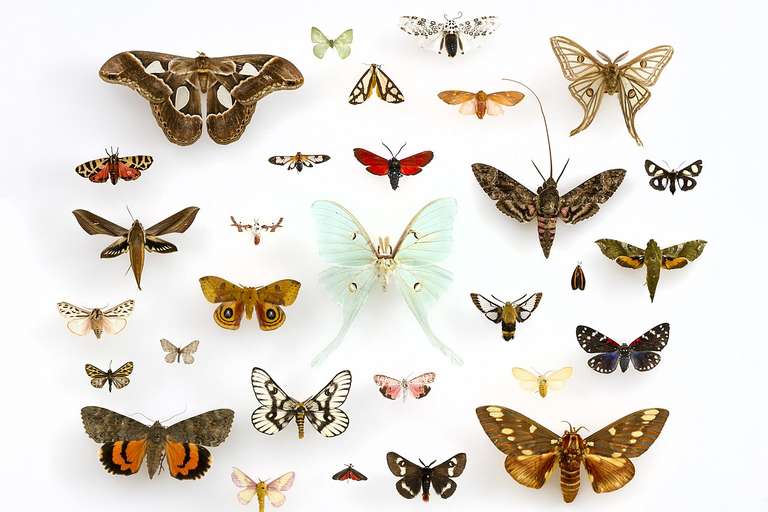
Assorted moths in the University of Texas Insect Collection
Butterflies and moths appear to be very delicate creatures, and yet they turn out to be much tougher — both in terms of their anatomy and survival skills — than previously imagined.

About 70 sturdy scales from their wings were just identified in a drilled core from northern Germany that dates to 200 million years ago. The ancestors of today's moths and butterflies therefore date to at least the latter part of the Late Triassic (251–199 million years ago).

The findings, published in the journal Science Advances, extend the origin of these insects by 5 million years, since the previous related fossil record-holders — from the United Kingdom — date to 195 million years ago. There is little doubt that dinosaurs and other iconic animals from the time saw the insects fluttering around them, just as many of us do today.

"There is definitely evidence for dinosaurs roaming around the area from outcrops further north in Sweden, which can be considered part of the same region," senior author Bas van de Schootbrugge of Utrecht University told Seeker.

Unlike dinosaurs, moths and butterflies do not have bones that can fossilize and preserve. Their many wing scales, however, are made of chitin, which is the primary component of hard natural materials like crustacean exoskeletons and cephalopod beaks.

"The preservation of these scales does require some exceptional conditions, such as a low oxygen environment and rapid burial," van de Schootbrugge said, adding that the scales that he and his colleagues studied "were deposited in a very shallow lagoon that was oxygen depleted, which contributed to their exceptional preservation."
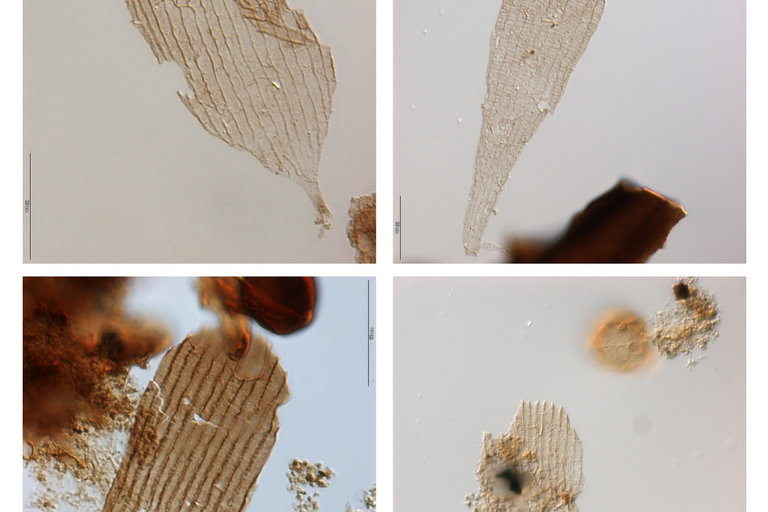
Examples of the oldest wing and body scales of primitive moths from the Schadelah-1 core photographed with transmitted light
The rest of the insects' bodies would have decomposed and then transported via rivers out to sea, together with plant material. This process would have pulverized and disassociated any larger pieces from each other and "would essentially be similar to putting a butterfly in a blender, although I do not recommend doing this," van de Schootbrugge deadpanned.

The Late Triassic scales come from insects in the order Lepidoptera, which is the second largest order in the class Insecta and includes butterflies, moths, skippers, caterpillars, borers, webworms, cankerworms, and bagworms. Technically, the Triassic scales all came from ancestral moths, since butterflies as we know them today are part of the family Papilionidae, which only emerged during the last 50 million years.

"True butterflies are therefore a relatively young group," lead author Timo van Eldijk, also of the University of Utrecht, told Seeker. "However, these butterflies evolved from moth-like ancestors. So, all butterflies are moths, but only some moths are butterflies."

The clade closest to Lepidoptera is Trichoptera that includes caddisflies. Both orders originated from a common ancestor that must have lived in the Late Triassic, and possibly even earlier. This ancestor did not have a proboscis, which is the elongated tubular, flexible mouthpart present in some moths and butterflies. Van Eldjik explained that the oldest living families of Lepidoptera, such as the Mycropterigidae, still have mandibles.

Conveniently, the more derived families with a proboscis are also distinguished by having hollow scales. Such scales were found within the Late Triassic assemblage, along with other types. Some ancestral moths therefore chewed their food, while others sucked their suppers.

Modern moths and butterflies with a proboscis sink it deep into flowers to sip nectar. This would have been impossible 200 million years ago, though, since flowers had not even evolved yet. The first known flowers in the fossil record date to about 140 million years ago.
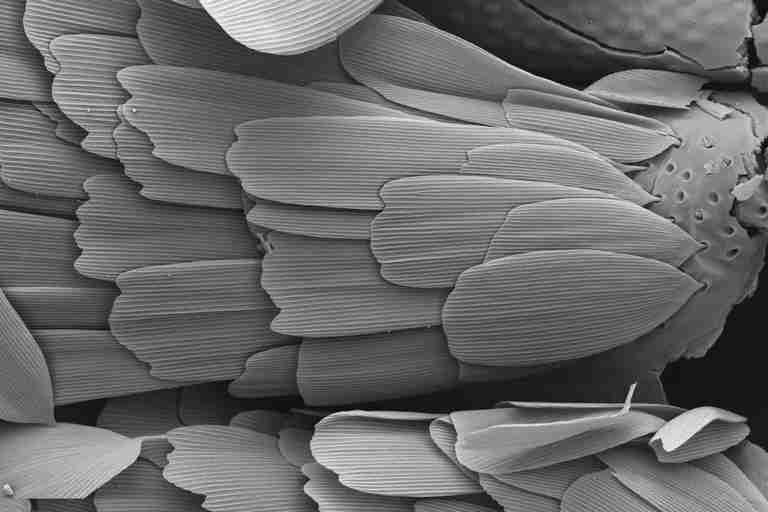
Scanning electron microscope image of the dense covering of scales on the wings and body of a Glossatan (proboscis-bearing) moth
The researchers think that the Triassic ancestral moths were sipping pollination droplets secreted by gymnosperms, which were prevalent and actually pre-date the origin of Levidoptera.

"We hypothesize that feeding on pollination droplets was one of the key drivers behind the evolution of the proboscis," van de Schootbrugge said.

He added that, given the diverse pollen and spore specimens found with the insect remains, there were extensive forests of large trees with an understory of ferns and related plants at the northern German site, which is near Braunschweig. In a clay pit, not far from where the core was drilled, they found the remains of many insects, such as beetles.

"So, it was an extensive coastal area covered in thick vegetation with many organisms, much like what you would expect from a coastal forest in, for example, the Mississippi delta," van de Schootbrugge said.

He and his team suspect that the Triassic ancestral moths probably varied in size, similar to today's moths and butterflies. They said that it is currently not possible to speculate on their coloring or if there were any differences between the sexes.

They do know, however, that these winged insects went through egg, caterpillar, pupa, and adult stages, just as moths and butterflies do today. This life cycle, called "complete metamorphosis," evolved much earlier than the Late Triassic and occurs in other insects, such as flies, beetles, and wasps.

The scientists observe that Lepidoptera survived many mass extinction events. The Late Triassic was itself a time of global mass extinction. This was followed by the K/T extinction event about 66 million years ago, during which non-avian dinosaurs and many species went extinct. At least some of the ancestors of moths and butterflies survived that event.

"So, they seem hardier than what you might think at first," van de Schootbrugge said. "Now, climate change might not affect insects that much, as they can adapt rapidly. They are the most successful group of organisms on land right now, and climate change might allow them to explore high-latitude regions, increasing their geographical spread."

Read more at Seeker