Oct 3, 2017

Life on Earth May Have Started With a Cosmic Splash

A photo of a warm pond on present-day Earth on the Bumpass Hell trail in Lassen Volcanic National Park in California
A new study bolsters the theory that the chemical origins of life on Earth were midwifed by meteorites that delivered essential building blocks from space.

Meteorites slamming into warm, small ponds on the planet’s rising land surfaces more than 4 billion years ago could have delivered those building blocks into an environment where they could grow and combine into ribonucleic acid, or RNA, said Ben K.D. Pearce, an astrobiologist at Canada’s McMaster University.

The study, produced by researchers at McMaster and Germany’s Max Planck Institute for Astronomy and published in the journal Proceedings of the National Academy of Sciences, is the latest in a debate over the origins of life. Did it come from Earth itself — forming around hot undersea vents in the crust — or from small ponds on land, as Darwin theorized, with material deposited from the cosmos around it? Pearce and his colleagues come down on the “warm little pond” side, arguing that the oceans were too harsh an environment for the building blocks of life.

RNA can reproduce itself and evolve. In its current form, it takes the genetic code contained in DNA and forms proteins.

“At one time, it was the dominant life form on Earth, and likely the first life form on Earth,” Pearce told Seeker. But it’s made up of a family of molecules known as nucleobases, which stem from a reactive type of nitrogen that wouldn’t have formed on a lifeless early Earth.

Nitrogen compounds like ammonia and hydrogen cyanide likely collected on bits of dust and rock floating around the sun, snowballing into larger bodies where they could react to produce nucleobases.

“You have get these molecules from space,” he said. And when those space rocks fell to Earth, the nucleobases they held could have landed in ponds of water and reacted with other chemicals that produced RNA.

Previous studies have put forth that theory, but what Pearce and his colleagues have done is to use computer models to gauge how probable that would have been. Nucleotides would have to survive in an environment bombarded with ultraviolet light, since there was no protective ozone layer at the time, and in water that could have broken them up.

While other scientists, including the famous astronomer Carl Sagan, have theorized that cosmic dust may have delivered those precursors, Pearce said any nucleotides riding in on dust particles were likely to have been too small to survive in their new home.

Read more at Seeker

US Scientists Win 2017 Nobel Prize in Physics for Gravitational Wave Discovery

Laureates (L-R) Rainer Weiss, Barry C. Barish and Kip S. Thorne are pictured on a display during the announcement of the 2017 Nobel Prize winners in Physics on October 3, 2017, at the Royal Swedish Academy of Sciences in Stockholm.
US astrophysicists Barry Barish, Kip Thorne, and Rainer Weiss were awarded the Nobel Physics Prize Tuesday for the discovery of gravitational waves, offering a sneak peak at the universe's very beginnings.

Predicted by Albert Einstein a century ago as part of his theory of general relativity, gravitational waves are "ripples" in space-time — the theoretical fabric of the cosmos.

They are the aftermath of violent galactic events, such as colliding black holes or imploding massive stars, and can reveal events that took place billions of years ago.

The first detection of gravitational waves happened in September 2015 at the US-based Laser Interferometer Gravitational-wave Observatory (LIGO), where the three Nobel laureates worked.

"Their discovery shook the world," said Goran K. Hansson, the head of the Swedish Royal Academy of Sciences which selects the Nobel laureates.

Announced in February 2016 to great excitement in the scientific community, the discovery was hailed as the historic culmination of decades of research. It has clinched numerous astrophysics prizes.

Traveling at speed of light


In 1984, Thorne, now 77, and Weiss, 85, co-created LIGO at the prestigious California Institute of Technology, which has taken home 18 Nobels since the prizes were first awarded in 1901.

Barish, 81, joined the project in 1994 and helped bring it to completion. LIGO is now a collaboration between more than 1,000 researchers from 20 countries.

The 2015 observation was of two black holes smashing into each other some 1.3 billion light-years away.

"Although the signal was extremely weak when it reached Earth, it is already promising a revolution in astrophysics," the Nobel academy said.

"Gravitational waves are an entirely new way of following the most violent events in space and testing the limits of our knowledge."

Gravitational waves are minuscule, and near-undetectable because they interact very weakly with matter and travel through the universe at the speed of light unimpeded.

The ripples emitted by a pair of merging black holes, for example, would stretch a one-million-kilometer (621,000-mile) ruler on Earth by less than the size of an atom.

Since 2015, the enigmatic ripples have been detected three more times: twice by LIGO and once by the Virgo detector located at the European Gravitational Observatory (EGO) in Cascina, Italy.

"Einstein was convinced it would never be possible to measure them," the jury said.

"The LIGO project's achievement was using a pair of gigantic laser interferometers to measure a change thousands of times smaller than an atomic nucleus, as the gravitational wave passed the Earth."

'Universe full of music'

Black holes emit no light, and can only be observed through gravitational waves that occur when they collide and violently merge — offering scientists a means of studying them.

"If we could hear all the waves and not only the strongest ones, the entire universe would be full of music, like birds chirping in a forest, with a louder tone here and a quieter one there," the academy said.

Weiss was awarded half the prize, which comes with nine million Swedish kronor (about $1.1 million or 940,000 euros), while Barish and Thorne shared the rest.

Read more at Seeker

Oct 2, 2017

Meet the hominin species that gave us genital herpes

This is a cast of a P. boisei skull, used for teaching at Cambridge University
Two herpes simplex viruses infect primates from unknown evolutionary depths. In modern humans these viruses manifest as cold sores (HSV1) and genital herpes (HSV2).

Unlike HSV1, however, the earliest proto-humans did not take HSV2 with them when our ancient lineage split from chimpanzee precursors around 7 million years ago. Humanity dodged the genital herpes bullet -- almost.

Somewhere between 3 and 1.4 million years ago, HSV2 jumped the species barrier from African apes back into human ancestors -- probably through an intermediate hominin species unrelated to humans. Hominin is the zoological 'tribe' to which our species belongs.

Now, a team of scientists from Cambridge and Oxford Brookes universities believe they may have identified the culprit: Parathropus boisei, a heavyset bipedal hominin with a smallish brain and dish-like face.

In a study published today in the journal Virus Evolution, they suggest that P. boisei most likely contracted HSV2 through scavenging ancestral chimp meat where savannah met forest -- the infection seeping in via bites or open sores.

Hominins with HSV1 may have been initially protected from HSV2, which also occupied the mouth. That is until HSV2 "adapted to a different mucosal niche" say the scientists. A niche located in the genitals.

Close contact between P. boisei and our ancestor Homo erectus would have been fairly common around sources of water, such as Kenya's Lake Turkana. This provided the opportunity for HSV2 to boomerang into our bloodline.

The appearance of Homo erectus around 2 million years ago was accompanied by evidence of hunting and butchery. Once again, consuming "infected material" would have transmitted the virus -- only this time it was P. boisei being devoured.

"Herpes infect everything from humans to coral, with each species having its own specific set of viruses," said senior author Dr Charlotte Houldcroft, a virologist from Cambridge's Department of Archaeology.

"For these viruses to jump species barriers they need a lucky genetic mutation combined with significant fluid exchange. In the case of early hominins, this means through consumption or intercourse -- or possibly both."

"By modelling the available data, from fossil records to viral genetics, we believe that Parathropus boisei was the species in the right place at the right time to both contract HSV2 from ancestral chimpanzees, and transmit it to our earliest ancestors, probably Homo erectus."

When researchers from University of California, San Diego, published findings suggesting HSV2 had jumped between hominin species, Houldcroft became curious.

While discussing genital herpes over dinner at Kings College, Cambridge, with fellow academic Dr Krishna Kumar, an idea formed. Kumar, an engineer who uses Bayesian network modelling to predict city-scale infrastructure requirements, suggested applying his techniques to the question of ancient HSV2.

Houldcroft and her collaborator Dr Simon Underdown, a human evolution researcher from Oxford Brookes, collated data ranging from fossil finds to herpes DNA and ancient African climates. Using Kumar's model, the team generated HSV2 transmission probabilities for the mosaic of hominin species that roamed Africa during "deep time."

"Climate fluctuations over millennia caused forests and lakes to expand and contract," said Underdown. "Layering climate data with fossil locations helped us determine the species most likely to come into contact with ancestral chimpanzees in the forests, as well as other hominins at water sources."

Some promising leads turned out to be dead ends. Australopithecus afarensis had the highest probability of proximity to ancestral chimps, but geography also ruled it out of transmitting to human ancestors.

Ultimately, the researchers discovered the key player in all the scenarios with higher probabilities to be Parathropus boisei. A genetic fit virally who was found in the right places to be the herpes intermediary, with Homo erectus -- and eventually us -- the unfortunate recipients.

"Once HSV2 gains entry to a species it stays, easily transferred from mother to baby, as well as through blood, saliva and sex," said Houldcroft.

Read more at Science Daily

Meteorite tells us that Mars had a dense atmosphere 4 billion years ago

The figure shows how surface air pressure changed throughout Martian history. A bar at 4 billion years ago denotes a lower limit shown by this study. Constraints suggested by other studies are also shown by arrows.
Exploration missions have suggested that Mars once had a warm climate, which sustained oceans on its surface. To keep Mars warm requires a dense atmosphere with a sufficient greenhouse effect, while the present-day Mars has a thin atmosphere whose surface pressure is only 0.006 bar, resulting in the cold climate it has today. It has been a big mystery as to when and how Mars lost its dense atmosphere.

An old meteorite has been known to contain the ancient Martian atmosphere. The researchers simulated how the composition of the Martian atmosphere changed throughout history under various conditions. By comparing the results to the isotopic composition of the trapped gas, the researchers revealed how dense the Martian atmosphere was at the time when the gas became trapped in the meteorite.

The research team concluded that Mars had a dense atmosphere 4 billion years ago. The surface air pressure at the time was at least 0.5 bar and could have been much higher. Because Mars had its magnetic field about 4 billion years ago and lost it, the result suggests that stripping by the solar wind is responsible for transforming Mars from a warm wet world into a cold desert world.

NASA's MAVEN spacecraft is orbiting Mars to explore the processes that removed the Martian atmosphere. The Japan Aerospace Exploration Agency (JAXA) is planning to further observe the removal processes by the Martian Moons eXploration (MMX) spacecraft. These missions will reveal how the dense atmosphere on ancient Mars predicted in this study was removed over time.

From Science Daily

Mini-kidneys grown in lab reveal renal disease secrets

Kidney organoids grown in the lab and suspended in a lab dish show the formation of cysts (right) in the disease model of polycystic kidney disease. Normal kidney organoids are on the left.
By creating and manipulating mini-kidney organoids that contain a realistic micro-anatomy, UW Medicine researchers can now track the early stages of polycystic kidney disease. The organoids are grown from human stem cells.

Polycystic kidney disease affects 12 million people. Until recently, scientists have been unable to recreate the progression of this human disease in a laboratory setting.

That scientific obstacle is being overcome. A report coming out next week shows that, by substituting certain physical components in the organoid environment, cyst formation can be increased or decreased.

Benjamin Freedman, assistant professor of medicine in the Division of Nephrology at the UW School of Medicine, and his team at the Kidney Research Institute, led these studies in conjunction with scientists at other institutions in the United States and Canada. Freedman and his group also are investigators at the UW Medicine Institute for Stem Cell and Regenerative Medicine

They outlined their methods and results in a paper to be published Oct. 2 in Nature Materials.

"Beforehand, we had shown that these organoids could form PKD-like cysts, but what's new here is that we've used the model to understand something fundamental about that disease," said Freedman.

As one example, the team found that PKD mini-kidneys grown in free-floating conditions formed hollow cysts that were very large. These cysts could easily be seen. In contrast, PKD mini-kidneys attached to plastic dishes stayed small.

According to Nelly Cruz, the lead author of the paper, other manipulations to the organoid also affect the progression of polycystic kidney disease.

"We've discovered that polycystin proteins, which are causing the disease, are sensitive to their micro-environment," she explained. "Therefore, if we can change the way they interact or what they are experiencing on the outside of the cell, we might actually be able to change the course of the disease." Cruz is a research scientist in the Freedman lab.

In another paper to be published in Stem Cells, Freedman and his team discuss how podocytes, which are specialized cells in the body that filter blood plasma to form urine, can be generated and tracked in a lab environment. Study of gene-edited human kidney organoids showed how podocytes form certain filtration barriers, called slit diaphragms, just as they do in the womb. This might give the team insight into how to counter the effects of congenital gene mutations that can cause glomerulosclerosis, another common cause of kidney failure.

Taken together, these papers are examples of how medical scientists are making progress toward developing effective, personalized therapies for polycystic kidney disease and other kidney disorders.

Read more at Science Daily

Animals that play with objects learn how to use them as tools

Playful exploration allows animals to gather information, report investigators.
Researchers have discovered that New Caledonian crows and kea parrots can learn about the usefulness of objects by playing with them -- similar to human baby behaviour.

The study, led by researchers at the Universities of York and St Andrews, demonstrated that two types of bird were able to solve tasks more successfully if they had explored the object involved in the task beforehand.

It has long been thought that playful exploration allows animals to gather information about their physical world, in much the same way that human infants learn about their world through play.

In one of the first direct tests of this hypothesis, scientists studied two bird species, the New Caledonian crow and the kea parrot, to understand how they interact with objects before, during and after a task involving that object.

Dr Katie Slocombe, from the University of York's Department of Psychology, said: "Both species of bird are known for exploring objects in different ways. The New Caledonian crow use objects in the wild and the kea parrot is known for often being destructive in its play back in its native New Zealand.

"We found that both species were better at selecting the correct tools to solve a task if they had the opportunity to explore them beforehand, suggesting that they were learning something about the properties of them as they interacted with them."

The team presented the birds with blocks and ropes of different colours, weights and patterns to explore and play with, before presenting a task where they had to collapse a platform with a ball and retrieve a reward from a pipe with a stick. The ball and stick where later replaced with the blocks and ropes to see whether they could choose the right tool from their earlier play session to complete the task.

The team suggests that applying this simple test to other species may shed more light on the different functions of play and exploration and its relation to tool use and physical problem solving.

Megan Lambert, PhD student at the University of York, said: "This type of 'latent learning', which occurs without any reinforcement, is thought to be particularly important for animals to be able to use objects as tools in a variety of contexts for creative problem-solving.

Read more at Science Daily

2017 Nobel Medicine Prize Awarded to US Geneticists for Circadian Clock Research

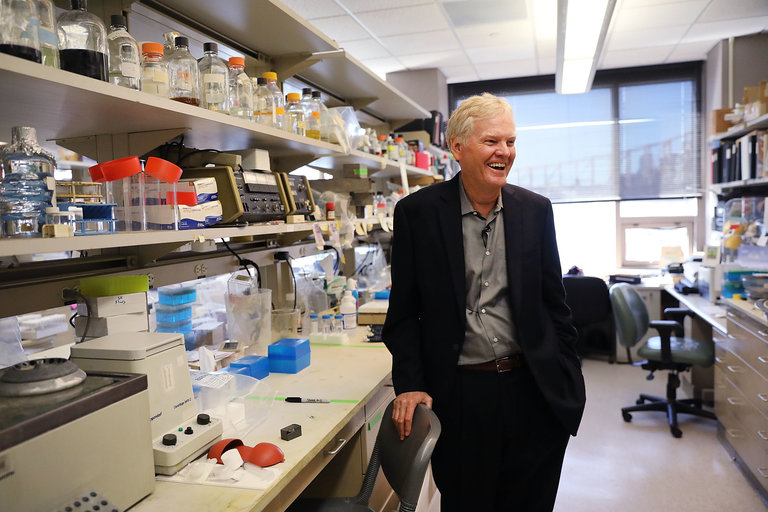
Rockefeller University biologist Michael Young stands in his lab after winning the Nobel Prize in Physiology or Medicine on October 2, 2017 in New York City. Young discovered the molecular mechanism of circadian rhythm, which governs biological clocks that regulate sleep, eating behavior, and metabolism.
US geneticists Jeffrey C. Hall, Michael Rosbash, and Michael W. Young were awarded the Nobel Medicine Prize on Monday for shedding light on the biological clock that governs the sleep-wake cycles of most living things.

The team's work revealed the role of genes in setting the “circadian clock” that regulates sleep and eating patterns, hormones and body temperature, the Nobel committee said.

“Their discoveries explain how plants, animals and humans adapt their biological rhythm so that it is synchronized with the Earth's revolutions.”

All life on Earth is tuned to the rotation of our planet. Scientists have long known that living organisms, including humans, have an internal timekeeper that helps them anticipate and adapt to the rhythm of the day.

Hall, 72, Rosbash, 73, and Young, 68, “were able to peek inside our biological clock and elucidate its inner workings,” the jury said.

They identified genes that regulate the clock, and the mechanism by which light can synchronize it.

Rosbash told Swedish Radio he was rattled when the committee's call woke him from his sleep at 5:10 am.

“I was called on the landline next to my bed which never rings unless someone has died or something of this magnitude happens,” he recounted. “I was breathless, both literally and figuratively. My wife said: 'Please start to breathe'.”

Young told reporters in New York the prize “really did take me by surprise.”

“I really had trouble even getting my shoes on this morning. You know, I'd go and pick up the shoes and then I'd realize I needed socks and then I'd realize I needed to put my pants on first.”

'Every dimension of health'

A disrupted circadian clock is what causes jetlag -- which happens when the internal clock and external environment move out of sync as people rapidly change time zones.

The clock also regulates sleep, which is critical for normal brain function. Circadian dysfunction has been linked to depression, bipolar disorder, cognitive function, poor memory formation and some neurological diseases.

Studies have indicated that a chronic misalignment between a person's lifestyle and the circadian clock -- when doing irregular shift work, for example -- might be associated with an increased risk for cancer, neurodegenerative diseases, metabolic disorders and inflammation.

Scientists are working hard on methods to alter the rhythm of errant clocks as a means to “improve human health,” the Nobel jury said.

Using the fruit fly as a model organism, this year's laureates isolated a gene that controls the daily biological rhythm, called the period gene.

“They showed that this gene encodes a protein that accumulates in the cell during the night and is then degraded during the day,” the Nobel statement said. “Subsequently they identified additional protein components of this machinery, exposing the mechanism governing the self-sustaining clockwork inside the cell.”

The three scientists will share the prize of nine million Swedish kronor (about $1.1 million or 937,000 euros).

“Just about every facet of our body changes predictably over the course of the day and night and these changes are driven by this internal timing mechanism,” Michael Hastings of the Medical Research Council Laboratory of Molecular Biology in Cambridge told AFP. “Every dimension of our health, every dimension of our personality or reactions to medicines, our reactions to disease are variable and are on the very precise program set by this internal body clock,” he said.

Next up: Waves or exoplanets?

Rosbash, born in 1944 in Kansas City, Missouri, to parents who had fled Nazi Germany, received his doctoral degree in 1970 at the Massachusetts Institute of Technology, and has since 1974 been on faculty at Brandeis University, where he worked closely with Hall on his prize-winning research.

Hall had originally planned to attend medical school when he entered Amherst College in Massachusetts in 1963, but halfway through his bachelor's degree his curiosity for medicine was replaced by one for basic science.

He went on to earn his doctoral degree in 1971 at the University of Washington, before joining Brandeis University in 1974. He is now retired.

Read more at Seeker

Oct 1, 2017

Genes that separate humans from fruit flies found

What makes us so different to a sea urchin? Sea urchins have just one NCoR gene, while humans have two.
Genes which determine animal complexity -- or what makes humans so much more complex than a fruit fly or a sea urchin -- have been identified for the first time.

The secret mechanism for how a cell in one animal can be significantly more complex than a similar cell in another animal appears to be due to proteins and their ability to control 'events' in a cell's nucleus.

The research, by biochemist Dr Colin Sharpe and colleagues in the University of Portsmouth, is published in PLoS One.

Dr Sharpe said: "Most people agree that mammals, and humans in particular, are more complex than a worm or a fruit fly, without really knowing why. The question has been nagging at me and others for a long time.

"One common measure of complexity is the number of different cell types in an animal, but little is known about how complexity is achieved at the genetic level. The total number of genes in a genome is not a driver, this value varies only slightly in multicellular animals, so we looked for other factors."

Dr Sharpe and MRes student, Daniela Lopes Cardoso interrogated large amounts of data from the genomes of nine animals -- from humans and macaque monkeys to nematode worms and the fruit fly, and calculated how diverse each was at the genetic level.

They found a small number of proteins which were better at interacting with other proteins and with chromatin, the packaged form of DNA in the cell nucleus.

"These proteins appear to be excellent candidates for what lies behind enormously varied degrees of complexity in animals," Dr Sharpe said.

"We expected to identify genes that interacted directly with DNA to regulate other genes, but this was not the case. Instead we identified genes that interacted with 'chromatin'.

"Our results suggest that the increased ability of certain proteins to interact with each other to regulate the dynamic organisation of chromatin in the nucleus as a component of animal complexity."

The results matter, he said, because biomedical scientists depend on better understanding human disease by studying it in animals. While this has value, there is an underlying concern that an animal model may be too simple to be useful, that results seen in a simpler animal may not correlate with what happens in a more complex animal.

Understanding the inherent differences in how animals are organised at genetic level and the limitations to interpretations that this imposes, will provide a more rational selection of appropriate animal models in biomedicine.

Dr Sharpe and team's previous research found that three factors lay behind the proteins made by one gene -- NCoR -- being more diverse in complex animals such as humans compared to, for example, sea urchins:

- Gene duplication, although the total number of genes in the genome doesn't vary significantly, some specific genes duplicate one or more times, for example there is one NCoR gene in sea urchin and two in humans.

Read more at Science Daily

Farthest active inbound comet yet seen

This illustration shows the orbit of comet C/2017 K2 PANSTARRS (K2) on its maiden voyage into the solar system. The Hubble Space Telescope observed K2 when it was 1.5 billion miles from the Sun, halfway between the orbits of Saturn and Uranus. The farthest object from the Sun depicted here is the dwarf planet Pluto, which resides in the Kuiper Belt, a vast rim of primordial debris encircling our solar system.
NASA's Hubble Space Telescope has photographed the farthest active inbound comet ever seen, at a whopping distance of 1.5 billion miles from the Sun (beyond Saturn's orbit). Slightly warmed by the remote Sun, it has already begun to develop an 80,000-mile-wide fuzzy cloud of dust, called a coma, enveloping a tiny, solid nucleus of frozen gas and dust. These observations represent the earliest signs of activity ever seen from a comet entering the solar system's planetary zone for the first time.

The comet, called C/2017 K2 (PANSTARRS) or "K2," has been travelling for millions of years from its home in the frigid outer reaches of the solar system, where the temperature is about minus 440 degrees Fahrenheit. The comet's orbit indicates that it came from the Oort Cloud, a spherical region almost a light-year in diameter and thought to contain hundreds of billions of comets. Comets are the icy leftovers from the formation of the solar system 4.6 billion years ago and therefore pristine in icy composition.

"K2 is so far from the Sun and so cold, we know for sure that the activity -- all the fuzzy stuff making it look like a comet -- is not produced, as in other comets, by the evaporation of water ice," said lead researcher David Jewitt of the University of California, Los Angeles. "Instead, we think the activity is due to the sublimation [a solid changing directly into a gas] of super-volatiles as K2 makes its maiden entry into the solar system's planetary zone. That's why it's special. This comet is so far away and so incredibly cold that water ice there is frozen like a rock."

Based on the Hubble observations of K2's coma, Jewitt suggests that sunlight is heating frozen volatile gases -- such as oxygen, nitrogen, carbon dioxide, and carbon monoxide -- that coat the comet's frigid surface. These icy volatiles lift off from the comet and release dust, forming the coma. Past studies of the composition of comets near the Sun have revealed the same mixture of volatile ices.

"I think these volatiles are spread all through K2, and in the beginning billions of years ago, they were probably all through every comet presently in the Oort Cloud," Jewitt said. "But the volatiles on the surface are the ones that absorb the heat from the Sun, so, in a sense, the comet is shedding its outer skin. Most comets are discovered much closer to the Sun, near Jupiter's orbit, so by the time we see them, these surface volatiles have already been baked off. That's why I think K2 is the most primitive comet we've seen."

K2 was discovered in May 2017 by the Panoramic Survey Telescope and Rapid Response System (Pan-STARRS) in Hawaii, a survey project of NASA's Near-Earth Object Observations Program. Jewitt used Hubble's Wide Field Camera 3 at the end of June to take a closer look at the icy visitor.

Hubble's sharp "eye" revealed the extent of the coma and also helped Jewitt estimate the size of the nucleus -- less than 12 miles across -- though the tenuous coma is 10 Earth diameters across.

This vast coma must have formed when the comet was even farther away from the Sun. Digging through archival images, Jewitt's team uncovered views of K2 and its fuzzy coma taken in 2013 by the Canada-France-Hawaii Telescope (CFHT) in Hawaii. But the object was then so faint that no one noticed it.

"We think the comet has been continuously active for at least four years," Jewitt said. "In the CFHT data, K2 had a coma already at 2 billion miles from the Sun, when it was between the orbits of Uranus and Neptune. It was already active, and I think it has been continuously active coming in. As it approaches the Sun, it's getting warmer and warmer, and the activity is ramping up."

But, curiously, the Hubble images do not show a tail flowing from K2, which is a signature of comets. The absence of such a feature indicates that particles lifting off the comet are too large for radiation pressure from the Sun to sweep them back into a tail.

Astronomers will have plenty of time to conduct detailed studies of K2. For the next five years, the comet will continue its journey into the inner solar system before it reaches its closest approach to the Sun in 2022 just beyond Mars' orbit. "We will be able to monitor for the first time the developing activity of a comet falling in from the Oort Cloud over an extraordinary range of distances," Jewitt said. "It should become more and more active as it nears the Sun and presumably will form a tail."

Jewitt said that NASA's James Webb Space Telescope, an infrared observatory scheduled to launch in 2018, could measure the heat from the nucleus, which would give astronomers a more accurate estimate of its size.

Read more at Science Daily

Sep 30, 2017

Small collisions make big impact on Mercury's thin atmosphere

Scientists used models along with earlier findings from the MESSENGER mission to shed light on how certain types of comets influence the micrometeoroids that preferentially impact Mercury on the dawn side of the planet. Here, data from the Mercury Atmosphere and Surface Composition Spectrometer, or MASCS, instrument is overlain on the mosaic from the Mercury Dual Imaging System, or MDIS.
Mercury, our smallest planetary neighbor, has very little to call an atmosphere, but it does have a strange weather pattern: morning micro-meteor showers.

Recent modeling along with previously published results from NASA's MESSENGER spacecraft -- short for Mercury Surface, Space Environment, Geochemistry and Ranging, a mission that observed Mercury from 2011 to 2015 -- has shed new light on how certain types of comets influence the lopsided bombardment of Mercury's surface by tiny dust particles called micrometeoroids. This study also gave new insight into how these micrometeoroid showers can shape Mercury's very thin atmosphere, called an exosphere.

The research, led by Petr Pokorný, Menelaos Sarantos and Diego Janches of NASA's Goddard Space Flight Center in Greenbelt, Maryland, simulated the variations in meteoroid impacts, revealing surprising patterns in the time of day impacts occur. These findings were reported in the Astrophysical Journal Letters on June 19, 2017.

"Observations by MESSENGER indicated that dust must predominantly arrive at Mercury from specific directions, so we set out to prove this with models," Pokorný said. This is the first such simulation of meteoroid impacts on Mercury. "We simulated meteoroids in the solar system, particularly those originating from comets, and let them evolve over time."

Earlier findings based on data from MESSENGER's Ultraviolet and Visible Spectrometer revealed the effect of meteoroid impacts on Mercury's surface throughout the planet's day. The presence of magnesium and calcium in the exosphere is higher at Mercury's dawn -- indicating that meteoroid impacts are more frequent on whatever part of the planet is experiencing dawn at a given time.

This dawn-dusk asymmetry is created by a combination of Mercury's long day, in comparison to its year, and the fact that many meteroids in the solar system travel around the Sun in the direction opposite the planets. Because Mercury rotates so slowly -- once every 58 Earth days, compared to a Mercury year, a complete trip around the Sun, lasting only 88 Earth days -- the part of the planet at dawn spends a disproportionately long time in the path of one of the solar system's primary populations of micrometeoroids. This population, called retrograde meteoroids, orbits the Sun in the direction opposite the planets and comprises pieces from disintegrated long-period comets. These retrograde meteroids are traveling against the flow of planetary traffic in our solar system, so their collisions with planets -- Mercury, in this case -- hit much harder than if they were traveling in the same direction.

These harder collisions helped the team further key in on the source of the micrometeoroids pummeling Mercury's surface. Meteroids that originally came from asteroids wouldn't be moving fast enough to create the observed impacts. Only meteoroids created from two certain types of comets -- Jupiter-family and Halley-type -- had the speed necessary to match the obseravations.

"The velocity of cometary meteoroids, like Halley-type, can exceed 224,000 miles per hour," Pokorný said. "Meteoroids from asteroids only impact Mercury at a fraction of that speed."

Jupiter-family comets, which are primarily influenced by our largest planet's gravity, have a relatively short orbit of less than 20 years. These comets are thought to be small pieces of objects originating in the Kuiper Belt, where Pluto orbits. The other contributor, Halley-type comets, have a longer orbit lasting upwards of 200 years. They come from the Oort Cloud, the most distant objects of our solar system -- more than a thousand times farther from the Sun than Earth.

Read more at Science Daily