Sep 7, 2017

Pluto features given first official names

Pluto's first official surface-feature names are marked on this map, compiled from images and data gathered by NASA's New Horizons spacecraft during its flight through the Pluto system in 2015.
The IAU has assigned names to fourteen geological features on the surface of Pluto. The names pay homage to the underworld mythology, pioneering space missions, historic pioneers who crossed new horizons in exploration, and scientists and engineers associated with Pluto and the Kuiper Belt. This is the first set of official names of surface features on Pluto to be approved by the IAU, the internationally recognised authority for naming celestial bodies and their surface features.

NASA's New Horizons team proposed the names to the IAU following the first reconnaissance of Pluto and its moons by the New Horizons spacecraft. Some of the names were suggested by members of the public during the Our Pluto campaign, which was launched as a partnership between the IAU, the New Horizons project and the SETI Institute. Other names had been used informally by the New Horizons science team to describe the many regions, mountain ranges, plains, valleys and craters discovered during the first close-up look at the surfaces of Pluto and its largest moon, Charon.

"We're very excited to approve names recognising people of significance to Pluto and the pursuit of exploration as well as the mythology of the underworld. These names highlight the importance of pushing to the frontiers of discovery," said Rita Schulz, chair of the IAU Working Group for Planetary System Nomenclature. "We appreciate the contribution of the general public in the form of their their naming suggestions and the New Horizons team for proposing these names to us."

More names are expected to be proposed to the IAU, both for Pluto and for its moons. "The approved designations honour many people and space missions who paved the way for the historic exploration of Pluto and the Kuiper Belt, the most distant worlds ever explored," said Alan Stern, New Horizons Principal Investigator from the Southwest Research Institute (SwRI) in Boulder, Colorado.

The approved Pluto surface feature names are listed below.

Tombaugh Regio honours Clyde Tombaugh (1906-1997), the U.S. astronomer who discovered Pluto in 1930 from Lowell Observatory in Arizona.

Burney crater honors Venetia Burney (1918-2009), who as an 11-year-old schoolgirl suggested the name "Pluto" for Clyde Tombaugh's newly discovered planet. Later in life she taught mathematics and economics.

Sputnik Planitia is a large plain named after Sputnik 1, the first space satellite, launched by the Soviet Union in 1957.

Tenzing Montes and Hillary Montes are mountain ranges honouring Tenzing Norgay (1914-1986) and Sir Edmund Hillary (1919-2008), the Indian/Nepali Sherpa and New Zealand mountaineer who were the first to reach the summit of Mount Everest and return safely.

Al-Idrisi Montes honours Ash-Sharif al-Idrisi (1100-1165/66), a noted Arab mapmaker and geographer whose landmark work of medieval geography is sometimes translated as "The Pleasure of Him Who Longs to Cross the Horizons."

Djanggawul Fossae defines a network of long, narrow depressions named for the Djanggawuls, three ancestral beings in indigenous Australian mythology who travelled between the island of the dead and Australia, creating the landscape and filling it with vegetation.

Sleipnir Fossa is named for the powerful, eight-legged horse of Norse mythology that carried the god Odin into the underworld.

Virgil Fossae honors Virgil, one of the greatest Roman poets and Dante's fictional guide through hell and purgatory in the Divine Comedy.

Adlivun Cavus is a deep depression named for Adlivun, the underworld in Inuit mythology.

Hayabusa Terra is a large land mass saluting the Japanese spacecraft and mission (2003-2010) that returned the first asteroid sample.

Voyager Terra honours the pair of NASA spacecraft, launched in 1977, that performed the first "grand tour" of all four giant planets. The Voyager spacecraft are now probing the boundary between the Sun and interstellar space.

Tartarus Dorsa is a ridge named for Tartarus, the deepest, darkest pit of the underworld in Greek mythology.

Read more at Science Daily

Direct evidence of sea level 'fingerprints' discovered

"Scientists have a solid understanding of the physics of sea level fingerprints, but we've never had a direct detection of the phenomenon until now," says study co-author Isabella Velicogna, a UCI professor of Earth system science and Jet Propulsion Laboratory research scientist, shown here on an expedition to Greenland.
Researchers from the University of California, Irvine and NASA's Jet Propulsion Laboratory have reported the first observation of sea level "fingerprints," tell-tale differences in sea level rise around the world in response to changes in continental water and ice sheet mass. The team's findings were published in the American Geophysical Union journal Geophysical Research Letters.

"Scientists have a solid understanding of the physics of sea level fingerprints, but we've never had a direct detection of the phenomenon until now," said co-author Isabella Velicogna, UCI professor of Earth system science and JPL research scientist.

As ice sheets and glaciers undergo climate-related melting, they alter Earth's gravity field, which causes nonuniform sea level change. Certain regions, particularly in the middle latitudes, are harder hit. For instance, Antarctica-generated sea level rise in California and Florida is as much as 52 percent greater than what's average in the rest of the world.

The team calculated sea level fingerprints using time-variable gravity data collected by the twin satellites of NASA's Gravity Recovery & Climate Experiment between April 2002 and October 2014. During that time, according to the study, the global mean sea level grew by about 1.8 millimeters per year, with 43 percent of the increased water mass coming from Greenland, 16 percent from Antarctica, and 30 percent from mountain glaciers. The scientists verified their calculations of sea level fingerprints associated with these mass variations via ocean-bottom pressure readings from stations in the tropics.

"It was very exciting to observe the sea level fingerprints in the tropics, where they were not expected to be detectable," said lead author Chia-Wei Hsu, a graduate student researcher at UCI. "In the tropics, sea level fingerprint values are very close to global average sea level values, making them harder to detect."

Read more at Science Daily

Biologists slow aging, extend lifespan of fruit flies

Fruit flies' mitochondria (in green) at 10 days (top left), 28 days (top right) and 37 days old (both bottom images). At bottom right, the mitochondria have returned to a more youthful state after UCLA biologists increased the fly's level of a protein called Drp1.
UCLA biologists have developed an intervention that serves as a cellular time machine -- turning back the clock on a key component of aging.

In a study on middle-aged fruit flies, the researchers substantially improved the animals' health while significantly slowing their aging. They believe the technique could eventually lead to a way to delay the onset of Parkinson's disease, Alzheimer's disease, cancer, stroke, cardiovascular disease and other age-related diseases in humans.

The approach focuses on mitochondria, the tiny power generators within cells that control the cells' growth and determine when they live and die. Mitochondria often become damaged with age, and as people grow older, those damaged mitochondria tend to accumulate in the brain, muscles and other organs. When cells can't eliminate the damaged mitochondria, those mitochondria can become toxic and contribute to a wide range of age-related diseases, said David Walker, a UCLA professor of integrative biology and physiology, and the study's senior author.

In the new research, Walker and his colleagues found that as fruit flies reach middle age -- about one month into their two-month lifespan -- their mitochondria change from their original small, round shape.

"We think the fact that the mitochondria become larger and elongated impairs the cell's ability to clear the damaged mitochondria," Walker said. "And our research suggests dysfunctional mitochondria accumulate with age, rather than being discarded."

The study, published Sept. 6 in the journal Nature Communications, reports that the UCLA scientists removed the damaged mitochondria by breaking up enlarged mitochondria into smaller pieces -- and that when they did, the flies became more active and more energetic and had more endurance. Following the treatment, female flies lived 20 percent longer than their typical lifespan, while males lived 12 percent longer, on average.

The research highlights the importance of a protein called Drp1 in aging. At least in flies and mice, levels of Drp1 decline with age.

To break apart the flies' mitochondria, Anil Rana, a UCLA project scientist and the study's lead author, increased their levels of Drp1. This enabled the flies to discard the smaller, damaged mitochondria, leaving only healthy mitochondria. Drp1 levels were increased for one week starting when the flies were 30 days old.

At essentially the same time, Rana demonstrated that the flies' Atg1 gene also plays an essential role in turning back the clock on cellular aging. He did this by "turning off" the gene, rendering the flies' cells unable to eliminate the damaged mitochondria. This proved that Atg1 is required to reap the procedure's anti-aging effects: While Drp1 breaks up enlarged mitochondria, the Atg1 gene is needed to dispose of the damaged ones.

"It's like we took middle-aged muscle tissue and rejuvenated it to youthful muscle," said Walker, a member of UCLA's Molecular Biology Institute. "We actually delayed age-related health decline. And seven days of intervention was sufficient to prolong their lives and enhance their health."

One specific health problem the treatment addressed was the onset of leaky intestines, which previous research by Walker's team found commonly occurs about a week before fruit flies die. Subsequent research in other laboratories has determined that an increase in intestines' permeability is a hallmark of aging in worms, mice and monkeys. In the UCLA study, the condition was delayed after flies were given more Drp1.

Fruit flies are often used for studies on aging because their short lifespan enables scientists to track the effects of specific treatments within a manageable period of time, and many of the features of aging at the cellular level are similar to those of humans. In addition, scientists have identified all of the fruit fly's genes and know how to switch individual ones on and off.

Walker hopes that a technique similar to the one his team developed for fruit files could eventually help humans by slowing aging and delaying aging-related diseases. He said the fact that the new approach was effective even after a short time is especially significant because long-term use of nearly any drug can have harmful side effects in humans.

Walker said one of the long-term goals of his research is to develop pharmaceuticals that would mimic the effects of Drp1, in order to extend people's lives and lengthen what he calls people's "health spans," meaning the number of healthy years in their lives.

In another part of the experiment, also involving middle-aged fruit flies, the scientists turned off a protein called Mfn that enables mitochondria to fuse together into larger pieces. Doing so also extended the flies' lives and improved their health.

Read more at Science Daily

Human skin cells transformed directly into motor neurons

Scientists have discovered a new way to convert human skin cells directly into motor neurons (above). The technique, developed at Washington University School of Medicine in St. Louis, could help researchers better understand diseases of motor neurons, such as amyotrophic lateral sclerosis. Human motor neurons are difficult to study since they can't be taken from living patients. The motor neurons pictured were converted from skin cells sampled from a healthy 42-year-old woman.
Scientists working to develop new treatments for neurodegenerative diseases have been stymied by the inability to grow human motor neurons in the lab. Motor neurons drive muscle contractions, and their damage underlies devastating diseases such as amyotrophic lateral sclerosis and spinal muscular atrophy, both of which ultimately lead to paralysis and early death.

In new research, scientists at Washington University School of Medicine in St. Louis have converted skin cells from healthy adults directly into motor neurons without going through a stem cell state.

The technique makes it possible to study motor neurons of the human central nervous system in the lab. Unlike commonly studied mouse motor neurons, human motor neurons growing in the lab would be a new tool since researchers can't take samples of these neurons from living people but can easily take skin samples.

The study is published Sept. 7 in the journal Cell Stem Cell.

Avoiding the stem cell phase eliminates ethical concerns raised when producing what are called pluripotent stem cells, which are similar to embryonic stem cells in their ability to become all adult cell types. And importantly, avoiding a stem cell state allows the resulting motor neurons to retain the age of the original skin cells and, therefore, the age of the patient. Maintaining the chronological age of these cells is vital when studying neurodegenerative diseases that develop in people at different ages and worsen over decades.

"In this study, we only used skin cells from healthy adults ranging in age from early 20s to late 60s," said senior author Andrew S. Yoo, PhD, an assistant professor of developmental biology. "Our research revealed how small RNA molecules can work with other cell signals called transcription factors to generate specific types of neurons, in this case motor neurons. In the future, we would like to study skin cells from patients with disorders of motor neurons. Our conversion process should model late-onset aspects of the disease using neurons derived from patients with the condition."

"Going back through a pluripotent stem cell phase is a bit like demolishing a house and building a new one from the ground up," Yoo said. "What we're doing is more like renovation. We change the interior but leave the original structure, which retains the characteristics of the aging adult neurons that we want to study."

The ability of scientists to convert human skin cells into other cell types, such as neurons, has the potential to enhance understanding of disease and lead to finding new ways to heal damaged tissues and organs, a field called regenerative medicine.

To convert skin cells into motor neurons, the researchers exposed the skin cells to molecular signals that are usually present at high levels in the brain. Past work by Yoo and his colleagues -- then at Stanford University -- showed that exposure to two short snippets of RNA turned human skin cells into neurons. These two microRNAs -- called miR-9 and miR-124 -- are involved with repackaging the genetic instructions of the cell.

In the new study, the researchers extensively characterized this repackaging process, detailing how skin cells reprogrammed into generic neurons then can be guided into specific types of neurons. They found that genes involved in this process become poised for expression but remain inactive until the correct combination of molecules is provided. After much experimentation with multiple combinations, the researchers found that adding two more signals to the mix -- transcription factors called ISL1 and LHX3 -- turned the skin cells into spinal cord motor neurons in about 30 days.

The combination of signals -- microRNAs miR-9 and miR-124 plus transcription factors ISL1 and LHX3 -- tells the cell to fold up the genetic instructions for making skin and unfurl the instructions for making motor neurons, according to Yoo and the study's co-first authors, Daniel G. Abernathy and Matthew J. McCoy, doctoral students in Yoo's lab; and Woo Kyung Kim, PhD, a postdoctoral research associate.

Another past study from Yoo's team showed that exposure to the same two microRNAs, miR-9 and miR-124, plus a different mix of transcription factors could turn skin cells into a different type of neuron. In that case, the skin cells became striatal medium spiny neurons, which are affected in Huntington's disease -- an inherited, eventually fatal genetic disorder that causes involuntary muscle movements and cognitive decline beginning in middle adulthood.

Read more at Science Daily

Sep 6, 2017

Discovery of boron on Mars adds to evidence for habitability

A selfie of the NASA Curiosity rover at the Murray Buttes in Gale Crater, Mars, a location where boron was found in light-toned calcium sulfate veins.
The discovery of boron on Mars gives scientists more clues about whether life could have ever existed on the planet, according to a paper published in the journal Geophysical Research Letters.

"Because borates may play an important role in making RNA -- one of the building blocks of life -- finding boron on Mars further opens the possibility that life could have once arisen on the planet," said Patrick Gasda, a postdoctoral researcher at Los Alamos National Laboratory and lead author on the paper. "Borates are one possible bridge from simple organic molecules to RNA. Without RNA, you have no life. The presence of boron tells us that, if organics were present on Mars, these chemical reactions could have occurred."

RNA (ribonucleic acid) is a nucleic acid present in all modern life, but scientists have long hypothesized an "RNA World," where the first proto-life was made of individual RNA strands that both contained genetic information and could copy itself. A key ingredient of RNA is a sugar called ribose. But sugars are notoriously unstable; they decompose quickly in water. The ribose would need another element there to stabilize it. That's where boron comes in. When boron is dissolved in water -- becoming borate -- it will react with the ribose and stabilize it for long enough to make RNA. "We detected borates in a crater on Mars that's 3.8 billion years old, younger than the likely formation of life on Earth," said Gasda. "Essentially, this tells us that the conditions from which life could have potentially grown may have existed on ancient Mars, independent from Earth."

The boron found on Mars was discovered in calcium sulfate mineral veins, meaning the boron was present in Mars groundwater, and provides another indication that some of the groundwater in Gale Cater was habitable, ranging between 0-60 degrees Celsius (32-140 degrees Fahrenheit) and with neutral-to-alkaline pH.

The boron was identified by the rover's laser-shooting ChemCam (Chemistry and Camera) instrument, which was developed at Los Alamos National Laboratory in conjunction with the French space agency. Los Alamos' work on discovery-driven instruments like ChemCam stems from the Laboratory's experience building and operating more than 500 spacecraft instruments for national defense.

The discovery of boron is only one of several recent findings related to the composition of Martian rocks. Curiosity is climbing a layered Martian mountain and finding chemical evidence of how ancient lakes and wet underground environments changed, billions of years ago, in ways that affected their potential favorability for microbial life.

As the rover has progressed uphill, compositions trend toward more clay and more boron. These and other chemical variations can tell us about conditions under which sediments were initially deposited and about how later groundwater moving through the accumulated layers altered and transported dissolved elements, including boron.

Read more at Science Daily

Accretion-powered pulsar reveals unique timing glitch

Composite image of the X-ray pulsar SXP 1062 surrounded by the supernova remnant. The false-color image combines X-ray (blue) and optical data (oxygen: green, hydrogen: red).
The discovery of the largest timing irregularity yet observed in a pulsar is the first confirmation that pulsars in binary systems exhibit the strange phenomenon known as a 'glitch'. The study is published in the journal Monthly Notices of the Royal Astronomical Society.

Pulsars are one possible result of the final stages of evolution of massive stars. Such stars end their lives in huge supernova explosions, ejecting their stellar materials outwards into space and leaving behind an extremely dense and compact object; this could either be a white dwarf, a neutron star or a black hole.

If a neutron star is left, it may have a very strong magnetic field and rotate extremely quickly, emitting a beam of light that can be observed when the beam points towards Earth, in much the same way as a lighthouse beam sweeping past an observer. To the observer on Earth, it looks as though the star is emitting pulses of light, hence the name 'pulsar'.

Now a group of scientists from the Middle East Technical University and Baskent University in Turkey have discovered a sudden change in the rotation speed of the peculiar pulsar SXP 1062. These jumps in frequency, known as 'glitches', are commonly seen in isolated pulsars, but have so far never been observed in binary pulsars (pulsars orbiting with a companion white dwarf or neutron star) such as SXP 1062.

SXP 1062 is located in the Small Magellanic Cloud, a satellite galaxy of our own Milky Way galaxy, and one of our nearest intergalactic neighbours at 200,000 light years away. Lead author of the study, Mr M. Mirac Serim, a senior PhD student working under the supervision of Prof Altan Baykal, said, "This pulsar is particularly interesting, since as well as orbiting its partner star as part of a binary pair, it is also still surrounded by the remnants of the supernova explosion which created it."

The pulsar is thought to pull in the leftover material from the supernova explosion, feeding on it in a process known as accretion. The team believe that the size of the glitch is due to the gravitational influence of its companion star and this accretion of the surrounding remnant material, which together exert large forces on the crust of the neutron star. When these forces are no longer sustainable, a rapid change in internal structure transfers momentum to the crust, changing the rotation of the pulsar very suddenly and producing a glitch.

Read more at Science Daily

The Cuckolding Cuckoo Bird's Deceit Is Even Greater Than We Imagined

A cuckoo flies from a perch in a woodland.
The common cuckoo, notorious for evading parental duty by hiding her eggs in the nests of other brooding birds, is even more devious than previously thought, scientists revealed on Monday.

After laying an egg, the female distracts the owner of the nest — a reed warbler, in this case — essentially by frightening the poor bird out of its wits, they said.

The cuckoo gives a “chuckle” that mimics the call of the sparrowhawk -- which loves to snack on warbler flesh -- before abandoning her egg among the warbler’s clutch and flying off to freedom.

“This hawk-like chuckle call increases the success of parasitism by diverting host parents’ attention away from the clutch and towards their own safety,” a duo of Cambridge University researchers wrote in the journal Nature Ecology & Evolution. “As a result, the female cuckoo might have ‘the last laugh’ in this particular battle.”

The bird whose behavior gave us the word “cuckoldry” is an example of a “brood parasite” — birds, insects, or fish that trick others into raising their young.

This is often at the expense of the foster parents’ own offspring.

To avoid getting caught — which will lead to the imposter egg being kicked out of the nest — the cuckoo has developed some nifty tricks, including matching its egg coloring to that of its target, for camouflage.

The bird has also adopted “remarkable secrecy and speed” in depositing its egg, said the team.

For this reason, scientists have battled to understand why the cuckoo would risk exposure by “chuckling” so soon after committing its crime.

‘Kwik-kwik-kwik’

The Cambridge team theorized the purpose was to distract the warbler with fear.

To test this, they played the recorded calls of male and female cuckoos, a sparrowhawk, and a random, non-threatening bird — a collared dove, to reed warblers.

Only the male cuckoo makes the signature sound copied in pendulum clocks. The female utters a laughter-like “kwik-kwik-kwik” not dissimilar in frequency to the sparrowhawk’s “kiii-kiii-kiii.”

The warblers, they observed, reacted with the same vigilance to female cuckoo calls as to hawk calls, and diverted attention away from their clutch.

The warblers ignored male cuckoo and collared dove calls.

Read more at Seeker

How African Wild Dogs Sneeze at Each Other to Communicate

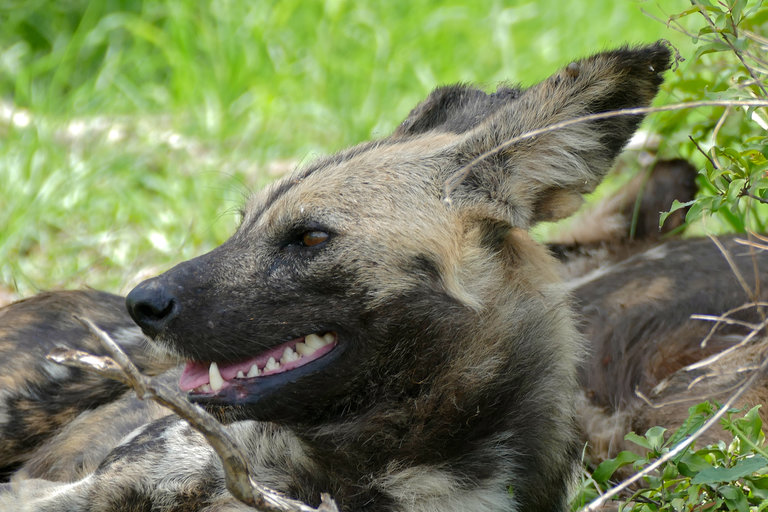
An African wild dog in a pack.
African wild dogs (Lycaon pictus) once flourished from the mountainous areas of sub-Saharan regions to the deserts of Africa. Now endangered, these pack-living relatives of domesticated dogs still have a population in Botswana, where researchers like Neil Jordan — a research fellow at the University of New South Wales Sydney and Taronga Conservation Society Australia — study them.

While spending immersive hours of observation in the field is less common among researchers these days, Jordan and his colleagues who work with the Botswana Predator Conservation Trust (BPCT) believe this time is well spent. Such efforts often require long hours of watching resting carnivores and waiting for them to become active, such as by leaving their rest site to go hunting.

“It was during these long waits and subsequent high energy rallies that I first noticed a possible relationship between sneezing and leaving,” Jordan said. “I could predict whether or not they were going to move off by listening to the number of sneezes.”

To test the unorthodox theory, he and his team collected data from five packs of African wild dogs in and around the Moremi Game Reserve in the Okavango Delta from June 2014 to May 2015. VHF radio collars affixed to at least one dog in each pack allowed the scientists to track the animals.

Through direct observations and video recordings, the researchers documented 68 “social rallies” that occurred among the five packs. Such rallies are the times in which these dogs interact with each other.

A pack of African wild dogs shares an impala carcass for a meal.
The researchers were amazed that the data confirmed Jordan’s suspicions: the more sneezes that occurred, the more likely it was that a given pack moved off and started hunting.

“The sneeze acts like a type of voting system,” Jordan said.

The findings, published in the journal Proceedings of the Royal Society B, suggest that dogs are not just simply clearing their airways when they sneeze.

Lead author Reena Walker of Brown University said there is evidence supporting that domestic dogs sneeze when they’re excited or anxious. Such “unvoiced” or mechanical sounds turn out to be pervasive in dogs and other canids.

“Panting, huffing, and sneezing are signals observed in domestic dogs, coyotes, and jackals that use the exhalation or inhalation of air as a sound to convey an emotional state — messages that range from ‘let’s play’ to ‘I see an unfamiliar object’ to ‘I’m scared,’” Walker said.

“So, finding that sneezes are a signal utilized by African wild dogs is not out of the realm of already understood means of communication in canids,” she continued, “but it is the first time we have seen a signal like a sneeze used in the context of group decision making.”

African wild dogs play fighting.
Co-author Andrew King of Swansea University added that the sneezes act as a type of quorum, where the sneezes have to reach a certain threshold before the pack changes its activity.

“Quorum-like responses occur in lots of different species,” King said. “For example, ants or bees use quorums when moving to new nest sites. In the case of bees, which dance to direct one another to new sites, once the number of bees at a site reaches a quorum, the bees begin an additional recruitment strategy to dancing, known as piping.”

Meerkats also use quorums to “vote” by emitting moving calls before heading off to a new foraging patch. Prior research has also determined that white-faced capuchin monkeys emit trills and, if the vocalizations reach a certain threshold, the monkeys will collectively depart.

Even bacteria, King said, “use quorums to coordinate gene expression according to the density of their local population,” so the process does not necessarily require substantial, if any, brain power.

For African wild dogs, the sneezing acts like democratic voting, such that each individual in a pack may participate and have a vote count. As for human voting, however, the system does not always seem fair.

The researchers noticed if the dominant male and female within each African wild dog pack sneezed, fewer additional sneezes were needed before the group left the resting site.

“However,” Walker said, “if the dominant pair were not engaged, more sneezes were needed — approximately 10 — before the pack would move off.”

The researchers are not yet certain if the sneezes of dominant and subdominant dogs are acoustically different. How dominance is established in a pack also remains unclear, but age appears to be a factor, with younger dogs tending to be more dominant, Jordan said.

Read more at Seeker

New Class of Black Hole 100,000 Times Larger Than the Sun Detected in Milky Way

Illustration of a spiral galaxy and black hole.
Black holes are notoriously hard to find, since they don’t emit any light. But there’s one particular size of black hole that has been especially evasive, even though astronomers have theorized that they should be plentiful.

While there is ample evidence for the extra-large, supermassive kind as well as the much smaller, stellar-mass black holes, the in-between size, or so-called "intermediate mass" black holes, have thus far eluded detection.

Astronomers now think they have found one — a black hole 100,000 times more massive than the sun, lurking inside a gas cloud near the middle of the Milky Way. It's located not far from supermassive black hole called Sagittarius A* that lies at the dead center of our galaxy.

Researchers think that intermediate-mass black holes (IMBH) could be a missing link that helps explain how supermassive black holes are formed.

“The observations are rather compelling, and it's going to be exciting as astronomers follow up this source,” astronomer and black hole researcher Kevin Schawinski of the Swiss Federal Institute of Technology in Zurich, who was not involved in the current study, told Seeker.

Last year, a team of researchers led by Tomoharu Oka from Keio University in Japan discovered “a peculiar molecular cloud” named CO–0.40–0.22, which was located 200 light-years away from the Milky Way’s center. The cloud had what the team called “extremely broad velocity width,” meaning it was moving very fast with varying velocities they could not explain. The researchers suspected a massive object was hiding inside, providing the gravitational kick for the variable and speedy gas flows.

Oka and his team followed up their observations using the Atacama Large Millimeter/submillimeter Array (ALMA) Observatory in Chile, and have now reported their findings in a paper published this week in the journal Nature Astronomy. With ALMA’s extremely high-precision data, the researchers were able to confirm the wide distribution of velocities inside the gas cloud, but they also found a telltale clue: a spectrum of radio waves very similar to what Sagittarius A* produces, but about 500 times fainter.

“Based on the careful analysis of gas kinematics, we concluded that a compact object with a mass of about [100,000] solar masses is lurking in this cloud,” Oka and his team wrote. They said numerical simulations suggest that CO–0.40–0.22 is one of the most promising candidates for an intermediate-mass black hole.

“If confirmed by others, having such an intermediate mass black hole in our Milky Way is going to open up so many exciting possibilities,” Schawinski said via email. “If there's one, maybe there are others?”

While astronomers understand how stellar-mass black holes form, the origins of supermassive black holes remain unknown. A stellar-mass black hole forms when a massive star goes supernova. This explosion, which can outshine an entire galaxy of stars for a short period of time, leaves behind the small, heavy core of a star. If this core is massive enough, it will collapse on itself and form a black hole. A typical stellar-class of black hole can be between approximately three and 10 solar masses.

Supermassive black holes have masses ranging from millions to billions of solar masses. Why they are so incredibly massive isn't well understood, but astronomers think they may form out of the collapse of gigantic clouds of gas during the early stages of the formation of a galaxy. Since the SMBHs are at the center of galaxies, they have ample stars, gas, and dust to feed on, so they can grow quickly. And since many galaxies collide repeatedly during their long lifetimes, the supermassive black holes collide and coalesce into even heavier supermassive black holes.

How do intermediate-mass black holes form? One idea is that they come from runaway coalescence of stars in young compact star clusters. If these are plentiful, as astronomers theorize, they could merge at the center of a galaxy to form a supermassive black hole. In fact, since CO–0.40–0.22 is so close to the black hole at the center of our galaxy, it very likely could be gobbled up by Sagittarius A*.

Read more at Seeker

Sep 5, 2017

Voyager 1, the Farthest-Reaching Spacecraft Ever, Marks 40 Years in Space

In 1977, NASA's Voyager 1 and 2 spacecraft began their pioneering journey across the solar system to visit the giant outer planets. Now, the Voyagers are hurtling through unexplored territory on their road trip beyond our solar system. Along the way, they are measuring the interstellar medium, the mysterious environment between stars that is filled with the debris from long-dead stars.
NASA's Voyager 1 probe lifted off on Sept. 5, 1977, a few weeks after its twin, Voyager 2. Together, the two Voyager spacecraft performed an epic "Grand Tour" of the solar system's giant planets, flying by Jupiter, Saturn, Uranus, and Neptune.

But their work didn't stop there. Both spacecraft kept flying, pushing farther and farther into the dark, cold, and little-known realms far from the sun.

Then, on Aug. 25, 2012, Voyager 1 popped free into interstellar space, becoming the first human-made object ever to do so. Voyager 2, which took a different route through the solar system, will likely exit the sun's sphere of influence in the next few years as well, mission team members have said.

And both spacecraft still have their eyes and ears open, all these decades later.

"It's amazing that the two spacecraft are still working after 40 years," said Ed Stone, who has been a Voyager project scientist since the mission's inception in 1972.

"When we launched, the Space Age itself was only 20 years old, so this is an unparalleled journey, and we're still in the process of seeing what's out there," Stone, who's based at the California Institute of Technology in Pasadena, told Space.com.

As of Friday (Sept. 1), Voyager 1 was a whopping 12.97 billion miles (20.87 billion kilometers) from Earth — more than 139 times the distance from our planet to the sun. Voyager 2 was about 10.67 billion miles (17.17 billion km) from its home planet.

An artist's concept of one of the NASA's twin Voyager spacecraft in space. Voyager 1 and Voyager 2 are humanity's farthest and longest-lived spacecraft, launching 40 years ago in August and September of 1977.
The Grand Tour

Voyager 1 cruised by Jupiter in March 1979 and Saturn in November 1980. This latter encounter also included a close flyby of Saturn's huge moon Titan.

Voyager 2 pulled off its own Jupiter-Saturn double, flying by those two planets in July 1979 and August 1981, respectively. Then, the spacecraft had encounters with Uranus, in January 1986, and Neptune, in August 1989.

During this Grand Tour, both spacecraft beamed home data that surprised and excited scientists.

For example, before the Voyagers launched, the only known active volcanoes were here on Earth. But Voyager 1 spotted eight erupting volcanoes on the Jupiter moon Io, showing that the little world is far more volcanically active than our own planet.

The mission also determined that Titan has a nitrogen-dominated atmosphere, just as Earth does.

"It may, in some important ways, resemble what the Earth's atmosphere was like before life evolved and created the oxygen that we all breathe," Stone said.

Furthermore, Voyager observations suggested that the Jupiter moon Europa may harbor an ocean of water beneath its icy crust — a notion that subsequent NASA missions have pretty much confirmed.

"I think what Voyager has done is reveal how diverse the planets and the moons and the rings, and the magnetic fields of the planets, are," Stone said. "Our terracentric view was just much narrower than, in fact, reality."

Interstellar ambassadors


Voyager 1 has found that cosmic radiation is incredibly intense beyond the sun's protective bubble, Stone said. The probe is also revealing how the "wind" of charged particles from the sun interact with the winds of other stars.

Meanwhile, Voyager 2 is studying the environment near the solar system's edge. After it enters interstellar space, Voyager 2 will make its own measurements, revealing more about this mysterious region.

But this work cannot go on forever.

The Voyagers are powered by radioisotope thermoelectric generators, which convert the heat produced by the radioactive decay of plutonium-238 into electricity. And that heat is waning.

"We have about 10 years or so of power remaining until we have only enough to power the spacecraft itself, without any of the instruments," Stone said.

But even after the probes power down, they'll continue speeding through the cosmos for eons, making one lap around the Milky Way every 225 million years.

Read more at Seeker