Apr 12, 2017

Skull of saber-toothed cat found almost complete

The reconstructed neurocranium of the European saber-toothed cat.
Led by scientists of the Senckenberg Research Institute and the University of Tübingen, the excavation team found the remains of a saber-toothed cat at the archeological site in Schöningen. An examination of the skull fragments at the Dutch University of Leiden revealed the animal to be a representative of the European saber-toothed cat, Homotherium latidens. The recent discovery constitutes the third example of this large predatory cat from Schöningen.

Long claws, razor-sharp, curved canine teeth and the size of a fully grown lion: the saber-toothed cat (Homotherium latidens) was a competitor as well as a dangerous predator that even posed a risk to the humans of its time. "In the course of our excavation in May 2015, we came across conspicuous bone fragments," explains Dr. Jordi Serangeli, a scientist at the University of Tübingen and the excavation leader at the approximately 300,000-year-old archeological site, and he continues, "In total, there are three individuals of Homotherium present in these relatively young sediment layers.

Until the first discovery of a saber-toothed cat in 2012 at the Schöningen excavation site in Lower Saxony it had been assumed that the large cats were already extinct about 200,000 years earlier, i.e., around 500,000 years ago. "Our findings show that 300,000 years ago, the saber-toothed cats were not as rare as previously thought," adds Serangeli.

During a restoration in 2016, André Ramcharan and Ivo Verheijen at the University of Leiden were able to reassemble the eleven bone fragments into an almost complete neurocranium. "We then compared the reconstructed skull with recent and already extinct species of large carnivores and were thus able to demonstrate that the remains represented the head of a European saber-toothed cat," explains Professor Dr. Thijs van Kolfschoten of the University of Leiden.

The third saber-toothed cat specimen that was discovered offers a great potential: thanks to the excellent level of preservation at the Schöningen dig, the interior of the skull reflects the shape and structure of the Homotherium brain. By examining the detailed brain structures, the team of scientists hopes to gain insights into the visual and hearing abilities as well as the feeding habits of the large cats. "The third Homotherium from Schöningen is invaluable for our understanding of the European saber-toothed cat," summarizes Professor Nicholas Conard of the Senckenberg Centre for Human Evolution and Palaeoenvironment and head of the Institute for Early Prehistory and Quaternary Ecology at the University of Tübingen.

In the near future the international team from the Schöningen project intends to publish the results of its interdisciplinary studies regarding the three saber-toothed cats discovered to date. "Moreover, we expect that future digs will produce additional Homotherium finds," offers Serangeli as a preview.

The dig in Schöningen keeps a team of ten members employed full-time -- and during the main excavation season, the team is joined by five to ten students, who support the scientific excavation. Worldwide, about 50 scientists from 30 institutions and a wide variety of disciplines are involved in researching the discoveries from Schöningen. The dig is financed by the State of Lower Saxony.

Read more at Science Daily

The Tallest Men in the World Trace Back to Paleolithic Mammoth Hunters

Men from Bosnia and Herzegovina, the Netherlands, Croatia, and Montenegro are, on average, the tallest in the world, according to new research that helps to explain why such individuals often grow to six feet and more in height.

Their stature appears to be at least partly a genetic legacy of the Upper Paleolithic Gravettian culture, says the study, which is published in the journal Royal Society Open Science. The Upper Paleolithic broadly dates to between 50,000 and 10,000 years ago.

“The Gravettian is the most important prehistoric culture of the Upper Paleolithic Europe and is sometimes called ‘the culture of mammoth hunters,’” lead author Pavel Grasgruber of Masaryk University told Seeker. “I suspect that this big game specialization associated with a surplus of high-quality proteins and low population density created environmental conditions leading to the selection of exceptionally tall males.”

Remains of Gravettian men suggest that they stood between 5 feet 10 inches and 6 feet 2 inches on average, which was an extraordinary size for the time. In contrast, men among the ancient Maya who lived several thousand years later were 5 feet 2 inches tall on average. Mayan women were about 4 feet tall on average.

Stone tools from the Caves of Gargas in France. The tools are from the Upper Paleolithic Gravettian culture, also known as the culture of mammoth hunters.
For the new study, Grasgruber and his team surveyed 3207 male students aged 17 to 20 years old from Bosnia and Herzegovina. Each participant filled out a basic questionnaire and had their height, sitting height, and arm span measured. The research is part of a larger ongoing survey of both men and women from countries known to have many tall individuals.

As Grasgruber previously indicated, good nutrition and environmental factors can influence the height of a population. Socioeconomic factors are important now as well, making it all the more puzzling that some of Europe’s poorest regions are home to men that tend to grow over six feet tall on average. This places a greater focus on genetics.

Prior research conducted by Grasgruber and other scientists connected the Y haplogroup I-M170 to tall stature.

“We know that the oldest sample carrying I-M170 belongs to a man from the Gravettian culture who lived some 33,000 years ago in Southern Italy,” Grasgruber said.

He explained that this group of genes, along with other related haplogroups, has been traced to parts of Asia and Europe, including to where many of today’s tallest men live.

Bosnian pro basketball player Mirza Teletovic, who plays for the Milwaukee Bucks. He stands 6 feet 9 inches, and comes from a region that produces the world's tallest men on average.
Another factor affecting the Bosnia and Herzegovina men could be higher calcium intake. The late anthropologist Carleton Coon, author of the book The Mountains of Giants: A Racial and Cultural Study of the North Albanian Mountain Ghegs, noted that the Dinaric Alps contain limestone bedrock with high mineral content, including calcium. Grasgruber said that Coon’s “idea is not unreasonable.”

Tall stature can be a mixed blessing. On the downside, larger individuals can require more nutrition and may be at greater risk for some health issues, such as cancer, blood clots, and spine problems. On the upside, many of us — particularly in Western cultures — tend to favor tall people, viewing them as more attractive and strong. Tall height can also be advantageous for particular sports, such as basketball.

Read more at Discovery News

Ants Mastered Sustainable Agriculture 30 Million Years Ago

Ants cultivated designer crops in controlled environments millions of years before humans figured out how to push seeds into the ground to grow food, scientists reported in a study Wednesday.

It has long been known that dozens of ants species tend and harvest fungi in subterranean farms, mostly to feed a colony's larvae.

A few species have taken that process to the next level, modifying fungi so thoroughly they can no longer survive in the wild, much in the way some genetically altered crops consumed by humans are not viable without pesticides or other inputs.

"Over the course of millions of years, the fungus has become domesticated," said lead author Michael Branstetter, an ant specialist at the US National Museum of Natural History. 

The new research shows for the first time that some ants transitioned to this more sophisticated level of farming about 30 million years ago, probably in response to a cooling and drying climate.

"We discovered that domestication likely occurred in dry habitats in South America," Branstetter told AFP. "These habitats would have prevented the ant's fungi from escaping the nest and interbreeding with other free-living fungi."

Moisture-loving fungi evolved in wet forests, and would have been poorly equipped to survive on their own in this changing environment.

The findings, published in the journal Proceedings of the Royal Society B, are the fruit of intense genetic sleuthing.

Using powerful new tools, scientists compared some 1,500 stretches of DNA in 119 modern ant species, two-thirds of them farming ants.

By identifying the non-farming ant most closely related to the fungi-cultivating species, they were able to construct an evolutionary tree going back in time.

"Higher agricultural-ant societies have been practicing sustainable, industrial-scale agriculture for millions of years," said lead researcher Ted Schultz, the museum's curator of ants.

There may be lessons there for our own species, he added.

"They provide all the nourishment needed for their societies using a single crop that is resistant to disease, pests and droughts at a scale and level of efficiency that rivals human agriculture," he said in a statement.

Just as humans living in a dry or temperate climate might raise tropical plants in a greenhouse, agricultural ants carefully maintain the humidity within their climate-controlled fungal gardens.

Read more at Discovery News

Triassic Carnivore Shows That Animals Resembled Dinosaurs Before Dinos Existed

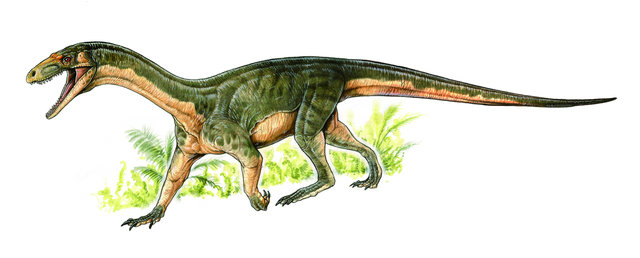
Life reconstruction of the new species Teleocrater rhadinus, a close relative of dinosaurs.
Dinosaurs arguably entered the media age with the hit 1974 BBC television series Before the Ark, written and presented by the British paleontologist Alan Charig. The series inspired generations of dino enthusiasts, and conveyed Charig’s passion for prehistory. He was particularly interested in mysterious animal remains unearthed in 1933 by fellow paleontologist Francis Rex Parrington, so much so that 30 years later, he traveled to the site where Parrington worked — the Manda Beds of southern Tanzania, Africa — to acquire additional fossils.

Now, a decade after Charig’s death, the animal behind these puzzling fossils has been identified as Teleocrater rhadinus, a scrappy reptile that is forcing a rethink of early dinosaur evolution. Importantly, it reveals that animals looked like dinosaurs even before actual dinosaurs existed.

T. rhadinus uniquely possesses crocodile, non-avian dinosaur, and bird features, according to a paper describing the species that appears in the journal Nature. Charig is listed as the paper’s senior author, honoring his earlier work on the fossils.

Lead author Sterling Nesbitt of Virginia Tech’s Department of Geosciences and his team obtained more remains for the reptile in 2015 and subsequently analyzed all of the fossils. The researchers determined that the toothy predator marched around on four limbs like a crocodile and had croc-ish ankle joints.

In terms of classic dinosaur characteristics, it possessed a long neck, a Tyrannosaurus rex-like hunger for meat, depressions for an enlarged jaw musculature on the roof of its skull, and muscular upper legs like those of many non-avian dinosaurs and later birds.

The fossils suggest that Teleocrater grew to about 6.5 to 10 feet long and weighed between 20 and 65 pounds. Nesbitt and his team suspect that it feasted on many different types of animals, including close relatives of mammals.

Teleocrater rhadinus hunting a cynodont, a close relative of mammals.
Although the predator looked a lot like a dinosaur, “it cannot be classified as a dinosaur because it doesn’t share all of the unique features that dinosaurs share,” Nesbitt told Seeker. But he noted that “Teleocrater shares more characteristics with dinosaurs and their relatives than with crocodiles and their relatives.”

Teleocrater was dated to 245 million years ago, close to the time when early reptiles known as archosaurs diverged into two major lineages: one that led to crocodylians (aquatic reptiles like alligators and crocodiles) and another that, through dinosaurs, eventually led to today’s birds. Teleocrater is now the oldest known member of the latter group.

Given this important positioning, Teleocrater is sure to be used as a model animal for understanding dinosaur origins. Previously, Triassic reptiles like Lagerpeton and Marasuchus were in this role, but Teleocrater is even older.

“Teleocrater was part of a side branch of dinosaur cousin,” Nesbitt said. “It never became a dinosaur, just like a chimp will never become a human.”

As a result, the species has no direct living descendants today. Nevertheless, it possessed both iconic crocodile and dinosaur characteristics some 10 million years before the first unambiguous dinosaurs evolved in what are now Argentina, Brazil, Zimbabwe, and India.

“Teleocrater and its close relatives show that the overall body plan that once was thought to characterize crocodile-line reptiles was also present in the first members of the lineage that led to dinosaurs,” co-author Martin Ezcurra of the Museo Argentino de Ciencias Naturales in Buenos Aires said in a statement.

Teleocrater and its relatives, which form a group called Aphanosauria per the new paper, were very widespread. Their remains have been found not only in what is now Africa but also in Russia, India, and Brazil.

Nesbitt said that the Triassic Period has long been considered to be the great “Age of Crocodile Relatives” because these aquatic reptiles were diverse, abundant, and located across much of the planet during that time. Now it’s known that Teleocrater and other close relatives of dinosaurs were equally diverse and widespread during the same time, setting the stage for dinosaurs dominating the Jurassic Period.

Read more at Discovery News

Apr 11, 2017

Long ago and far away, an average galaxy: 'Typical' galaxy helps astronomers study epoch of reionization

Astronomers used the gravity of a massive galaxy cluster as a lens to spot an incredibly distant galaxy, about 13.1 billion years in the past. They used the Hubble Space Telescope to find the galaxy and confirmed its age and distance with instruments at the Keck Observatory in Hawaii.
Astronomers led by a graduate student at the University of California, Davis have discovered one of the most distant galaxies in the universe, and it's nothing out of the ordinary.

"Other most distant objects are extremely bright and probably rare compared to other galaxies," said Austin Hoag, a UC Davis graduate student in physics who is lead author on the paper, published April 10 in Nature Astronomy. "We think this is much more representative of galaxies of the time."

These ultradistant galaxies, seen as they were close to the beginning of the universe, are interesting to Hoag, UC Davis physics professor Marusa Bradac and collaborators in the U.S., Australia and Europe because they fall within the "Epoch of Reionization," a period about a billion years after the Big Bang when the universe became transparent.

After the Big Bang, the universe was a cloud of cold atomic hydrogen, which blocks light. The first stars and galaxies condensed out of the cloud and started to emit light and ionizing radiation. This radiation melted away the atomic hydrogen like a hot sun clearing fog, and the first galaxies spread their light through the universe.

Much remains lost in the fog of reionization.

"We have a before and an after, but not exactly a when," Hoag said. There are also questions about what radiating objects drove reionization: Was it mostly young galaxies, or did objects such as black holes and gamma ray bursts contribute as well?

Galaxy Cluster is a Giant Lens in the Sky

The new object, named MACS1423-z7p64, is at a redshift of 7.6, putting it about 13.1 billion years in the past (The farther away an object is, the farther its light is shifted into the red end of the spectrum, due to the expansion of the universe). To find such faint, distant objects, the astronomers took advantage of a giant lens in the sky.

As light passes by a massive object such as a galaxy cluster, its path gets bent by gravity, just as light gets bent passing through a lens. When the object is big enough, it can act as a lens that magnifies the image of objects behind it.

Hoag and colleagues are surveying the sky around massive galaxy clusters that are the right size and distance away to focus light from very distant galaxies. While it is similar to millions of other galaxies of its time, z7p64 just happened to fall into the "sweet spot" behind a giant galaxy cluster that magnified its brightness ten-fold and made it visible to the team, using the Hubble Space Telescope. They were then able to confirm its distance by analyzing its spectrum with the Keck Observatory telescopes in Hawaii.

The team plans to continue their survey of candidate galaxies with the Hubble and Keck telescopes. The upcoming launch of the James Webb Space Telescope, set for 2018, opens up new possibilities, Hoag said. The team is currently planning observations for the Webb telescope, which is bigger than Hubble and will allow astronomers to look at even more distant parts of the Universe.

Read more at Science Daily

As fins evolve to help fish swim, so does the nervous system

This is a parrotfish, a common Labrid species.
The sensory system in fish fins evolves in parallel to fin shape and mechanics, and is specifically tuned to work with the fish's swimming behavior, according to new research from the University of Chicago. The researchers found these parallels across a wide range of fish species, suggesting that it may occur in other animals as well.

The study, published April 10, 2017 in the Proceedings of the National Academy of Sciences, combined measurements of fin shape from hundreds of specimens of the Labridae family with fin mechanical properties and neural responses recorded from eight different Labrid species, commonly known as wrasses. These measurements were then mapped on an evolutionary tree of 340 wrasses to determine how the mechanical properties and nervous systems of the fins evolved over time.

"As pectoral fins evolve different shapes, behaviors, and mechanical properties, we've shown that the sensory system is also evolving with them," said Brett Aiello, a PhD student in the Department of Organismal Biology and Anatomy, and the lead author of the study. "This allows the sensory system to be tuned to the different stimuli relevant to the locomotor behaviors and fin mechanics of different species."

When animals use appendages for movement, they rely on sensory feedback from those limbs to control motion. Nerves in the pectoral fins of fish detect the fin rays' position and how much they bend as they move through the water, which helps the fish sense speed and the relative position of their fins.

The shape of the fin affects how the fish will move too. Scientists use a number called aspect ratio (AR) to measure this shape. High AR means the fin is long and narrow, or more wing-like; low AR means the fin is broad or round, and more paddle-like. Wrasses with high AR, wing-like fins flap them to maximize efficiency and thrust as they propel themselves forward, while those with the broader, low AR, paddle-like fins use rowing movements to maneuver close to reef bottoms.

Aiello and his colleagues collected fin aspect ratio measurements from hundreds of Labrid species at the Field Museum, and combined that data with a genetic phylogeny of 340 Labrids developed by Mark Westneat, PhD, professor of Organismal Biology and Anatomy and co-author on the study. Using DNA from living fishes, Westneat constructed a family tree of relationships between these species, tracing how they evolved through time. The researchers then mapped the fin shape of each species on the phylogeny, allowing them to track fin evolution from their ancestral state to living species. The ancestral state reconstruction revealed patterns of convergent evolution, with high AR fins originating independently at least 22 times.

With this history of fin evolution in place, the researchers also tested the mechanical properties and sensory system sensitivity in the pectoral fins of four pairs of closely related Labrid species, one with low AR fins and one with independently evolved high AR fins. The team tested the sensory response by measuring the neural response from the pectoral fin nerves as they bent the fin, and then repeated the process, bending the fins a different amount each time.

What they found gave more clues about the utility of each kind of fin. The low AR, paddle-like fins tended to be more flexible, and the high AR fins were more stiff or rigid. But the sensory system of the wing-like, high AR fins was also more sensitive, meaning the fins were more responsive to a smaller magnitude of bending. Aiello said he believes that a more sensitive nervous system evolved in the high AR fins because it needed to be more responsive to smaller movements as the fish use these stiff, less flexible fins to swim.

The work is the product of collaboration across disciplines, a hallmark of the Organismal Biology and Anatomy program at UChicago. The resulting PNAS study could have been three separate papers: the archival research of specimens from the Field Museum, the genetic phylogeny, and the neurobiological study of the living species.

"Collaboration among scientists with different perspectives and expertise can take research in whole new directions," said Melina Hale, the William Rainey Harper Professor of Organismal Biology and Anatomy and senior author of the study. "It is also a lot of fun because we learn about each other's fields. For experimentalists, like us, working with colleagues and natural history collections at the Field Museum has been particularly important as they bring key insights on evolution and biodiversity."

Besides giving biologists a better understanding of how fish have optimized their swimming mechanics, the results of the study could also be useful to engineers developing underwater autonomous vehicles. The propulsion systems of these devices need to be both efficient and responsive, and there are perhaps no better designs to copy than those perfected through evolution over millions of years.

Read more at Science Daily

Palaeontologist reconstructs feathered dinosaurs in the flesh

This is the wing of the bird-like feathered dinosaur Anchiornis under laser-stimulated fluorescence. The folds of skin in front of the elbow and behind the wrist (called patagia) were covered in feathers, just like in modern living birds.
Until now it has been hard to get an accurate idea of the shape of a dinosaur from its fossilised remains, as only their bones are usually preserved. Using a new technique, Dr Michael Pittman from the Department of Earth Sciences, the University of Hong Kong and his collaborators reconstructed the first highly detailed body outline of a feathered dinosaur based on high-definition images of its preserved soft tissues.

This ground breaking work was published in Nature Communications.

Laser-stimulated fluorescence (LSF) is a revolutionary new technique using high power lasers that makes unseen soft tissues preserved alongside the bones, literally "glow in the dark" by fluorescence. The technique developed by collaborator Tom Kaye of the Foundation for Scientific Advancement, scans the fossils with a violet laser in a dark room. The laser "excites" the few skin atoms left in the matrix making them glow, to reveal what the shape of the dinosaur actually looked like. "For the last 20 years we have been amazed by the wondrous feathered dinosaurs of Northeastern China. However, we never thought they would preserve soft tissues so extensively," said lead author and palaeontologist Dr Michael Pittman.

Dr Pittman and his colleagues examined over 200 specimens of the feathered bird-like dinosaur Anchiornis to find the dozen with special preservation. The quantitative reconstruction shows the contours of the wings, legs and even perfectly preserved foot scales, providing new details that illuminate the origin of birds.

"The detail was so well lit that we could see the texture of the skin," said Dr Pittman. Anchiornis lived in the late Jurassic period (~160 million years old), close to the time when palaeontologists think birds first appeared. In recovering important soft tissue details of the wing in particular, Dr. Pittman and his colleagues found that the shape of wing was in many ways similar to modern birds, but it also had some seemingly primitive characteristics like feathers arranged more evenly across the wing rather than in distinct rows. These new insights provide crucial information for reconstructing how dinosaurs experimented and eventually achieved flight. The new laser technique brings out hidden details because of the high intensity laser light. The team is already scheduling trips worldwide to fulfill requests to scan exceptional specimens.

From Science Daily

Three quarters of deep-sea animals make their own light

This image shows the siphonophore Frillagalma vityazi lit up by ROV lights (top) and emitting bioluminescence in the lab (bottom). A recent paper shows that 99.7 percent of siphonophores in Monterey Bay create their own light.
Ever since explorer William Beebe descended into the depths in a metal sphere in the 1930s, marine biologists have been astounded by the number and diversity of glowing animals in the ocean. Yet few studies have actually documented the numbers of glowing animals at different depths. In a new study in Scientific Reports, MBARI researchers Séverine Martini and Steve Haddock show that three quarters of the animals in Monterey Bay waters between the surface and 4,000 meters deep can produce their own light.

You would think it would be easy to count the number of glowing (bioluminescent) animals in the ocean, just by looking at videos or photographs taken at different depths. Unfortunately, very few cameras are sensitive enough to show the pale glow of many marine animals. Below 300 meters (1,000 feet) the ocean is essentially pitch black, so animals don't need to glow very brightly. Also most animals don't glow continuously because making light takes extra energy and can attract predators.

Because of the difficulty in counting glowing animals at depth, most previous estimates of the proportion of glowing animals were based on qualitative observations made by researchers peering out the windows of submersibles. Martini and Haddock's study is the first ever quantitative analysis of the numbers and types of individual glowing animals at different depths.

The researchers compiled data on every animal larger than one centimeter that appeared in video from 240 dives by MBARI's remotely operated vehicles (ROVs) in and around Monterey Canyon. They counted over 350,000 individual animals, each of which had been identified by MBARI video technicians using a vast database known as the Video Annotation and Reference System (VARS). The VARS database contains over five million observations of deep-sea animals, and has been used as a source of data for more than 360 research papers.

Martini, the lead author of the recent study, compared the list of animals seen during the 240 ROV dives with a list of animals and animal groups that were known to be bioluminescent. This list was based on a review of previous scientific papers, as well as firsthand observations by Haddock and others. As an indication of the lack of research in this area, the most complete source of bioluminescence information for marine animals was a paper published in 1987, 30 years ago.

Martini divided the observed animals into five categories:

  • Definitely bioluminescent
     
  • Highly likely to be bioluminescent
     
  • Very unlikely to be bioluminescent
     
  • Definitely not bioluminescent, and
     
  • Undefined (not enough information was available to determine if an animal is bioluminescent or not).

Because scientists know so little about deep-sea animals, 20 to 40 percent of the animals seen below 2,000 meters were classed as "Undefined."

Looking through the data, Martini and Haddock were surprised to find that the proportion of glowing to non-glowing animals was pretty similar from the surface all the way down to 4,000 meters. Although the total number of glowing animals decreased with depth (something that had been previously observed), this was apparently due to the fact that there are simply fewer animals of any kind in deeper water.

Even though the proportion of glowing to non-glowing animals was similar at all depths, the researchers found that different groups of animals were responsible for the light produced at different depths. For example, from the sea surface down to 1,500 meters, most of the glowing animals were jellyfish (medusae) or comb jellies (ctenophores). From 1,500 meters to 2,250 meters down, worms were the most abundant glowing animals. Below that, small tadpole-like animals known as larvaceans accounted for about half of the glowing animals observed.

The analysis also showed that some groups of animals were much more likely to glow than others. For example, 97 to 99.7 percent of the cnidarians (jellyfish and siphonophores) in the videos are able to produce their own light. In contrast, only about half of the fishes and cephalopods (squids and octopuses) are bioluminescent.

The finding that the proportion of glowing to non-glowing animals is relatively constant at all depths suggests that scientists may be able to estimate the total numbers of animals at specific depths "just" by measuring the amount of light produced by animals at each depth. Unfortunately, researchers do not yet have instruments that can reliably measure the total bioluminescence from all animals at a given depth. But Martini is working on instruments that may be able to do this, and plans to publish her findings in a future paper.

Read more at Science Daily

Colliding Stars Trigger Spectacular Stellar Fireworks Display

The collision of two young stars triggered a spectacular stellar explosion like a fireworks show on the Fourth of July, a new study shows.

This cataclysmic event took place roughly 500 years ago, from Earth's perspective, in a region known as the Orion Molecular Cloud 1 (OMC-1), located about 1,500 light-years from Earth. Using the Atacama Large Millimeter/submillimeter Array (ALMA) in Chile, astronomers captured a stunning view of the remains of the brilliant burst.

OMC-1 is a dense and active stellar nursery. Over time, two adolescent protostars roaming about the molecular cloud gradually wandered too close to each other and collided, sending streams of gas, dust and other unborn star material out into interstellar space "at speeds greater than 150 kilometers per second," according to the recent study. This event "released as much energy as our sun emits over the course of 10 million years," scientists said in a statement from the National Radio Astronomy Observatory (NRAO).

"What we see in this once-calm stellar nursery is a cosmic version of a Fourth of July fireworks display, with giant streamers rocketing off in all directions," John Bally, lead author of the study from the University of Colorado Boulder, said in the statement.

As young stars form in dense regions of a massive cloud of gas, such as OMC-1, they are able to drift about randomly. However, if the newborn stars slow down, they begin to fall toward a common center of gravity — and if they get too close before dispersing into the galaxy, they experience violent collisions, such as that observed by the ALMA telescopes. This type of stellar explosion is generally short-lived, and the remnants are visible for only centuries, scientists said in the statement.

"Though fleeting, protostellar explosions may be relatively common," Bally said in the statement. "By destroying their parent cloud, as we see in OMC-1, such explosions may also help to regulate the pace of star formation in these giant molecular clouds."

Previous observations made using the Submillimeter Array in Hawaii and the Gemini South telescope in Chile revealed the explosive nature of this stellar burst and the structure of the remnant streams of gas, which extend nearly a light-year from end to end, scientists said in the statement.

The new study, however, provides insight into the underlying force of the blast, as well as the "distribution and high-velocity motion of the carbon monoxide (CO) gas inside the streamers," scientists said. Their findings, published March 3 in The Astrophysical Journal, shed new light on how stellar collisions like this may affect star formation in other areas of the galaxy, the researchers said.

Read more at Discovery News

Apr 6, 2017

Giant viruses may simply be a 'Frankenstein' of smaller viruses

Bubbling nitrifying activated sludge tank at a wastewater treatment plant in Klosterneuburg, Austria. This was the source of the sludge samples used for microcolony sorting.
Viruses have a ubiquitous presence in the world. Their population is estimated to be 1031, 10 times greater than the nonillion (1030) of microbes on the planet -- a figure that surpasses the number of stars in the Milky Way. Giant viruses are characterized by disproportionately large genomes and virions that house the viruses' genetic material. They can encode several genes potentially involved in protein biosynthesis, a unique feature which has led to diverging hypotheses about the origins of these viruses. But after discovering a novel group of giant viruses with a more complete set of translation machinery genes than any other virus known to date, scientists at the U.S. Department of Energy Joint Genome Institute (DOE JGI), a DOE Office of Science User Facility, believe that this group (dubbed "Klosneuviruses") significantly increases our understanding of viral evolution.

The predicted hosts for the Klosneuviruses are protists (single-celled eukaryotic (nucleus-containing) microorganisms) and while their direct impacts on protists are not yet worked out, these giant viruses are thought to have a large impact on these protists that help regulate the planet's biogeochemical cycles. DOE JGI published the findings in the journal Science on April 7, 2017 with collaborators from the National Institutes of Health, University of Vienna, and CalTech.

"The discovery presents virus evolution for us in new ways, vastly expanding our understanding of how many essential host genes viruses can capture during their evolution," said National Institutes of Health evolutionary and computational biologist Eugene Koonin, a study co-author whose lab collaborated with DOE JGI on analyzing the Klosneuvirus genome. "Since protein synthesis is one of the most prominent hallmarks of cellular life, it shows that these new viruses are more 'cell-like' than any virus anyone has ever seen before."

Scientists have been fascinated by giant viruses since 2003, when a group of French biologists led by Didier Raoult discovered the Mimiviruses. Since then, a handful of other giant virus groups have been found. The unique ability among them to encode proteins involved in translation (typically DNA to RNA to protein) piqued researchers' interests as to the origin of giant viruses. Since then, two evolutionary hypotheses have emerged. One posits that giant viruses evolved from an ancient cell, perhaps one from an extinct fourth domain of cellular life. Another -- a scenario championed by Koonin -- presents the idea that giant viruses arose from smaller viruses.

The discovery of Klosneuvirus supports the latter idea, according to Tanja Woyke, DOE JGI Microbial Genomics Program lead and senior author of the paper. "In this scenario, a smaller virus infected different eukaryote hosts and picked up genes encoding translational machinery components from independent sources over long periods of time through piecemeal acquisition," she said.

At first glance, the suite of "cellular" genes in Klosneuvirus seemed to have a common origin, but when analyzing them in detail, the research team observed they came from different hosts. From the evolutionary trees the team built, they noticed that they were acquired by the viruses bit by bit, at different stages in their evolution. The Klosneuvirus genes contained aminoacyl-tRNA (transfer ribonucleic acid) enzymes with specificity for 19 out of 20 amino acids, along with more than 20 tRNAs and an array of translation factors and tRNA modifying enzymes -- an unprecedented finding among all viruses, including the previously known giant viruses.

JGI postdoctoral researcher Frederik Schulz and Woyke unearthed Klosneuvirus while analyzing microcolony sequence data from a wastewater treatment plant sample in Klosterneuburg, Austria. This data was generated under a DOE JGI Community Science Program (CSP) project focused on the diversity of nitrifying bacteria for converting ammonia to nitrate in industrial and sewage waste treatment. "We expected genome sequences of nitrifying bacteria in the microcolony sequence data," Woyke said. "Finding a giant virus genome took the project into a completely new and unexpected, yet very exciting direction."

When Schulz, the study's first author, noticed that several of the metagenomes were viral in origin, he and Woyke conducted analyses to determine their source. They found that the Klosneuvirus group came from a novel viral lineage affiliated with Mimiviruses.

"Mining sequence data in DOE JGI's Integrated Microbial Genomes & Microbiomes system, which houses thousands of metagenomes, allowed us to find evolutionary relatives of our Klosneuvirus," Schulz said. He notes that while the metagenomic discovery of Klosneuviruses helped answer important evolutionary questions, the actual biological function of the translation system genes remains elusive -- at least until these viruses are grown in the laboratory together with their hosts.

Read more at Science Daily