Oct 27, 2010

Mind control over computers becomes a reality

The device has enabled people to move a cursor around a screen and also fade and brighten images using just their brain.
The instructions are enough to play a simple computer game and could eventually allow brain damaged individuals to communicate with the outside world.

The team at the University of California and California Institute of Technology recruited 12 epilepsy patients who because of their illness had sensors embedded into their brain to monitor nerve activity.

They then set about training the volunteers to "exert conscious control" on individual nerve endings or neurons within the brain so that they could be switched on and off using just their thoughts.

By picking up these "thoughts" using the sensors they could be converted into commands for a computer screen.

Professor Christof Koch, of the California Institute of Technology, said that the study showed "individuals can rapidly, consciously, and voluntarily control neurons deep inside their head."

The team, that included Moran Cerf, a PHD student, looked at the medial temporal lobe—a region on the left hand side of the brain that plays a major role in human memory and emotion.

Prior to recording the activity, the volunteers were interviewed to find their interests and 100 images created around them.

These were then tested to find the four that showed the strongest correlation response in the brain.
These could then be used to control the movement of a cursor or to fade in and out different images.

Read more at The Telegraph

Asian Neanderthals, Humans Mated

Early modern humans mated with Neanderthals and possibly other archaic hominid species from Asia at least 100,000 years ago, according to a new study that describes human remains from that period in South China.

The remains are the oldest modern human fossils in East Asia and predate, by over 60,000 years, the oldest previously known modern human remains in the region.

The fossils -- a chin and related teeth -- belonged to a modern human that also featured more robust Neanderthal-type characteristics, indicates the study, published in the latest Proceedings of the National Academy of Sciences.

Co-author Erik Trinkaus, who is one of the world's leading experts on Neanderthals, told Discovery News that the new findings mean "there was mating between these 'archaic' and 'modern' groups across Asia, and not just in Europe and the remainder of Africa."

"Of more interest than who had sex with whom is the fact that modern humans had spread across southern Eurasia by 100,000 years ago, and yet archaic humans remained across the more northern areas, and even displaced the modern humans in Southwest Asia for an additional 50,000-70,000 years," added Trinkaus, a professor of physical anthropology at Washington University in St. Louis. "It argues for very little adaptive advantage on the part of these modern humans."

Read more at Discovery News

Monkey Fossils Suggest Primates Came Out of Asia, Not Africa

The discovery of four ancient, lemur-like creatures in what is now Libya suggests the human family tree’s taproot is in the Middle East, not Africa.

The conventional narrative of primate development places the origins of anthropoids — monkeys and apes, including humans — in Africa. Some paleontologists, however, think Asia is the more likely cradle for that ur-primate, or what Christopher Beard has called the “Dawn Monkey.”

Beard, a paleontologist at the Carnegie Museum of Natural History, is among the co-authors of the paper describing the new primates, published October 28 in Nature. The four species’ fossils, representing three distinct taxonomic families, are 40 million years old. Nothing similar was known to have lived in Africa at that time.

The diversity and timing of the new anthropoids raises two scenarios. Anthropoids might simply have emerged in Africa much earlier than thought, and gone undiscovered by modern paleontologists. Or they could have crossed over from Asia, where evidence suggests that anthropoids lived 55 million years ago, flourishing and diversifying in the wide-open ecological niches of an anthropoid-free Africa.

That humans may trace their evolutionary lineage to creatures like the newly-discovered anthropoids, which likely weighed between four ounces and one pound and could sit in the palm of your hand, is an intriguing possibility. But other paleontologists warn that more investigation is required.
Read more at Wired

Oct 26, 2010

Why shaking someone’s beliefs turns them into stronger advocates

“You don’t have to look very far for examples of people holding on to their beliefs in the face of overwhelming evidence to the contrary. Thousands still hold to the idea that vaccines cause autism, that all life was created a few thousand years ago, and even that drinking industrial bleach is a good idea. Look at comment threads across the internet and you’ll inevitably find legions of people who boldly support for these ideas in the face of any rational argument.

That might be depressing, but it’s not unexpected. In a new study, David Gal and Derek Rucker from Northwestern University have found that when people’s confidence in their beliefs is shaken, they become stronger advocates for those beliefs. The duo carried out three experiments involving issues such as animal testing, dietary preferences, and loyalty towards Macs over PCs. In each one, they subtly manipulated their subjects’ confidence and found the same thing: when faced with doubt, people shout even
louder.

Gal and Rucker were inspired by a classic psychological book called When Prophecy Fails. In it, Leon Festinger and colleagues infiltrated an American cult whose leader, Dorothy Martin, convinced her followers that flying saucers would rescue them from an apocalyptic flood. Many believed her, giving up their livelihoods, possessions and loved ones in anticipation of their alien saviours. When the fated moment came and nothing happened, the group decided that their dedication had spared the Earth from destruction. In a reversal of their earlier distaste for publicity, they started to actively proselytise for their beliefs. Far from shattering their faith, the absent UFOs had turned them into zealous evangelists.

The case study inspired Festinger’s theory of “cognitive dissonance”, which describes the discomfort that people feel when they try to cope with conflicting ideas. Festinger reasoned that people will go to great lengths to reduce this conflict. Altering one’s beliefs in the face of new evidence is one solution but for Martin’s followers, this was too difficult. Their alternative was to try and muster social support for their ideas. If other people also believed, their internal conflicts would lessen.”

Read more at Discover

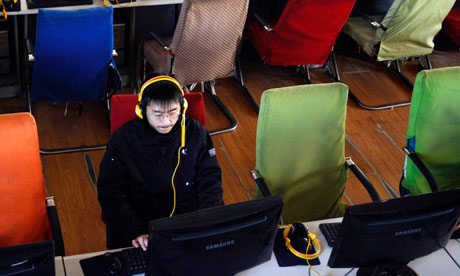
Silence of the dissenters: How south-east Asia keeps web users in line

“Governments across south-east Asia are following China’s authoritarian censorship of the digital world to keep political dissent in check, the Guardian can reveal.

Vietnam, Burma, Thailand, Cambodia and the Philippines have all moved or are moving towards monitoring internet use, blocking international sites regarded as critical and ruthlessly silencing web dissidents.

• In Vietnam, the Communist party wants to be your “friend” on the state-run version of Facebook, provided you are willing to share all personal details.

• In Burma, political unrest can be silenced by cutting off the country from the internet.

• In Thailand, website moderators can face decades in jail for a posted comment they did not even write, if the government deems it injurious to the monarchy.

While much is made of China’s authoritarian attitude towards internet access, a majority of south-east Asian governments have similar controls and, rather than relaxing restrictions on internet use, many are moving towards tighter regulation.

The Guardian has spoken to five leading bloggers across the region about the present restrictions they face and future fears.”

Read more at The Guardian

Moon Not Only Has Water, but Lots of It

“There is a lot more water on the moon than previously believed, according to an analysis of NASA data being published Friday, a finding that may bolster the case for a manned base on the lunar surface.

The discovery grew out of an audacious experiment last year, when the National Aeronautics and Space Administration slammed a spent-fuel rocket into a lunar crater at 5,600 miles an hour, and then used a pair of orbiting satellites to analyze the debris thrown off by the impact. They discovered that the crater contained water in the form of ice, plus a host of other resources, including hydrogen, ammonia, methane, mercury, sodium and silver.

NASA announced its groundbreaking discovery of lunar water last November. Now, a more detailed analysis of the data—the subject of six research papers being published in the journal Science—concludes that there is a lot more water on the moon than anyone expected, about twice the concentrations seen in the Sahara Desert.

“It’s really wet,” said Anthony Colaprete, co-author of one of the Science papers and a space scientist at NASA Ames Research Center at Moffett Field, Calif. He and his colleagues estimate that 5.6% of the total mass of the targeted lunar crater’s soil consists of water ice. In other words, 2,200 pounds of moon dirt would yield a dozen gallons of water.

The presence of water doesn’t make it more likely that there ever was life on the moon, as the location studied is among the coldest in the solar system. But the large quantity boosts the case for a manned lunar base from which to launch other interplanetary adventures. Water is crucial because its components, hydrogen and oxygen, are key ingredients for rocket fuel. Oxygen can also be extracted from water to make breathable air.

Finding a water source on the moon has long been a dream, because it could save on the expense of transporting it from earth. A bottle of water on the moon would run about $50,000, according to NASA, because that is what it costs, per pound, to launch anything to earth’s nearest neighbor.”

Read more at The Wall Street Journal

Oct 25, 2010

100-million-year-old mistake provides snapshot of evolution

“Research by University of Leeds plant scientists has uncovered a snapshot of evolution in progress, by tracing how a gene mutation over 100 million years ago led flowers to make male and female parts in different ways.

The findings – published this week in the Proceedings of the National Academy of Sciences (PNAS) Online Early Edition – provide a perfect example of how diversity stems from such genetic ‘mistakes’. The research also opens the door to further investigation into how plants make flowers – the origins of the seeds and fruits that we eat.

In a number of plants, the gene involved in making male and female organs has duplicated to create two, very similar, copies. In rockcress (Arabidopsis), one copy still makes male and female parts, but the other copy has taken on a completely new role: it makes seed pods shatter open. In snapdragons (Antirrhinum), both genes are still linked to sex organs, but one copy makes mainly female parts, while still retaining a small role in male organs – but the other copy can only make male.

“Snapdragons are on the cusp of splitting the job of making male and female organs between these two genes, a key moment in the evolutionary process,” says lead researcher Professor of Plant Development, Brendan Davies, from Leeds’ Faculty of Biological Sciences. “More genes with different roles gives an organism added complexity and opens the door to diversification and the creation of new species.”

By tracing back through the evolutionary ‘tree’ for flowering plants, the researchers calculate the gene duplication took place around 120 million years ago. But the mutation which separates how snapdragons and rock cress use this extra gene happened around 20 million years later.”"

Read more at Physorg

New industrial application for revolutionary forensic metal fingerprinting technique

“Groundbreaking research into fingerprint detection developed at the University of Leicester now has an industrial application, thanks to a new invention by the scientist who developed the technique.

Dr John Bond’s method of identifying fingerprints on brass bullet-casings, even after they have been wiped clean, was based on the minuscule amounts of corrosion which can be caused by sweat. First announced in 2008, this breakthrough was cited as one of the technologies ‘most likely to change the world’ by a panel of experts for BBC Focus magazine and was included in Time magazine’s list of ’50 best inventions of the year’.

Now, working with scientists in the University of Leicester Department of Chemistry, Dr Bond has applied the same technique to industry by developing a simple, handheld device which can measure corrosion on machine parts. Corrosion leads to wear and tear and needs to be carefully monitored so that worn parts are replaced at the appropriate time so this invention should prove a boon to the manufacturing sector.

“This is a new, quick, cheap and easy way of measuring the extent of corrosion on copper and copper based alloys, such as brass,” explains Dr Bond, who is an Honorary Research Fellow in the University’s Forensic Research Centre and Scientific Support Manager at Northamptonshire Police.

“It works by exploiting the discovery we made during the fingerprint research – that the corrosion on brass forms something called a ‘Schottky barrier’ – and we use this to see how much the metal has corroded.
“Such measurements can already be made but this is quick, cheap and easy and can be performed ‘in the field’ as it works off a nine-volt battery.”"

Read more at Lab Spaces

Time Dilation – a short introduction


Take your brain for a run with this one.

Via Science & Reason.

Oct 24, 2010

Political correctness ends 'Vice Squad' name

What would Gene Hunt say?
Scotland Yard's famous Vice Squad, which deals with prostitution and other aspects of London's underworld, has changed its title to the rather less dynamic "Serious Crime Directorate 9: Human Exploitation and Organised Crime Command", or SCD9 for short.

The explanation is one that would draw a robust response from DCI Hunt, the old-school detective from BBC One's Life on Mars and Ashes to Ashes.

Metropolitan Police sources said the switch had been ordered in part because the word "vice" was thought to have negative "connotations".

It reflects a growing trend by law enforcement agencies to treat prostitutes as victims rather than as offenders.
Over the decades the Vice Squad have led some of Met's most celebrated cases. Its detectives had dealings with Ronnie and Reggie Kray when the gangster twins moved into running nightclubs in the 1960s.

The Profumo affair, which threatened to topple Harold Macmillan's Conservative government, also involved officers from Vice.

After Christine Keeler, the London call girl, was exposed as having had affairs with both John Profumo, the war secretary, and Yevgeny Ivanov, a Soviet attache, her friend Stephen Ward was charged by police with living off immoral earnings.

It was the Vice Squad that led the prosecution of Cynthia Payne, the "Luncheon Voucher Madam", whose south London brothel catering for older men was raided in 1978.

She was sentenced to 18 months' imprisonment, and her life inspired the 1987 feature film Personal Services, starring Julie Walters.

Alan Moss, a police historian and former Met chief superintendent, said: "The jargon of modern policing, with all the numbers and letters, is confusing for the public and probably for people in the police as well.
"I think the names of different squads should bear the name of what they do, and the crime they are trying to combat."

Read more at The Telegraph