Jan 3, 2018

Scientists explore mysteries behind diversity of DNA composition among species

Rendering of DNA.
To make the iconic, twisted double helix that accounts for the diversity of life, DNA rules specify that G always pairs with C, and A with T.

But, when it's all added up, the amount of G+C vs A+T content among species is not a simple fixed percentage or, standard one-to-one ratio.

For example, within single-celled organisms, the amount of G+C content can vary from 72 percent in a bacteria like Streptomyces coelicolor while the protozoan parasite that causes malaria, Plasmondium falciparum, has as little as 20 percent.

In single-celled eukaryotes, yeast contain 38 percent G+C content, plants like corn have 47 percent, and humans contain about 41 percent.

The big question is, why?

"This has been one of the long-standing problems in genome evolution, and prior attempts to explain it have involved considerable arm waving," said Michael Lynch, who leads a new Center for Mechanisms of Evolution at Arizona State University's Biodesign Institute.

Is there something within the chemical nature of DNA itself that favors one nucleotide over the other, or does the bias of mutation pressure vary, and if so, why would this be different among species?

"In the absence of key observations on the mutation process, there has been a struggle to fathom what the mechanism is," said Lynch.

Michael Lynch's group has now experimentally demonstrated that G+C composition is generally strongly favored, whereas this is often opposed by mutational pressure of various strengths in the opposite direction.

"On average, natural selection or some other factor (possibly associated with recombinational forces) favors G+C content, regardless of the class of DNA, size of a species' genome, or where the species is found on the evolutionary tree of life," said Lynch.

The study was published in the journal Nature Ecology and Evolution.

To err is universal

Driving evolution are DNA mutations, errors in the genome that are introduced and passed along to the next generation, so that over time, providing the fuel for the invention of new adaptations or traits.

To get to the heart of the matter, the scientists wanted a way to quantify the full spectrum of DNA mutations in the lab across a wide swath of species.

This can now be done due in part by new technologies to make DNA sequencing faster and cheaper. It has fueled a golden age of evolutionary experimental biology.

"We started with knowledge of the mutational spectrum that occurs at the genome level in about 40 species examined in my lab," said Lynch. "You can use such information to calculate what the GC composition would be in the absence of selection. And then we can compare this null expectation with the the actual genome content, the difference being due to selection."

In a tour de force experiment that is the largest survey to date, they examined every single DNA mutation across different species, sequencing billions of DNA chemical bases.

"This represented a very substantial work load, effort and cost that was necessary to test different evolutionary models with high statistical power," said Hongan Long, a postdoctoral researcher who led the experiments.

They also took advantage of an analysis of 25 current datasets of mutations and 12 new mutation-accumulation (MA) experiments (many from their own lab), including bacteria and a menagerie of multicellular organisms including yeast, worms, fruit flies, chimpanzees and humans.

During each MA experiment, they performed complete genome sequencing of about 50 different bacterial lines that had been passaged through severe, single-cell bottlenecks for thousands of cell divisions.

"This single-cell passage of each line acts like a filter, eliminating the ability of natural selection to modify the accumulation of all but the most severe and deleterious mutations, giving us an effectively unbiased view of the mutation process," said Long.

With each generation, they carefully measured the mutation rate, or every occurrence of when just a single DNA letter is changed.

This can happen in two ways: a single G or C DNA base pair being converted to the A+T direction; or the opposite can happen, with an A or T base switching in the G+C direction.

After all the number and data crunching, a striking pattern emerged between G+C content and the expectations based on DNA mutations.

"It turns out, they are correlated," said Lynch.. "The G+C composition is always higher than you expect, based on neutrality. That tells us that there is pervasive selection. So mutation drives the overall pattern, but selection for G's and C's over A's and T's boosts the genome content above the neutral mutational expectation.

This seems to be almost universally true."

The end of the beginning

Now that they've shown the G+C composition correlation, it has opened up the door to many more questions, and answers that remain elusive.

"One question is, 'why does the mutation spectrum change so dramatically across species'"? asked Lynch. "Species don't have the same mutation spectrum. There are species whose mutation profiles are more AT rich and others more GC rich. We still don't know the mechanisms behind such divergence in the mutational spectrum."

They may be due to simple differences in chemistry and biophysics.

One general force that may be of relevance is DNA stability, driven by the chemistry of the DNA letters. The forces that keep the DNA ladder intact are called hydrogen bonds. G:C pairs involve three hydrogen bonds, whereas, A:T pairs involve only two.

"The prevailing thought is that more G:C content adds to genome stability," said Lynch.

Another possibility is during reproduction, when the DNA strands intertwine from each parent to make a fertilized egg, mismatches can occur in the base pairing, leading to mistakes that DNA proofreading enzymes have to fix later on. Sometimes, a G can get changed to an A, or a T becomes a C, converting genes during this mismatch repair process.

"That's generally thought to be biased towards Gs and Cs," said Lynch.

Read more at Science Daily

Spider's web inspires removable implant that may control type 1 diabetes

Doctoral students Alan Chiu, left, and Duo An hold a sample of TRAFFIC (Thread-Reinforced Alginate Fiber for Islets enCapsulation). In the background, left to right, are Minglin Ma, Dan Luo, Meredith Silberstein and Dr. James Flanders.
For the more than 1 million Americans who live with type 1 diabetes, daily insulin injections are literally a matter of life and death. And while there is no cure, a Cornell University-led research team has developed a device that could revolutionize management of the disease.

In Type 1 diabetes, insulin-producing pancreatic cell clusters (islets) are destroyed by the body's immune system. The research group, led by assistant professor Minglin Ma from the Department of Biological and Environmental Engineering, has devised an ingenious method for implanting hundreds of thousands of islet cells into a patient. They are protected by a thin hydrogel coating and, more importantly, the coated cells are attached to a polymer thread and can be removed or replaced easily when they have outlived their usefulness.

Transplantation of stem cell-derived, insulin-producing islet cells is an alternative to insulin therapy, but that requires long-term immunosuppressive drug administration. One well-researched approach to avoid the immune system's response is to coat and protect the cells in tiny hydrogel capsules, hundreds of microns in diameter. However, these capsules cannot be taken out of the body easily, since they're not connected to each other, and there are hundreds of thousands of them.

And the ability to remove the transplant is key because of its potential to form tumors.

"When they fail or die, they need to come out," Ma said. "You don't want to put something in the body that you can't take out. With our method, that's not a problem."

Taking inspiration from the way water beads on a spider's web, Ma and his team first attempted to connect the islet cell-containing capsules through a string but realized that it would be better to put the hydrogel layer uniformly around a string instead. That string: an ionized calcium-releasing, nanoporous polymer thread.

This thread -- which the group has dubbed TRAFFIC (Thread-Reinforced Alginate Fiber For Islets enCapsulation) -- was inspired by a spider's web but, according to Ma, is even better because the hydrogel covers the thread uniformly.

"You don't have any gaps between capsules," he said. "With a spider's silk, you still have gaps between the water beads. In our case, gaps would be bad in terms of scar tissue and the like."

This therapy would involve minimally invasive laparoscopic surgery to implant approximately six feet of hydrogel-coated thread into the patient's peritoneal cavity.

TRAFFIC has received patent protection with the help of Danish pharmaceutical giant Novo Nordisk, which developed injectable insulin more than 90 years ago and is a collaborator on the paper. Other co-authors include professor Dan Luo in the Department of Biological and Environmental Engineering, postdoctoral researcher Wei Song, doctoral students Jason Lu and Yehudah Pardo, fiber science postdoc Dahua Shou, nutritional science professor Ling Qi and postdoc Yewei Ji.

Read more at Science Daily

Tabby's Star: Alien megastructure not the cause of dimming of the 'most mysterious star in the universe'

This illustration depicts an uneven ring of dust orbiting KIC 8462852, also known as Boyajian’s Star or Tabby's Star.
A team of more than 200 researchers, including Penn State Department of Astronomy and Astrophysics Assistant Professor Jason Wright and led by Louisiana State University's Tabetha Boyajian, is one step closer to solving the mystery behind the "most mysterious star in the universe." KIC 8462852, or "Tabby's Star," nicknamed after Boyajian, is otherwise an ordinary star, about 50 percent bigger and 1,000 degrees hotter than the Sun, and about than 1,000 light years away. However, it has been inexplicably dimming and brightening sporadically like no other. Several theories abound to explain the star's unusual light patterns, including that an alien megastructure is orbiting the star.

The mystery of Tabby's Star is so compelling that more than 1,700 people donated over $100,000 through a Kickstarter campaign in support of dedicated ground-based telescope time to observe and gather more data on the star through a network of telescopes around the world. As a result, a body of data collected by Boyajian and colleagues in partnership with the Las Cumbres Observatory is now available in a new paper in The Astrophysical Journal Letters.

"We were hoping that once we finally caught a dip happening in real time we could see if the dips were the same depth at all wavelengths. If they were nearly the same, this would suggest that the cause was something opaque, like an orbiting disk, planet, or star, or even large structures in space" said Wright, who is a co-author of the paper, titled "The First Post-Kepler Brightness Dips of KIC 8462852." Instead, the team found that the star got much dimmer at some wavelengths than at others.

"Dust is most likely the reason why the star's light appears to dim and brighten. The new data shows that different colors of light are being blocked at different intensities. Therefore, whatever is passing between us and the star is not opaque, as would be expected from a planet or alien megastructure," Boyajian said.

The scientists closely observed the star through the Las Cumbres Observatory from March 2016 to December 2017. Beginning in May 2017 there were four distinct episodes when the star's light dipped. Supporters from the crowdfunding campaign nominated and voted to name these episodes. The first two dips were named Elsie and Celeste. The last two were named after ancient lost cities -- Scotland's Scara Brae and Cambodia's Angkor. The authors write that in many ways what is happening with the star is like these lost cities.

"They're ancient; we are watching things that happened more than 1,000 years ago," the authors wrote. "They're almost certainly caused by something ordinary, at least on a cosmic scale. And yet that makes them more interesting, not less. But most of all, they're mysterious."

The method in which this star is being studied -- by gathering and analyzing a flood of data from a single target -- signals a new era of astronomy. Citizen scientists sifting through massive amounts of data from the NASA Kepler mission were the ones to detect the star's unusual behavior in the first place. The main objective of the Kepler mission was to find planets, which it does by detecting the periodic dimming made from a planet moving in front of a star, and hence blocking out a tiny bit of starlight. The online citizen science group Planet Hunters was established so that volunteers could help to classify light curves from the Kepler mission and to search for such planets.

"If it wasn't for people with an unbiased look on our universe, this unusual star would have been overlooked," Boyajian said. "Again, without the public support for this dedicated observing run, we would not have this large amount of data."

Now there are more answers to be found. "This latest research rules out alien megastructures, but it raises the plausibility of other phenomena being behind the dimming," Wright said. "There are models involving circumstellar material -- like exocomets, which were Boyajian's team's original hypothesis -- which seem to be consistent with the data we have." Wright also points out that "some astronomers favor the idea that nothing is blocking the star -- that it just gets dimmer on its own -- and this also is consistent with this summer's data."

Read more at Science Daily

A Previously Unknown Group of Ancient Native Americans Was Just Revealed

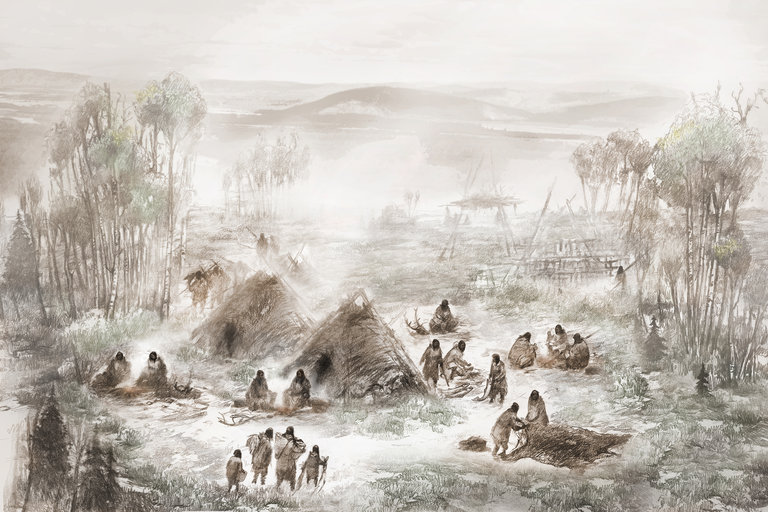
Reconstruction of the Upward Sun River base camp in what is now Alaska.
When scientists recently sequenced the genome of a six-week-old infant girl who lived 11,500 years ago at an Alaskan site now called Upward Sun River (USR), they expected that her DNA would match the genetic profile of other northern Native American people.

Instead, the genome of the infant — named Xach'itee'aanenh T'eede Gaay, meaning "Sunrise Girl-Child" and called USR1 by scientists — matched no other known ancient population.

"It was very surprising to find that USR1 belonged to a Native American population that was actually distinct from the two main Native American branches to which all Native American genomes sequenced to date belong to," J. Víctor Moreno-Mayar of the University of Copenhagen Center for GeoGenetics told Seeker.

"This means that this population was living up there, isolated from other Native American groups, for a considerably long time," he added.

Moreno-Mayar and his colleagues' findings, published in the journal Nature, support what is known as the Beringian Standstill Hypothesis. The theory holds that while all Native American ancestry can be traced back to a single East Asian source population, some descendants of this group migrated to eastern Beringia — what is now Alaska — and lived there for thousands of years.

The new paper further shows that eastern Beringia remained inhabited even after a separate branch of Native Americans had already been established in unglaciated North America.

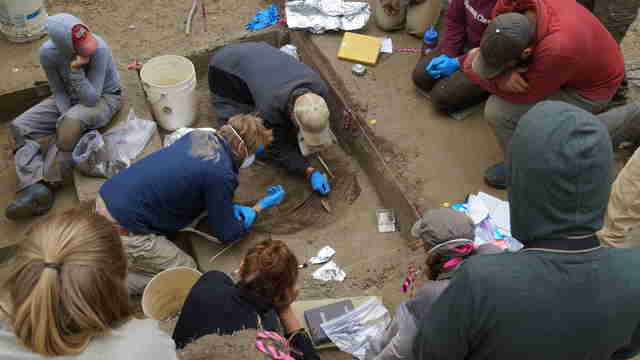
Sunrise Girl-Child was one such early Alaskan. Her remains were found, along with those of another younger female infant named Yelkaanenh T'eede Gaay, meaning "Dawn Twilight Girl-Child," during a 2015 excavation of USR in Interior Alaska, the central region of Alaska's territory.

Researchers excavate the Upward Sun River infants.
The excavations were enabled by an agreement signed, in part, by the Healy Lake Tribal Council and the Tanana Chiefs Conference, which is the traditional tribal consortium of the 42 villages of Interior Alaska.

Just 200 years before the young girls' short lifetimes, the last glacial period of the Pleistocene Epoch (2.6 million–11,700 years ago) ended. A popular hypothesis known as the Bering Land Bridge Theory, first proposed in 1590 by the Spanish missionary Fray Jose de Acosta, posits that during the Pleistocene, Beringia was a vast super-continent that extended from Siberia to what is now the Yukon territory of Canada. The western and eastern portions of Beringia were joined by the Bering Land Bridge that was dissected at times by several rivers.

Geological evidence suggests that waters receded during the Late Pleistocene, better exposing the land bridge and easing navigation over it. Animals, including humans, could likely just walk over the natural bridge until about 10,500 years ago, when waters of the Bering Strait and the Chukchi Sea covered it.

Sunrise Girl-Child, Dawn Twilight Girl-Child, and their families stayed in Beringia, so the researchers have decided to call the population that these early people represent the Ancient Beringians.

"From archaeological data, we can say that the Ancient Beringians were likely present in Alaska from at least 12,500 to 6,000 years ago," co-lead author Ben Potter, a professor of anthropology at the University of Alaska Fairbanks, told Seeker.

"Interestingly," he added, "the tools associated with this group, including microblades, are very similar and historically related to the widespread microblade-using cultures in Northeast Asia, found in Japan, Korea, northern China and Siberia."

The genetic data shows that the two infants were probably first cousins. The DNA samples of Dawn Twilight Girl-Child were not sufficient for extensive further analysis, however, so the researchers instead focused on Sunrise Girl-Child.

Moreno-Mayar, senior author Eske Willerslev and their team compared Sunrise Girl-Child's genome sequence to a set of both ancient and contemporary genomes. The comparison suggests that the ancestors of Ancient Beringians and those of other Native Americans descended from a single founding population that first split from East Asians around 36,000 years ago, although gene flow with North Eurasians — possibly centered around Lake Baikal in southern Siberia — continued until about 25,000 years ago.

Cove at Lake Baikal in the mountainous Russian region of southern Siberia.
The founding population then split into two groups approximately 20,000 years ago, the genetic evidence suggests. According to the researchers, these groups were the newly identified Ancient Beringians and the ancestors of all other Native Americans. There are two possible explanations for where this split occurred, and how the separation affected subsequent migrations.

The first possible scenario is that Ancient Beringians and the ancestors of other Native Americans diverged somewhere in Asia 20,000 years ago. Both populations then could have moved along different routes, or at different times, through Beringia.

The second possible scenario is that Ancient Beringians and the ancestors of other Native Americans diverged in what is now Alaska 20,000 years ago. The latter group then could have moved south of the ice sheets at a later date.

"Regardless of whether scenario one or two is correct, there was a single population of ancestral Native Americans, and they at least migrated to an area where they were genetically isolated from ancestral East Asians and ancestral North Eurasians," Potter said.

Moreno-Mayar noted, "By 20,000 years ago, most of North America was covered by two vast glaciers, so whenever Native Americans made it to Alaska, they most likely still had to wait until a viable route into mid-latitude America was made available."

As for why people then migrated so much, prior research suggests at least one reason. They appear to have been following the movements of prey animals. These could have included migrating schools of fish and/or terrestrial mammals such as woolly mammoths, steppe bison, and caribou.

Geological and ecological evidence suggests that the northwest American coastal route was ice-free and potentially navigable by 16,000 years ago, while the American interior was ice-free by 15,000–14,000 years ago.

A debate now exists as to precisely when humans first colonized the Americas and if those first routes were over land or water. Moreno-Mayar and his team admit that the genetic evidence cannot yet provide definitive answers to these questions.

Archaeological findings ranging from everything to an ancient fishhook to fossilized excrement provide clues, though. Evidence for human settlements at Triquet Island, Paisley Caves, and the Channel Islands along the western North American coast all date to around 13,000–14,000 years ago.

The sites Quebrada Jaguay, Quebrada Tacahuay, Quebrada Santa Julia, and Monte Verde along the western South American coast date to about 13,000 years ago.

On the eastern coast of North America, the site Page-Ladson in Florida dates to approximately 14,500 years ago. Stone tools and mastodon remains suggest that humans there were hunting big game. Yet another early site is Huaca Prieta, north of Peru, which dates to 15,000–14,500 years ago.

Taken together, the genetic and archaeological evidence then suggests that people first expanded out of Beringia by about 16,000 years ago.

Archaeologist Todd Braje of San Diego State University, who recently co-authored a paper published in Science on Native Americans, told Seeker that "the first Americans likely arrived along the Pacific Coast — not crossing the open Pacific but migrating along the Pacific Rim in boats in a step-wise fashion."

1914 image showing canoes of the Kwakiutl, an indigenous people from the Pacific Northwest Coast.
Michael Waters of Texas A&M University also favors the over water migration theory.

"The only logical way people could have come to Florida by 14,600 years ago is if their ancestors entered the Americas by boat along the Pacific Coast," Waters told Seeker. "They could have traveled by boat to central Mexico, crossed and come along the Gulf Coast. They could have entered the Americas via the Columbia River and then traveled inland to the Mississippi River and followed it down and entered the Gulf Coast, eventually making their way to Florida."

Whether or not the first continental Americans arrived in such a way, or by crossing the Bering Land Bridge, remains a mystery for now.

Even more puzzling is the controversial 130,000-year-old Cerutti Mastodon site in coastal San Diego County, California. Its discovery was announced in an April 2017 paper published in Nature. Lead author Steven Holen of the Center for American Paleolithic Research and his team reported finding "hammerstones and stone anvils" along with "spiral-fractured bone and molar fragments" of a mastodon that they believe was butchered.

"We don’t know how this animal died, " University of Michigan paleontologist Daniel Fisher, a co-author of the paper on the Cerutti Mastodon site, remarked to Seeker. "We don’t know whether humans were part of that death. All that we know is that humans came along some time after the death, and they very strategically set up a process involving the harvesting of marrow from the long bones and the recovery of dense fragments of bone that they could use as raw material for producing tools."

Such an early settlement of the Americas is not at present widely supported by other scientists. If additional evidence is found to support the claims, however, this could mean that anatomically modern humans were not the first members of the genus Homo to arrive in the New World.

Moreno-Mayar and his team did find that Sunrise Girl-Child/USR1's genome contained Neanderthal DNA. All people of Native American heritage also retain Neanderthal DNA.

"Interestingly, we found that USR1 carries a slight excess of Denisovan ancestry compared to some Native American groups," Moreno-Mayar said.

Read more at Seeker

Jan 2, 2018

Supermassive black holes control star formation in large galaxies

Young galaxies blaze with bright new stars forming at a rapid rate, but star formation eventually shuts down as a galaxy evolves. A new study, published January 1, 2018, in Nature, shows that the mass of the black hole in the center of the galaxy determines how soon this "quenching" of star formation occurs.

Every massive galaxy has a central supermassive black hole, more than a million times more massive than the sun, revealing its presence through its gravitational effects on the galaxy's stars and sometimes powering the energetic radiation from an active galactic nucleus (AGN). The energy pouring into a galaxy from an active galactic nucleus is thought to turn off star formation by heating and dispelling the gas that would otherwise condense into stars as it cooled.

This idea has been around for decades, and astrophysicists have found that simulations of galaxy evolution must incorporate feedback from the black hole in order to reproduce the observed properties of galaxies. But observational evidence of a connection between supermassive black holes and star formation has been lacking, until now.

"We've been dialing in the feedback to make the simulations work out, without really knowing how it happens," said Jean Brodie, professor of astronomy and astrophysics at UC Santa Cruz and a coauthor of the paper. "This is the first direct observational evidence where we can see the effect of the black hole on the star formation history of the galaxy."

The new results reveal a continuous interplay between black hole activity and star formation throughout a galaxy's life, affecting every generation of stars formed as the galaxy evolves.

Led by first author Ignacio Martín-Navarro, a postdoctoral researcher at UC Santa Cruz, the study focused on massive galaxies for which the mass of the central black hole had been measured in previous studies by analyzing the motions of stars near the center of the galaxy. To determine the star formation histories of the galaxies, Martín-Navarro analyzed detailed spectra of their light obtained by the Hobby-Eberly Telescope Massive Galaxy Survey.

Spectroscopy enables astronomers to separate and measure the different wavelengths of light from an object. Martín-Navarro used computational techniques to analyze the spectrum of each galaxy and recover its star formation history by finding the best combination of stellar populations to fit the spectroscopic data. "It tells you how much light is coming from stellar populations of different ages," he said.

When he compared the star formation histories of galaxies with black holes of different masses, he found striking differences. These differences only correlated with black hole mass and not with galactic morphology, size, or other properties.

"For galaxies with the same mass of stars but different black hole mass in the center, those galaxies with bigger black holes were quenched earlier and faster than those with smaller black holes. So star formation lasted longer in those galaxies with smaller central black holes," Martín-Navarro said.

Other researchers have looked for correlations between star formation and the luminosity of active galactic nuclei, without success. Martín-Navarro said that may be because the time scales are so different, with star formation occurring over hundreds of millions of years, while outbursts from active galactic nuclei occur over shorter periods of time.

A supermassive black hole is only luminous when it is actively gobbling up matter from its host galaxy's inner regions. Active galactic nuclei are highly variable and their properties depend on the size of the black hole, the rate of accretion of new material falling onto the black hole, and other factors.

"We used black hole mass as a proxy for the energy put into the galaxy by the AGN, because accretion onto more massive black holes leads to more energetic feedback from active galactic nuclei, which would quench star formation faster," Martín-Navarro explained.

The precise nature of the feedback from the black hole that quenches star formation remains uncertain, according to coauthor Aaron Romanowsky, an astronomer at San Jose State University and UC Observatories.

Read more at Science Daily

Social susceptibility: Leader-follower dynamics of influential individuals in a social group

Stegodyphus dumicola Previous Pause Next 3 of 3 Stegodyphus dumicola spiders make fast work of a captured ant.
This is the story of a spider, small but bold.

This particular arachnid, in fact, has helped to debunk the Great Man Theory, a 19th-century notion positing that highly influential individuals use their power -- be it personal charisma, intelligence, wisdom or political skill -- to maximize their impact in shaping the course of history.

How better to test that theory than with Stegodyphus dumicola?

Working with these African social spiders in their native habitats, UC Santa Barbara evolutionary ecologist Jonathan Pruitt created a model for exploring leadership dynamics and social susceptibility -- the tendency of individuals to change their behavior in response to interactions with influential group members. He found that the social susceptibility of the population majority -- and not the influence of key individuals -- is what drives leadership. The results appear in the journal Current Biology.

"We knew from previous studies that in a social group, the rare presence of bold individuals -- who constitute between 1 and 5 percent of a population -- radically changes collective behavior," said Pruitt, an associate professor in UCSB's Department of Ecology, Evolution, and Marine Biology (EEMB). "This new research evaluates whether the rise and fall of societies could be contingent on having just one or a few of these key individuals and whether the profitability of their presence might change based on the environment."

Pruitt and his team set up 240 experimental societies across two different precipitation gradients in Africa: one in the Namib Desert heading north to Angola and a second from the Kalahari Desert heading east to Lesotho. Some of these colonies contained particularly bold spiders (putative leaders) and some did not. The researchers then monitored these colonies' behavior and survival for the next six months.

The scientists determined the boldness of individual spiders by exposing them to a directional jet of air. Because S. dumicola cannot see well, they interpret air movement as a predator such as a bird, bat or wasp. Their response? A death-feigning posture wherein they tuck their legs and huddle into a ball. Bold individuals don't hide for long, but shy ones can take 20 minutes to an hour to recover.

"We wanted to see whether the presence of these particularly bold individuals changed how a society behaves collectively, and whether the aggressiveness of a society determined the likelihood of its members surviving or dying together in a sudden extinction event," Pruitt explained. "We found no association between how a society behaved and whether it lived or died at wet sites; nor did bold individuals have a large effect on colony behavior at these sites. However, we found a very tight association between the presence of bold individuals and societal aggressiveness at arid sites, and colonies containing bold individuals were far more likely to survive in these habitats."

The fact that the same rare personality types existed at both dry and wet sites, but varied in their degree of apparent social influence across these habitats, allowed the investigators to decipher, for the first time, whether it is the traits of the leaders or the social context in which they reside that truly drives their influence. As it turned out, the population majority determined whether these key group members could emerge at all, thus debunking the Great Man Theory and its parallel hypotheses regarding "keystone individuals" in a variety of animal societies. Instead, social influence appears to emerge from shy, generic spiders.

"When we took bold individuals from a wet site, where they didn't have any social influence, and put them with shy spiders from an arid site, those shy individuals were willing to follow the bold ones regardless of where they were from," Pruitt noted. "So, it wasn't the unique social influence of bold individuals from arid sites but rather the social susceptibility of the population majority that made an advantageous social order emerge."

To further scrutinize their findings, the scientists substituted bold individuals of another independently evolved species of social spider that occurs in southern Africa. Adding bold Stegodyphus mimosarum to groups of shy spiders in both wet and dry sites reproduced the same result at wet sites: The shy individuals were unresponsive to bold foreigners. However, the shy spiders from dry sites, who were used to food-restricted environments, responded equally to bold spiders of both species. Thus, for arid S. dumicola, anything even coarsely approximating the phenotype of a leader is enough to instigate followership in these populations.

Read more at Science Daily

Diabetes drug 'significantly reverses memory loss' in mice with Alzheimer's

A drug developed for diabetes could be used to treat Alzheimer's after scientists found it "significantly reversed memory loss" in mice through a triple method of action.

The research, published in Brain Research, could bring substantial improvements in the treatment of Alzheimer's disease through the use of a drug originally created to treat type 2 diabetes.

Lead researcher Professor Christian Holscher of Lancaster University in the UK said the novel treatment "holds clear promise of being developed into a new treatment for chronic neurodegenerative disorders such as Alzheimer's disease."

Alzheimer's disease is the most common cause of dementia and the numbers are expected to rise to two million people in the UK by 2051 according to Alzheimer's Society, who part- funded the research.

Dr Doug Brown, Director of Research and Development at Alzheimer's Society, said: ""With no new treatments in nearly 15 years, we need to find new ways of tackling Alzheimer's. It's imperative that we explore whether drugs developed to treat other conditions can benefit people with Alzheimer's and other forms of dementia. This approach to research could make it much quicker to get promising new drugs to the people who need them."

Although the benefits of these 'triple agonist' drugs have so far only been found in mice, other studies with existing diabetes drugs such as liraglutide have shown real promise for people with Alzheimer's, so further development of this work is crucial."

This is the first time that a triple receptor drug has been used which acts in multiple ways to protect the brain from degeneration. It combines GLP-1, GIP and Glucagon which are all growth factors. Problems with growth factor signalling have been shown to be impaired in the brains of Alzheimer's patients.

The study used APP/PS1 mice, which are transgenic mice that express human mutated genes that cause Alzheimer's. Those genes have been found in people who have a form of Alzheimer's that can be inherited. Aged transgenic mice in the advanced stages of neurodegeneration were treated.

In a maze test, learning and memory formation were much improved by the drug which also:-

  • enhanced levels of a brain growth factor which protects nerve cell functioning
  • reduced the amount of amyloid plaques in the brain linked with Alzheimer's
  • reduced both chronic inflammation and oxidative stress
  • slowed down the rate of nerve cell loss

Professor Holscher said: "These very promising outcomes demonstrate the efficacy of these novel multiple receptor drugs that originally were developed to treat type 2 diabetes but have shown consistent neuro- protective effects in several studies."

"Clinical studies with an older version of this drug type already showed very promising results in people with Alzheimer's disease or with mood disorders"

"Here we show that a novel triple receptor drug shows promise as a potential treatment for Alzheimer's but further dose-response tests and direct comparisons with other drugs have to be conducted in order to evaluate if this new drugs is superior to previous ones."

Read more at Science Daily

Speed breeding technique sows seeds of new green revolution

Speed breeding means that it is now possible to grow as many as 6 generations of wheat every year -- a threefold increase on the techniques currently used by breeders and researchers.
Pioneering new technology is set to accelerate the global quest for crop improvement in a development which echoes the Green Revolution of the post war period.

The speed breeding platform developed by teams at the John Innes Centre, University of Queensland and University of Sydney, uses a glasshouse or an artificial environment with enhanced lighting to create intense day-long regimes to speed up the search for better performing crops.

Using the technique, the team has achieved wheat generation from seed to seed in just 8 weeks. These results appear today in Nature Plants.

This means that it is now possible to grow as many as 6 generations of wheat every year -- a threefold increase on the shuttle-breeding techniques currently used by breeders and researchers.

Dr Brande Wulff of the John Innes Centre, Norwich, a lead author on the paper, explains why speed is of the essence:

"Globally, we face a huge challenge in breeding higher yielding and more resilient crops. Being able to cycle through more generations in less time will allow us to more rapidly create and test genetic combinations, looking for the best combinations for different environments."

For many years the improvement rates of several staple crops have stalled, leading to a significant impediment in the quest to feed the growing global population and address the impacts of climate change.

Speed breeding, says Dr Wulff, offers a potential new solution to a global challenge for the 21st century.

"People said you may be able to cycle plants fast, but they will look tiny and insignificant, and only set a few seed. In fact, the new technology creates plants that look better and are healthier than those using standard conditions. One colleague could not believe it when he first saw the results."

The exciting breakthrough has the potential to rank, in terms of impact, alongside the shuttle-breeding techniques introduced after the second world war as part of the green revolution.

Dr Wulff goes on to say: "I would like to think that in 10 years from now you could walk into a field and point to plants whose attributes and traits were developed using this technology."

This technique uses fully controlled growth environments and can also be scaled up to work in a standard glass house. It uses LED lights optimised to aid photosynthesis in intensive regimes of up to 22 hours per day.

LED lights significantly reduce the cost compared to sodium vapour lamps which have long been in widespread use but are ineffective because they generate much heat and emit poor quality light.

The international team also prove that the speed breeding technique can be used for a range of important crops. They have achieved up to 6 generations per year for bread wheat, durum wheat, barley, pea, and chickpea; and four generations for canola (a form of rapeseed). This is a significant increase compared with widely used commercial breeding techniques.

Speed breeding, when employed alongside conventional field-based techniques, can be an important tool to enable advances in understanding the genetics of crops.

"Speed breeding as a platform can be combined with lots of other technologies such as CRISPR gene editing to get to the end result faster," explains Dr Lee Hickey from the University of Queensland.

The study shows that traits such as plant pathogen interactions, plant shape and structure, and flowering time can be studied in detail and repeated using the technology.

The speed breeding technology has been welcomed by wheat breeders who have become early adopters.

Ruth Bryant, Wheat Pathologist at RAGT Seeds Ltd, Essex, UK, said: "Breeders are always looking for ways to speed up the process of getting a variety to market so we are really interested in the concept of speed breeding. We are working closely with Dr Wulff's group at the John Innes Centre to develop this method in a commercial setting."

Dr Allan Rattey, a wheat crop breeder with Australian company Dow AgroSciences, has used the technology to breed wheat with tolerance to pre-harvest sprouting (PHS) a major problem in Australia.

Read more at Science Daily

Jan 1, 2018

Try exercise to improve memory and thinking, new guideline urges

For patients with mild cognitive impairment, don't be surprised if your health care provider prescribes exercise rather than medication. A new guideline for medical practitioners says they should recommend twice-weekly exercise to people with mild cognitive impairment to improve memory and thinking.

The recommendation is part of an updated guideline for mild cognitive impairment published in the Dec. 27 online issue of Neurology, the medical journal of the American Academy of Neurology.

"Regular physical exercise has long been shown to have heart health benefits, and now we can say exercise also may help improve memory for people with mild cognitive impairment," says Ronald Petersen, M.D., Ph.D., lead author, director of the Alzheimer's Disease Research Center, Mayo Clinic, and the Mayo Clinic Study of Aging. "What's good for your heart can be good for your brain." Dr. Petersen is the Cora Kanow Professor of Alzheimer's Disease Research.

Mild cognitive impairment is an intermediate stage between the expected cognitive decline of normal aging and the more serious decline of dementia. Symptoms can involve problems with memory, language, thinking and judgment that are greater than normal age-related changes.

Generally, these changes aren't severe enough to significantly interfere with day-to-day life and usual activities. However, mild cognitive impairment may increase the risk of later progressing to dementia caused by Alzheimer's disease or other neurological conditions. But some people with mild cognitive impairment never get worse, and a few eventually get better.

The academy's guideline authors developed the updated recommendations on mild cognitive impairment after reviewing all available studies. Six-month studies showed twice-weekly workouts may help people with mild cognitive impairment as part of an overall approach to managing their symptoms.

Dr. Petersen encourages people to do aerobic exercise: Walk briskly, jog, whatever you like to do, for 150 minutes a week -- 30 minutes, five times or 50 minutes, three times. The level of exertion should be enough to work up a bit of a sweat but doesn't need to be so rigorous that you can't hold a conversation. "Exercising might slow down the rate at which you would progress from mild cognitive impairment to dementia," he says.

Another guideline update says clinicians may recommend cognitive training for people with mild cognitive impairment. Cognitive training uses repetitive memory and reasoning exercises that may be computer-assisted or done in person individually or in small groups. There is weak evidence that cognitive training may improve measures of cognitive function, the guideline notes.

The guideline did not recommend dietary changes or medications. There are no drugs for mild cognitive impairment approved by the U.S. Food and Drug Administration.

More than 6 percent of people in their 60s have mild cognitive impairment across the globe, and the condition becomes more common with age, according to the American Academy of Neurology. More than 37 percent of people 85 and older have it.

With such prevalence, finding lifestyle factors that may slow down the rate of cognitive impairment can make a big difference to individuals and society, Dr. Petersen notes.

"We need not look at aging as a passive process; we can do something about the course of our aging," he says. "So if I'm destined to become cognitively impaired at age 72, I can exercise and push that back to 75 or 78. That's a big deal."

Read more at Science Daily

Getting the right treatment: Predicting treatment response in depression

New evidence from mice suggests why an antidepressant treatment can alleviate depression in one person but not another. The study, publishing December 28 in the open access journal PLOS Biology, was led by Marianne Müller and an international team at the University Medical Center Mainz and the Max Planck Institute of Psychiatry. The researchers developed a mouse model that allowed them to identify blood signatures associated with response to antidepressant treatment and could show the importance of the stress-related glucocorticoid receptor in recovery from depression.

Major depression is the leading cause of disability according to the World Health Organization, affecting an estimated 350 million people worldwide, but only one-third of patients bene?t from the ?rst antidepressant prescribed. Although the currently available treatments are safe, there is significant variability in the outcome of antidepressant treatment. So far there are no clinical assessments that can predict with a high degree of certainty whether a particular patient will respond to a particular antidepressant. Finding the most effective antidepressant medication for each patient depends on trial and error, underlining the urgent need to establish conceptually novel strategies for the identification of biomarkers associated with a positive response.

To tackle this challenge, scientists established a novel experimental approach in animals focusing on extreme phenotypes in response to antidepressant treatment. This model simulated the clinical situation, by identifying good and poor responders to antidepressant treatment. The researchers hypothesized that conditions in the mouse model would facilitate the identification of valid peripheral biomarkers for antidepressant treatment response and could potentially apply to humans.

"We were able to identify a cluster of antidepressant response-associated genes in the mouse model that we then validated in a cohort of depressed patients from our collaborators from Emory University, Atlanta," explains Tania Carrillo-Roa from the Max Planck Institute of Psychiatry. This suggests that molecular signatures associated with antidepressant response in the mouse could in fact predict the outcome of antidepressant treatment in the patient cohort. Additional analyses indicated that the glucocorticoid receptor, which is one of the most important players in fine-tuning the stress hormone system, shapes the response to antidepressant treatment.

Ultimately, identification of biomarkers predictive of individual responses to treatment would dramatically improve the quality of care/ treatment for depressed patients by taking the trial and error out of prescribing antidepressants. In the future, this cross-species approach might serve as a template for the discovery of improved and tailored treatment for patients who suffer from depression.

From Science Daily