Letters from Albert Einstein giving colleagues his thoughts on physics, God, and Israel in the 1950s go under the hammer at a Jerusalem auction house on June 20.
The website of Winners auction house describes five signed letters written in English between 1951 and 1954.
The site gave current estimates of their combined value as between $31,000 and $46,000.
In a 1951 letter to eminent physicist David Bohm, Einstein discusses Bohm's linkage between quantum theory and "relativistic field theory."
"I must confess that I am not able to guess how such unification could be achieved," Einstein writes.
The typed letter includes an equation added in neat handwriting and the writer's signature.
Bohm, born in the United States to Jewish immigrant parents, had worked with Einstein at Princeton University before fleeing to Brazil after losing his post in Senator Joseph McCarthy's anti-communist witch-hunts.
In a 1954 letter to Bohm, who was living in Sao Paulo, Einstein empathizes with his friend's struggles in his complex theoretical work.
"If God has created the world his primary worry was certainly not to make its understanding easy for us. I feel it strongly since fifty years," he writes.
Winners said the letters came from the estate of Bohm's late widow.
Another 1954 letter refers to the possibility of Bohm moving to Israel, which had been founded in 1948.
Einstein, who had turned down an offer to be the fledgling country's president, believed the time was not ripe for such a move.
"Israel is intellectually alive and interesting but has very narrow possibilities and to go there with the intention to leave on the first occasion would be regretable," he wrote.
Bohm did, in fact, take up a visiting professorship at Israel's renowned Technion technological institute in 1955.
Read more at Discovery News
Jun 13, 2017
Jupiter, the Largest Planet in the Solar System, Is Also the Oldest
![]() |
| An image of Jupiter's South Pole. |
The gas giant's core had already grown to be 20 times more massive than Earth just 1 million years after the sun formed, a new study suggests.
"Jupiter is the oldest planet of the solar system, and its solid core formed well before the solar nebula gas dissipated, consistent with the core-accretion model for giant planet formation," lead author Thomas Kruijer, of the University of Munster in Germany and Lawrence Livermore National Laboratory in California, said in a statement.
About 4.6 billion years ago, the solar system coalesced from an enormous cloud of gas and dust. The sun formed first, and the planets then accreted from the leftover material spinning around the newborn star in a vast disc.
Theoretical work strongly suggests that Jupiter took shape quite early in the solar system's history, but the planet's precise age had remained a mystery, Kruijer and his colleagues said.
The researchers dated Jupiter's formation and growth by analyzing the ages of certain iron meteorites — shards of the metallic cores of ancient planetary building blocks — that have fallen to Earth. These ages were determined by measuring the abundances of molybdenum and tungsten isotopes. (Isotopes are versions of elements with different numbers of neutrons in their atomic nuclei.)
This work indicated that the meteorites came from two distinct "reservoirs" that were spatially separate for 2 million to 3 million years, beginning about 1 million years after the solar system formed, the researchers said.
"The most plausible mechanism for this efficient separation is the formation of Jupiter, opening a gap in the disk and preventing the exchange of material between the two reservoirs," the researchers wrote in the new study, which was published online today (June 12) in the journal Proceedings of the National Academy of Sciences.
![]() |
| Jupiter is not only the largest planet in our solar system, but it’s also the oldest, according to a new study. |
Jupiter's growth rate slowed thereafter, they said. The gas giant didn't reach 50 Earth masses until a minimum of 3 million to 4 million years after the sun's formation, the researchers determined. (Jupiter is currently about 318 times more massive than Earth.)
"Our measurements show that the growth of Jupiter can be dated using the distinct genetic heritage and formation times of meteorites," Kruijer said in the same statement.
Read more at Discovery News
Life-Giving Chemical Compound Found Orbiting Infant Stars in Space
![]() |
| IRAS 16293-2422 is a triple protostar system located in the Rho Ophiuchi star-forming region, which can be seen in the right corner of this image. |
The molecule, methyl isocyanate, “plays an essential role in the formation of proteins, which are basic ingredients for life,” said Victor Rivilla, a scientist at the Astrophysics Observatory in Florence, Italy, and co-author of a study published in Monthly Notices of the Royal Astronomical Society.
The findings could offer clues on how chemicals sparked into living matter on Earth several billion years ago.
At the very least, they show that elements crucial for the emergence of life “were very likely already available at the earliest stage of solar system formation,” said Niels Ligterink, a researcher at Leiden Observatory in the Netherlands and lead author of a second study in the same journal.
Scientists spotted the organic compound in a dense envelope of interstellar dust and gas circling three young stars some 400 light years from Earth in the constellation Ophiuchus, better known as the Serpent Bearer.
Using the Atacama array of radio telescopes in the northern desert of Chile, the two teams independently isolated the chemical signature of methyl isocyanate and then followed up with computer modeling and laboratory experiments to probe the molecule’s origins.
“Thanks to the amazing capabilities of current telescopes, we are discovering more and more complex organic molecules around the birthplaces of stars and planets,” Rivilla told AFP.
Life-giving, but toxic
Scientists also recently detected sugars in space, including a compound called glycolaldehyde, which plays a role in the formation of DNA structure.
Methyl isocyanate beyond our atmosphere was first discovered two years ago, but in a very different context: near complex, high-mass stars many times bigger than the sun. These are not environments that can yield planetary systems like our own.
Earth and the other planets in our solar system formed some 4.5 billion years ago out of matter left over from the sun.
At this very early stage of evolution, the material feeding the formation of the three-star system described Thursday — known prosaically as IRAS 16293-2422 — is rotating in a disk around each star. Some of the gas and dust will fall to the stars, and the rest will make up the planets.
Paradoxically, methyl isocyanate — and other chemical precursors to life — are highly toxic and potentially lethal to humans and other animals.
Read more at Discovery News
New Microbial Genomes Help Scientists Fill Gaps in the Tree of Life
Microbes are the workhorses of the natural world. In the soil, they convert the essential elements of life into nutrients that can be absorbed by plants. They break down dead organic matter to release carbon and other critical elements back into the earth and air. And without the billions of microbes in our gut, humans wouldn’t even be able to digest food and convert it into usable energy.
Yet despite the critical importance of microbes to life on Earth — and their increasing usefulness in energy production, agriculture, and biotechnology — we still know very little about how they do what they do. That’s because microbes are the most abundant and diverse life forms on the planet, with an estimated billion or more species, only a few thousands of which have been named and identified.
Now a groundbreaking project from the United States Department of Energy (DOE) is attempting to shine light on the unexplored branches of the tree of life by sequencing large numbers of unknown microbial genomes. The group published a study in Nature Biotechnology this week in which they analyzed 1,003 new genomes that were sequenced from bacterial and archaeal organisms.
This latest batch of microbial genomes not only confirms the tremendous genetic diversity of microbes, but adds to the growing catalog of microbe-produced proteins and enzymes that could one day transform medicine, energy production, genetic engineering, and various other fields.
Nikos Kyrpides leads the Genomic Encyclopedia of Bacteria and Archaea (GEBA) initiative at the DOE’s Joint Genome Institute. He explained that the first 20 years of microbial genome sequencing focused on well-known microorganisms like viruses and pathogenic bacteria. In fact, by 2015, 43 percent of all sequenced bacterial genomes were strains from the same 10 pathogenic species.
But that narrow focus ignored large swaths of the phylogenetic family tree that left entire branches without a single representative genome. Armed with radically faster and more powerful sequencing technology, Kyrpides’s group set out to catalog genomes representing the full diversity of microbial life on Earth. In 2009, they published an analysis of the first batch of 56 microbial genomes, in which they identified sequences of microbial DNA that pumped out entirely new proteins and enzymes.
“We saw there’s an enormous amount of discovery that can be done through the study of microbes for which we don’t know anything about,” said Kyrpides, who quickly proposed funding for a much larger sequencing effort.
This latest batch of more than 1,000 genomes included 845 “singletons” — the only sequenced representative of their species. Analysis of the genomes also revealed a 10 percent increase in novel protein families.
Jonathan Eisen, an evolutionary biologist at the University of California Davis, helped launch the microbial genome encyclopedia project at the DOE. He said that the value of this open genomic reference library is twofold: first, it provides researchers worldwide with a more accurate catalog of the diversity of life; and second, it identifies new proteins and enzymes that can used for a variety of purposes, from developing new cures for chronic diseases to efficiently generating natural gas from biomass.
Eisen noted that data from the first 56 genomes analyzed in 2009 led to the discovery of new forms of cellulase, the enzyme that breaks down plant material for biofuel production. Researchers also scanned the growing genomic encyclopedia to find novel variants of the Cas9 protein that may improve upon the popular CRISPR gene-editing technology, said Kyrpides.
In its mission to fill the microbial gaps in the tree of life, the DOE team searched high and low for microbes that fell outside of the spotlight. The latest batch of 1,000 bacteria and archaea — primitive single-celled organisms without a nucleus or membrane-bound organelles — were sampled from extreme environments like oil springs, industrial waste sites, and the funkier corners of the human body.
The effort to sequence unknown microbes has already paid off in some appropriately unexpected ways. Eisen points to a 2015 paper that revealed some key differences between the gut microbes of modern Westerners and those living in the digestive tracts of a hunter-gatherer tribe in Peru. One microbe in particular, Treponema, was present in large numbers in the hunter-gatherers but almost non-existent in folks from Oklahoma. The researchers were able to match the mysterious gut microbe’s genome with its closest relative, a Treponoma species found in pigs, because it was already in the DOE encyclopedia.
What’s important to Eisen is that without the Genomic Encyclopedia of Bacteria and Archaea initiative, there would have been no reference point for Treponoma on the phylogenetic family tree. It demonstrates the value of plucking samples from every inch of the tree of life rather than focusing only on sources and systems that we deem most useful.
“Here’s this ostensibly really important member of the human microbiome, at least in these hunter-gatherer populations, that was completely missed by the Human Microbiome Project,” Eisen said, referring to the National Institutes of Health project to sequence the most important “good” and “bad” microbes in the human gut.
Kyrpides recognizes that such a large-scale genome sequencing effort would have been prohibitively expensive and painfully slow even five years ago. But profound improvements in sequencing technology have opened the doors to unfettered exploration of microbial diversity. The key next-generation sequencing platforms used by the DOE group were Illumina and PacBio.
Technological improvements are also revolutionizing the application of this new genomic data, Eisen said. If a bioenergy or biomedicine company wants to experiment with a new protein or enzyme found in the encyclopedia, it no longer has to culture the particular microbe that produces the enzyme or extract and clone its DNA. That’s what the genome encyclopedia is for.
Read more at Discovery News
Yet despite the critical importance of microbes to life on Earth — and their increasing usefulness in energy production, agriculture, and biotechnology — we still know very little about how they do what they do. That’s because microbes are the most abundant and diverse life forms on the planet, with an estimated billion or more species, only a few thousands of which have been named and identified.
Now a groundbreaking project from the United States Department of Energy (DOE) is attempting to shine light on the unexplored branches of the tree of life by sequencing large numbers of unknown microbial genomes. The group published a study in Nature Biotechnology this week in which they analyzed 1,003 new genomes that were sequenced from bacterial and archaeal organisms.
This latest batch of microbial genomes not only confirms the tremendous genetic diversity of microbes, but adds to the growing catalog of microbe-produced proteins and enzymes that could one day transform medicine, energy production, genetic engineering, and various other fields.
Nikos Kyrpides leads the Genomic Encyclopedia of Bacteria and Archaea (GEBA) initiative at the DOE’s Joint Genome Institute. He explained that the first 20 years of microbial genome sequencing focused on well-known microorganisms like viruses and pathogenic bacteria. In fact, by 2015, 43 percent of all sequenced bacterial genomes were strains from the same 10 pathogenic species.
But that narrow focus ignored large swaths of the phylogenetic family tree that left entire branches without a single representative genome. Armed with radically faster and more powerful sequencing technology, Kyrpides’s group set out to catalog genomes representing the full diversity of microbial life on Earth. In 2009, they published an analysis of the first batch of 56 microbial genomes, in which they identified sequences of microbial DNA that pumped out entirely new proteins and enzymes.
“We saw there’s an enormous amount of discovery that can be done through the study of microbes for which we don’t know anything about.”
“We saw there’s an enormous amount of discovery that can be done through the study of microbes for which we don’t know anything about,” said Kyrpides, who quickly proposed funding for a much larger sequencing effort.
This latest batch of more than 1,000 genomes included 845 “singletons” — the only sequenced representative of their species. Analysis of the genomes also revealed a 10 percent increase in novel protein families.
Jonathan Eisen, an evolutionary biologist at the University of California Davis, helped launch the microbial genome encyclopedia project at the DOE. He said that the value of this open genomic reference library is twofold: first, it provides researchers worldwide with a more accurate catalog of the diversity of life; and second, it identifies new proteins and enzymes that can used for a variety of purposes, from developing new cures for chronic diseases to efficiently generating natural gas from biomass.
Eisen noted that data from the first 56 genomes analyzed in 2009 led to the discovery of new forms of cellulase, the enzyme that breaks down plant material for biofuel production. Researchers also scanned the growing genomic encyclopedia to find novel variants of the Cas9 protein that may improve upon the popular CRISPR gene-editing technology, said Kyrpides.
In its mission to fill the microbial gaps in the tree of life, the DOE team searched high and low for microbes that fell outside of the spotlight. The latest batch of 1,000 bacteria and archaea — primitive single-celled organisms without a nucleus or membrane-bound organelles — were sampled from extreme environments like oil springs, industrial waste sites, and the funkier corners of the human body.
The effort to sequence unknown microbes has already paid off in some appropriately unexpected ways. Eisen points to a 2015 paper that revealed some key differences between the gut microbes of modern Westerners and those living in the digestive tracts of a hunter-gatherer tribe in Peru. One microbe in particular, Treponema, was present in large numbers in the hunter-gatherers but almost non-existent in folks from Oklahoma. The researchers were able to match the mysterious gut microbe’s genome with its closest relative, a Treponoma species found in pigs, because it was already in the DOE encyclopedia.
What’s important to Eisen is that without the Genomic Encyclopedia of Bacteria and Archaea initiative, there would have been no reference point for Treponoma on the phylogenetic family tree. It demonstrates the value of plucking samples from every inch of the tree of life rather than focusing only on sources and systems that we deem most useful.
“Here’s this ostensibly really important member of the human microbiome, at least in these hunter-gatherer populations, that was completely missed by the Human Microbiome Project,” Eisen said, referring to the National Institutes of Health project to sequence the most important “good” and “bad” microbes in the human gut.
Kyrpides recognizes that such a large-scale genome sequencing effort would have been prohibitively expensive and painfully slow even five years ago. But profound improvements in sequencing technology have opened the doors to unfettered exploration of microbial diversity. The key next-generation sequencing platforms used by the DOE group were Illumina and PacBio.
Technological improvements are also revolutionizing the application of this new genomic data, Eisen said. If a bioenergy or biomedicine company wants to experiment with a new protein or enzyme found in the encyclopedia, it no longer has to culture the particular microbe that produces the enzyme or extract and clone its DNA. That’s what the genome encyclopedia is for.
Read more at Discovery News
Jun 12, 2017
Promiscuous salamander found to use genes from three partners equally
A University of Iowa-led team of biologists analyzed the genome of Ambystoma, a six-million-year-old salamander lineage that produces only female offspring. The team found most of its genetic profile is made up of equal contributions from males of three separate salamander species -- Ambystoma laterale, Ambystoma texanum, and Ambystoma tigrinum.
The researchers think the all-female salamander's balanced genome points to the bizarre ways some animals -- from all-female populations of fish, lizards, and others -- can use their genomes to maximize their chances of success.
"We're hypothesizing the successful individuals have balanced gene expression," says Maurine Neiman, associate professor in biology at the UI and an author on the paper, published in the journal Genome Biology and Evolution. "This balance might have been a prerequisite for the emergence and continued success of this particular hybrid lineage."
Sexual reproduction is dominant in the animal world. The unisexual Ambystoma salamander engages in sex, but with a slightly different purpose. When it mates, the female acquires the male's genes and then keeps only some, discarding others. This is known as kleptogenesis, or the theft of genetic material from male donors for reproductive purposes.
The UI researchers wondered how choosy the unisexual female is about which genes it keeps and uses when mating with males from different sexual salamander species. Using a specimen from the lab of Ohio State University biologist and study co-author H. Lisle Gibbs, the team analyzed nearly 3,000 genes in a unisexual female with three genomes (called a triploid). Of that total, they found 72 percent of the genes provided by the three male partners were expressed equally.
In other words, the all-female salamander chose to use roughly the same number of genes from each salamander species.
"It's mostly balanced. The three genomes are mostly being expressed equally in this hybrid," says Kyle McElroy, a graduate student in Neiman's lab and the paper's corresponding author. "What we'd like to find out is how the choosing and using occurs, and how these genes from different sexual salamander species come together to make a successful hybrid."
It could be a case of keeping things simple. McElroy likens it to a sports team having a roster of equally competent players, with no star athlete whose injury would cripple its success.
"If you have a team that's unbalanced and loses a top player, you won't win," says McElroy, a fourth-year graduate student from St. Louis. "But if every player is equal, then you don't lose as much."
So, rather than the female salamander individually selecting genes from the thousands available to her -- a complicated process -- the salamander appears to have found a balanced ratio of genes from the males of the other three species that works for her, and has settled on that.
Read more at Science Daily
Fungal Genomic Breakthrough Unlocks a ‘Gold Rush’ of New Drug Discoveries
Several common medications, from the antibiotic penicillin to the LDL cholesterol-lowering drug lovastatin, originated in molds. Through the 1960s, molds and other fungi were at the center of largescale drug discovery, but then researchers hit roadblocks and the effort somewhat fizzled. Problems included challenges associated with culturing microbes in labs and isolating potentially useful molecules.
Now a technological breakthrough, outlined in a paper published by the journal Nature Chemical Biology, has just been developed that could unlock the floodgates for new drugs originating from fungi. The process involves using genomics and data analytics to capture fungal DNA and then identify promising new chemical molecules that could become the basis of a range of new drugs.
“New chemical matter from the fungal world can now be extracted,” senior author Neil Kelleher, a chemical biologist at Northwestern University, told Seeker. “So it’s like mining for gold, but instead of small labs panning for nuggets, the process can now be industrialized.”
The technology developed by Kelleher, lead author Kenneth Clevenger, and their colleagues consists of a three-step system. First, genomics and molecular biology are used to identify and capture broad portions of fungal DNA known as gene clusters. Next, the gene clusters are placed into a model fungus: Aspergillus nidulans.
Clevenger explained that this fungus “is one of the most studied fungi out there, so we know a lot about it biology and chemistry.” As a result, he continued, scientists can then distinguish with greater ease new molecules from those in the fungus that are already well documented.
The final step is to utilize mass spectrometry and data analytics to analyze the resulting fungal compounds.
The researchers applied the three-step technology to investigate three diverse fungal species, and discovered 17 new compounds from the 56 gene clusters that they screened. Kelleher noted that this is “a great hit rate in the business of natural products discovery.”
The team named one of the new metabolites valactamide A, and it is now the focus of additional study. Co-author Nancy Keller of the University of Wisconsin-Madison said that fungi often produce such metabolites as protectants and weapons from other microbes or environmental stresses.
“Due to these properties,” she said, “many fungal metabolites become very valuable in treating human disease by targeting pathogenic microbes or malfunctioning human enzymes.”
Keller explained that fungi have complex cells like humans do and share many of the same proteins. As a result, they can interact with our bodies and change substances, such as enzymes.
For example, the fungi-sourced lovastatin targets an enzyme — HGM-CoA reductase — found in both humans and fungi. This enzyme is needed to produce cholesterol in humans as well as the fungi version of cholesterol, called ergosterol. When lovastatin interacts with the enzyme in a person, it can lower that individual’s LDL cholesterol (popularly known as the “bad” cholesterol). The drug also has antifungal properties.
“It’s likely that many fungi-sourced compounds with medical potential will be antimicrobial, but based on past history, we can also expect drugs to target the human immune response and high cholesterol, among others,” Clevenger said.
Other tech advances in recent years have led to the realization that good health often has more to do with a well-balanced microbiome than the presence — or absence — of any particular supposed beneficial or detrimental agent.
Read more at Discovery News
Now a technological breakthrough, outlined in a paper published by the journal Nature Chemical Biology, has just been developed that could unlock the floodgates for new drugs originating from fungi. The process involves using genomics and data analytics to capture fungal DNA and then identify promising new chemical molecules that could become the basis of a range of new drugs.
“New chemical matter from the fungal world can now be extracted,” senior author Neil Kelleher, a chemical biologist at Northwestern University, told Seeker. “So it’s like mining for gold, but instead of small labs panning for nuggets, the process can now be industrialized.”
The technology developed by Kelleher, lead author Kenneth Clevenger, and their colleagues consists of a three-step system. First, genomics and molecular biology are used to identify and capture broad portions of fungal DNA known as gene clusters. Next, the gene clusters are placed into a model fungus: Aspergillus nidulans.
Clevenger explained that this fungus “is one of the most studied fungi out there, so we know a lot about it biology and chemistry.” As a result, he continued, scientists can then distinguish with greater ease new molecules from those in the fungus that are already well documented.
The final step is to utilize mass spectrometry and data analytics to analyze the resulting fungal compounds.
The researchers applied the three-step technology to investigate three diverse fungal species, and discovered 17 new compounds from the 56 gene clusters that they screened. Kelleher noted that this is “a great hit rate in the business of natural products discovery.”
The team named one of the new metabolites valactamide A, and it is now the focus of additional study. Co-author Nancy Keller of the University of Wisconsin-Madison said that fungi often produce such metabolites as protectants and weapons from other microbes or environmental stresses.
“Due to these properties,” she said, “many fungal metabolites become very valuable in treating human disease by targeting pathogenic microbes or malfunctioning human enzymes.”
![]() |
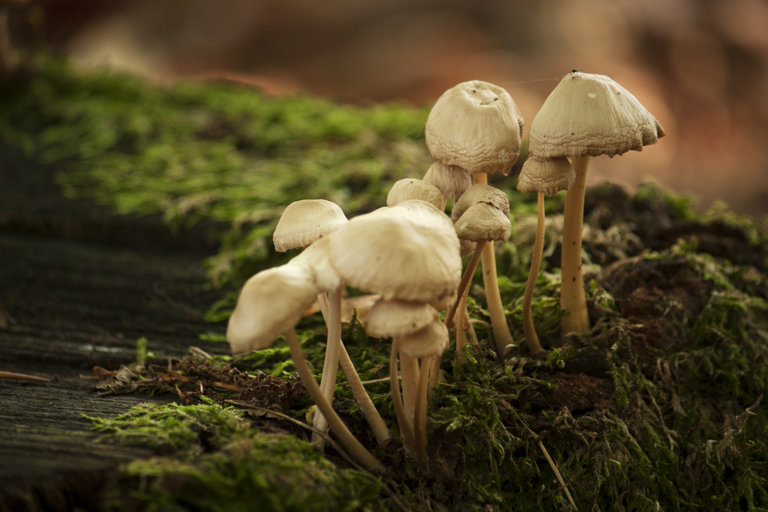
| An oyster mushroom (Pleurotus ostreatus), which is a natural source of lovastatin. |
For example, the fungi-sourced lovastatin targets an enzyme — HGM-CoA reductase — found in both humans and fungi. This enzyme is needed to produce cholesterol in humans as well as the fungi version of cholesterol, called ergosterol. When lovastatin interacts with the enzyme in a person, it can lower that individual’s LDL cholesterol (popularly known as the “bad” cholesterol). The drug also has antifungal properties.
“It’s likely that many fungi-sourced compounds with medical potential will be antimicrobial, but based on past history, we can also expect drugs to target the human immune response and high cholesterol, among others,” Clevenger said.
Other tech advances in recent years have led to the realization that good health often has more to do with a well-balanced microbiome than the presence — or absence — of any particular supposed beneficial or detrimental agent.
Read more at Discovery News
NASA's Curiosity Rover Traces Ancient Environmental Changes on Mars
![]() |
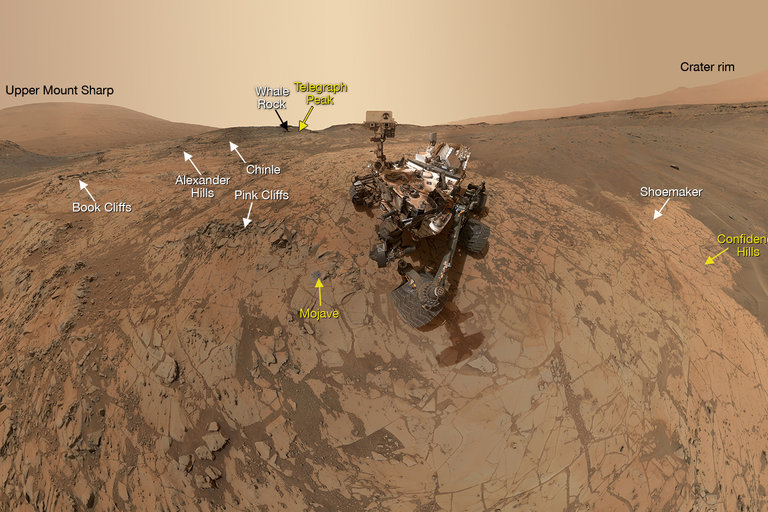
| This self-portrait of NASA's Curiosity Mars rover shows the vehicle at the "Mojave" site, where its drill collected the mission's second taste of Mount Sharp. |
Data gathered by NASA’s Curiosity rover over the past five years have allowed scientists to construct a detailed portrait of the history of Gale Crater and the lowermost layers of Mount Sharp where the rover has been traversing. Rocks studied during the mission have shown that this site was once a muddy lakebed, filled with water.
The latest research suggests with even more certainty that this was once likely a habitable environment. The diversity of minerals in the rock samples collected by Curiosity are also revealing details about the ancient environmental changes that occurred as Mars started to shed its atmosphere millions of years ago and much of the water on the planet's surface was lost to space.
“We went to Gale Crater to investigate these lower layers of Mount Sharp that have these minerals that precipitated from water and suggest different environments,” said Elizabeth Rampe, a NASA exploration mission scientist at Johnson Space Center and lead author of a new study, in a press statement. “These layers were deposited about 3.5 billion years ago, coinciding with a time on Earth when life was beginning to take hold. We think early Mars may have been similar to early Earth, and so these environments might have been habitable.”
The researchers looked specifically at four samples that were collected from the lower layers of Mount Sharp using the rover’s drill and studied with the onboard chemistry lab, the Chemistry and Mineralogy (CheMin) instrument. They looked specifically at the mineralogy of a layered mudstone called lacustrine, which is formed by lake sedimentation. (On Earth, lacustrine environments are a major contributor of petroleum source rocks.)
A rock’s various layers can tell the story of the geologic and climate history of Mars, yielding information about the planet’s past likelihood of habitability. Determining what minerals can be found in the layers of Martian sedimentary rock can also yield much data about the environment in which they formed.
The team said that the minerals found in the four different samples vary widely within the various layers of the rocks, which suggests that several different environments were present in ancient Gale Crater. There is evidence for waters with different pH and other varying conditions.
At the base are minerals that are volcanic in origin that are rich in iron and magnesium, similar to basalts in Hawaii. Moving higher in the section, scientists saw more silica-rich minerals. In the Telegraph Peak sample, scientists found minerals similar to quartz. In the Buckskin sample, scientists found tridymite. Tridymite is found on Earth, for example, in rocks that formed from partial melting of Earth’s crust or in the continental crust. Scientists say this is a strange finding because Mars never had plate tectonics.
Additionally, there are different iron-oxide minerals in the samples, reflecting the oxidation of the rock minerals as they reacted with oxygen. This tells scientists the water in the lake changed over time.
In their paper, published in Earth and Planetary Science Letters, the researchers discuss two hypotheses to explain this mineralogical diversity. The lake waters themselves at the base were oxidizing, so either there was more oxygen in the atmosphere or other factors encouraged oxidation.
Another hypothesis is that the groundwater changed over time, and that the environmental conditions present in the lake and in later groundwater were quite different. But both offered liquid water and a chemical diversity that could have been favorable for microbial life.
“We have all this evidence that Mars was once really wet but now is dry and cold,” Rampe said. “Today, much of the water is locked up in the poles and in the ground at high latitudes as ice. We think that the rocks Curiosity has studied reveal ancient environmental changes that occurred as Mars started to lose its atmosphere.”
The question is, how long did the water remain on Mars, and was it long enough for life to flourish?
These findings, along with all of the data gathered during Curiosity’s mission, are helping to give scientists a full picture of ancient Mount Sharp, where the rocks appear to be made from the silt that settled out from the lakes.
Read more at Discovery News
‘Liquid Light’ Can Bend Around Objects in a Frictionless Flow
For several centuries now, scientists have known that light behaves like a wave, expanding out from its source until absorbed or reflected by objects, which are in turn illuminated.
In recent years, however, research has indicated that light can also behave like a liquid — flowing around objects and reconstituting on the other side. Previously, this phenomenon has only been observed under certain extreme conditions, such as laboratory chambers chilled to near absolute zero.
New research published this week in the journal Nature Physics reveals that light can behave in an even stranger “superliquid” state, in which light particles flow around objects with no friction or viscosity at all. In this state, light exhibits the dramatic effect of “frictionless flow,” bending around obstacles with no ripples or swirls whatsoever. Interestingly, this effect can be observed at room temperature and ambient pressure.
You'll need some equipment, though. Scientists from CNR Nanotec of Lecce, Italy, in collaboration with École Polytechnique de Montreal in Canada, Imperial College London, Università del Salento in Italy, and Aalto University in Finland, produced the effect by sandwiching a thin layer of organic molecules between two ultra-reflective mirrors, producing what is in effect a light-matter hybrid fluid.
“In this way, we can combine the properties of photons — such as their light effective mass and fast velocity — with strong interactions due to the electrons within the molecules,” Stéphane Kéna-Cohen of École Polytechnique de Montreal said in a statement. “Under normal conditions, a fluid ripples and whirls around anything that interferes with its flow. In a superfluid, this turbulence is suppressed around obstacles, causing the flow to continue on its way unaltered."
This state of superfluidity is sometimes referred to as the fifth state of matter, or a Bose-Einstein condensate. Particles in this state behave like a single macroscopic wave, oscillating at the same frequency, and paradoxically combining the attributes of liquids, solids, and gases.
“The extraordinary observation in our work is that we have demonstrated that superfluidity can also occur at room-temperature, under ambient conditions, using light-matter particles called polaritons,” said Daniele Sanvitto, who led the research group.
As to the practical effects of the discovery, the most readily evident benefit concerns superconducting materials that can move electricity around with virtually zero resistance, according to the research team. Typically, these materials need to be radically cooled, usually with liquid nitrogen. If engineers can find a way to harness superfluidity at room temperature, it could lead to new and improved photonic devices like lasers, LEDs, solar panels, and photovoltaic cells.
Read more at Discovery News
In recent years, however, research has indicated that light can also behave like a liquid — flowing around objects and reconstituting on the other side. Previously, this phenomenon has only been observed under certain extreme conditions, such as laboratory chambers chilled to near absolute zero.
New research published this week in the journal Nature Physics reveals that light can behave in an even stranger “superliquid” state, in which light particles flow around objects with no friction or viscosity at all. In this state, light exhibits the dramatic effect of “frictionless flow,” bending around obstacles with no ripples or swirls whatsoever. Interestingly, this effect can be observed at room temperature and ambient pressure.
You'll need some equipment, though. Scientists from CNR Nanotec of Lecce, Italy, in collaboration with École Polytechnique de Montreal in Canada, Imperial College London, Università del Salento in Italy, and Aalto University in Finland, produced the effect by sandwiching a thin layer of organic molecules between two ultra-reflective mirrors, producing what is in effect a light-matter hybrid fluid.
“In this way, we can combine the properties of photons — such as their light effective mass and fast velocity — with strong interactions due to the electrons within the molecules,” Stéphane Kéna-Cohen of École Polytechnique de Montreal said in a statement. “Under normal conditions, a fluid ripples and whirls around anything that interferes with its flow. In a superfluid, this turbulence is suppressed around obstacles, causing the flow to continue on its way unaltered."
This state of superfluidity is sometimes referred to as the fifth state of matter, or a Bose-Einstein condensate. Particles in this state behave like a single macroscopic wave, oscillating at the same frequency, and paradoxically combining the attributes of liquids, solids, and gases.
“The extraordinary observation in our work is that we have demonstrated that superfluidity can also occur at room-temperature, under ambient conditions, using light-matter particles called polaritons,” said Daniele Sanvitto, who led the research group.
As to the practical effects of the discovery, the most readily evident benefit concerns superconducting materials that can move electricity around with virtually zero resistance, according to the research team. Typically, these materials need to be radically cooled, usually with liquid nitrogen. If engineers can find a way to harness superfluidity at room temperature, it could lead to new and improved photonic devices like lasers, LEDs, solar panels, and photovoltaic cells.
Read more at Discovery News
Jun 11, 2017
World's 'first named dinosaur' reveals new teeth with scanning tech
![]() |
| Artist's impression of how Victorian palaeontologists thought the Megalosaurus looked (R) is compared with how we now understand it to have looked (L). |
Professor Mark Williams at WMG has revealed five previously unseen teeth in the jawbone of the Megalosaurus -- and that historical repairs on the fossil may have been less extensive than previously thought.
Using state of the art CT scanning technology and specialist 3D analysis software, Professor Williams took more than 3000 X-ray images of the world-famous Megalosaurus jawbone, creating a digital three-dimensional image of the fossil.
In an unprecedented level of analysis, Professor Williams at WMG was able to see inside the jawbone for the first time, tracing the roots of teeth and the extent of different repairs.
Some damage occurred to the specimen when it was removed from the rock, possibly shortly after it was discovered.
Records at the Oxford University Museum of Natural History suggest that some restoration work may have been undertaken by a museum assistant between 1927 and 1931, while repairing the specimen for display -- but there are no details about the extent of the repairs or the materials used.
The scans have revealed previously unseen teeth that were growing deep within the jaw before the animal died -- including the remains of old, worn teeth and also tiny newly growing teeth.
The scans also show the true extent of repairs on the fossil for the first time, revealing that there may have been at least two phases of repair, using different types of plaster. This new information will help the museum make important decisions about any future restoration work on the specimen.
This research was made possible through a collaboration between Professor Williams' research group at WMG, University of Warwick -- including PhD researcher Paul Wilson -- and Professor Paul Smith, director of the Oxford University Museum of Natural History.
Professor Williams commented: "Being able to use state-of-the-art technology normally reserved for aerospace and automotive engineering to scan such a rare and iconic natural history specimen was a fantastic opportunity.
"When I was growing up I was fascinated with dinosaurs and clearly remember seeing pictures of the Megalosaurus jaw in books that I read. Having access to and scanning the real thing was an incredible experience."
The Megalosaurus jawbone is on display at the Oxford University Museum of Natural History alongside other bones from the skeleton.
Read more at Science Daily
Lost ecosystem found buried in mud of southern California coastal waters
![]() |
| Shells from muddy sediment collected on the western Palos Verdes shelf off the coast of southern California. The shells are from the scallop Chlamys hastata. |
These brachiopods and scallops had thrived along a section of coast stretching approximately 250 miles from San Diego to Santa Barbara for at least 4,000 years. But they had died off by the early 20th century, replaced by the mud-dwellling burrowing clams that inhabit this seabed today. Paleontologists Adam Tomašových of the Slovak Academy of Sciences and Susan Kidwell of the University of Chicago examine the lost ecosystem in a study published online June 7 in the Royal Society Proceedings B.
Evidence indicates that the brachiopod and scallop die-off occurred in less than a century. Because this community disappeared before biologists started sampling the seafloor, its existence was unknown and unsuspected. Only dead shells remain, permitting analysis by paleontologists.
"This loss unfolded during the 19th century, thus well before urbanization and climate warming," said Kidwell, the William Rainey Harper Professor in Geophysical Sciences. "The disappearance of these abundant filter-feeding animals coincided with the rise of lifestock and cultivation in coastal lands, which increased silt deposition on the continental shelf, far beyond the lake and nearshore settings where we would expect this stress to have an impact."
Continental shelves, the submerged shoulders of the continents, are a worldwide phenomenon. They form a distinct environment separated by a steep slope from the much deeper and vaster expanse of ocean floor beyond, and provide key habitats for biodiversity and fisheries.
The seabed off southern California is one of the most thoroughly studied in the world, but in applying geologic methods to modern biological samples of the sea floor, Kidwell and Tomašových encountered unsuspected results. Today that seabed consists of soft sediments, where creatures such as segmented worms, crustaceans, molluscs, crabs and urchins feed on organic matter.
This is a fundamentally different ecosystem than the one that preceded it not so long ago, said Tomašových, who heads the Department of Paleoecology and Organismal Evolution at the Slovak Academy.
"The methods applied here provide crucial information on ecosystem response to natural and human pressures over otherwise inaccessible timescales," he said.
In pioneering these methods since the 2000s, Kidwell and her associates have fostered the field of conservation paleobiology. Their work has shown that misfits between live populations and the shells they leave behind on modern sea floors do not signal poor preservation. The differences instead indicate a recent ecological shift -- one usually driven by human activities such as pollution or sea-floor dredging.
Tomašových and Kidwell based their new study on the analysis of samples and data collected from multiple sources. They have conducted their own research on the sea floor off southern California, but they've also benefited from samples and monitoring data that other scientists have collected from the area since 1954.
Brachiopods and scallops, which prefer cold waters and a gravelly environment, range from the U.S.-Mexico border to the Gulf of Alaska. Tomašových and Kidwell eliminated climate warming as a likely culprit in their ecosystem collapse, given that large populations of brachiopods persist near Catalina Island, where water temperatures are similar to those of southern California's mainland coastal waters.
The paleontologists instead pointed to the dramatic changes that southern California's watersheds have undergone since 1769, after Spanish missionaries introduced cattle, horses and sheep to the area.
The researchers established the age of the brachiopods using a molecular dating technique called amino acid racemization. All of the 190 shells analyzed were more than 100 years old, and most were older than 200 years, indicating that the start of the population die-off coincided with the rise of livestock and cultivation on the nearby mainland.
Brachiopods and scallops have low tolerance for high levels of suspended sediment, leaving them vulnerable to the side effects of a regional economy that focused on cattle production from 1769 to the 1860s. During this time, much of modern-day Los Angeles and Orange counties were subject to unmanaged, open-range grazing. The economy shifted to agriculture in the late 19th century, but in the absence of soil conservation methods, the side effects on the coastal ocean would have continued unabated into the early 20th century.
The researchers concluded that siltation associated with this prolonged period of unmanaged land use probably drove the collapse of the brachiopod-scallop populations.
Read more at Science Daily
Subscribe to:
Posts (Atom)