Nov 15, 2016

Genes for speech may not be limited to humans

Deer mice.
Our current understanding is that mice have either no -- or extremely limited -- neural circuitry and genes similar to those that regulate human speech. According to a recent study published in Frontiers in Behavioral Neuroscience, this understanding may be incorrect.

Dr. Jonathan Chabout is the lead author of the paper, whose principal investigator is Dr. Erich Jarvis.

Dr. Jarvis and colleagues report the results of their investigation into the effect of a genetic mutation in the Forkhead box protein #2 (FOXP2) on the vocalization patterns of adult male mice. FOXP2 regulates speech production in humans. Individuals with deficiencies in FOXP2 protein have difficulty forming complex syllables and complex sentence construction.

Although mice are unable to communicate using speech in the same way as humans, they do vocalize as a means of communicating with each other. Therefore this study sought to determine whether FOXP2 deficiencies have similar consequences for communication by mice as they do for humans.

They do.

Dr. Jarvis suggests that this study supports the "continuum hypothesis," which is that FOXP2 affects the vocal production of all mammals and not just humans.

Dr. Jarvis' team investigated twenty-six (26) male mice bred to have a FOXP2 mutation the same as that found in humans with speech deficits, and twenty-four (24) "wildtype" male mice (i.e., mice with a normal level of FOXP2 protein).

Both types of male mice (the heterozygous mice containing the FOXP2 mutation and the wildtype mice) were placed in several unique contexts -- housed with an active wildtype female mouse, in proximity of only the urine of wildtype females, or housed with a sleeping female or sleeping male mouse. These particular contexts derived from prior research published by Chabout and colleagues in 2015.

This past study found that in these various social contexts, healthy males produced differences in the sequence and duration of the ultrasonic vocalizations (USVs), which are high-pitched sounds inaudible to humans, that mice make. In their new study, the investigators wished to determine if there was an effect of a FOXP2 deficiency on the communication patterns of mice.

The results showed that the FOXP2 heterozygotes have difficulty producing the complex vocal communication patterns that wildtype mice can create with ease -- as measured both by syllable length and the number of unique syllables produced over time. These divergences are particularly strong when comparing the communication of FOXP2 heterozygotes and wildtype males while in the presence of active female mice. In this context, the wildtype males were 3 times as likely as heterozygotes to produce the most complex syllable types and sequences available for review. Dr. Jarvis' team performed intricate statistical analyses to validate this finding, and their conclusion held true.

Following the conclusion of all recordings, Dr. Jarvis' team used a process known as transsynaptic tracing from vocal larynx muscles to compare the vocal brain regions of wildtype and heterozygote FOXP2 mice. This study revealed that the heterozygote's vocal motor neurons were more widely distributed across the cortex than was the case for wildtype mice. This evidence suggests that the FOXP2 mutation affects both the placement and functioning of the neurons connected to effective communication, from mice all the way to humans.

Read more at Science Daily

Researchers solve mystery of historic 1952 London fog and current Chinese haze

A fog blanketed London in December 1952, killing as many as 12,000 people and puzzling researchers for decades. Texas A&M researchers believe they have solved the mystery.
Few Americans may be aware of it, but in 1952 a killer fog that contained pollutants covered London for five days, causing breathing problems and killing thousands of residents. The exact cause and nature of the fog has remained mostly unknown for decades, but an international team of scientists that includes several Texas A&M University-affiliated researchers believes that the mystery has been solved and that the same air chemistry also happens in China and other locales.

Texas A&M researcher Renyi Zhang, University Distinguished Professor and the Harold J. Haynes Chair of Atmospheric Sciences and Professor of Chemistry, along with graduate students Yun Lin, Wilmarie Marrero-Ortiz, Jeremiah Secrest, Yixin Li, Jiaxi Hu and Bowen Pan and researchers from China, Florida, California Israel and the UK have had their work published in the current issue of Proceedings of the National Academy of Sciences (PNAS).

In December of 1952, the fog enveloped all of London and residents at first gave it little notice because it appeared to be no different from the familiar natural fogs that have swept over Great Britain for thousands of years.

But over the next few days, conditions deteriorated, and the sky literally became dark. Visibility was reduced to only three feet in many parts of the city, all transportation was shut down and tens of thousands of people had trouble breathing. By the time the fog had lifted on Dec. 9, at least 4,000 people had died and more than 150,000 had been hospitalized. Thousands of animals in the area were also killed.

Recent British studies now say that the death count was likely far higher -- more than 12,000 people of all ages died from the killer fog. It has long been known that many of those deaths were likely caused by emissions from coal burning, but the exact chemical processes that led to the deadly mix of fog and pollution have not been fully understood over the past 60 years.

The 1952 killer fog led to the passage of the Clean Air Act in 1956 by the British Parliament and is still considered the worst air pollution event in the European history.

Through laboratory experiments and atmospheric measurements in China, the team has come up with the answers.

"People have known that sulfate was a big contributor to the fog, and sulfuric acid particles were formed from sulfur dioxide released by coal burning for residential use and power plants, and other means," Zhang says.

"But how sulfur dioxide was turned into sulfuric acid was unclear. Our results showed that this process was facilitated by nitrogen dioxide, another co-product of coal burning, and occurred initially on natural fog. Another key aspect in the conversion of sulfur dioxide to sulfate is that it produces acidic particles, which subsequently inhibits this process. Natural fog contained larger particles of several tens of micrometers in size, and the acid formed was sufficiently diluted. Evaporation of those fog particles then left smaller acidic haze particles that covered the city."

The study shows that similar chemistry occurs frequently in China, which has battled air pollution for decades. Of the 20 most polluted cities in the world, China is home to 16 of them, and Beijing often exceeds by many times the acceptable air standards set by the U.S. Environmental Protection Agency.

"The difference in China is that the haze starts from much smaller nanoparticles, and the sulfate formation process is only possible with ammonia to neutralize the particles," Zhang adds.

"In China, sulfur dioxide is mainly emitted by power plants, nitrogen dioxide is from power plants and automobiles, and ammonia comes from fertilizer use and automobiles. Again, the right chemical processes have to interplay for the deadly haze to occur in China. Interestingly, while the London fog was highly acidic, contemporary Chinese haze is basically neutral."

Read more at Science Daily

'Siberian Robin Hood' Found Buried With Arrows, Quiver

The burial of a medieval archer has been unearthed in the Altai mountains, complete with arrows, quiver and a wooden sarcophagus.

The man, called a "Siberian Robin Hood" by the local press, was likely a warrior of Mongolian origin who lived between 1200 and 1300 AD. The way he was buried suggests he was held in high respect.

According to the Siberian Times, the burial was found by local residents in a cliff near Kokorya, in the remote Altai Republic.

Wedged into a hole, the grave contained "the bones of an adult man, his birch bark quiver, arrow shafts and iron arrow heads, intricate ornaments and utensils made from the roots of trees, as well as the remnants of silk ribbons," the Siberian Times wrote.

The items are very well preserved due to the Siberian cold. The burial also contained birch bark linings for a saddle, the remains of a leather strap possibly used for attaching the quiver to the belt, and abundance of iron arrowheads and wooden arrow shafts.

"I can't say he was a 'Siberian Robin Hood.' Arrows are ordinary findings for medieval burials in the Altai. Almost all men used bows for hunting and battles," Nikita Konstantinov, head of the Museum of Gorno-Altaisk State University, told Seeker.

"The burial is interesting because of the decorated quiver," he added.

Made of two layers of birch bark — internal and external — the quiver had separate pockets for different types of arrows.

Although the bottom and other details aren't preserved, the quiver is unique. It features elaborate bone decorations with patterns that were popular in the territory of the Golden Horde, a division of the Mongol Empire which flourished from the mid-13th century to the end of the 14th century.

"There are no such quivers in the Altai, this one is unique," Konstantinov said.

Read more at Discovery News

When We Find Intelligent Aliens, They Will Be Machines

If an extraterrestrial species becomes advanced enough to send signals Earthlings can pick up, it will likely shed its traditional biological trappings and become a form of machine intelligence in rather short order, said veteran alien hunter Seth Shostak.

To make his case, Shostak pointed to the path that humanity appears to be on. The human species invented the radio around 1900 and the computer in 1945, and it's already manufacturing relatively cheap devices with greater computing power than the human brain.

The development of true, strong artificial intelligence (AI) is therefore not too far off, experts have said. The famous futurist Ray Kurzweil, for example, has pegged 2045 as the year this world-changing "singularity" will hit.

"But maybe it takes to 2100, or 2150, or 2250. It doesn't matter," Shostak said in September during a presentation at the Dent:Space conference in San Francisco. "The point is, any society that invents radio, so we can hear them, within a few centuries, they've invented their successors. And I think that's important, because the successors are machines."

AI will interface with people's bodies for a while, but eventually humans will abandon the wetware and go fully digital, Shostak predicted.

"It'll be like — you build a four-cylinder engine. You put it in a horse to get a faster horse. And pretty soon you say, 'Look, let's get rid of the horse part and just build a Maserati,'" said Shostak, an astronomer at the Search for Extraterrestrial Intelligence (SETI) Institute in Mountain View, California. "So that's probably what's going to happen."

Humans' machine selves will get smarter and more capable incredibly quickly, he added. Humanity's present intelligence is the result of 4 billion years of Darwinian evolution, which uses random variation as its raw material and is not directed toward any particular goal. But the evolution of machine intelligence will be engineered and efficient, Shostak said.

"Once you invent a thinking machine, you say, 'Invent something better than you are,' and you build that. 'Design something better than you are,' and you build that, and so forth," he said.

This idea has serious implications for the search for intelligent alien life. Unlike Earth organisms, super-advanced extraterrestrial machines would not require water or other chemicals to survive, so they would not be tied to their ancestors' home worlds tightly at all, Shostak said. And journeying tremendous distances would not be a big deal to these machines, provided they could access enough energy and raw materials to keep repairing themselves over the millennia, he said.

"We continue to look in the directions of star systems that we think have habitable words, that have planets where biology could cook up and eventually turn into something clever like you guys," he told the Dent:Space audience. "But I don't think it's going to be that way."

Shostak said he isn't counseling his fellow SETI astronomers to stop investigating potentially Earth-like planets such as Proxima b, a recently discovered world that lies just 4.2 light-years away. (And simple life-forms could still inhabit such worlds even if their most intelligent inhabitants went digital and departed long ago, Shostak said.) But it may be a good idea to expand the search to regions of space that would seemingly be attractive to digital life-forms, he said — for example, places with lots of available energy, such as the centers of galaxies.

Read more at Discovery News

Bird Poop Increases Arctic Clouds, Slows Warming

Tufted puffins (famous for their Donald Trump-like comb-over), Arctic terns and other seabirds produce poop that helps cool the Arctic.

The discovery, reported in the journal Nature Communications, adds to the growing body of evidence that the excrement from at least certain animals, such as whales, can affect climate.

"This study highlights important connections between seabirds, atmospheric chemistry and climate that we don't yet fully understand," co-author Gregory Wentworth of the University of Toronto's Department of Chemistry told Seeker. "It's important to consider how changes in seabird population will affect the process."

Wentworth previously led a study that determined seabird colonies are significant sources of atmospheric ammonia in the Arctic during the summertime, when tens of millions of breeding bird pairs nest in the region. How their massive amount of waste relates to ammonia, which impacts climate, involves a chain of events that starts, not with birds, but with fish.

He explained that fish are rich in nitrogen. Seabirds consume fish, and so their excrement, known as guano, contains ample amounts of uric acid, a nitrogen-containing molecule. Uric acid, in turn, is broken down by microbes into ammonia, and this reduced-nitrogen gas is released into the atmosphere. There, ammonia molecules can cluster together with other gases, namely sulfuric acid and water vapor, to form very tiny solid aerosol particles.

The new study, led by Betty Croft of Dalhousie University's Department of Physics and Atmospheric Science, used ammonia emissions data for various seabirds to model how the resulting atmospheric particulate matter impacts cloud formation and cooling at Alert, Nunavut, in the Canadian Arctic. In addition to tufted puffins, the birds included dovekies, black-legged kittiwakes, thick-billed murres, Arctic terns, northern fulmars and 317 other seabird species.

Arctic tern.
The scientists found that the "newly formed atmospheric particles can grow through condensation of additional gases to slightly bigger sizes that can act as the seeds for cloud droplet formation," Croft said. "If we have more of these atmospheric particles available, then existing clouds can have more and smaller cloud droplets."

These droplets are important, because they can make existing clouds more reflective of the incoming energy from the sun. That is when the temperature can start to fall.

"The cooling effects occur when the clouds are reflecting sunlight back into space," Wentworth explained. "This effect is largest for clouds over darker surfaces, such as the open ocean, and is relatively minor over bright surfaces like sea ice and snow."

Since the Arctic has experienced considerable warming in recent years, this literally cool process is a welcome find.

"Guano Mountain" at Vancouver Island, British Columbia.
Ken Carslaw, director of the Institute for Climate and Atmospheric Science at the University of Leeds, told Seeker, "The research is important because it shows yet another way in which the biosphere is controlling aerosols and climate. This information is vital in order to more accurately determine how human activities have altered aerosols."

It is because of our polluting ways that any possible beneficial cooling resulting from birds outside of the Arctic, such as seagulls soaring and splattering around beaches, is negated.

Croft explained that "in more polluted environments, the gas-phase ammonia has a greater tendency to just condense on to existing atmospheric particles, as opposed to forming any additional particles, which are key in the guano-to-particle-to-cloud process that we considered in the study."

Read more at Discovery News

Nov 14, 2016

Red squirrels in the British Isles are infected with leprosy bacteria

This is a red squirrel with leprosy on its ear.
Microbiologists at EPFL and the University of Edinburgh have discovered that red squirrels in Britain and Ireland carry the two bacterial species that cause leprosy in humans.

Once rampant in medieval Europe, leprosy dramatically declined by the end of the Middle Ages for reasons that are still unclear. About a century ago, leprosy in Europe virtually disappeared, at least among humans. Examining diseased red squirrels from England, Ireland, and Scotland, scientists at EPFL and the University of Edinburgh have now discovered that the same bacteria that cause leprosy in humans also infect red squirrels. The work is published in Science.

Leprosy is an infectious disease that mainly affects the skin, peripheral nerves, the upper respiratory tract, and the eyes. It is caused by the bacteria Mycobacterium leprae and the recently discovered Mycobacterium lepromatosis. One of the most ancient diseases, leprosy has had an enormous social impact across multiple cultures throughout history. Largely controlled today thanks to antibiotics, there are still over 200,000 new cases of leprosy reported each year worldwide.

A little-known fact is that leprosy also affects animals, such as armadillos, which have reportedly caused a few cases of animal-to-human (or "zoonotic") infections. Drawing from this evidence, the labs of Stewart Cole at EPFL and Anna Meredith at the University of Edinburgh carried out DNA tests on 110 red squirrels from England, Scotland, and Ireland. Some of these animals showed clinical symptoms of leprosy, while others did not; nonetheless, most were found to be infected with leprosy bacteria.

Surprisingly, red squirrels from Brownsea Island, off the south coast of England, were infected with a strain of M. leprae that is closely related to one found in a skeleton of a leprosy victim that was buried in Winchester 730 years ago, just 70 km from Brownsea Island.

On the other hand, red squirrels from Scotland and Ireland and the Isle of Wight (South England) were found to be infected with the other leprosy bacterium, M. lepromatosis. This species causes leprosy in humans in Mexico, and further analysis showed that the two strains from Mexico and Europe diverged from a common ancestor around 27,000 years ago.

"It was completely unexpected to see that centuries after its elimination from humans in the UK M. leprae causes disease in red squirrels," says Stewart Cole. "This has never been observed before."

The study shows how a pathogen can remain undetected in the environment even hundreds of years after it has been cleared from the human population. "The discovery of leprosy in red squirrels is worrying from a conservation perspective but shouldn't raise concerns for people in the UK," says Anna Meredith. "We need to understand how and why the disease is acquired and transmitted among red squirrels so that we can better manage the disease in this iconic species."

But is there a danger to humans? "There is no reason for panic," says Andrej Benjak, one of the paper's lead authors. "Autochthonous leprosy has not been detected in the UK in decades, though we cannot exclude the possibility of rare, unreported or misdiagnosed cases that originated within the UK." He suggests increasing efforts to monitor the disease, as part of the WHO's global Leprosy Surveillance Programme, where there is still room for improvement.

Read more at Science Daily

Underwater Stone Age settlement mapped out

Discoveries indicate mass fishing and therefore a semi-permanent settlement.
Six years ago divers discovered the oldest known stationary fish traps in northern Europe off the coast of southern Sweden. Since then, researchers at Lund University in Sweden have uncovered an exceptionally well-preserved Stone Age site. They now believe the location was a lagoon environment where Mesolithic humans lived during parts of the year.

Other spectacular finds include a 9,000 year-old pick axe made out of elk antlers. The discoveries indicate mass fishing and therefore a semi-permanent settlement.

"As geologists, we want to recreate this area and understand how it looked. Was it warm or cold? How did the environment change over time?" says Anton Hansson, PhD student in Quaternary geology at Lund University.

Changes in the sea level have allowed the findings to be preserved deep below the surface of Hanö Bay in the Baltic Sea.

The researchers have drilled into the seabed and radiocarbon dated the core, as well as examined pollen and diatoms. They have also produced a bathymetrical map that reveals depth variations.

"These sites have been known, but only through scattered finds. We now have the technology for more detailed interpretations of the landscape," says Anton Hansson.

"If you want to fully understand how humans dispersed from Africa, and their way of life, we also have to find all their settlements. Quite a few of these are currently underwater, since the sea level is higher today than during the last glaciation. Humans have always prefered coastal sites," concludes Hansson.

From Science Daily

Keeping our balance: A tale of two systems

Group of young barbary macaques (stock image). By recording and analyzing the activity in the brains of macaques during movements experienced in their daily lives – doing things like foraging, walking, running, climbing and grooming – the researchers found that there were two very different kinds of signals being sent to their brains as the monkeys moved around.
The transition from being sea creatures to living on land, even if it happened over 300 million years ago, seems to have left its traces on the way we keep our balance today.

"It's a discovery that is likely to be controversial," says Kathy Cullen, the senior researcher on a paper on the subject that was published recently in Nature Communications. She has been working on this problem for over a decade with her colleague Maurice Chacron who also teaches in McGill's Department of Physiology.

"What we've found is that there are two sensory channels that transmit information to the brain about how we move around in the world using fundamentally different approaches. No one has ever demonstrated anything of the kind before," says Cullen. "But what is even more exciting to us is that we believe that the different ways that each of these channels sends information to the brain is a legacy of the differences between needing to navigate in water and in air."

Two types of neural signaling to keep us in balance

By recording and analyzing the activity in the brains of macaques during movements experienced in their daily lives -- doing things like foraging, walking, running, climbing and grooming -- the researchers found that there were two very different kinds of signals being sent to their brains as the monkeys moved around.

"Scientists already knew that there were two different types of receptors that sense motion in the inner ears of animals that live on land, but we've never really understood why before," says Mohsen Jamali whose PhD research at McGill is responsible for the discovery. He is now a post-doctoral fellow at Harvard. "We found that it's because there are two very different kinds of signals that are being transmitted to neurons in the brain to keep us in balance. One is like the fluid stylings of a crooner sliding slowly from one note to the next, the other is rapid and very precisely timed -- a bit like the beat of a drum,as it responds to a guitar solo."

Changing sensory environments of move from sea to land

The researchers believe that the different kinds of signals used by these two channels to give us a sense of how we move around in the world are related to the major evolutionary changes in our pasts. They are, in fact, no less than echoes of the different strategies needed to navigate the changing sensory environments in which we were living.

"If you can imagine swimming in the sea, you have a sense of the resistance of water along with its muffling, almost viscous effect. So it makes sense that information about our movements would be transmitted to our brains using these smooth, slowly varying patterns that resemble the peaks and dips of sound in a singer's voice," says Chacron. "But because on land there is far less resistance than in the water, as we move around we need to be able to perceive and be prepared to react with extreme rapidity in order to keep our balance. That's where timing with millisecond precision becomes important."

Read more at Science Daily
3,000-Year-Old Mummy Found in Egyptian Tomb

Spanish archaeologists have unearthed an ancient Egyptian mummy in "very good condition" near Luxor, Egypt's antiquities ministry has announced.

Resting inside a brightly colored wooden sarcophagus, the mummy had been bound with linen stuck together with plaster.

"The tomb was uncovered at the southern enclosure wall of the Temple of Millions of Years," Mahmoud Afifi, head of the ancient Egyptian antiquities department of the ministry, said in a statement.

The temple was built on the west bank of the Nile near Luxor by Pharaoh Thutmosis III (1490-1436 BC), one of Egypt's greatest warrior kings. Also known as the "Napoleon of Egypt," he was the sixth Pharaoh of the Eighteenth Dynasty, the best known of all the dynasties of ancient Egypt as it boasted pharaohs such as Hatshepsut, Amenhotep III, Akhenaten and Tutankhamun.

The mummy is believed to be the body of a man named Amenrenef, who held the title of "Servant of the King's House." Amenrenef, however, did not live under Thutmosis III. His tomb likely dates from the Third Intermediate period around 1,000 BC, probably to the 21st Dynasty.

"When the temple was already not functioning, the area was used as a necropolis," Egyptologist Myriam Seco Álvarez, head of the Spanish archaeological team, told Seeker.

"Until now we knew about the necropolis under the temple dated to the Middle Kingdom, but we didn't know about the Late Period tombs and this one of the Third Intermediate Period," she added.

The 3,000-year-old mummy case features "many colorful decorations recalling religious symbols of ancient Egypt," the Egyptologist said.

Álvarez, who has been working at the Temple of Millions of Years since 2008, noted that the inscriptions and decorations include solar symbols, the protective goddesses Isis and Nephthys spreading their wings, the four sons of god Horus, and many other finely painted scenes.

"The mission will now study the tomb and its contents to find out more about its owner," Afifi said.

From Discovery News

Some Dinosaurs Were Iridescent

Remains of a 120-million-year-old bird from China reveal that its neck, head and body had iridescent plumage.

The discovery, reported in the journal Paleontology, strengthens evidence that many dinosaurs and prehistoric birds were dazzling to look at and likely evolved flashy ornaments such as iridescent feathers to capture the attention of the opposite sex. The feathers possibly also served as camouflage, or helped in alarming potential predators or prey.

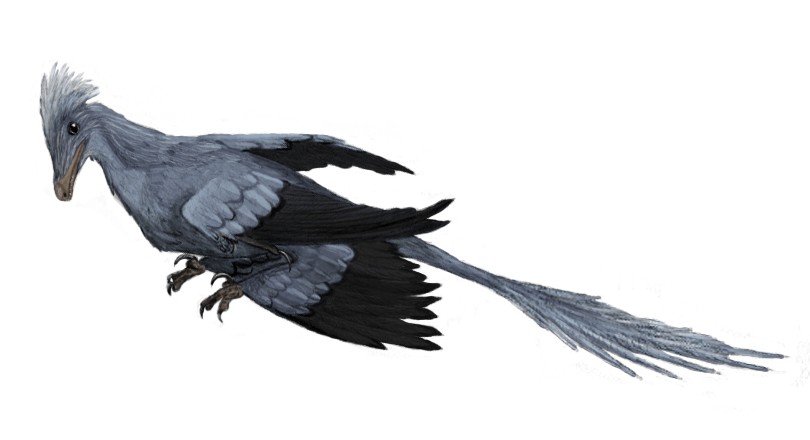
"A conservative estimate of what they would have looked like would be a primary black color with a glossy, iridescent sheen, much like what has been suggested for the non-avian dinosaur Microraptor," Jennifer Peteya of the University of Akron's Department of Biology and Integrated Bioscience Program told Seeker.

Illustration of the small dinosaur Microraptor zhaoianus.
The "they" that she is referring to are members of the species represented by the new Early Cretaceous bird, whose remains were recovered from the Jiufotang Formation of Liaoning Province in northeastern China.

Peteya and her team determined that the fossil belonged to an early enantiornithine bird, referring to a group of now-extinct birds that lived alongside dinosaurs and almost always had teeth and clawed "fingers" on their wings.

Both microscopic and chemical evidence suggest the iridescence. The bird's melanosomes, which are cellular structures that produce the color pigment melanin, were very long and thin and were arranged in a sheet-like end-to-end orientation.

These characteristics are associated with iridescent feathers in living birds, so the researchers believe that the ancient bird's feathers featured luminous colors when viewed from different directions. The orientation of the melanosomes wasn't quite as strong as it is for modern birds like peacocks and hummingbirds, so the effect would have been a bit subtler, the scientists suspect.

Purple-throated Carib hummingbird feeding at Morne Diablotins National Park, Dominica.
The prehistoric bird also had two long ornamental tail feathers.

"In many species of modern birds, mate choice is determined by flashy feathers and ornaments such as these," Peteya said. "Males, for example, with longer ornamental feathers or flashier feathers are more likely to attract a female than duller males."

Iridescence often evolves later in a bird's life, tied to sexual maturity. In this case, however, the flashy features seem to have emerged when the bird was still relatively young. Perhaps these birds were very fast living, mating early in life, or safety took a back seat to attractiveness, since the iridescence could have grabbed the attention of predators as well as mates.

Read more at Discovery News