Oct 18, 2011
Frozen Puck Hovers Over Track Using “Quantum Levitation”
Researchers at the school of physics and astronomy at Tel Aviv University have created a track around which a semiconductor can float, thanks to the phenomenon of “quantum levitation“.
This levitation effect is explained by the Meissner effect, which describes how, when a material makes the transition from its normal to its superconducting state, it actively excludes magnetic fields from its interior, leaving only a thin layer on its surface.
When a material is in its superconducting state — which involves very low temperatures — it is strongly diamagnetic. This means that when a magnetic field is externally applied, it will create an equally opposing magnetic field, locking it in place.
A material called yttrium barium copper oxide can be turned into a superconductor by exposure to liquid nitrogen — which makes it one of the highest-temperature superconductors.
Read more at Wired Science

Taxi Driver Mummified Like Pharaohs

Viewers of England's Channel 4 will see Alan Billis turned into a mummy over the space of a few months as his body is preserved using the techniques which the ancient Egyptians used on Tutankhamun.
Billis had been terminally ill with cancer when he volunteered to undergo the procedure which a scientist has been working to recreate for many years.
The 61-year-old from Torquay in Devon had the backing of his wife Jan, who said: "I'm the only woman in the country who's got a mummy for a husband."
The process is revealed in a new documentary Mummifying Alan: Egypt's Last Secret to be screened next Monday, October 24.
Stephen Buckley, a chemist and research fellow at York University, has spent 19 years trying to uncover the preservation techniques which the Egyptians used during the 18th dynasty.
Alongside archaeologist Jo Fletcher, Buckley has studied mummified bodies, analyzing tissue samples and finally putting his findings into practice by putting them to the test on Mr Billis's body at Sheffield's Medico-Legal Centre.
"It's turned current understanding, including my own, completely on its head," said Buckley.
Billis had been diagnosed with terminal lung cancer when he heard about the search for a body donor.
"I was reading the paper and there was a piece that said 'volunteer wanted with a terminal illness to donate their body to be mummified,'" he told the documentary team.
"People have been leaving their bodies to science for years and if people don't volunteer for anything nothing gets found out."
Billis -- who dubbed himself "Tuten-Alan" -- continued: "Experimenting is all about trying different processes to make things work. If it doesn't work it's not the end of the world, is it? Don't make any difference to me, I'm not going to feel it. It's still bloody interesting."
His wife took his decision in her stride and said: "He just said, 'I've just phoned someone up about being mummified.' I said 'you've what?' 'Yes, I've phoned up someone about being mummified.'
"And I thought here we go again. What's going to go on now? It's just the sort of thing you would expect him to do."
Buckley has used specialist scientific equipment such as a gas chromatograph mass spectrometer to identify materials which were used by priests, including beeswax, oils and resins.
He went on to conduct a series of experiments using pigs' legs as a substitute for human flesh, rigging up makeshift desert conditions in his shed.
Read more at Discovery News
What it means to donate your brain
“At 92 years old, Albert Webb is wandering through an exhibition in London’s trendy Shoreditch. In the underground warren of rooms, echoes of recorded voices mingle with the sounds of people’s conversations. The occasional burst of laughter bounces around the walls. Wearing a white sweater that he knitted himself, Webb leans in to tell me his story. When he smiles his eyes disappear into thin creases, giving him an air of gleefulness.
A grin may seem an odd response to the question I’ve just asked – why he chose to donate his brain to medical research – but after 17 years participating in a brain study led by the aptly named Carol Brayne of the University of Cambridge, Webb discusses his decision with ease. To him, donation secures a form of immortality.
He explains that he’d knit the sweater he’s wearing many years ago, before he lost his wife Ellen. Knitting was something they had done together. “When she died, I packed it in,” he says. She had dementia toward the end of her life. This Saturday marks the ninth anniversary of her death. They were married for 57 years.
 It’s a poignant story in a fitting setting. We are standing in the middle of Mind Over Matter, an exhibition inspired by the research of Brayne and colleagues that is the result of a long collaboration between artist Ania Dabrowska and social scientist Bronwyn Parry. The exhibition focuses on 12 brain donors from Brayne’s studies – the stories of their lives and triumphs, and their reasons for donating.”
Read more at New Scientist
A grin may seem an odd response to the question I’ve just asked – why he chose to donate his brain to medical research – but after 17 years participating in a brain study led by the aptly named Carol Brayne of the University of Cambridge, Webb discusses his decision with ease. To him, donation secures a form of immortality.
He explains that he’d knit the sweater he’s wearing many years ago, before he lost his wife Ellen. Knitting was something they had done together. “When she died, I packed it in,” he says. She had dementia toward the end of her life. This Saturday marks the ninth anniversary of her death. They were married for 57 years.
Read more at New Scientist
Cyclops Shark & Other Cryptic Creatures Make October Creepy
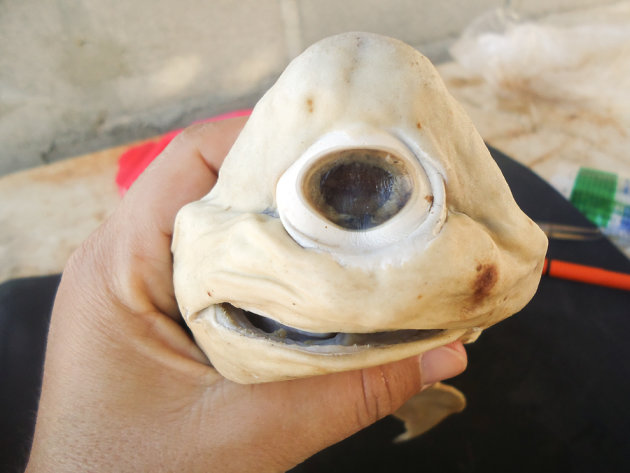
But the Cyclops shark, sliced from the belly of a pregnant mama dusky shark caught by a commercial fisherman in the Gulf of California earlier this summer, is by all reports the real thing. Shark researchers have examined the preserved creature and found that its single eye is made of functional optical tissue, they said last week. It's unlikely, however, that the malformed creature would have survived outside the womb.
"This is extremely rare," shark expert Felipe Galvan Magana of Mexico's Centro Interdisciplinario de Ciencias del Mar told the Pisces Fleet Sportfishing blog in July. "As far as I know, less than 50 examples of an abnormality like this have been recorded." [See photos of the one-eyed "Cyclops" shark]
Pisces Fleet, a sportfishing company, rocketed the Cyclops shark to viral status online this summer with their photos of the creepy-cute creature. But this isn't the first time that reports of a mythical-seeming creature have spurred media sensations — last week alone, Russian officials announced "proof" of a Yeti, and paleontologists spun a theory about an ancient Kraken-like squid. Few reports of mythical beasts, however, come with proof.
Cyclops shark
The Cyclops shark is an exception. While rare, "cyclopia" is a real developmental anomaly in which only one eye develops. Human fetuses are sometimes affected, as in a 1982 case in Israel reported in 1985 in the British Journal of Ophthalmology. In that case, a baby girl was born seven weeks early with no nose and only one eye in the center of her face. The infant, who lived only 30 minutes after birth, also had severe brain abnormalities.
In 2006, a kitten born with one eye and no nose (a rare condition called holoprosencephaly), created a stir online as news organizations and bloggers tried to determine if the bizarre photos of the animal were real. A veterinarian confirmed the kitten's condition; "Cy," as the cat was known, lived only a day. The remains were sold to the creationist Lost World Museum.
The fisherman who discovered the Cyclops shark is reportedly hanging on to the preserved remains, news outlets reported. But scientists have recently examined and X-rayed the fish, authenticating the catch. According to Seth Romans, a spokesman for Pisces Fleet, Galvan Magana and his colleagues will publish a scientific paper about the find within the next several weeks.
Romans told LiveScience that the fisherman who caught the strange shark is "amazed and fascinated" by the attention his catch has drawn.
It's not the first strange shark fetus Galvan Magana has found; he and his colleagues discovered two-headed shark embryos in two different female blue sharks. It's possible that one embryo started to split into twins, but failed to completely separate because of crowding in the womb, the researchers reported in January 2011 in the journal Marine Biodiversity Records.
Lair of the kraken?
Another recent report of a cryptic creature comes without the benefit of photographic evidence. Nor do the monster-hunters in this scenario have a body to display.
That's because the discovery is of an alleged "kraken's lair," a spot where 200-million-year-old ichthyosaur bones mingle in odd patterns. Paleontologist Mark McMenamin reads these patterns as evidence of a giant, ancient squid-like creature playing with its food, and he said as much on Oct. 10 at the annual meeting of the Geological Society of America. Supporting his claim, he said, is the fact that even today Pacific octopus, which are also cephalopods like the ancient "kraken," have been seen taking down sharks.
Other researchers responded that McMenamin was seeing what he wanted to see in the patterns.
"To my mind, this hypothesis is like looking at clouds — being able to see what you desire," Glenn Storrs, the curator of vertebrate paleontology at the Cincinnati Museum Center, told LiveScience.
Mythical krakens are now thought of as giant squid or octopuses, capable of bringing down a ship with their tentacled arms. But many of the earliest kraken reports were of creatures so enormous that they grew vegetation on their backs like islands. These krakens dragged down anchored ships or swamped them by surfacing suddenly. [Read Get Kraken: Why Scientists Should Study Sea Monsters]
The 1816 "Universal Dictionary of the Arts, Sciences Literature, Etc.," (advertised as "intended to supersede the use of other books of reference") defines the kraken as "a most amazing large sea animal," said to be "of a crab-like form."
"Its back or upper part, which seems an English mile and a half (some have affirmed more), looks at first like a number of small islands, surrounded with something that floats like seaweeds," the dictionary author writes. "At last several bright points of horns appear, which grow thicker the higher they emerge, and sometimes stand up as high and large as the masts of middle-sized vessels. In a short time, it slowly sinks, which is thought as dangerous as its rising; as it causes such a swell and whirlpool as draws everything down with it."
Read more at Yahoo! News
Oct 17, 2011
Archaeologists Find Blade 'Production Lines' Existed as Much as 400,000 Years Ago

Prof. Avi Gopher, Dr. Ran Barkai and Dr. Ron Shimelmitz of TAU's Department of Archaeology and Ancient Near Eastern Civilizations say that large numbers of long, slender cutting tools were discovered at Qesem Cave, located outside of Tel Aviv, Israel. This discovery challenges the notion that blade production is exclusively linked with recent modern humans.
The blades, which were described recently in the Journal of Human Evolution, are the product of a well planned "production line," says Dr. Barkai. Every element of the blades, from the choice of raw material to the production method itself, points to a sophisticated tool production system to rival the blade technology used hundreds of thousands of years later.
An innovative product
Though blades have been found in earlier archaeological sites in Africa, Dr. Barkai and Prof. Gopher say that the blades found in Qesem Cave distinguish themselves through the sophistication of the technology used for manufacturing and mass production.
Evidence suggests that the process began with the careful selection of raw materials. The hominins collected raw material from the surface or quarried it from underground, seeking specific pieces of flint that would best fit their blade making technology, explains Dr. Barkai. With the right blocks of material, they were able to use a systematic and efficient method to produce the desired blades, which involved powerful and controlled blows that took into account the mechanics of stone fracture. Most of the blades of were made to have one sharp cutting edge and one naturally dull edge so it could be easily gripped in a human hand.
This is perhaps the first time that such technology was standardized, notes Prof. Gopher, who points out that the blades were produced with relatively small amounts of waste materials. This systematic industry enabled the inhabitants of the cave to produce tools, normally considered costly in raw material and time, with relative ease.
Thousands of these blades have been discovered at the site. "Because they could be produced so efficiently, they were almost used as expendable items," he says.
Prof. Cristina Lemorini from Sapienza University of Rome conducted a closer analysis of markings on the blades under a microscope and conducted a series of experiments determining that the tools were primarily used for butchering.
Read more at Science Daily
Super-Sized Muscle Made Twin-Horned Dinosaur a Speedster

A close examination of the tail bones of Carnotaurus showed its caudofemoralis muscle had a tendon that attached to its upper leg bones. Flexing this muscle pulled the legs backwards and gave Carnotaurus more power and speed in every step.
In earlier research, Persons found a similar tail-muscle and leg-power combination in the iconic predator Tyrannosaurus rex. Up until Persons published that paper, many dinosaur researchers thought T. rex's huge tail might have simply served as a teeter-totter-like counterweight to its huge, heavy head.
Persons' examination of the tail of Carnotaurus showed that along its length were pairs of tall rib-like bones that interlocked with the next pair in line. Using 3-D computer models, Persons recreated the tail muscles of Carnotaurus. He found that the unusual tail ribs supported a huge caudofemoralis muscle. The interlocked bone structure along the dinosaur's tail did present one drawback: the tail was rigid, making it difficult for the hunter to make quick, fluid turns. Persons says that what Carnotaurus gave up in maneuverability, it made up for in straight ahead speed. For its size, Carnotaurus had the largest caudofemoralis muscle of any known animal, living or extinct.
Read more at Science Daily
Avoiding Bias in Medical Research
Most people are rather vague when reporting on food and drink consumption, smoking and exercise habits. General practitioners, however, are skilled at interpreting phrases such as "I only have a few drinks rarely...each week" and "I get to the gym regularly" and can estimate based on symptoms and a person's physical appearance just how precise those claims are. However, it is crucial for healthcare research and epidemiology that relies on patient self-reporting that we find a more objective, rather than intuitive, way to identify bias in self-reporting.
A new statistical approach to address the problem of bias in self-reporting has been developed by a team at Washington State University in Pullman. The technique, reported in a forthcoming issue of the International Journal of Behavioural and Healthcare Research, is based on stochastic frontier estimation (SFE). SFE is more commonly used in economics and market research to spot statistical errors and unanticipated deviations from the norms in data. The approach helps highlight when the subjects of medical research may either deliberately or inadvertently bias the information they provide to researchers.
"There are many reasons individuals might offer biased estimates of self-assessed behavior, ranging from a misunderstanding of what a proper measurement is to social-desirability bias, where the respondent wants to 'look good' in the survey, even if the survey is anonymous," explains Robert Rosenman, who coauthored the study with Laura Hill and Vidhura Tennekoon. "Response bias itself can be problematic in program evaluation and research, but is especially troublesome when it causes a recalibration of bias after an intervention," he adds.
SFE can identify bias at specific times in self-reported data and in particular identify bias after a healthcare intervention so that researchers can determine whether or not self-reporting patients have biased their responses because they presume the intervention should have caused changes. This characteristic of the technique could ensure that double-blind placebo-controlled trials are more robust in terms of the validity of data. It could help improve results obtained before and after an experimental treatment is given to one group and the placebo to another when neither party, patient or researcher, is aware in advance of which group a patient is in.
Read more at Science Daily
A new statistical approach to address the problem of bias in self-reporting has been developed by a team at Washington State University in Pullman. The technique, reported in a forthcoming issue of the International Journal of Behavioural and Healthcare Research, is based on stochastic frontier estimation (SFE). SFE is more commonly used in economics and market research to spot statistical errors and unanticipated deviations from the norms in data. The approach helps highlight when the subjects of medical research may either deliberately or inadvertently bias the information they provide to researchers.
"There are many reasons individuals might offer biased estimates of self-assessed behavior, ranging from a misunderstanding of what a proper measurement is to social-desirability bias, where the respondent wants to 'look good' in the survey, even if the survey is anonymous," explains Robert Rosenman, who coauthored the study with Laura Hill and Vidhura Tennekoon. "Response bias itself can be problematic in program evaluation and research, but is especially troublesome when it causes a recalibration of bias after an intervention," he adds.
SFE can identify bias at specific times in self-reported data and in particular identify bias after a healthcare intervention so that researchers can determine whether or not self-reporting patients have biased their responses because they presume the intervention should have caused changes. This characteristic of the technique could ensure that double-blind placebo-controlled trials are more robust in terms of the validity of data. It could help improve results obtained before and after an experimental treatment is given to one group and the placebo to another when neither party, patient or researcher, is aware in advance of which group a patient is in.
Read more at Science Daily
Dark Matter: Now More Mysterious Than Ever

Researchers know dark matter comprises a far greater percentage of the universe than the ordinary matter making up things like people and stars. Because of this, the distribution of dark matter determines the structure of the cosmos. Galaxies form when they are attracted to and anchored by large clumps of dark matter.
The dwarf galaxies Fornax and Sculptor are themselves made of 99 percent dark matter and only 1 percent normal matter. It is impossible to directly see the dark matter but, by observing the rotation of stars around each galactic center, researchers can detect its influence and map out its distribution.
While simulations suggest that the dark-matter density should increase sharply near the galactic centers, the recent observations found the dark matter spread relatively uniform throughout. Yet if these dwarf galaxies have no “clump” in their center, then what is pinning them in place?
Observations of other small galaxies have similarly failed to find a dense central dark matter core, a difficulty that has prompted astronomers to begin expanding their ideas on the mysterious substance.
Read more at Wired Science
Oct 16, 2011
How the Zebra Gets Its Stripes: A Simple Genetic Circuit

Now a team of scientists has designed a simple genetic circuit that creates a striped pattern that they can control by tweaking a single gene.
"The essential components can be buried in a complex physiological context," said Terence Hwa, a professor of physics at the University of California, San Diego, and one of the leaders of the study published October 14 in Science. "Natural systems make all kinds of wonderful patterns, but the problem is you never know what's really controlling it."
With genes taken from one species of bacterium and inserted into another, Hwa and colleagues from the University of Hong Kong assembled a genetic loop from two linked modules that senses how crowded a group of cells has become and responds by controlling their movements.
One of the modules secretes a chemical signal called acyl-homoserine lactone (AHL). As the bacterial colony grows, AHL floods the accumulating cells, causing them to tumble in place rather than swim. Stuck in the agar of their dish, they pile up.
Because AHL doesn't diffuse very far, a few cells escape and swim away to begin the process again.
Left to grow overnight, the cells create a target-like pattern of concentric rings of crowded and dispersed bacterial cells. By tweaking just one gene that limits how fast and far cells can swim, the researchers were able to control the number of rings the bacteria made. They can also manipulate the pattern by modifying how long AHL lasts before it degrades.
Although individual bacteria are single cells, as colonies they can act like a multicellular organism, sending and receiving signals to coordinate the growth and other functions of the colony. That means fundamental rules that govern the development of these patterns could well apply to critical steps in the development of other organisms.
To uncover these fundamental rules, Hwa and colleagues characterized the performance of their synthetic genetic circuit in two ways.
First, they precisely measured both the activity of individual genes in the circuit throughout the tumble-and-swim cycle. Then they derived a mathematical equation that describes the probability of cells flipping between swim and tumble motions.
Additional equations describe other aspects of the system, such as the dynamics of the synthesis, diffusion and deactivation of one of the cell-to-cell chemical signal AHL.
This three-pronged approach of "wet-lab" experiments, precise measurements of the results, and mathematical modeling of the system, characterize the emerging discipline of quantitative biology, Hwa said. "This is a prototype, a model of the kind of biology we want to do."
Read more at Science Daily
Giving placebos such as reiki to cancer patients does more harm than good
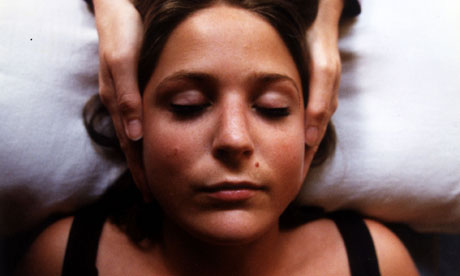
Reiki involves channelling "healing energy" into the body. Lots of people swear by it, but does it really work?
To find out, a proper control group is essential. The researchers therefore decided to compare reiki against "sham reiki" and against no such intervention. Sham reiki involved a non-reiki healer pretended to be a reiki healer. He was not trained in reiki and only followed the ritual of the treatment. So he did not send any "healing energy" to the patients whereas the reiki healer had been taught to do just that.
The results of this study were impressive: reiki did, in fact, make the patients fell better. Specifically, it increased the comfort and wellbeing of the patients in comparison with those who received no such intervention. Intriguingly, however, the sham reiki had exactly the same effects, and there were no differences between real and sham reiki.
What does this mean? The researchers were quite clear about their interpretation of the results. They believe reiki has been shown to work. Yet, I think the findings demonstrate exactly the opposite: genuine reiki is no better than sham reiki, thus it does not work.
Perhaps this is a rather academic matter of interpretation over which one could argue until the cows come home. However, the more pressing question is this: what should oncology teams throughout the world do about such findings?
Should they use reiki or similar therapies, as these American nurses seem to be suggesting? They clearly help desperately ill cancer patients, . Or should they avoid such treatments, because they are no better than placebo, as I and most scientists would suggest?
The scientific stance may appear heartless and cruel in light of the suffering of cancer patients, while the attitude of the nurses seems patient-centred and caring. This impression is wrong. By insisting that patients must not be treated with placebos like reiki, scientists also advocate that they receive treatments that demonstrably work better that placebo. For instance, massage has been shown to improve the wellbeing of cancer patients beyond a placebo effect. If a patient receives a massage with empathy, sympathy, time, understanding and dedication, she would benefit from the placebo effect – just like the reiki patient – but, in addition, she would also benefit from the specific effect of the treatment that massage does and Reiki does not offer.
Read more at The Guardian
Subscribe to:
Posts (Atom)